

Jingcun Zhice Submits IPO Prospectus for Its Non-Invasive, Portable Neurodegenerative Disease Screening Device with 95% Clinical Sensitivity
With the advent of an aging society, there has been a concurrent rise in age-related diseases, among which Alzheimer’s disease (AD) poses an increasingly severe public health challenge. According to estimates by the Chinese Center for Disease Control and Prevention, China currently has approximately 10 million AD patients, a figure projected to exceed 30 million by 2050, making it the country with the largest number of Alzheimer’s patients worldwide.
However, in clinical diagnosis, there is still a lack of ideal methods for early screening of Alzheimer’s disease. First, the “gold standard diagnosis,” which combines magnetic resonance imaging (MRI) with cerebrospinal fluid (CSF) analysis, is difficult to implement on a large scale. CSF testing is highly invasive, requiring lumbar puncture for sample collection, and is costly, making it poorly accepted by patients. Second, traditional diagnostic approaches, such as classic scale assessments of cognitive function, activities of daily living, and mental status, have limited accuracy.
Therefore, convenient, rapid, and cost-effective non-invasive early screening has emerged as a new breakthrough in Alzheimer’s disease (AD) detection in recent years.
“Multimodal + AI”: Providing a Non-Invasive, Convenient Screening Solution for Alzheimer’s Disease
In July 2023, Beckman Coulter, a subsidiary of global IVD giant Danaher, announced a collaboration with Fujirebio, a long-established leader in medical diagnostics in Japan, to jointly develop new biomarkers for Alzheimer’s disease and other neurodegenerative disorders. Prior to this, key strategic initiatives by multinational giants in the field of Alzheimer’s disease had been concentrated on therapeutic interventions. This move marks the first major entry by global industry leaders into the realm of early diagnosis and screening for Alzheimer’s disease.
The primary objective of the collaboration between Danaher and Fujirebio is to explore the use of blood tests as a substitute for cerebrospinal fluid analysis in Alzheimer’s disease screening. Following this strategic move by industry giants, innovation in early diagnosis and screening for Alzheimer’s disease has reached a crescendo, with more research efforts directed toward developing efficient, convenient, and even non-invasive early screening technologies.
In comparison, Jingcun Zhice entered the market even earlier. Since 2013, Professor Jiang Jiehui of Biomedical Engineering at Shanghai University has focused on brain neuroimaging processing and analysis of cognitive neurological disorders such as Alzheimer’s disease and Parkinson’s disease. In 2024, Professor Jiang led his team to establish Jingcun Zhice and launched a portable preliminary screening system for Alzheimer’s disease (AD), dedicated to providing a simple, rapid, and non-invasive early screening device for individuals at high risk of Alzheimer’s disease.
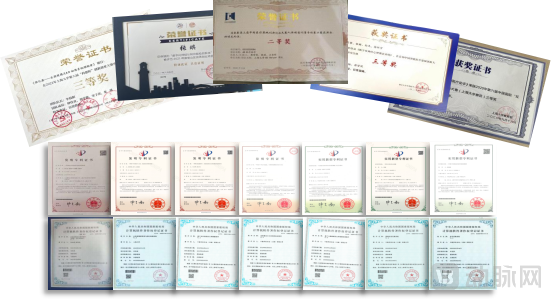
Patents related to the product; image provided by the interviewee
Professor Jiang Jiehui told VCBeat that the team primarilyLeveraging multimodal information fusion and artificial intelligence technologies to provide a critical time window for the early diagnosis and intervention of Alzheimer's disease.
First, multimodal information fusion enables the Jingcun Zhice team to rapidly determine whether subjects have Alzheimer’s disease or mild cognitive impairment by collecting their physiological and neuropsychological indicators. These physiological indicators include multiple parameters such as facial micro-expressions, gait, electroencephalogram (EEG), heart rate, and eye movements. Furthermore, as early as during his postdoctoral fellowship, Professor Jiang Jiehui collaborated with experts in the field of neuropsychology to conduct in-depth research.
Professor Jiang Jiehui stated, “Data from a single modality provides limited information, failing to simultaneously offer qualitative and quantitative feedback on users’ emotional states and related physiological indicators, while also lacking portability.”The advantage of multimodal information fusion lies in the integration of data from different modalities, which can improve diagnostic accuracy and specificity.For example, through task-based and interactive assessments, researchers can distinguish whether cognitive impairment is caused by depression or Alzheimer’s disease.
Notably, high-dimensional multimodal data—such as eye-tracking, electroencephalography (EEG), facial images, and gait videos—pose challenges for traditional deep learning feature extraction methods, often hindering the model’s ability to learn effective representations. To address this, the Jingcun Zhice team employs transfer learning in their AI algorithms, pre-training the models followed by fine-tuning.
Specifically, first, for eye-tracking and electroencephalogram (EEG) data, the team employed time-series models such as LSTM and GRU to extract features from eye movements and EEG signals. These models were pre-trained on large-scale datasets collected from partner hospitals and subsequently fine-tuned on the acquired data. Second, for facial image data, the team utilized the ResNet model to extract facial expression features, with pre-training and fine-tuning conducted on the RAF-DB dataset. Third, for gait video data, the team adopted the GaitPart model to extract gait features, performing pre-training and fine-tuning on the OU-MVLP dataset.
“From the data acquisition phase, the team initiated AI-driven intervention to perform feature extraction and fusion, laying the foundation for subsequent analysis..” said Professor Jiang Jiehui. The application of AI technology has also helped the team to more quickly differentiate between emotional and cognitive states, and to identify and analyze patients' psychological and cognitive health.
Moreover, AI technology can also provide clinical diagnosis and treatment recommendations for doctors and patients—after the AI system sets thresholds based on scores to assess whether a patient is at risk of cognitive impairment (such as Alzheimer’s disease), forming an integrated closed-loop system from screening to diagnostic and treatment recommendations, further providing rehabilitation advice for clinical practice.。
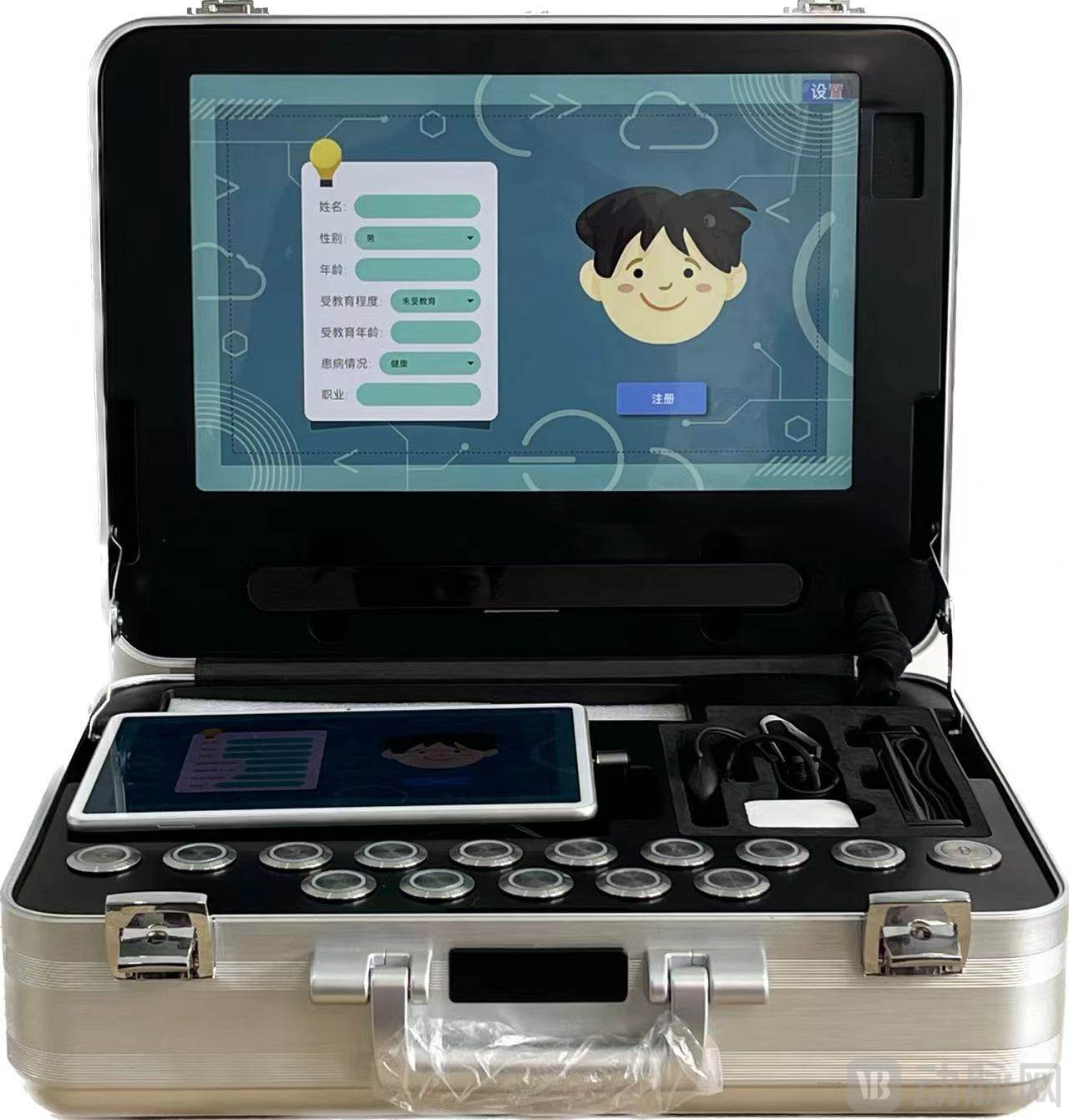
Jingcun Zhice Portable AD Screening Product, Photo Provided by Interviewee
From an aesthetic perspective, VCBeat notes that this device is compact and lightweight, making it suitable for a variety of settings such as community hospitals, nursing homes, and households. Its non-invasive and painless features during detection make it appropriate for users of all age groups, ensuring comfort and safety throughout the testing process.
Completed 200 clinical trials, with a sensitivity of 95%.
As of now,The Jingcun Intelligent Testing Team has completed clinical case studies on more than 200 cases.Initially led by Huashan Hospital of Fudan University, the initiative rapidly attracted participation from renowned domestic medical institutions such as Shanghai Sixth People’s Hospital, Pudong Hospital, and Beijing Xuanwu Hospital, resulting in a continuous surge in clinical data volume. This has also opened up broader opportunities for further precision and personalized development of the technology.
Professor Jiang Jiehui told VCBeat,In rigorous evaluations at Grade A tertiary hospitals, the AD portable early screening system demonstrated a sensitivity of over 95% compared with clinical diagnosis, successfully meeting clinical technical standards.
In the field of screening, the Jingcun Zhice team not only focuses on the early identification of Alzheimer's disease but also extends its scope to cognitive impairments, particularly the screening of emotional disorders such as depression. Meanwhile, the team continues to strengthen its efforts in screening for neurological diseases, committed to building a more comprehensive and precise disease prevention and control system.
However, from a business perspective, Professor Jiang Jiehui stated that,The team will focus its future R&D efforts primarily on Alzheimer’s disease and depression.。
In recent years, the global number of Alzheimer’s disease cases has risen rapidly. According to a report by the World Health Organization, there were 55 million cases of Alzheimer’s disease worldwide in 2022, with nearly 10 million new cases added each year. Meanwhile, the market for depression screening is also expanding rapidly. Data Bridge Market Research analyzes that the global depression screening market was valued at USD 10.62491 billion in 2022 and is projected to reach USD 15.82987 billion by 2030. However, China currently has fewer than 40,000 psychiatrists. This creates a dilemma in the diagnosis and treatment of depression: a large number of patients on one hand, and a severe shortage of professional physicians on the other.
Based on this,The Jingcun Zhice team once again integrates multimodal information to analyze ecological behaviors (such as gait, posture, and speech) for depression recognition, providing supplementary information beyond routine clinical diagnosis to assist physicians in making diagnostic decisions.
Currently, the product has conducted preliminary clinical trials with several Grade A tertiary hospitals, including Huashan Hospital and Shanghai Sixth People’s Hospital, and has entered the application phase for the NMPA medical device registration certificate, thereby accelerating the standardization of internet-based medical diagnosis and treatment. To advance industrialization, Jingcun Zhice has established a dedicated engineering team internally to handle product certification. In light of limited experience in this area, the team is also actively seeking collaborations with third-party institutions to jointly conduct product testing and certification.
Diversified business model yielding results, with relevant orders already secured
From a business model perspective, Jingcun Zhice’s core business model revolves around equipment sales, but it does not stop there.。
By integrating hardware and software systems into a unified design, Jingcun Zhice not only offers complete system sales but also flexibly provides software services as standalone offerings, charging on a per-use basis or through subscription and update packages, thereby delivering long-term technical support to users. Furthermore, recognizing the necessity of consumables in multimodal data acquisition processes involving eye tracking and EEG, Jingcun Zhice has innovatively introduced a pay-per-use model for consumables, further diversifying its revenue streams.
The underlying logic of a multi-dimensional business model is to better capture the customer base.Jingcun Intelligent Testing has long targeted hospitals, nursing homes, and community health management centers, particularly in response to the growing demand for health management among the elderly population.
At the sales level, although the product’s cash flow has not yet been fully realized, it has successfully placed research prototypes in several Grade A tertiary hospitals, providing them with data collection and analysis services. Just two weeks prior to the team’s interview, two companies in Suzhou signed software service orders with Jingcun Zhice and completed payment. Moving forward, Jingcun Zhice will continue to expand its sales team by recruiting professional marketing specialists, and further penetrate target markets such as nursing homes through a combination of online and offline channels.
*Jingcun Zhice portable AD screening product is currently in the market promotion stage. If you are interested in this product, please feel free to scan the QR code below to contact us.