

Integrated DNA Technologies (IDT): Powering the Genomics Revolution as a Global Leader Serving 130,000+ Customers

Integrated DNA Technologies
Developer of pharmaceuticals and medical diagnostic products
Since the concept of genomics was first proposed in 1986, and particularly following the successful implementation of projects such as the Human Genome Project (HGP), the field of genomics has made significant strides.
Today, genomics has become a key entry point for understanding life phenomena, attracting the attention and in-depth exploration of countless elites in the scientific research and industrial sectors. In its development process, an increasing number of life science companies and research institutions are transforming genomics technologies into products and services. These commercialized solutions not only provide researchers with convenient and efficient research tools but also drive innovation and development in fields such as medicine, agriculture, and biotechnology.
Integrated DNA Technologies (IDT) (Chinese abbreviation: “IDT Edite”), founded in 1987, is a genomics solutions provider that has flourished alongside the rise of genomics.Since its inception, IDT has been dedicated to developing, manufacturing, and selling nucleic acid products for the life sciences community, providing support for academic and commercial research, agriculture, medical diagnostics, and drug development.
After 36 years of pioneering development, IDT has developed multiple patented technologies for genomic applications, covering next-generation sequencing (NGS), CRISPR genome editing, synthetic biology, digital PCR, and RNA interference. Furthermore, through its GMP services, IDT’s products are used by scientists to research various forms of cancer as well as a wide range of genetic and infectious diseases.To date, IDT produces over 90,000 nucleic acid products daily and has served more than 130,000 life science researchers across over 100 countries and regions worldwide.
As a global leader in genomics solutions, how does IDT strategically position itself to drive the innovative development and commercial translation of genomic technologies? And how did it grow from a tech laboratory into an international giant in the field of genomics? With these questions in mind, VCBeat recently conducted an exclusive interview with Mr. Wu Jianhua, General Manager of IDT China.

Mr. Wu Jianhua, General Manager of IDT China | Image source: IDT
Core founders have been deeply engaged in the field of genomics for over 35 years
In 1987, Dr. Joseph Walder, then a professor in the Department of Biochemistry at the University of Iowa, founded Integrated DNA Technologies (IDT) and established his laboratory within the business incubator of the University of Iowa’s Technology Innovation Center to develop antisense oligonucleotides and DNA detection technologies.
Dr. Joseph Walder is a preeminent expert in the chemical synthesis of DNA and RNA. In 1978, he joined the University of Iowa as an Assistant Professor in the Department of Biochemistry, where he conducted cutting-edge biochemical research, including the study and development of potential anti-sickle cell compounds and hemoglobin-derived blood substitutes. His numerous pioneering technological breakthroughs and patents laid a solid foundation for Integrated DNA Technologies (IDT) to become a global leading provider of genomics solutions.
At that time, oligonucleotides, as fundamental tools for regulating gene expression in biomedical and life sciences research, saw gradually emerging demand in fields such as life sciences research. However, due to the immaturity of nucleotide synthesis technologies at the time, low production efficiency, and high costs, supply fell far short of the growing demand.
Thus, Dr. Joseph Walder sought to provide researchers with customized oligonucleotide synthesis services through high-efficiency nucleic acid synthesis technologies, thereby accelerating and enhancing the precision of breakthrough innovations in genomic science. To this end, during the early stages of his venture, Dr. Walder proposed a creative solution: exchanging innovative oligonucleotide services for synthesizers from various laboratories. This approach not only secured hundreds of synthesizers for Integrated DNA Technologies (IDT) but also ensured the retention of loyal customers, marking a critical step in IDT’s rise within the field of genomics.
During the first 10 years,IDT has rapidly evolved from a startup with just 10 oligonucleotide synthesizers into an innovative pioneer, now operating more than 500 synthesizers and supplying tens of thousands of custom oligonucleotide products to customers worldwide every day.
After 36 years of development, IDT has grown from a regional leader into a global leading provider of genomics solutions, achieving numerous milestones in both product R&D and corporate development.
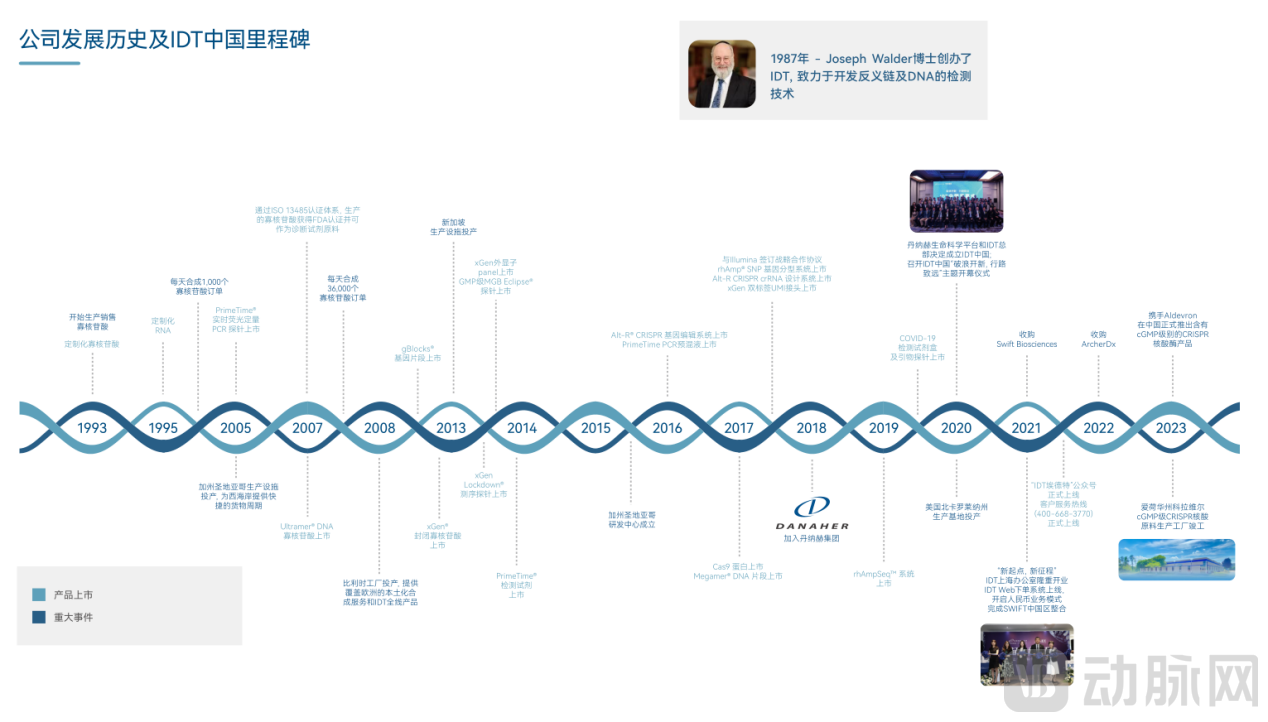 Company Development History and IDT China Milestones Image source: IDT
It is worth noting that, during the company’s development journey,In 2018, IDT was acquired by Danaher Corporation (NYSE: DHR).Since then, IDT has become a member of Danaher Life Sciences and gained the support of the Danaher Business System (DBS). Meanwhile, leveraging synergies with other life sciences companies under Danaher, IDT has accelerated the research, development, and upgrading of its genomics solutions, further driving the global expansion of its products and services.
In addition,In 2020, IDT established a team and founded IDT China in Shanghai, bringing the name “IDT Edite” into the public eye to better cultivate and serve the Chinese market.Subsequently, IDT successively acquired Swift Biosciences, a genomics kit development company, as well as Archer’s next-generation sequencing (NGS) research panel products from Invitae (NYSE: NVTA), a medical genetics company.
Meanwhile, IDT has also achieved a global layout of its production bases. Currently, in addition to continuously expanding its production capacity at its headquarters in Iowa, USA, IDT has established manufacturing facilities in San Diego, California; Research Triangle Park, North Carolina; Leuven, Belgium; and Singapore, laying the foundation for its global strategic layout.
Over its 36-year history, IDT has not only achieved technological breakthroughs and market expansion through its own efforts, but also further consolidated and expanded its influence in the field of genomics through strategic collaborations and acquisitions.
Leveraging oligonucleotide synthesis as the core technology to develop a series of end-to-end solutions
Leveraging the strengths of its core team and technological expertise, IDT has established a production process centered on oligonucleotide synthesis, featuring advanced capabilities in synthesis, modification, purification, and quality control.
Currently,Leveraging its globally leading capabilities and technologies in custom oligonucleotide synthesis and development, Integrated DNA Technologies (IDT) has established a comprehensive suite of end-to-end solutions. These offerings provide customers in precision medicine and personalized diagnostics with holistic, innovative solutions, spanning multiple cutting-edge fields including PCR, next-generation sequencing (NGS), CRISPR genome editing, functional genomics, synthetic biology, and custom oligonucleotides.
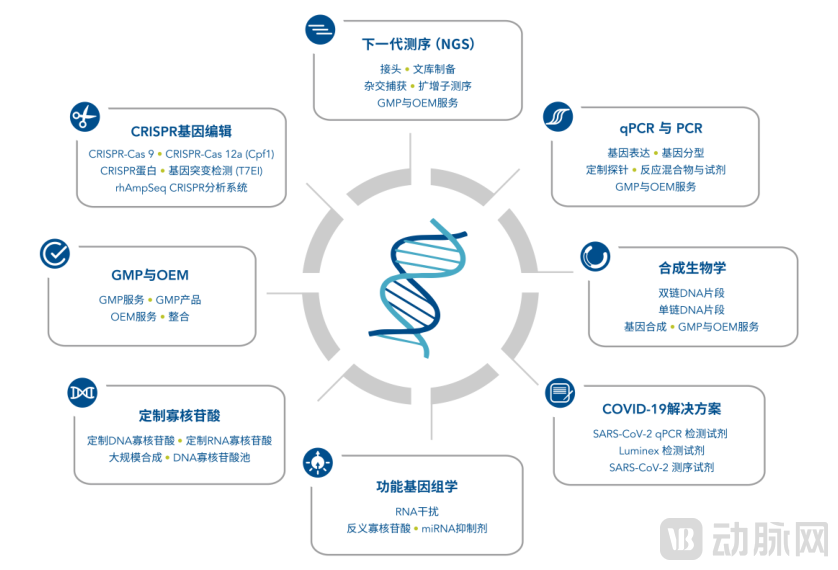 IDT’s Comprehensive Genomics Research Tools. Image source: IDT
It is worth noting that,IDT’s comprehensive end-to-end solutions offer advantages such as high coverage, high uniformity, flexibility, and scalability.It is reported that IDT is committed to vertical integration in its manufacturing operations. Leveraging its proprietary oligonucleotide synthesis platform and internal raw material supply, IDT can flexibly adjust production and implement internal quality control according to customer requirements, thereby achieving comprehensive quality assurance throughout the entire process from source materials to product development.
In terms of product quality control, the oligonucleotide probes produced by IDT for its NGS business are individually synthesized and undergo quality control using proprietary ESI mass spectrometry. This process enables the provision of quality control documentation for each oligonucleotide, thereby meeting the stringent requirements for IVD regulatory registration submissions.
In terms of flexibility and scalability, the demand for products and services has become more diverse, as scientists at the forefront of translational research seek customized solutions to translate basic laboratory findings into clinical studies. To this end,IDT has expanded its production facilities and capabilities to incorporate ISO 13485 and cGMP manufacturing standards. It currently operates GMP-grade cleanroom facilities in the United States and Europe, respectively, enabling seamless support for customers’ diverse needs throughout the entire research journey, from Research Use Only (RUO) to cGMP compliance.
It is worth noting that the market value of Integrated DNA Technologies’ oligonucleotide manufacturing process lies not only in its high product quality standards and stringent quality control, but also in its continuous technological innovation and iteration.In terms of innovative product development, with technological advancements, IDT is continuously launching new products to meet customers' evolving needs.“said Wu Jianhua, General Manager of Integrated DNA Technologies China.”
For example, as CRISPR technology continues to mature and gain widespread adoption, demand for CRISPR genome editing product solutions is increasingly growing across multiple fields, including basic scientific research, disease treatment, and agricultural improvement. As a global leader in the field of genomics, IDT is currently providing integrated “gene detection + gene therapy” solutions to a broad base of industrial clients and researchers in China.
June 2023,IDT Announces Partnership with Aldevron to Officially Launch cGMP-Grade CRISPR Nuclease Products in China.July 2024,IDT and Aldevron Join Forces Again to Expand Key CRISPR Solutions for Cell and Gene Therapy, Launching a Novel Ready-to-Use, High-Quality CRISPR Type V Nuclease, Eureca-V™
Importantly,In January 2024, Danaher partnered with the Innovative Genomics Institute (IGI), a world-class academic organization founded by Nobel laureate Jennifer Doudna, to establish a joint research and development center dedicated to developing CRISPR gene-editing solutions.Among these, IDT will leverage its newly commissioned therapeutic oligonucleotide manufacturing facility to provide industry-leading capabilities in the synthesis, modification, purification, and quality control of CRISPR nucleases and guide RNAs.
Currently, IDT offers a comprehensive end-to-end solution for CRISPR genome editing, encompassing design, synthesis, delivery, and validation. Furthermore, it provides a suite of tools, products, and solutions tailored for HDR repair, long-fragment donor templates, and challenging delivery samples, thereby fully supporting the development and optimization of novel CRISPR methodologies.
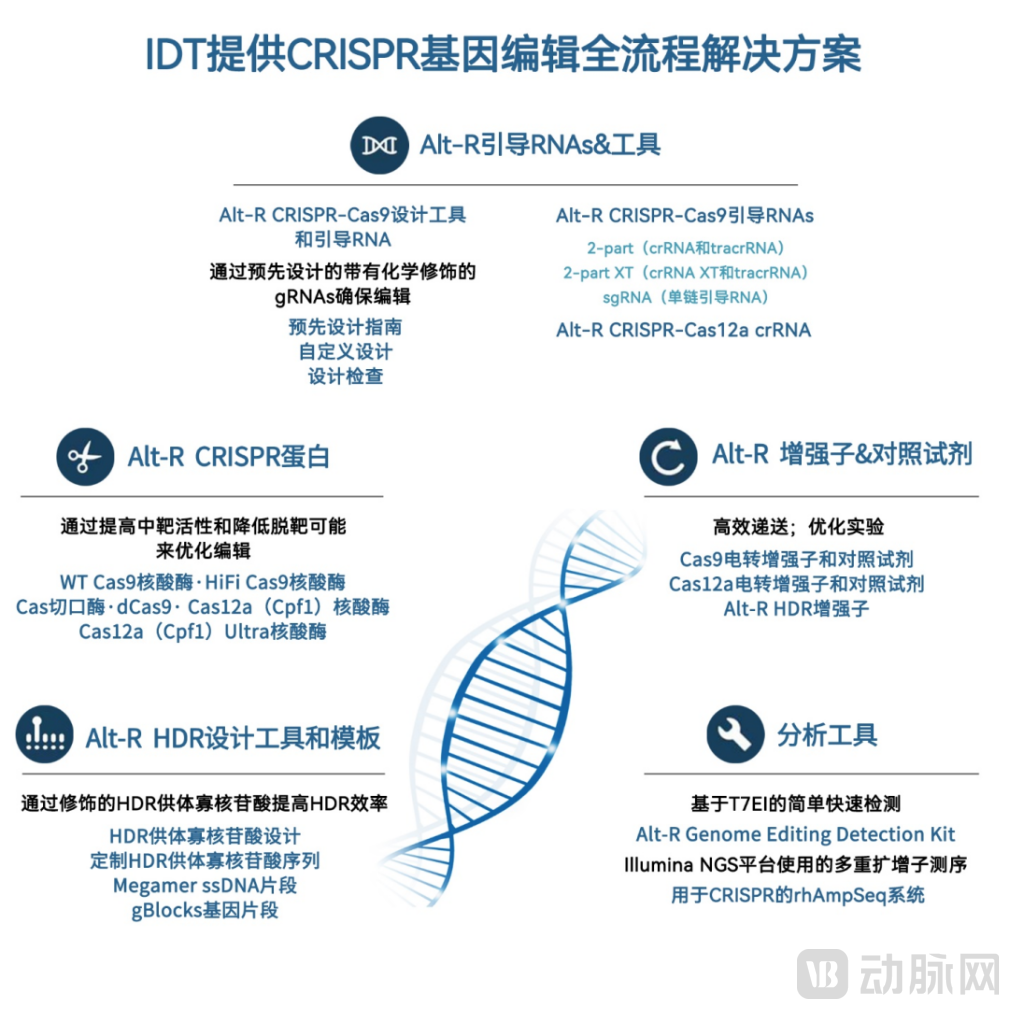 IDT CRISPR Genome Editing Products: Comprehensive Solutions. Image source: IDT
In the field of gene synthesis services, in August 2024, IDT announced the launch of an upgraded product in its gene synthesis portfolio—Rapid Genes. This service provides ready-to-use gene clones ranging from 125 to 2,000 bp in length, which are rigorously validated by next-generation sequencing (NGS). Delivered in plate format, these products are compatible with automated workflows, helping researchers reduce costs and enhance experimental efficiency.
It is reported that IDT currently operates 12 facilities worldwide and employs approximately 2,000 staff, enabling it to rapidly respond to local customer needs and deliver efficient products and services. According to incomplete statistics,IDT currently serves over 130,000 life science researchers, with more than 4,200 orders processed daily. Nearly all leading domestic and international enterprises are its customers or partners.
Foster Collaboration Across the Entire Industry Chain to Accelerate Genomics Research
After more than 40 years of development, genomics has transitioned from theoretical exploration to practical application, significantly driving innovation and progress in medicine, agriculture, biotechnology, and other fields. Currently, there is a broad industry consensus that “precision medicine, future agriculture, and bio-manufacturing” represent the three key strategic directions for the genomics sector. Notably, genomics has been scientifically proven to be effective in disease prevention, management, and treatment. Furthermore, propelled by the wave of synthetic biology, genomics technologies—as foundational underlying technologies and tools for synthetic biology—are once again encountering unprecedented opportunities for development.
Facing this market with immense potential, IDT is well-prepared. Wu Jianhua, General Manager of IDT China, stated:“IDT’s new mission is ‘to accelerate the pace of genomics.’”It is reported thatCurrently, IDT is leveraging Danaher’s development strategy and resources to deeply engage with government bodies, healthcare institutions, research organizations, and corporate capital. By integrating policy, industry, talent, innovation, funding, and ecosystem chains, IDT accelerates the translation of customer research into industrial applications, ultimately driving the development and advancement of new-quality productive forces.
On one hand, Integrated DNA Technologies (IDT) has been continuously increasing its R&D investment and technological innovation, focusing on developing more efficient, precise, and cost-effective genomics solutions. Meanwhile, for its existing products, the company is constantly exploring and expanding into new market segments and application boundaries. According to incomplete statistics, IDT delivered six innovative solutions to its customers in 2023 alone.
On the other hand, IDT focuses on building a global collaboration network, establishing close partnerships with research institutions, medical institutions, biotechnology companies, and pharmaceutical companies to jointly promote the translation and application of genomics research achievements.
In February 2023, IDT launched the Collab Network alliance program, aiming to unite researchers and industry partners within an influential research consortium to foster mutual learning, collaboration, and future technological advancements. Currently, IDT has established collaborations with innovative companies such as MGI Tech and Element Biosciences, as well as medical institutions like Fuwai Hospital of the Chinese Academy of Medical Sciences, to jointly drive the development of differentiated solutions.
Looking ahead to future development, Wu Jianhua, General Manager of IDT China, stated at the conclusion of the interview: “In the future, IDT will continue to deepen its expertise in the field of genomics. Guided by end-market demands, we will drive the R&D and commercialization of innovative products, thereby accelerating the translation of scientific achievements into practical applications. Meanwhile, we will strengthen local innovation within IDT China and respond to customer needs with ‘China speed,’ ultimately contributing to leapfrog development in the life sciences sector.”