2024 Bio-Manufacturing Industry Summit Successfully Held at NSD, Peking University
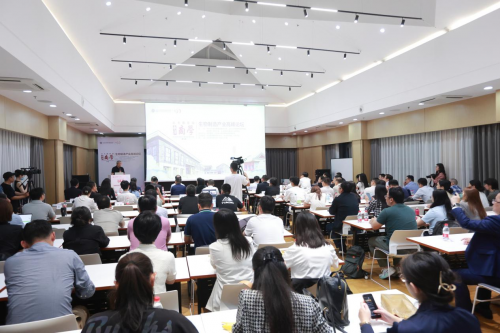
On the evening of September 19, 2024, the 8th Chengze Business Forum of the National School of Development (NSD) at Peking University—High-Level Summit on the Biomanufacturing Industry—concluded successfully at the Chengze Garden Campus of the NSD, Peking University. The event was jointly hosted by the Institute for Global Health and Development at Peking University, the National School of Development at Peking University, the Langrun Liren Medical Association, and the Chengze Entrepreneur Program of the NSD; co-organized by Huasheng Capital and Beijing Miaoshenghua Biotechnology Co., Ltd.; and co-supported by the EMBA Center of the NSD, the Corporate Relations Department, and CHO100. This event was also part of the business school series celebrating the 30th anniversary of the establishment of the National School of Development at Peking University.
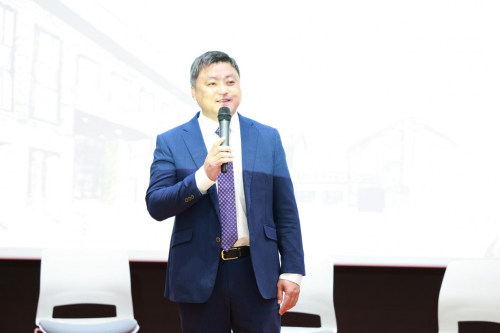
This forum focused on the latest developments and future trends in the biomanufacturing industry, attracting numerous experts, scholars, entrepreneurs, and investors. It was moderated by Wang Xianqing, Director of the Communication Center at the National School of Development, Peking University.
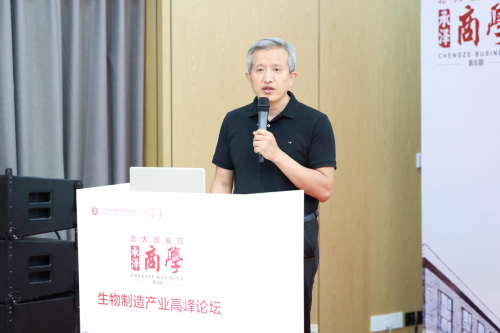
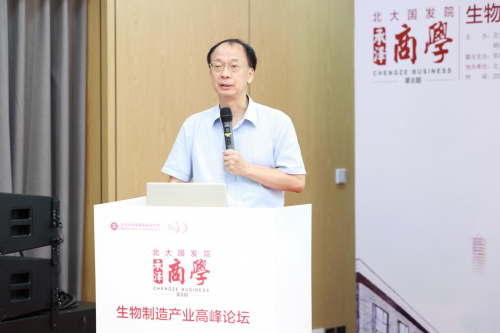
At the outset of the forum, Professor Liu Guoen, Dean of the Peking University Institute for Global Health Development, Professor at the National School of Development, and Chang Jiang Scholar Distinguished Professor appointed by the Ministry of Education, provided an in-depth exposition on the significant value of synthetic biology to global health. He pointed out that synthetic biology not only holds promise for substantially improving the efficiency and reducing the costs of pharmaceutical manufacturing—as demonstrated by the research, development, and production of drugs such as synthetic artemisinin—but also exhibits tremendous application potential and broad prospects in multiple fields, including animal health, environmental health, and climate change, thereby making a substantial contribution to advancing global sustainable development.
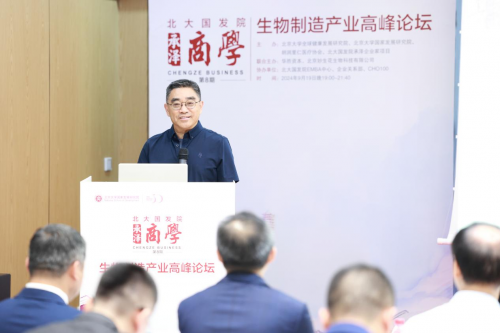
Professor Chen Guoqiang, Director of the Center for Synthetic and Systems Biology at Tsinghua University and a Chang Jiang Scholar Distinguished Professor appointed by the Ministry of Education, delivered a special lecture on the technical challenges and industrial applications of synthetic biology. He emphasized that synthetic biology still faces numerous challenges in areas such as scale-up for mass production and the development of original microbial strains. He noted that research into and application of extremophiles, such as halophiles, hold promise for addressing these critical bottlenecks in the future. The field possesses immense potential for development. Professor Chen also shared Tsinghua University’s latest research achievements in synthetic biology and provided an outlook on future development trends.
During the forum, the *Blue Book on Industrial Practices in Synthetic Biology* was officially released. Distinguished guests, including Professor Liu Guoen, Professor Chen Guoqiang, Wang Jia (Chairman of the Langrun Liren Medical Association), Wang Wuge (Founder of Huasheng Capital), Zhang Miaomiao (Vice President of Beijing Bioproces Biotechnology Co., Ltd.), Chao Wei (Deputy General Manager of Beijing Shougang LanzaTech Technology Co., Ltd.), Du Jun (Vice President of Beijing Tsingke Biotechnology Co., Ltd.), Yang Haiquan (Co-founder of Beijing Qihe Bioscience Co., Ltd.), and Yang Xue (General Manager of Beijing Miaoshenghua Biotechnology Co., Ltd.), took the stage together to witness this significant moment.
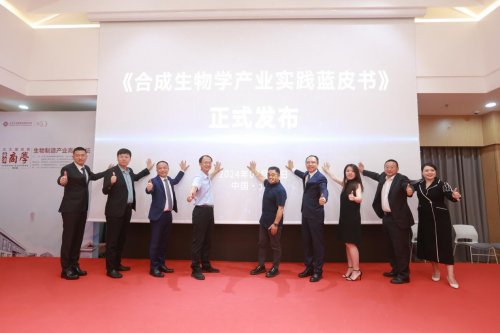
As the representative of the initiating organization of the Blue Book, Wang Jia stated that the Blue Book aims to serve as a practical handbook for entrepreneurs, scientists, and investors, while providing practical guidance for traditional industry disruptors seeking to enter the field of synthetic biology. Its core highlights include: a comprehensive analysis of the key operational aspects of synthetic biology companies; an in-depth interpretation of the market and policy environments across four major sectors—gene synthesis, gas-phase biofermentation, biological breeding, and recombinant proteins; and the creation of a panoramic view of China’s synthetic biology industry, offering strategic references and insights for industry participants.
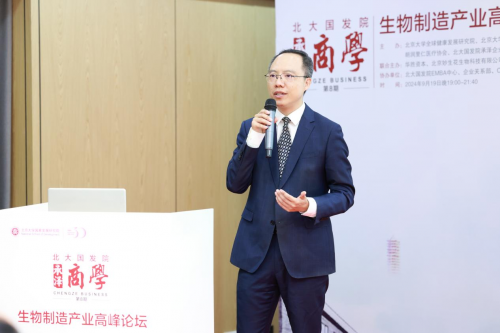
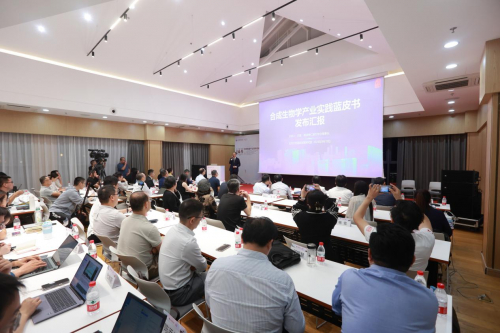
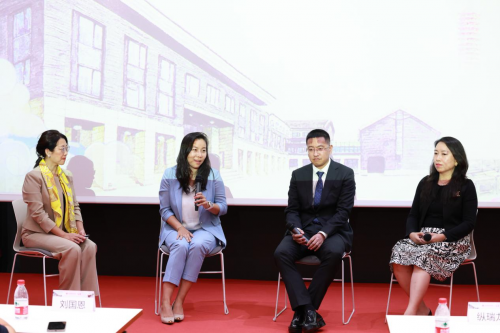
The forum also featured two roundtable discussions, centered on the themes of “Synthetic Biology and New Quality Productive Forces” and “Opportunities and Challenges for Scientist Entrepreneurs.”
The roundtable on “Synthetic Biology and New Quality Productive Forces” was moderated by Wang Jia. Professor Liu Guoen shared the Planetary Health Coordinate Initiative of Peking University’s Institute for Global Health, highlighting the immense application potential of its massive datasets in the field of biomanufacturing. Professor Chen Guoqiang pointed out that synthetic biology in China is still in its early stages of development, with production scale-up being a core technical challenge, and called for sustained and patient support from capital investors. Du Jun, Vice President of Tsingke Biotechnology, outlined the evolution of synthetic biology applications and noted that Chinese enterprises must address issues such as intellectual property protection for microbial strains in international competition. Chao Wei, Deputy General Manager of Shougang LanzaTech, introduced the revolutionary role of synthetic biology in transforming the energy and chemical industries, emphasizing its ability to innovate traditional production models and promote green, low-carbon development.
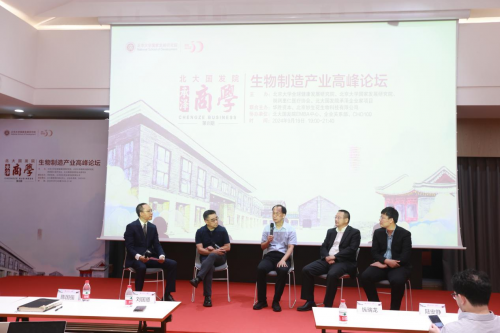
The roundtable discussion on “Opportunities and Challenges for Scientist Entrepreneurs,” moderated by Wang Xin, Assistant Dean of the BiMBA Business School at the National School of Development, Peking University, brought together numerous distinguished scientist-entrepreneurs and business leaders. Li Lin, Chairman of Haosi Biology and a scientist-turned-entrepreneur, emphasized that the transition from scientist to entrepreneur represents a major challenge in the startup journey, noting that an inclusive and patient environment is crucial for technological innovation. Yang Haiquan, Co-founder of Qihe Biosciences, argued that technology-driven startups must closely align with market trends and customer needs, with the key lying in solving customers’ practical problems. Zhou Liping, Head of Human Resources for Merck Group China, highlighted the importance of ecosystems in interdisciplinary sciences, advocating for the establishment of open talent development systems and collaborative innovation ecosystems among industry, academia, and research institutions to promote the sustained development of synthetic biology.
At the conclusion of the forum, Dr. Tian Youzhong, Research Fellow at the Institute for Global Health Development of Peking University, delivered the closing remarks. He highly commended the forum’s academic value and industry influence, stating that he would continue to promote exchanges and cooperation in the biomanufacturing sector, thereby contributing to the robust growth of China’s bioeconomy.