

He's Eye Hospital Drives the Accelerated Development of China's Ophthalmic Industry Ecosystem

He Eye
Ophthalmology Medical Service Provider
In early autumn, Wuhan, the "River City," remained sweltering. Matching the heat of the weather was the grand convening of the 28th National Ophthalmology Academic Conference (hereinafter referred to as "CCOS 2024"). The event attracted thousands of ophthalmology experts and tens of thousands of industry professionals.
CCOS 2024 Concurrent Event — Ophthalmic Device Industry Development Forum Also Attracted a Gathering of Industry Leaders,The event featured a distinguished lineup of guests, including founders and CEOs of China’s most representative innovative ophthalmic device companies, senior investors from the VC/PE sector, representatives from various ophthalmic hospitals, and vice presidents from pharmaceutical companies. Originally anticipated as an intimate industry exchange for 80–100 participants, the event ultimately drew over 130 attendees, creating a highly vibrant and well-attended atmosphere.
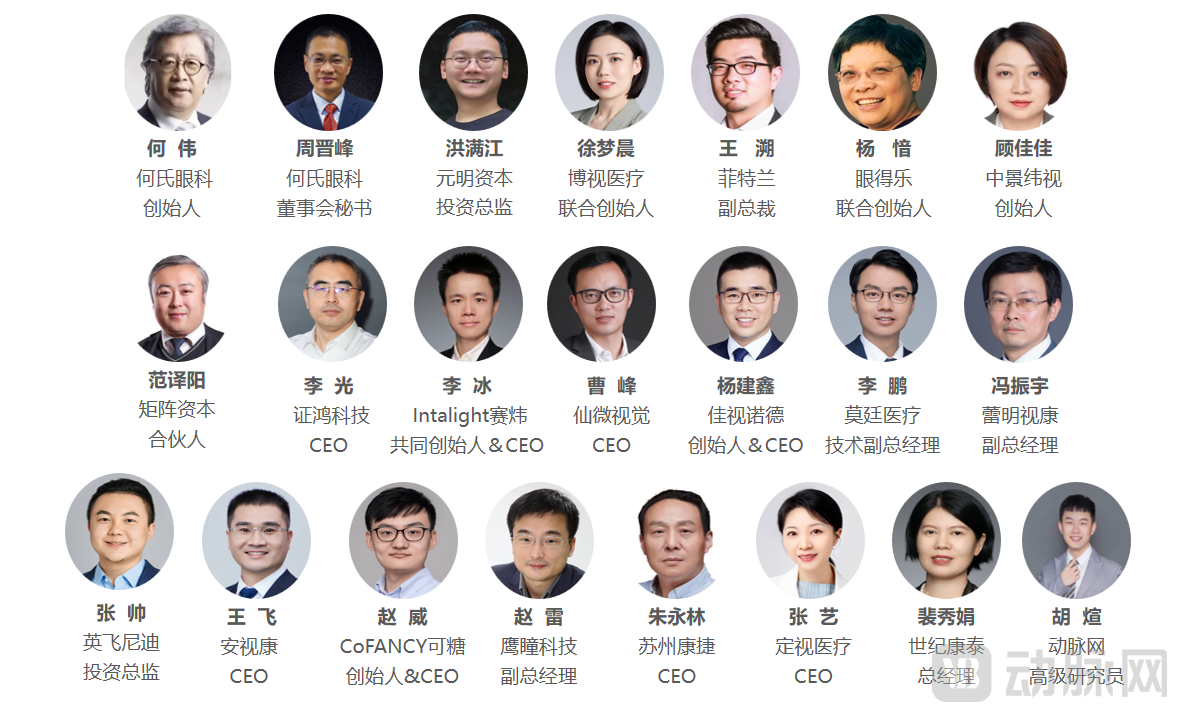
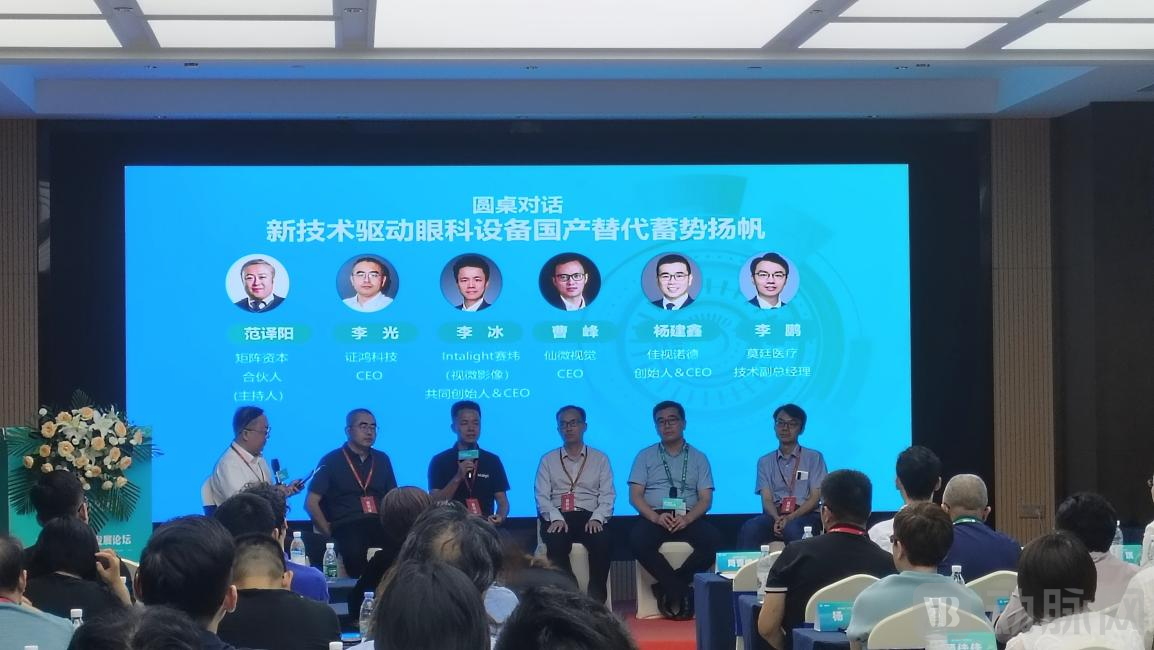 ▲Above: List of Selected Attendees
Figure below: Live photo of the on-site roundtable discussion
It is reported that this conference was jointly organized by Liaoning He Eye Hospital Group Co., LTD., Shenyang He Eye Industry Group Co., Ltd., Guangzhou Ailuobo Medical Device Co., Ltd., Huangpu District He Eye Health Industry Technology Research Institute of Guangzhou, and VCBeat, aiming toAccelerate breakthroughs in technology and commercialization for domestic ophthalmic innovation enterprises, strengthen exchanges among ophthalmic device companies, and promote collaborative symbiosis within the ophthalmic innovation ecosystem.
As a key driver of the innovation ecosystem, the event organizer, He Eye, has been deeply committed to the field of eye health innovation. It has established an integrated eye health service ecosystem combining medical care, education, industry, and research, and continues to advance its capabilities.
In the 1980s, He Wei was sponsored by the Ministry of Education to study in Japan for his doctoral degree. During his studies abroad, while returning to China to provide free medical consultations, He Wei discovered that a vast number of people were in need of internationally advanced ophthalmic treatment technologies. “At that time, I was shocked by the reality in China where accessing eye care was difficult and expensive, which solidified my determination to return home after completing my studies.”
In 1995, at the outset of his entrepreneurial journey upon returning to China, He Wei, driven by the ideal of “serving the country and benefiting the people through science and technology,” was already conceptualizing the future development of He Eye. To this end, he specifically developed a “City of Light Initiative” on his computer, encompassing various aspects such as medical care, education, industry, academia, and research, with the ultimate aim of creating greater value for society.
“I want to make the greatest possible contribution to the development of ophthalmology in China, to help establish an internationally renowned center for ocular microsurgery, and to devote my full strength to blindness prevention and treatment efforts for patients.” He Wei recalled the past with deep emotion at the Ophthalmic Device Industry Development Forum.
Thus, He Wei returned to his homeland armed with three core technologies—phacoemulsification for cataracts, vitrectomy, and fundus laser therapy—and founded He Eye Hospital, the first private ophthalmic hospital in China."My vision is to establish a healthcare group that ensures every patient, regardless of wealth or poverty, has access to advanced medical technologies."”
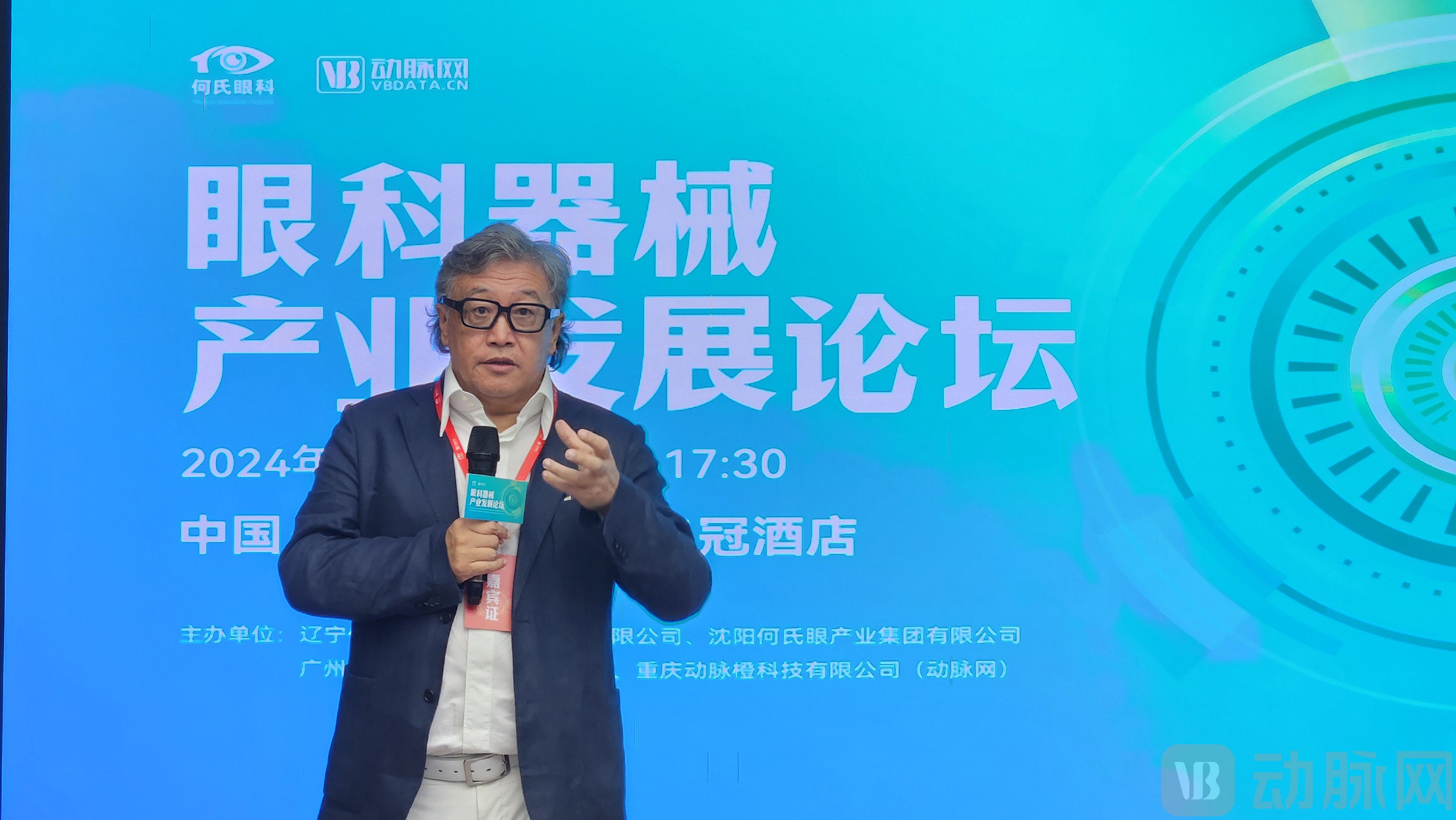
▲ He Wei, Founder of He Eye, Delivers On-Site Speech
Driven by an entrepreneurial spirit of perseverance, He Wei has led his team to transform He Eye Hospital from a modest 125-square-meter clinic into a national ophthalmic hospital group that currently operates over 100 He Eye Hospitals and optometry chains across China. The group has established a three-tier eye health medical service model and successfully listed on the ChiNext board in March 2022, emerging as a pioneer in providing full-lifecycle eye health services within the industry.
Over the past 29 years of steadfast progress, He Wei has come to deeply understand that the development of the ophthalmology industry requires concerted efforts across various specialized sectors, including medical care, education, industry, and research.
Therefore,In terms of industrial layout, He Eye has consistently adhered to building an eye health service ecosystem that integrates medical care, education, industry, and research, thereby providing comprehensive ophthalmic medical and eye health management system solutions for all populations, across all scenarios, and throughout the entire life cycle.
Specifically, in addition to the listed ophthalmic hospital groups, He WeiIn the education sectorFounded Liaoning He University, dedicated to cultivating more medical professionals for the country.
It is understood that Liaoning He University was established in 1999. Approved by the Ministry of Education, the university features a professional education model characterized by the integration of medical practice, teaching, research, and industry, as well as the convergence of medicine, arts, and engineering. It is dedicated to cultivating applied professionals in the broader health sector who excel in eye health disciplines and possess cross-disciplinary, integrative, and collaborative capabilities. Adhering to the motto “Dream, Gratitude, Knowledge, Perseverance, and Results,” and upholding the educational philosophy of “Everything for the Students,” the university leverages the advantages of its integrated platform for “medical practice, teaching, research, and industry” to nurture talents for national rejuvenation who are equipped with rational thinking, independent personality, innovative spirit, and the ability to unify knowledge with action.
On the industrial side, He Wei founded the He Eye Industry Group, which primarily drives the development of China’s eye health sector through innovative technologies. The group has established four subsidiary business segments, building a complete scientific innovation ecosystem and a comprehensive eye industry development system that spans research and development, innovation incubation, and industrialization.
Currently, He Eye Industry Group holds over 100 authorized patents and has obtained more than 10 product registration certificates for items such as VS, non-mydriatic fundus cameras, AI-based intelligent ophthalmic devices, and rigid gas permeable contact lenses. Its portfolio includes companies such as Adaptica SRL (Italy), O&O MDC SRL (Italy), Weijing, Yuanchu Precision Medicine, Shenyang Ailuobo, Guangzhou Ailuobo, Hangzhou Tongchuang Medical, Shenyang Baiao Medical, and Guangzhou Baiao. Furthermore, He Eye Industry Group has established overseas sales centers, with its products covering the global market.
On the research front, He Eye has always been a pioneer in industry innovation. Taking the currently hot topics of gene and stem cell research as an example, on September 7 this year, the Ministry of Commerce of China, the National Health Commission, and the National Medical Products Administration jointly issued a notice on launching pilot programs for expanded opening-up in the medical field. The development and application of technologies related to human stem cells and genetic diagnosis and treatment have become key directions for these pilot programs, drawing close attention from the industry to progress in this area.
As early as several years ago, He Eye began to lay out in the fields of stem cells and genes. In 2011, relying on the Key Laboratory of Ophthalmic Stem Cell Tissue Engineering of Liaoning Province, He Eye established the Clinical Application Research Center for Ophthalmic Stem Cells, which is one of the earlier research institutions in the field of ophthalmic stem cells in China. The research center has obtained permission for the clinical application of stem cells in ophthalmology, and has jointly undertaken multiple national-level major scientific and technological projects with universities such as Tongji University and Fudan University for many consecutive years, conducting in-depth research on retinal stem cells, retinal stem cells and tumors, ocular genetics, and other aspects.
In the field of genetics, He Eye has also achieved continuous breakthroughs. For instance, in 2023, the company successfully facilitated the administration of the world’s first gene therapy drug to the first patient in China with retinitis pigmentosa, thereby accelerating the rapid development of the gene therapy sector.
Maintaining acute sensitivity to cutting-edge technologies is the genetic code behind He Eye’s sustained innovation and growth. Leveraging a suite of R&D platforms—including an eye gene bank, the Key Laboratory of Stem Cell Tissue Engineering, the Clinical Application Research Center for Ophthalmic Stem Cells, the Ministry of Science and Technology’s International Science and Technology Cooperation Base, the National-Local Joint Engineering Laboratory, the Public Service Platform for the Eye Industry, and the Big Data R&D and Application Center—He Eye continuously pioneers advancements in precision medicine, with a dedicated focus on addressing challenges posed by hereditary eye diseases. Meanwhile, He Eye has assembled a top-tier scientific research team, equipping them with internationally benchmarked diagnostic, therapeutic, and research facilities.
As can be seen, the various business segments established by He Wei operate both independently and in parallel, while also fostering collaborative innovation and shared growth. It is precisely through the continuous innovation and synergy among the various units within its ecosystem that He Eye has become a key driver of ecological innovation in the ophthalmology industry.
He Wei pointed out that He Eye continues to pursue the strategic goal of “building a Digital City of Light and constructing a smart industrial ecosystem for eye health,” constantly promoting the integrated development of new technologies such as big data, artificial intelligence, genetics, and stem cells, thereby comprehensively launching a new model of digital, all-encompassing, full-scenario, and full-lifecycle eye health management services for patients.
It is worth mentioning that, while promoting ecological innovation,He Eye has remained true to its original mission for 29 years, consistently engaging in public welfare initiatives.
“We have always remained true to our original aspiration, empowering eye health and overall wellness through technology, and are committed to enhancing social well-being by fulfilling our social responsibilities,” mentioned He Wei.
In response, He Eye has actively promoted capacity building among primary care ophthalmologists by leveraging the blindness prevention and treatment training base platform accredited by the National Health Commission. Meanwhile, through its distinctive “healthcare + artificial intelligence” services, He Eye has extended innovative technologies to the grassroots level, enhancing chronic disease monitoring capabilities in primary care settings, reducing poverty caused or exacerbated by illness, and thereby supporting rural revitalization and promoting county-level economic development.
Moreover, He Eye leverages new technologies such as genomics, stem cells, big data, and artificial intelligence to co-establish “Light Houses” and smart eye health management stations with schools, communities, and rural areas. By using ophthalmic intelligent devices as an entry point and AI-powered diagnostics, it achieves “early monitoring, early warning, early intervention, and early treatment” for ocular and chronic diseases, thereby bridging the “last mile” in eye health management.
Adhering steadfastly to the original mission of “making eye care accessible to all” has been the unwavering foundation of He Eye for 29 years, and remains the key to its steady and sustainable growth.
A single tree does not make a forest; a single string does not make music. He Eye, deeply aware of this principle, has been making relentless strides in building an industrial innovation ecosystem.
“Although the industry is currently facing a capital winter, we believe that the ophthalmic market offers vast opportunities. Therefore,”He Eye, while advancing steadily, will also actively forge strategic alliances with various stakeholders in the industry to expand, optimize, and strengthen the industrial ecosystem.“Zhou Jinfeng, Board Secretary of He Eye, stated at the Ophthalmic Device Industry Development Forum.”
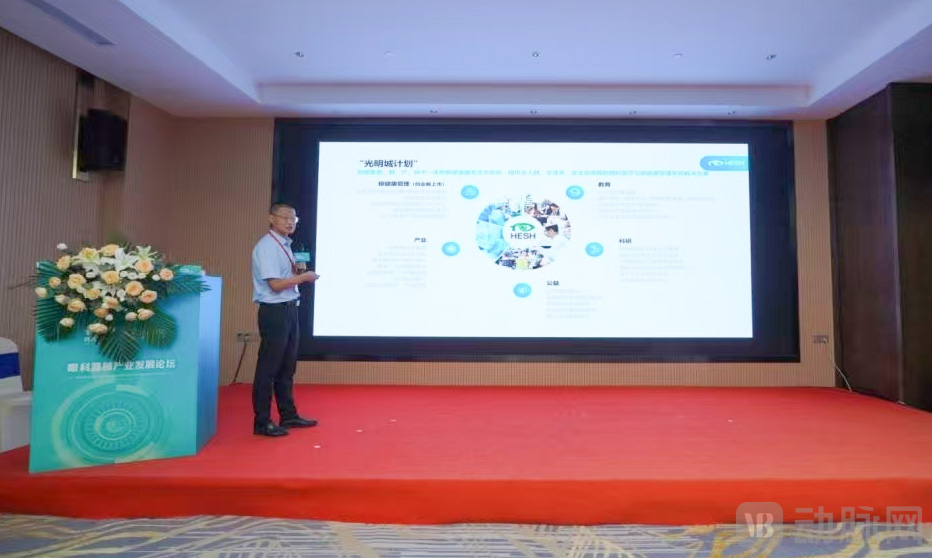 ▲ He Eye Board Secretary Zhou Jinfeng Delivers On-Site Speech
From the perspective of the industry's long-term development prospects, the ophthalmic healthcare market still holds immense potential.Taking dry eye disease as an example, statistics from the "Chinese Expert Consensus on Dry Eye Disease (2020)" indicate that the prevalence of dry eye disease in China is approximately 21%–30%. Based on the National Bureau of Statistics' 2022 census data, this translates to roughly 360 million patients. Dry eye disease has become the most common ophthalmic condition after myopia, with the patient population continuing to grow, thereby creating substantial commercial potential.
In this process, China's ophthalmic services industry is facing six major development opportunities.First, ophthalmic services are trending toward community-based and convenient models. Eye hospitals are gradually establishing optometry clinics within communities, while optical retail stores are shifting toward specialization, thereby raising the bar for equipment and technical capabilities. Second, the consumer eye health market is vibrant, with distinct needs across different age groups, such as myopia prevention and control for adolescents, dry eye syndrome and refractive errors for young adults, and cataracts for the elderly. Third, digital transformation is accelerating, with new technologies like artificial intelligence and live streaming reshaping marketing and service models; for instance, social media is used to attract customers, and consumer-grade products are promoted through live-streamed sales. Fourth, although investment and financing in the upstream ophthalmic sector have declined, domestic production and technological innovation continue to advance, supporting the industry’s development. Fifth, cross-industry collaborations are increasing, with eye hospitals partnering with upstream and downstream enterprises and establishing industrial funds to facilitate business integration. Finally, ophthalmic services are expanding outward by integrating with fields such as medical aesthetics, dentistry, and chronic disease management, thereby broadening their scope of service. Examples include eye hospitals setting up diabetes clinics and offering treatments for dry eye syndrome as well as cosmetic eye services.
At the consumer healthcare service endpoint, ophthalmic devices are evolving to meet the demand for low cost, miniaturization, and superior performance.
From a cost-efficiency perspective, the endpoint of medical service delivery is expanding from hospitals to smaller institutions such as primary care optometry centers. As these smaller entities are highly price-sensitive, the cost of optometric products must decrease year by year to meet this segment of market demand. With technological advancements, users are increasingly favoring multimodal, miniaturized, portable, and home-use medical devices.
Amid the trends toward lower costs and greater miniaturization, users still maintain high expectations for the performance of medical devices, including accuracy and user-friendliness.
“The demand for digitalization will continue to rise..” Zhou Jinfeng stated, “The digitalization of healthcare can enable precise, patient-centric services. Online consultations offer advantages such as facilitating patient access to medical care, promoting equitable distribution of medical resources, and improving the efficiency of medical visits. Furthermore, by leveraging data channels from hospitals, schools, intelligent ophthalmic robots, and wearable devices, it is possible to obtain precise data, establish patient profiles, and provide comprehensive solutions including customized treatment plans, medication recommendations, and health management services.”
Over the past two years, digitalization has become a core component of He Eye’s development strategy. Leveraging its comprehensive industrial ecosystem platform, He Eye integrates big data and artificial intelligence technologies to enhance the level of digital diagnosis and treatment. This approach enables full-lifecycle eye health management, encompassing early detection, timely intervention, and comprehensive care, thereby alleviating the societal burden on healthcare and aligning with the “Healthy China” initiative.
Meanwhile, seizing the new trends of cross-industry integration and rising consumer demand during the industry’s evolution, He Eye is actively expanding its business from specialized medical care into the consumer sector, with digital platforms serving as the key driver of this transformation. Leveraging these digital platforms, He Eye not only provides users with higher-quality ophthalmic diagnosis and treatment services but also achieves the goal of “early detection and early intervention” through full-lifecycle eye health management, thereby safeguarding consumers’ health at earlier stages of disease progression.
In summary, seizing development opportunities and making corresponding adjustments to the direction of industry evolution will be an inherent requirement for the iterative upgrading of every enterprise entering the market.
“Involution” is becoming the most palpable reality in the ophthalmology industry today. The underlying cause is that companies are attempting to expand market share or attract investment by driving down costs and sales prices, which has resulted in most domestic manufacturers being trapped in involutionary R&D focused on low- to mid-end innovations.
“Innovation remains the essence of healthy development in the medical device sector,Domestic manufacturers should focus on intensifying competition in product quality and performance, address genuine clinical pain points and needs, continuously tap into their R&D potential, and innovate to deliver high-quality, cost-effective products through iterative development.“Zhou Jinfeng, Board Secretary of He Eye, mentioned.”
Meanwhile, in the face of the current capital winter, enterprises must strive to ensure their survival during the process of clearing out existing stock:
First, lower expectations and adjust your mindset; do not blindly pursue valuations.
Second, anchor in niche sectors for deep cultivation, return to practical and social value, and remain wary of the past logic of pure storytelling;
Third, change strategies; SMEs should focus more on addressing the shortcomings of the industry or large companies.
Fourth, accelerate iterative innovation and proactively pursue the vast incremental overseas markets, adopt a product-centric approach to business operations, and make forward-looking strategic layouts.
Throughout this process, He Eye will maintain ongoing communication and interaction with innovative enterprises in areas such as high-end equipment, consumer healthcare, ophthalmic pharmaceuticals, and artificial intelligence, while providing various forms of support including industrial collaboration and investment, to jointly promote industry development.
Winds rise from the tips of duckweed, and waves form from subtle ripples. We believe that as more industry innovators join forces, Chinese ophthalmic enterprises will inevitably write new chapters in their innovation stories.