

Chinese Pharma Giant Launches World’s First Liposomal Mitoxantrone, Realizing NeoPharm’s Decade-Old Vision

Neopharm
Developer and distributor of pharmaceuticals and medical devices
An Enthusiastic Retail Investor Sues Innovative Liposome Company
The judgment issued on March 31, 2010, by the Supreme Court of North Dakota (note: the original text erroneously states “Illinois, North Dakota”; North Dakota and Illinois are separate U.S. states) provides a detailed account of the events and has become a valuable reference for NeoPharm, Inc. (“NeoPharm”), which has faded from public view following its delisting. Indeed, this innovative liposome company rarely features in contemporary discussions on drug delivery technologies, owing to its overly pioneering technology and unfortunate timing.
According to the judgment, plaintiffs who purchased common stock of NeoPharm between October 31, 2001, and April 19, 2002 (hereinafter referred to as the “Litigation Period”) allege that NeoPharm, John N. Kapoor, James M. Hussey, and Imran Ahmad (collectively, the “Defendants”) made false and misleading statements regarding NeoPharm’s experimental drug LEP (liposome-encapsulated paclitaxel). The court ruled that the Defendants’ motion for summary judgment would be granted in part and denied in part. The Defendants’ motion to exclude would be denied, with leave for the Defendants to raise any challenges to their methodology in pre-trial motions.
In short, shareholders believe that Neopharm’s liposome technology fails to live up to its name and are demanding an explanation from the company.
The decade spanning from the plaintiff’s stock purchase to the issuance of the full judgment by the local High People’s Court coincided with a decade of exploratory advances in biopharmaceutical technology. NeoPharm, having crossed into the new millennium, underwent three name changes and weathered turbulent restructuring, ultimately leaving behind only its technological legacy. This legacy has enabled subsequent industry players to continue researching and refining these innovations, providing inspiration and strategic direction for the development of innovative drug delivery systems.
A Rising Star Born During the Rapid Development of Liposome Technology, Once Held Back by Clinical Outcomes
Neopharm was founded in 1990 and completed its listing on the NASDAQ at the turn of the century. Originally named OncoMed Inc., the company licensed its core liposome technology from Georgetown University. The company was established during a period when economically efficient liposomal products for antifungal and anticancer drugs were successively introduced to the market, significantly driving research and development in liposome technology.
Lipid-based nanomaterials possess unique amphiphilic properties, characterized by both hydrophilic and lipophilic affinities, which make it possible to simultaneously incorporate hydrophilic and lipophilic drugs and active ingredients into a single formulation. However, researchers have also found that the amphiphilicity of lipid nanomaterials is a “double-edged sword”: while it facilitates drug loading, it also increases the difficulty of mass production. Consequently, the complex preparation processes for lipid nanomaterials make impurity removal challenging, hinder the purification of intermediates and final products, and thus pose significant barriers to scalable manufacturing. Due to these pronounced technical bottlenecks, although NeoPharm has multiple drug candidates at various stages of clinical development, it has not yet commercialized any of them.
However, NeoPharm remained firmly convinced of the market potential and sales prospects for its liposomal anticancer agents. In June 1998, NeoPharm initiated clinical trials for both LEP (liposome-encapsulated paclitaxel) and its first liposomal product, liposome-encapsulated doxorubicin, to verify that, in addition to reducing the side effects associated with conventional anticancer therapies, liposomal anticancer agents could also overcome multidrug resistance in chemotherapy.
However, the good times did not last. Over the three-year period from 2005 to 2007, NeoPharm incurred a total operating loss of approximately $90 million, and the company even failed to file its annual financial report for 2008 at one point. In response, NeoPharm began implementing a restructuring plan in late 2007, which included appointing a new management team, reducing cash burn, and streamlining its organizational structure.
In 2009, Neopharm was delisted from NASDAQ and began trading on the over-the-counter (OTC) market. The company’s stock had once surged to $12 per share, but by 2009 it was hovering around just 30 cents. Crain’s Chicago Business noted that the stock price had been steadily declining since 2006, when the company announced disappointing clinical trial results for a brain cancer drug that the market had previously viewed as promising.
On another front, the new team is gaining strong momentum. On January 4, 2010, NeoPharm announced that it had submitted a New Drug Application (NDA) to the U.S. Food and Drug Administration (FDA) for the treatment of idiopathic pulmonary fibrosis, a fatal lung disease, stating that this submission marked a “significant milestone” for NeoPharm.
Neopharm initiated a Phase I clinical study of IL13-PE, administering the drug as an inhaled nebulized liquid directly into patients’ lungs. The company subsequently conducted the study across 6 to 8 regions, enrolling 32 patients to evaluate the drug’s safety, maximum tolerated dose, and efficacy in patients with advanced idiopathic pulmonary fibrosis (IPF). In June of the same year, the FDA granted orphan drug designation to IL13-PE for the treatment of IPF. Encouraged by this development, Neopharm immediately launched a Phase II clinical trial.
On January 6, 2010, NeoPharm announced Phase II data on LEP (liposomal paclitaxel) for the treatment of patients with metastatic breast cancer. The trial, which used Taxol® (Bristol-Myers Squibb paclitaxel) as the primary active ingredient, was conducted at five pilot sites in India.
Among them, 16 subjects (46%) exhibited tumor response, including 15 partial responses and one complete response; 10 subjects (29%) had stable disease (mean duration of 6 cycles; range, 2–10 cycles); and 9 subjects (25%) experienced disease progression. Furthermore, LEP was well tolerated, with only one subject (3%) experiencing Grade 3 sensory polyneuropathy and two subjects (6%) experiencing Grade 3 neutropenia, which are also two common toxicities associated with Taxol® (paclitaxel from Bristol-Myers Squibb) and Abraxane®. In addition, no adverse events or other infusion reactions related to prophylactic premedication were observed.
Synthetic Cardiolipin: Targeting Pain Points in Cancer Therapy
Neopharm’s core technology lies in the use of a synthetic cardiolipin, tetramyristoyl cardiolipin, during liposome preparation. Due to the unique properties of cardiolipin, it interacts strongly with lipophilic drugs, stably embedding them within the liposomal membrane, thereby enhancing the stability of both the drug and the formulation in vitro and in vivo. In addition to cardiolipin, the formulation includes DOPC (a commonly used pharmaceutical excipient in liposome preparation) and cholesterol. The drug-to-lipid ratio is approximately 1:18, the particle size ranges from 150 to 200 nm, and the encapsulation efficiency can reach up to 95%.

Cardiolipin
Neopharm has developed four products based on this patented technology: LE-SN38, LE-rafAON (antisense oligonucleotide), LEM (liposomal mitoxantrone), and LEP (liposomal paclitaxel).
SN38 is the active metabolite of irinotecan. Since SN-38 is insoluble in common pharmaceutical solvents, it cannot be administered directly. Furthermore, its clinical application has been significantly limited due to factors such as instability. Encapsulating SN-38 into liposomes can overcome these challenges.
LE-rafAON encapsulates c-raf antisense oligonucleotides. LE-rafAON can inhibit Raf-1 protein produced by tumors, thereby suppressing tumor growth and enhancing tumor sensitivity to radiotherapy and chemotherapy.
Mitoxantrone is a cell cycle-nonspecific agent with a broad antitumor spectrum. It is clinically indicated for various conditions, including acute leukemia, lymphoma, breast cancer, and prostate cancer, holding significant promise for application. However, its clinical use is limited by adverse reactions such as myelosuppression. Liposomal encapsulated mitoxantrone (LEM), developed by Neopharm, is formulated by mixing lyophilized lipids with mitoxantrone salt (marketed under the brand name Novantrone). This product aims to enhance the safety and efficacy of free Novantrone.
LEM entered Phase I clinical trials in 2001, under the identifier NCT00024492. The trial enrolled 40 patients with advanced solid tumors who received intravenous LEM. Results from blood pharmacokinetics and tumor observations were completed in 2004; initially, the company did not disclose the findings. Subsequent reports indicated that the clinical trial was declared a failure due to occasional infections caused by the rapid release of LEM in vivo.
The preparation method disclosed by LEP uses cardiolipin, phosphatidylcholine, phospholipids, vitamin E, and paclitaxel at a weight ratio of 1.8:9.0:3.0:0.1:1. These components are heated to dissolve in tert-butanol, filtered through a 0.22 μm membrane, aliquoted, and lyophilized. For clinical use, normal saline is added, followed by hydration for 1 hour. The vial is then shaken for 10 minutes, and finally subjected to ultrasonication in a water bath sonicator at maximum frequency for 10 minutes. Furthermore, LEP must be stored at 2–8°C, and the reconstituted product remains stable for 24 hours at room temperature when protected from light.
“Legacy” Assets Yet to Bear Fruit Dragged Into Another Lawsuit
In 2010, despite holding a patented technology platform and advancing a pipeline with preliminary clinical results, Neopharm’s financial position became unsustainable. The reasons were similar to those that later befell Codiak, a pioneer in exosome therapy: as a novel technology burdened with lofty expectations, merely demonstrating favorable safety profiles or mediocre efficacy was far from sufficient to meet market demands and satisfy high investor expectations. As the saying goes, “anything less than a resounding success is perceived as a failure,” especially given that Neopharm indeed had pipelines that clearly underperformed.
Before long, Neopharm found its own way to exit.
In October of the same year, Insys Therapeutics (“Insys”), a drug development company focused on pain and oncology, announced that it would acquire NeoPharm through a reverse merger, with an initial stock value of $135 million. Shareholders of privately held Insys will ultimately hold 95% of NeoPharm’s shares upon completion of the transaction, which is expected to close in November. Thereafter, Insys will become a wholly owned subsidiary of NeoPharm; however, Insys’s executives and directors will replace NeoPharm’s leadership team, who will resign following the merger. Consequently, the merged entity will retain the name “Insys.”
The connection between Insys and NeoPharm stems from John N. Kapoor, a pharmaceutical industry veteran and investor who founded Insys in 2002 and also served as Chairman of NeoPharm’s Board of Directors; his name had previously appeared in court judgments concerning NeoPharm.
The merged company boasts a research and development pipeline focused on pain management and oncology. Initially, the company will advance NeoPharm’s LEP-ETU pipeline for metastatic breast cancer into Phase III clinical trials. Meanwhile, Insys will simultaneously pursue the submission of a New Drug Application (NDA) for its flagship product, fentanyl sublingual spray. This agent, indicated for the treatment of breakthrough cancer pain, completed a Phase III randomized, double-blind, placebo-controlled, multicenter study in February 2010. Furthermore, the integration of NeoPharm’s technology platform is expected to enhance Insys’s sublingual spray delivery technology.
Unfortunately, Neopharm’s liposomal technology failed to gain further traction. Meanwhile, Insys focused on selling products such as Subsys (sublingual fentanyl spray) and Syndros (oral solution of dronabinol).
In 2019, Insys faced multiple criminal and civil charges for allegedly bribing doctors to prescribe the highly addictive painkiller Subsys (fentanyl sublingual spray), thereby exacerbating the opioid crisis. After 15 days of deliberation by a federal jury, the U.S. Department of Justice announced in May that the company would be fined up to $225 million (approximately RMB 1.56 billion), while its former chairman and four employees could face prison sentences of up to 20 years. This marked the first time in the 21st century that a medium-to-large pharmaceutical company worldwide had gone bankrupt due to prosecution for providing substantial kickbacks to physicians. The case garnered significant attention from major U.S. media outlets upon its exposure, frequently making headlines.
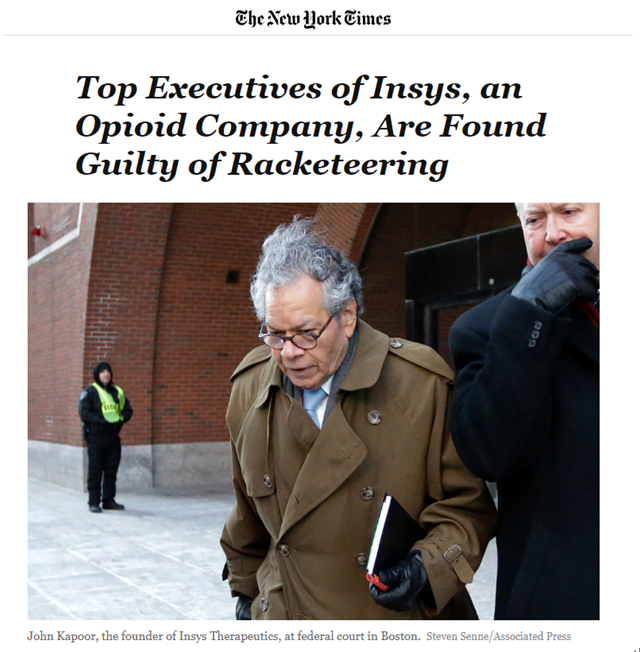
Subsequently, Insys filed for bankruptcy as expected, yet the litigation against it continues. Meanwhile, NeoPharm’s leading technology platform fell into dormancy in the United States due to poor partnership choices.
A Decade in the Making: The “World’s First” Emerges First Across the Ocean
Meanwhile, NeoPharm’s unfinished endeavors have seen a glimmer of hope on the other side of the Pacific.
On January 11, 2022, CSPC Pharmaceutical Group announced that its subsidiary, CSPC Zhongnuo Pharmaceutical (Shijiazhuang) Co., Ltd., had officially received the drug registration approval from the National Medical Products Administration (NMPA) for its Mitoxantrone Hydrochloride Liposome Injection (10 ml:10 mg), indicated for the treatment of relapsed or refractory peripheral T-cell lymphoma (PTCL). It is reported that this product possesses full independent intellectual property rights, with invention patents granted in more than ten countries and regions, including China, the United States, Europe, and Japan. Furthermore, the research and development of Mitoxantrone Hydrochloride Liposome Injection received funding from multiple national projects, such as the “National Key Research and Development Program” and the “National Major Project for New Drug Innovation.”

It should be noted that following Neopharm, teams in North America continued to employ the citrate gradient method; however, this approach failed to yield therapeutic efficacy due to inadequate drug release. Numerous Chinese enterprises have also attempted this technique, but none have ultimately achieved technological breakthroughs or realized industrial-scale production.
CSPC Pharmaceutical Group embarked on its expansion into the liposome technology field in 2004. Through continuous investment in research and development, it has established a liposome technology platform with independent intellectual property rights. CSPC optimized mitoxantrone and redesigned its manufacturing process. By employing unique drug-loading and drug-release technologies, the formulation ensures that nanoparticles effectively accumulate in tumors after administration and release the drug in a controlled manner. This enhances the bioavailability of the drug within the tumor tissue, thereby yielding significantly improved efficacy and safety profiles, while avoiding common adverse effects such as skin toxicity and infusion reactions.
After the dust settled, CSPC Pharmaceutical Group was the first to bring mitoxantrone liposomes to market.