

RayerKnife: China's First and Globally Second Real-Time Image-Guided Robotic Radiosurgery System Revolutionizes Precision Radiotherapy

RAYER
Radiation Therapy Equipment Developer
The landscape of the global stereotactic radiotherapy field is undergoing dramatic changes.
On September 2, 2024, Jiangsu Rayer Medical Technology Co., Ltd. (hereinafter referred to as “RAYER”) launched the RayerKnife, a complete device with fully independent intellectual property rights.®The X-ray stereotactic radiotherapy system (also known as “RAYER Knife”) has obtained the Class III medical device registration certificate from the National Medical Products Administration (NMPA) of China (Registration No.: Guo Xie Zhu Zhun 20243051667).
Stereotactic radiotherapy is a precise, efficient, and non-invasive radiation therapy technique characterized by high-dose delivery, hypofractionation, and short treatment courses, gaining increasingly widespread application in the global field of radiotherapy. For a long time, the technological pinnacle in this field has been dominated by Accuray’s CyberKnife.
Today, the emergence of RAYER’s CyberKnife-like system has broken this international monopoly. It is one of only two approved devices globally, the first of its kind in China, and the only domestically produced high-end equipment in this category. This achievement has successfully illuminated the “innovation tree” of Chinese radiotherapy equipment, filling a long-standing gap in China’s high-end stereotactic radiosurgery sector.
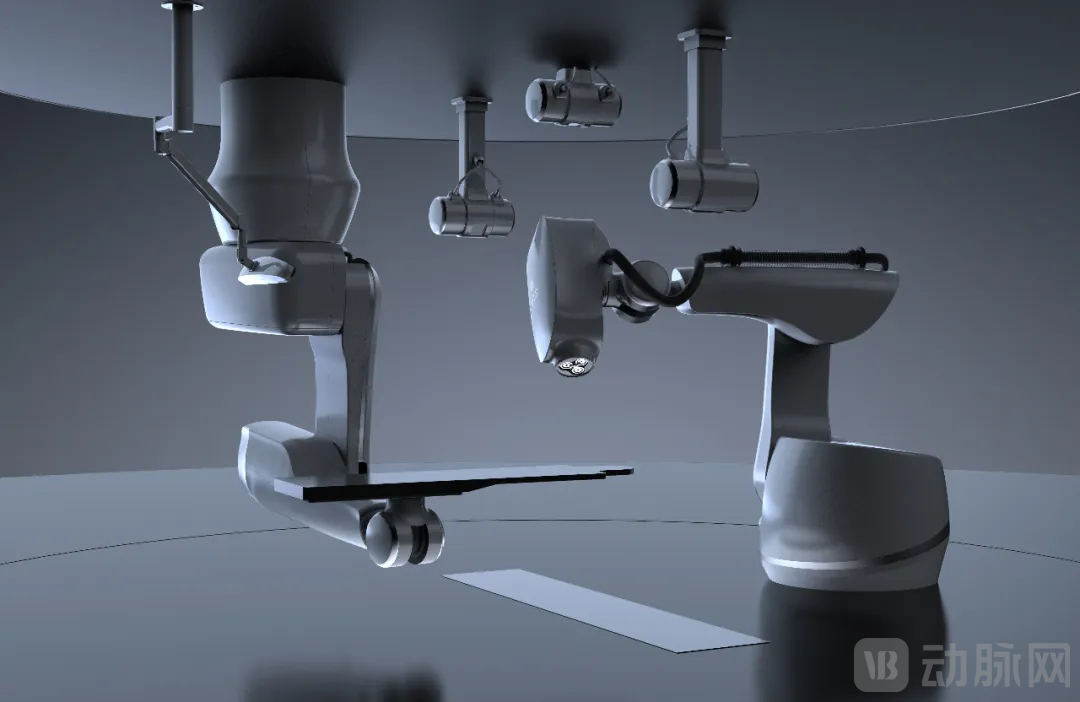
RayerKnife®X-ray Stereotactic Radiotherapy System
Real-Time Image-Guided Localization and Tracking with Miniaturized Linear Accelerators and Intelligent Robots
Precision Radiotherapy for Tumors Combined with Control Technology
To ensure effective treatment, precise localization is essential; the accuracy of tumor localization is key to achieving precision radiotherapy. During radiotherapy, numerous factors influence the determination of the planning target volume (PTV), such as equipment errors, setup errors, voluntary and involuntary organ motion, the impact of changes in surrounding soft tissues or organs on organ movement, and variations in the motion patterns of the same organ under different body positions.
Among these, organ motion is the primary source of error in tumor localization. For instance, swallowing, mouth opening, eye movements, and tongue movements can affect the localization of head and neck tumors; meanwhile, tumors in locations such as the thorax, abdomen, and liver are subject to positional and boundary uncertainties of both the tumor and organs at risk due to respiratory and cardiac motions.
Current mainstream radiotherapy modalities, such as medical electron linear accelerators, Gamma Knife, and proton/heavy ion therapy, all face a common challenge: their beams remain stationary during treatment, necessitating adjunctive motion management strategies to enhance treatment precision. However, this limitation hinders real-time, precise tracking of the tumor target volume, thereby restricting further optimization of therapeutic outcomes.
One of the greatest advantages of RayerKnife over traditional radiotherapy technologies is its integration of advanced technologies such as robotic control, miniaturized linear accelerators, and real-time image guidance. Similar to how a guidance system directs a missile to precisely strike its target, it achieves robot-assisted tracking therapy under image guidance by employing real-time image-guided motion target tracking.
The RayerKnife system integrates advanced technologies, including a miniaturized linear accelerator, an automatic collimator switching device, a six-degree-of-freedom treatment couch, real-time image guidance, robotic motion control, and spherical treatment planning. It delivers non-coplanar multi-field and non-isocentric irradiation patterns across a wide spherical workspace. Through image guidance and robotic motion control throughout the entire treatment process, the system achieves positional compensation for static targets (with a treatment accuracy of 0.9 mm) and synchronous tracking for moving targets in the thoracic and abdominal regions (with a treatment accuracy of 0.95 mm), thereby ensuring highly conformal prescription dose coverage of the target volume and rapid dose fall-off outside the target.
RayerKnife can be used for stereotactic radiosurgery (SRS) of the brain and spine, as well as stereotactic body radiation therapy (SBRT), enabling curative treatment for various types of solid tumors smaller than 6 cm in multiple sites throughout the body, including intracranial regions, head and neck, spine, lungs, liver, prostate, and breast. The clinical introduction of the RayerKnife system helps expand the indications for stereotactic radiation therapy.
At the software level, RayerKnife utilizes RAYER’s proprietary Treatment Planning System (TPS), Data Management System (DMS), and Treatment Control System (TCS). This TPS employs the VOLO algorithm and automated inverse planning optimization, ensuring rapid and efficient performance.
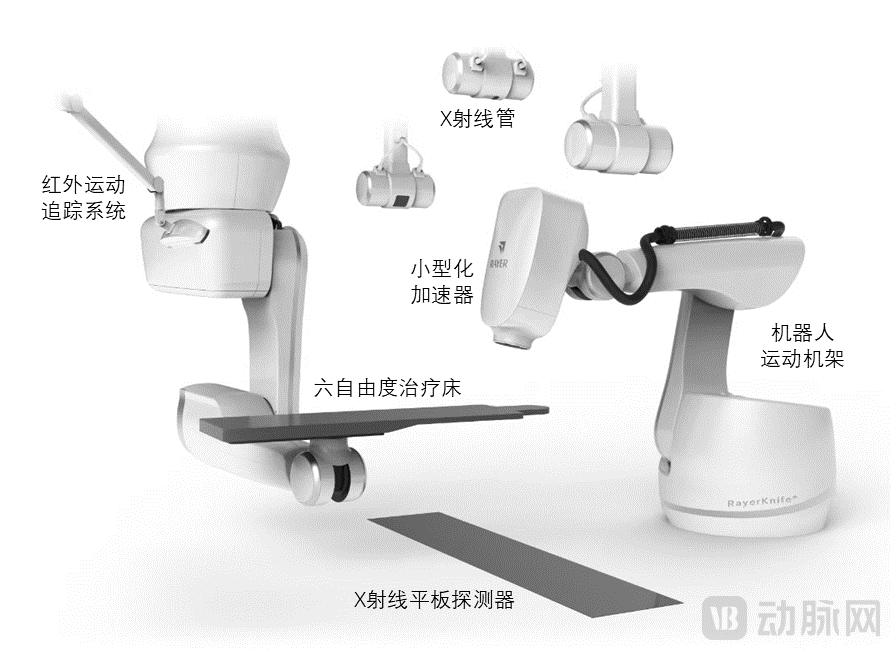
RayerKnife System Product Composition
To address patient setup errors caused by fractionated treatments in conventional radiotherapy, RAYER leverages precise positioning and a six-degree-of-freedom robotic treatment couch to correct translational and rotational displacements. In response to target volume shifts and respiratory motion during treatment, the system integrates real-time image guidance throughout the entire process with synchronized movement of the accelerator robot, thereby enabling positional error compensation for static targets and synchronous tracking therapy for moving targets in the thoracic and abdominal regions.During treatment, the image-guided system can track the patient’s target area in real time, regardless of patient movement or tumor motion caused by respiration, ensuring positional accuracy and thereby enabling high-dose X-rays to be precisely focused on the tumor region.
Dr. Fu Dongshan, founder of RAYER, told VCBeat that motion-adaptive therapy can achieve the smallest planning target volume among all radiotherapy techniques, thereby maximizing the protection of normal tissues. As the RAYER Knife enables robot-assisted motion-adaptive therapy under image guidance, it facilitates real-time tracking and treatment of the target area, effectively safeguarding critical organs surrounding the tumor from damage. This gives the RAYER Knife distinct advantages in treating high-difficulty, high-risk tumors such as intracranial tumors, spinal tumors, lung cancer, and liver cancer.
The comprehensive innovation of RayerKnife is underpinned by RAYER’s three proprietary, ingeniously crafted technologies.
Miniaturized Linear Accelerator: Crafting the Compact and Powerful "Heart" of the Device.To achieve robot-assisted therapy under image guidance, miniaturized linear accelerators are essential. The linear accelerator serves as the heart of radiotherapy equipment, responsible for generating and delivering the therapeutic beam. Its core component—the accelerating tube—acts as the power “heart” of the accelerator, accelerating electrons to near the speed of light before they strike a target. This interaction produces high-energy X-rays, which are then directed by a gun barrel-like structure in the treatment head to irradiate the lesion area. The term “linear accelerator” intuitively reflects the core process in which electrons undergo linear acceleration within the accelerating tube prior to impacting the target material.
For a long time, U.S. companies have dominated the market with their side-coupled structure accelerating tube technology. However, RAYER achieved a breakthrough with ring-coupled structure in just over a year, overcoming the stringent machining precision requirements of ring coupling and ensuring the stability and reliability of linear accelerator manufacturing.
The miniaturized linear accelerator integrated into the RayerKnife operates in the X-band, with a total length of less than 100 cm and a total weight under 200 kg. Both its weight and size are significantly smaller than those of traditional linear accelerators. Compared to similar products in the United States, it is a full 15 cm shorter, while still achieving a dose rate of 1000 cGy/min.
Intelligent automatic switching of multi-collimators shortens treatment time.RayerKnife is equipped with 12 circular collimators, ranging in aperture from 5 mm to 60 mm. It can hold three collimators simultaneously and automatically switch between them during treatment, eliminating the need for manual loading or replacement by technicians. This design enables the distinctive “single-pass treatment path” feature, which eliminates the need for backtracking during therapy and reduces single-session treatment time by approximately one-third.
Utilizing dual-isocenter spherical irradiation with high and low treatment isocenters, it enables full-surface irradiation from above, laterally, and below the patient, thereby expanding the treatment volume and enhancing patient positioning comfort.Unlike solutions that require patients to assume a prone position for adaptive therapy due to the inability to project radiation directly beneath the treatment couch, RayerKnife elegantly resolves this challenge by leveraging a dual-center spherical irradiation design.
RayerKnife not only retains the conventional low-isocenter mode, delivering radiation from above and the sides of the patient, but also innovatively introduces an automated treatment couch lifting mechanism to create a high-isocenter configuration, enabling radiation delivery directly from beneath the patient. Furthermore, after the couch is raised, RayerKnife incorporates an additional X-ray unit for position verification to ensure treatment precision. This design eliminates constraints on treatment space that could compromise treatment planning (particularly for challenging and complex tumor cases), while allowing patients to remain in a supine position throughout the entire treatment process, without needing to assume a prone position to accommodate the equipment.
Dr. Fu Dongshan added, “Most conventional linear accelerators have nine treatment points, all on the same plane; even with two additional non-coplanar arcs, the total number of treatment points reaches only 27. In contrast, RAYER’s linear accelerator is based on a spherical geometry, enabling 100–200 treatment points, thereby achieving excellent conformity for tumors with complex shapes.”
It is reported that,In terms of pricing, RayerKnife is nearly 30% cheaper than comparable imported products, offering a significant cost advantage, and it is the only domestically produced alternative to its U.S. counterparts.
“A nine-story platform rises from piled earth; a tree that fills one’s embrace grows from a tiny sprout.” The success of RayerKnife today was not achieved overnight.
Since its establishment in September 2009, RAYER has remained at the forefront of precision radiotherapy. Starting with core components of precision oncology radiation equipment, the company has progressively built a complete industrial chain spanning from localized parts to integrated systems, successfully achieving domestic substitution for key components in precision radiotherapy. Ultimately, leveraging its RayerKnife system, RAYER has emerged as a premier manufacturer of high-end radiotherapy integrated systems.
Currently, the company already hasIGPS Image-Guided Radiotherapy Positioning System, OGTS Optical Guidance Tracking System, and ICOUCH Robotic Treatment Couch—three component products—as well as the complete RayerKnife X Stereotactic Radiotherapy System.
Among these, the IGPS Image-Guided Radiotherapy Positioning System is RAYER’s best-selling product. Developed from the “Real-Time Image-Guided Radiotherapy System Development” project under the National Science and Technology Support Program during the 12th Five-Year Plan period, it is the first radiotherapy image-guidance product in China to obtain NMPA registration certification. It is also the only domestic product of its kind to have simultaneously received certifications from three authoritative bodies: China’s NMPA, the European Union’s CE, and the U.S. FDA. Furthermore, it has been included in the National Catalogue of Innovative Medical Devices (2018) and recognized as Jiangsu Province’s First Set of Major Critical Equipment.
This product is widely applicable in various radiotherapy equipment, such as proton/heavy ion accelerators and Gamma Knife systems. By employing kV-level X-ray stereoscopic planar imaging technology combined with software-controlled X-ray imaging units, it captures image features of the patient’s internal anatomical structures and performs 2D and 3D image registration with CT images, thereby achieving millimeter-level precision in patient positioning verification. The system can detect and correct patient positional errors, including three translational and three rotational deviations, with an error margin of less than 1.0 mm.
It is reported that,RAYER’s component products have been deployed and utilized in dozens of medical institutions, including Peking Union Medical College Hospital, the Cancer Hospital of the Chinese Academy of Medical Sciences, Tianjin Medical University Cancer Institute and Hospital, Shandong Cancer Hospital, and Ruijin Hospital Tumor (Proton) Center, with over 100 units installed.Solidified the core revenue base.
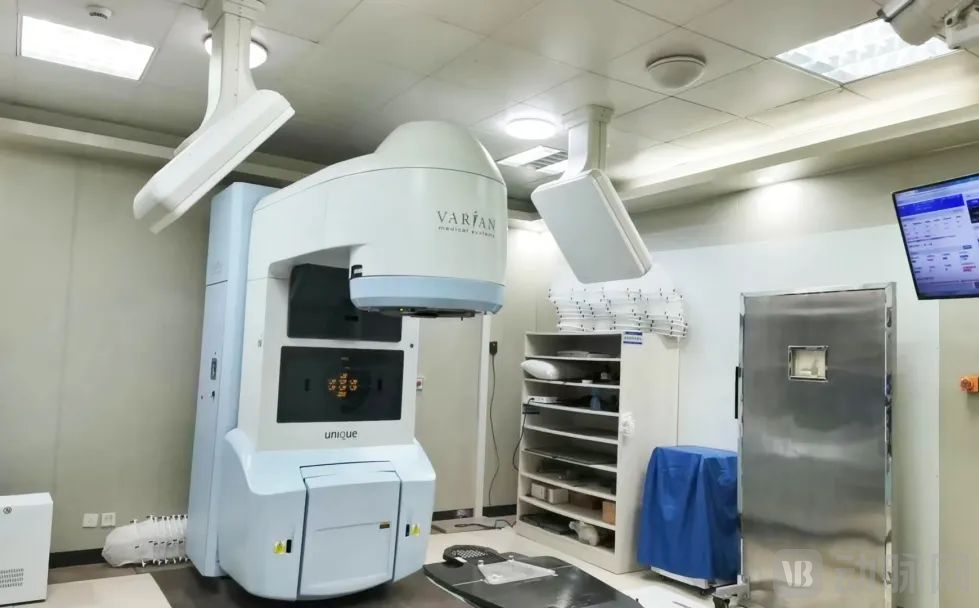
Radiotherapy Room 2, Shandong Cancer Hospital: RAYER Image-Guided Radiotherapy Positioning System Integrated with Unique Accelerator. Image courtesy of RAYER.
Meanwhile, RAYER will leverage its RayerKnife platform to actively build a complete supply chain system for domestically produced components. By continuously upgrading and iterating its products, the company will drive technological innovation and upgrades among upstream suppliers, with a particular focus on the localization of high-value components. This strategy aims to accelerate the achievement of full autonomy and controllability in high-end medical equipment, thereby spearheading breakthrough development in China’s domestic radiotherapy equipment industry.
With the official approval of RayerKnife, RAYER is currently accelerating the installation of its first commercial unit in a hospital to establish a benchmark demonstration in the market. The company strategically positions RayerKnife as a new growth engine, focusing on the hospital market at the prefecture-level city and above, including cancer hospitals, general hospitals, military hospitals, high-end private hospitals, and emerging medical institutions, while continuously strengthening its marketing efforts and market penetration. RAYER’s revenue scale is expected to achieve a significant leap in 2025.
Building on the strong foundation established by its core components in the global market, RayerKnife is actively preparing to enter international markets in North America, Europe, Japan, and Southeast Asia, ushering in a new chapter in its global expansion strategy.
Meanwhile, RAYER is also striving to reach new heights in innovative technology. The company is currently developing a multimodal image-guided stereotactic radioablation system for arrhythmia. By integrating a high-precision robotic operating platform with advanced radioablation technology, this system enables precise identification and navigation of intricate intracardiac structures, allowing for unprecedented accuracy in locating and ablating arrhythmogenic foci.
Finally, Dr. Fu Dongshan pointed out that the number of new cancer cases in China exceeds 4.5 million annually, with 15%–20% of these patients being suitable candidates for stereotactic radiotherapy. Addressing the prevalent challenges in conventional radiation therapy, such as prolonged treatment cycles and heavy patient burden, Stereotactic Body Radiation Therapy (SBRT) has emerged as an ideal solution due to its unique advantages of short treatment duration and high efficiency. This approach not only significantly alleviates the financial and psychological stress on patients and their families but also brings considerable convenience and improved operational efficiency to hospital management.
Although stereotactic radiotherapy has been included in the medical insurance coverage in provinces and municipalities such as Beijing, Shanghai, Henan, and Shandong, pricing varies across regions due to the novelty of the technology and the previous situation where only one U.S. manufacturer had received approval. For instance, in Shandong Province, the cost per treatment session is approximately RMB 8,000; if a patient requires five sessions, the total expense may reach RMB 40,000–50,000. However, with the widespread adoption of RayerKnife, we believe that in the near future, more cancer patients will be able to access precise oncology treatment services that are safer, more effective, more convenient, and more affordable.
References:
Seeing the “New” Forces in Xishan Development Zone | RAYER: 15 Years of Innovative Development, Setting a Benchmark for High-End Domestic Radiotherapy
[RAYER | Enhancing Radiotherapy Precision for More Effective Cancer Treatment]
“Domestic ‘CyberKnife’ Receives Regulatory Approval”