

Domestic Gene Sequencers Surge Amid Global Competition: From Niche Breakthrough to Market Expansion

MGI
Gene Sequencing Instruments and Related Reagent & Consumables R&D Manufacturer

GeneMind
Gene Sequencing Equipment Self-Developer

Genetron Health
Researcher of Precision Personalized Diagnosis and Treatment Solutions for Cancer
“Gene sequencers are starting to follow the same path as smartphones and new energy vehicles.” As domestic manufacturers of gene sequencers hold grand launch events to promote their new products, some industry practitioners have lamented this trend. Such a scene has been unprecedented in China’s life sciences tools industry.
Gene sequencers have long been regarded as the crown jewel of laboratory tools, shrouded in mystery and rarity. Today, developers of gene sequencers are stepping into the spotlight to share details of their development processes and product performance, revealing the boundless potential of this “black box” to hundreds or even thousands of users. The era when everyone can have access to their own genomic data may well be just around the corner.
In this process, domestically produced gene sequencers, emerging in great numbers like bamboo shoots after a spring rain, will undoubtedly generate significant value. However, the commercial market for gene sequencers is both rational and ruthless. Whether domestic gene sequencers can take root and flourish in the narrow gaps of a market dominated by overseas brands, and which sequencers will remain on the stage in the long run, remain unknown.
1. The Rise of Domestic Gene Sequencers
In the development of gene sequencers, the craftsmanship spirit of Chinese professionals has been brought to its utmost perfection.
Currently, domestically produced gene sequencers have largely overcome the arduous exploratory phase of starting from scratch and entered a new cycle characterized by rapid growth in both brands and models. The year 2023 is regarded as the inaugural year of commercialization for domestically produced gene sequencers, with major brands launching their first commercial models since establishment. By 2024, many domestic gene sequencer brands had begun to form comprehensive product portfolios. Overall, the current market for domestically produced gene sequencers is characterized by extreme performance, functional diversity, and comprehensive technological capabilities.
First, let’s examine performance. Chinese-made gene sequencers have adopted an ambitious strategy, with certain products achieving the world’s highest levels in terms of sequencing throughput, read length, and speed.Throughput in gene sequencing refers to the number of base sequences that can be detected per unit of time, serving as a key metric for evaluating the performance of gene sequencers. The emergence of next-generation sequencing (NGS) technology has rapidly popularized gene sequencing in both research and clinical settings, primarily due to its dramatic increase in throughput. Typically, NGS technologies can simultaneously sequence hundreds of thousands to millions of DNA molecules, generating thousands to millions of sequencing reads. In contrast, the previously dominant Sanger sequencing method could only sequence a small fragment of DNA at a time.
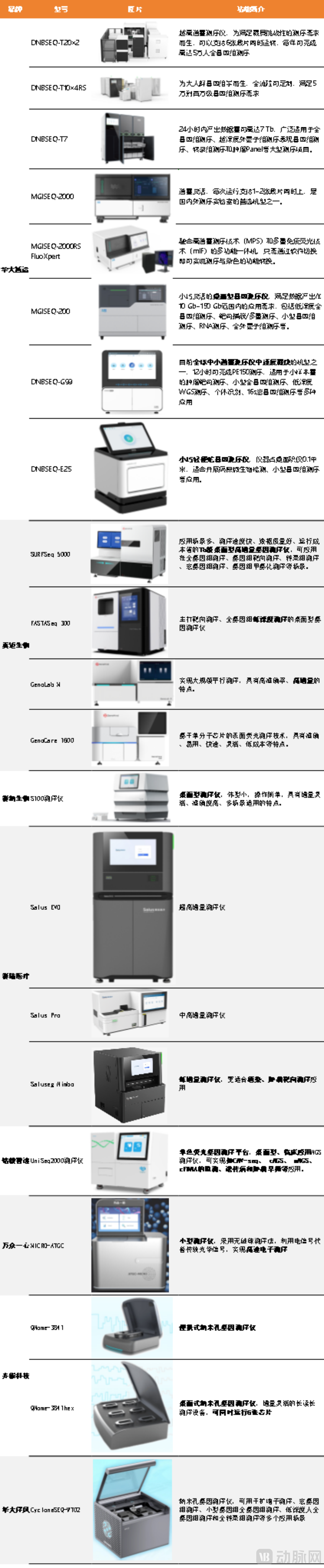
Currently, multiple domestic manufacturers of gene sequencers have launched ultra-high-throughput gene sequencers capable of generating terabase (Tb)-level base sequences per run.For instance, MGI’s DNBSEQ-T20×2, DNBSEQ-T10×4RS, and DNBSEQ-T7; GeneMind’s SURFSeq 5000; and Salus Medical’s Salus EVO are all ultra-high-throughput gene sequencers, with single-run throughput exceeding the terabase (Tb) level. Among these, MGI’s DNBSEQ-T20×2 achieves a single-run throughput of up to 42 Tb (PE100) or 72 Tb (PE150), which is 4.5 to 7 times higher than that of conventional ultra-high-throughput sequencers, making it one of the highest-throughput gene sequencing platforms globally.
In terms of read length and speed, domestically produced gene sequencers also deliver impressive performance.Read length in gene sequencing refers to the length of DNA sequence that can be determined in a single sequencing reaction. In next-generation sequencing (NGS), individual DNA molecules must be amplified into clusters for synchronous replication to enhance fluorescence signal intensity, thereby enabling the reading of DNA sequences. Due to this mechanism, NGS read lengths are relatively short, typically ranging from 50 bp to 300 bp. In contrast, nanopore sequencing technology yields significantly longer read lengths. Since 2023, the domestic market for nanopore sequencers has experienced a quiet surge. Notably, Qitan Technology’s QNome-3841hex can generate sequencing reads ranging from 200 bp to 2 Mbp, while BGI Sequencing’s newly launched CycloneSEQ-WT02 also achieves megabase-level read lengths. Applications in fields such as disease control and public security are gradually being rolled out.
Sequencing speed is a relatively intuitive metric and serves as a key indicator of whether a gene sequencer is suitable for clinical applications. MGI’s DNBSEQ-G99 is currently one of the fastest mid-to-low throughput sequencers globally, capable of completing PE150 sequencing within 12 hours. It is well-suited for various applications, including tumor targeted sequencing with small sample sizes, small-scale whole-genome sequencing (WGS), low-coverage WGS, individual identification, and 16S metagenomic sequencing. Meanwhile, GeneMind’s MICRO-ATGC employs a bead-free sequencing method that replaces traditional optical signals with electrical signals, thereby achieving high-speed electronic sequencing.
Next, let us examine functionality. Gene sequencer manufacturers primarily cover a wide range of application scenarios by launching models with different throughput capacities.High-throughput sequencers are primarily used to meet the gene sequencing needs of large-scale populations, such as whole-genome sequencing of large cohorts, ultra-deep exome sequencing, and tumor panel sequencing, which often require high-throughput sequencing instruments. Medium-throughput gene sequencers are mainly used in conventional research laboratories, while low-throughput gene sequencers are primarily applied in clinical settings, such as targeted sequencing for tumors and infectious diseases, early cancer screening, and screening for hereditary diseases. In China, MGI, GeneMind, and Sailu Medical have all established product portfolios covering high-, medium-, and low-throughput gene sequencers, thereby addressing gene sequencing needs across various scenarios.
Finally, the technical platform.With the launch of Qitan Technology’s QNome-3841 and QNome-3841hex, as well as MGI’s CycloneSEQ-WT02, the core technologies employed by domestically produced gene sequencers have expanded from the previously dominant sequencing-by-synthesis method to nanopore sequencing, thereby covering all major gene sequencing technology platforms.
In a sense, in the turbulent year of 2024, domestically developed gene sequencers have established a market that is the most comprehensive in product categories, the most complete in functionality, and the most diverse in technology globally, laying the foundation for a thriving application ecosystem.
2. Incremental Market in the Cracks, Facing Fierce Competition
At present, the application scenarios of gene sequencers mainly fall into two categories: scientific research and clinical use.Among these, research services remain the primary application scenario for gene sequencers, accounting for more than half of the market share. However, the research services market for gene sequencers has become relatively mature, and its growth rate falls far short of the incremental market driven by clinical innovations. Although research services may serve as the initial entry point for the commercialization of gene sequencers, substantial commercial value is truly generated only after gaining access to clinical applications. And clini-The incremental market in the niche of bedside detection innovation has also become a fiercely contested battleground for domestic gene sequencer manufacturers.
In China, clinical genetic testing is distinct from routine laboratory tests such as complete blood count and liver and kidney function assessments, and is categorized as a specialized test. The business models for genetic testing fall into two types: Laboratory Developed Tests (LDTs) and In Vitro Diagnostics (IVD). Specifically, LDTs refer to tests developed, validated, and used within a laboratory setting. This model provides testing services using in vitro diagnostic reagents developed internally. Such testing methods are typically employed for clinical diagnosis but have not yet obtained product registration or filing, and are restricted to use within the developing laboratory. In contrast, under the IVD model, genetic testing is conducted as a routine clinical test, with hospitals purchasing gene sequencers and corresponding test reagents to perform the analyses on-site.
Although the LDT model has gained legal status under specific circumstances since the release of the document “Notice on Carrying Out In-House Development and Use of In Vitro Diagnostics by Medical Institutions,” it is not the most ideal model for the widespread clinical adoption of genetic testing, due to the high difficulty of channel maintenance and the slow growth in prescription volumes. Most downstream gene sequencing service providers are attempting to batch-submit their proprietary genetic testing panels to hospitals.
In this process, in addition to obtaining the necessary reagent registration qualifications, collaborating with professional gene sequencer manufacturers to develop gene sequencers that meet medical device requirements has become the choice for most service providers, creating significant opportunities for domestic gene sequencer manufacturers to increase their installed base.
The clinical innovative testing market is also one of the most uncertain sectors in healthcare.Companies are constantly being eliminated, while new leaders emerge.
Currently, MGI holds a temporary advantage by virtue of its leading number of partnerships.According to statistics from VCBeat, there are currently 25 domestically produced gene sequencers that have obtained Class III medical device registration certificates, meaning they can be used clinically in combination with in vitro diagnostic reagents approved by the National Medical Products Administration and the instrument’s accompanying random software.Among them, 16 domestically produced gene sequencers, including Genetron Bio’s Gene+eq-2000 and VisionMed’s VisionSeq 1000, have adopted the combined probe anchoring polymerization sequencing technology platform, making this patented technology held by a domestic team the most mainstream technical platform for Chinese-made gene sequencers.
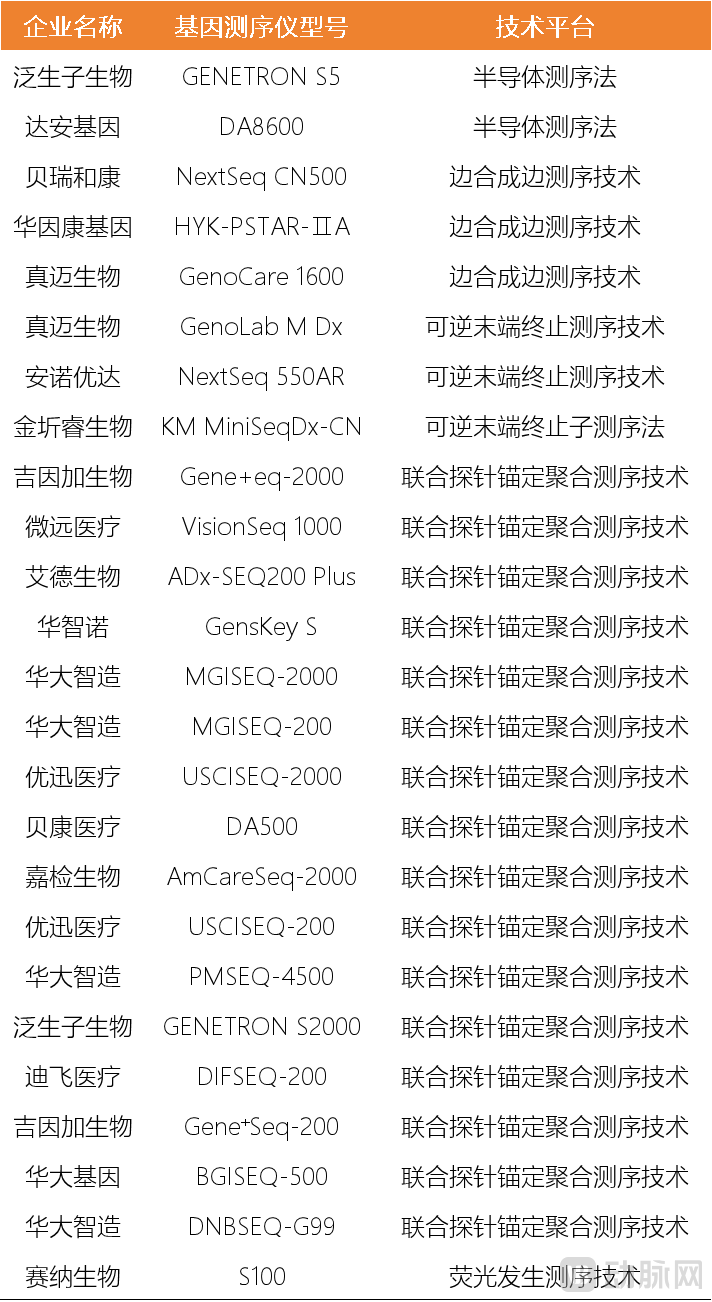
Combined Probe Anchor Polymerization Sequencing Technology, pioneered by BGI, utilizes DNA Nanoballs (DNBs) for template amplification and signal enhancement. This technology employs multiple specific DNA probes to capture and enrich target sequences, followed by polymerization of fluorescently labeled nucleotides on the DNBs catalyzed by DNA polymerase, thereby enabling high-throughput sequencing of the target sequences.
Combined Probe Anchoring and Ligation Sequencing (cPAS) offers significant advantages and serves as the core technology of MGI’s DNBSEQ sequencing platform. The DNBSEQ platform utilizes cPAS to anchor sequencing primers and fluorescent probes onto DNA nanoballs for ligation, followed by optical signal acquisition through a high-resolution imaging system. MGI’s gene sequencers, such as the DNBSEQ-T7 and DNBSEQ-G99, employ cPAS technology to enhance sequencing efficiency and reduce costs.
Currently, MGI’s clinical testing development collaboration landscape covers most mainstream downstream service providers, with a significant first-mover advantage.Service providers such as Genetron, Weiyuan Medical, and Beikang Medical, which hold a certain market position in mainstream application scenarios of gene sequencing—including tumor companion diagnostics, infectious disease testing, and assisted biological testing—have all developed their own hardware products based on MGI’s technology platform.However, given that the volume of in-hospital genetic testing implemented through the “hardware + reagents” model remains quite limited, the commercial value derived from MGI’s first-mover advantage is still relatively weak.
Notably, on the other hand, GeneMind has demonstrated strong compatibility and integration capabilities, positioning it to rapidly enter mature clinical genetic testing scenarios.Specifically, GeneMind’s independently developed GenoCare 1600 and GenoLab M Dx employ sequencing-by-synthesis (SBS) technology and reversible terminator sequencing technology, respectively. Among these, reversible terminator sequencing is the most critical foundational technology in next-generation sequencing (NGS). The basic principle of reversible terminator sequencing involves incorporating reversibly terminated, fluorescently labeled nucleotides during DNA synthesis to achieve sequencing-by-synthesis. The patent for reversible terminator sequencing originally belonged to Solexa; Illumina acquired this patent through industrial mergers and acquisitions and further developed it into the globally popular SBS platform.
According to reports, GeneMind’s GenoLab M Dx is the first domestically produced high-throughput gene sequencer with independent intellectual property rights based on reversible terminator sequencing. It employs SURFSeq, a chip-based amplification surface fluorescence sequencing technology, to identify fluorescent signals from bases, thereby enabling sequencing by synthesis.Compatible with mainstream NGS library preparation kits and bioinformatics analysis software. Although GeneMind has not explicitly stated that reagents and software developed for the Illumina platform can run on the GenoLab M Dx, the adoption of more mainstream underlying technical architectures undoubtedly expands the applicable scenarios for the GenoLab M Dx.
Furthermore, Genetron’s GENETRON S5 and Daan Gene’s DA8600 employ semiconductor sequencing. This relatively traditional gene sequencing technology still holds a place in today’s domestic gene sequencer market. Semiconductor sequencing determines DNA sequences by detecting the pH changes (manifested as current signals) caused by the release of hydrogen ions during the incorporation of nucleotides by DNA polymerase, eliminating the need for fluorescent probes and expensive optical equipment, thereby significantly reducing sequencing costs. Semiconductor sequencing technology is primarily used in Ion Torrent gene sequencers. With Ion Torrent being acquired first by Life Technologies and later by Thermo Fisher Scientific, the core patents for semiconductor sequencing technology have ultimately come under the ownership of Thermo Fisher Scientific.
Thus, it is evident that in the incremental market niche of clinical innovative diagnostics, fierce competition remains to be waged, both between domestic gene sequencers and overseas giants, and among domestic brands themselves.
3. Who Will Prevail?
During commercial expansion, gene sequencers are deeply integrated with vertical application sectors.For gene sequencer manufacturers, those who master application scenarios will conquer the market.
Taking clinically innovative diagnostics as an example, gene sequencers are often bundled with specific reagents and software for particular diseases. As high-value durable goods, gene sequencers have long replacement cycles; therefore, the sales performance of sequencing reagents often determines the financial results of gene sequencer manufacturers. According to the 2024 semi-annual financial reports, reagents and consumables accounted for 60% of MGI’s revenue, while this figure exceeded 70% for Illumina.
In this sense, the core of competition in the gene sequencer market hinges on manufacturers’ ability to build application ecosystems.On one hand, gene sequencer manufacturers need to deepen collaboration with downstream gene sequencing service providers, pharmaceutical companies, and other stakeholders to launch clinical diagnostic kits developed based on their technology platforms, thereby expanding the existing market.
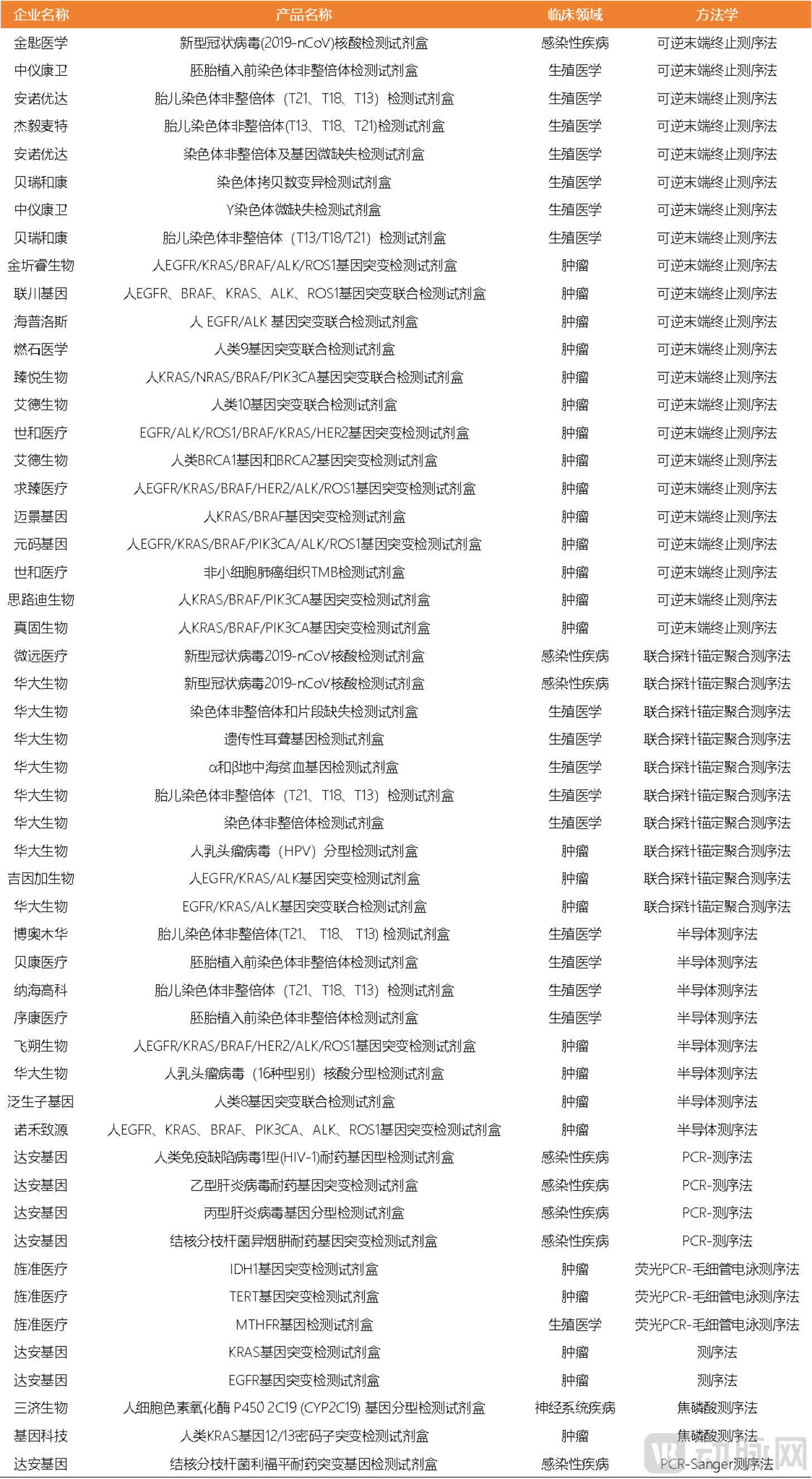
According to statistics from VCBeat, as of press time, there are 52 gene testing kits approved for clinical use in China, covering areas such as tumor companion diagnostics, reproductive medicine, and infectious disease testing. Among these, 22 kits are developed based on reversible terminator sequencing, 10 based on combinatorial probe-anchor ligation sequencing, and 8 based on semiconductor sequencing. In conjunction with the previous analysis, the major underlying gene sequencer manufacturers are Illumina, MGI, and Thermo Fisher. Illumina holds a distinct commercial advantage, while GeneMind may potentially emerge as a strong competitor due to its system compatibility.
In fact, deep collaboration with downstream partners to develop application-specific reagents is a key commercialization strategy for Illumina. Particularly in the field of tumor companion diagnostics, Illumina has fostered collaborations between downstream sequencing service providers and manufacturers of targeted cancer therapies to co-develop companion diagnostics, thereby enabling the widespread application of gene sequencing in cancer diagnosis and treatment. In recent years, Illumina has increasingly engaged directly in the development of cancer-related diagnostic reagents. The most notable example is its repeated investment in Grail, which facilitated the market launch of multi-cancer early detection products. Furthermore, in January 2020, Illumina partnered directly with Roche Pharmaceuticals to announce a 15-year non-exclusive collaboration aimed at expanding the clinical application of tumor testing solutions based on next-generation sequencing (NGS) technology.
On the other hand, gene sequencer manufacturers also need to collaborate with a broader base of gene sequencer users through online forums, offline conferences, and other channels to build a developer ecosystem.Continuously develop new application scenarios.In this regard, Oxford Nanopore’s explorations have been quite successful. Through the Nanopore Community and London Calling, Oxford Nanopore has gradually expanded downstream applications of its nanopore sequencers while continuously optimizing its own sequencing capabilities. The Nanopore Community is open to all users of Oxford Nanopore technologies, providing experimental support, facilitating collaboration among users, and offering early access to information on new products and updates. London Calling is an annual conference hosted by Oxford Nanopore Technologies that attracts scientists and researchers from around the world to share their research findings using nanopore sequencing technology in fields such as microbiology and metagenomics.
In China, collaboration between gene sequencer manufacturers and downstream service providers is becoming increasingly close.MGI, which originated from BGI Genomics, the leading domestic gene sequencing service provider, naturally benefits from such industrial chain collaboration. In January 2021, GeneMind also introduced Sansure Biotech as its second-largest shareholder, securing RMB 255 million in financing. Sansure Biotech will have the right to participate in major operational decision-making. Furthermore, as indicated by the frequent new product launches mentioned at the beginning of this article, Chinese gene sequencer manufacturers are increasingly focusing on ecosystem building, translating this awareness into various innovative initiatives.
Whether domestically produced gene sequencers, which have emerged amidst intense competition, can continue to thrive in broader application scenarios remains to be seen.