

Why Is the Bioelectronic Materials Sector Heating Up? Boston Scientific, Medtronic, and IBM Enter with Hundreds of Patents Filed
With the advancement of medical technology, implanting electronic components into the human body to treat heart diseases and neurodegenerative disorders, or to screen and purify cancer cells, has become a reality.
Furthermore, the implantation of electronic components into the body requires careful consideration of key factors such as biocompatibility, self-powering capabilities, and specific absorption rate (SAR) to ensure both implant safety and therapeutic efficacy. This has given rise to a new interdisciplinary field at the intersection of life sciences and electronic materials: bioelectronic materials.
In the scientific research community, bioelectronic materials have become a well-established field of study, spawning numerous subfields such as flexible bioelectronic materials, hydrogel-based bioelectronic materials, and polymer-based bioelectronic materials. In 2023, Nature published two consecutive articles on electronic biomaterials, sparking widespread discussion within the academic community.
In fact, electronic biomaterials are not only a focus for academic researchers but also a key area of interest for major commercial medical device companies. Since 2003, many medical device companies have filed patents in this field, with Medtronic leading the way, holding over 140 patent publications.
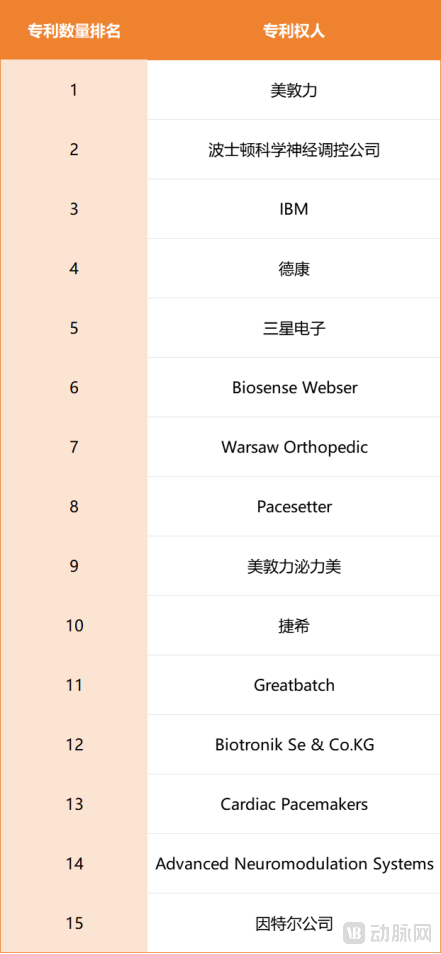
Top 15 Patent Publications on Electronic Biomaterials in the Commercialization Sector
Bioelectronic Materials Are No Longer Limited to Metals
Bioelectronics refers to electronic devices that are integrated into biological systems in forms that can be implanted or attached to the skin. This concept first emerged in 1912, when researchers proposed monitoring physiological electrical signals using electrode patches, laying the foundation for the electrocardiogram (ECG). It was not until 1960, when American researcher Wilson Greatbatch developed an implantable cardiac pacemaker using transistors, that bioelectronics officially entered the era of implantation.
Advances in materials technology are a key driver behind the iterative development of bioelectronics. Currently, bioelectronic materials fall into two main categories: metals and polymers. These two broad categories encompass numerous subtypes, thereby enriching the diversity of bioelectronic materials.
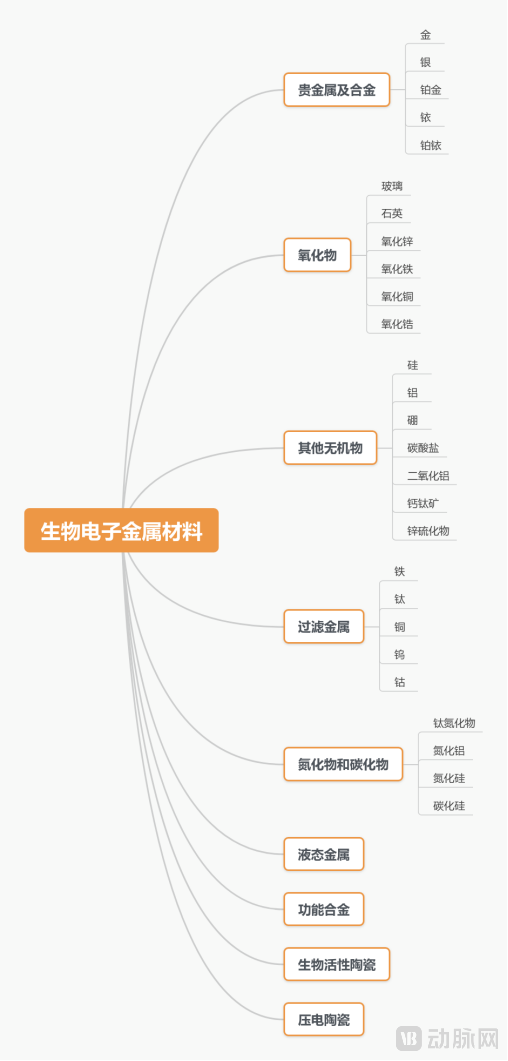
Simple Classification of Bioelectronic Metal Materials
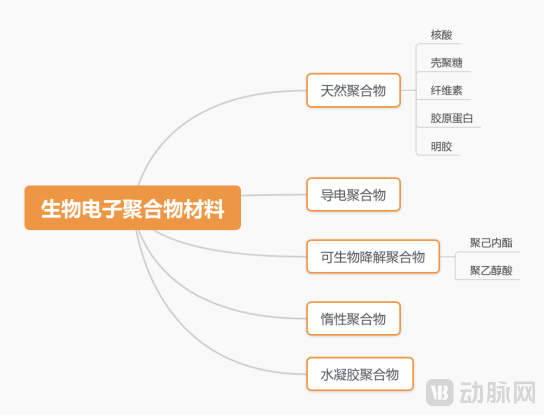
A Brief Classification of Bioelectronic Polymer Materials
It is evident that bioelectronic materials have evolved from traditional solid-state devices to a more diverse array of material types, including flexible and stretchable materials, hydrogels, and biodegradable materials. Materials with varying properties can provide safe, comfortable, and personalized treatment regimens for patients in different clinical scenarios.
Stretchable materials can conform closely to human tissues, adapting to dynamic changes such as bending and stretching, thereby enabling precise epidermal monitoring, tissue monitoring, in vivo monitoring, and cellular detection during human movement. Hydrogels exhibit excellent biocompatibility and softness, allowing them to penetrate deep into the human body without causing discomfort. Two-dimensional materials, typically referring to graphene and transition metal dichalcogenides, possess superior electrical conductivity and stability, making them suitable for applications such as biomarker detection and skin sensors.
Overall, electronic biomaterials have overcome the bottleneck of biocompatibility and are evolving toward high precision and low latency. This characteristic has opened up broad application prospects across various fields, such as real-time monitoring of brain activity or heart rate, delivery of therapeutic electrical signals, drug delivery, chemical sensing, and novel prosthetic devices.
Commercialization Directions in Bioelectronics: Cardiovascular Devices, Diabetes Monitoring, and Neuromodulation
While electronic biomaterials have a wide range of potential applications, an analysis of recent patents filed by major companies in the bioelectronics sector reveals that their commercialization efforts are primarily concentrated in the fields of cardiovascular disease, diabetes monitoring, and neuromodulation.
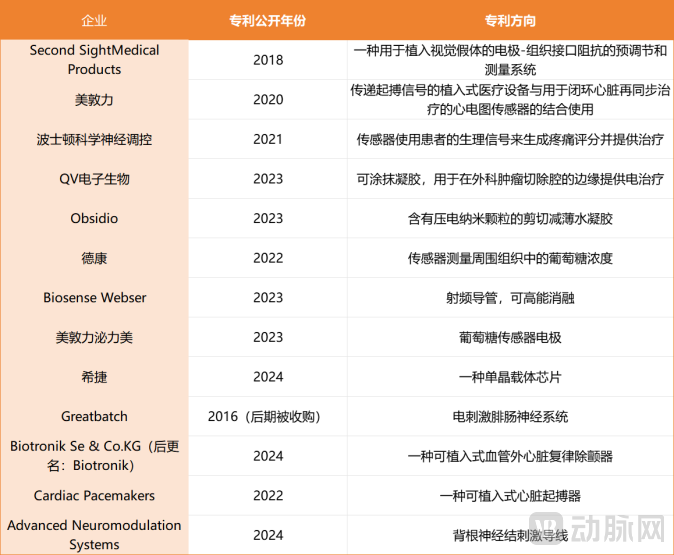
Some medical device companies have filed patents in the field of electronic biology in recent years.
Companies with a presence in the cardiovascular disease sector include Medtronic, Cardiac Pacemakers, Inc., Biotronik, and Biosense Webster, among others. Their primary products are implantable cardiac pacemakers and implantable cardioverter-defibrillators (ICDs). These devices impose stringent requirements on bioelectronic materials. First and foremost, excellent biocompatibility is essential. As the heart is a vital organ, devices such as cardiac pacemakers maintain long-term contact with human tissues; if the materials trigger immune responses, they may pose varying degrees of risk for complications in patients. Furthermore, material selection critically influences the long-term stability of the device after implantation, necessitating the prevention of corrosion, degradation, or the release of harmful substances within the human body.
Next is flexibility and adaptability. The heart is a constantly beating organ, so implantable materials must possess sufficient flexibility and adaptability to accommodate its dynamic motion. This is also one of the reasons why implantable cardiac pacemakers and defibrillators are evolving toward more compact form factors.
Finally, there is self-powered capability. In the 1970s, implantable cardiac pacemakers developed by Medtronic faced challenges due to battery life limitations. Today, many companies are developing self-powered cardiac pacemakers that convert mechanical energy, such as that from heartbeats, into electrical energy to provide a continuous power supply for implantable devices, thereby reducing the need for patients to undergo battery or device replacements.
In addition to implantable cardiac pacemakers and defibrillators, companies are also leveraging bioelectronic materials to develop drug-eluting stents, drug-coated balloons, and artificial heart valves. These innovations not only advance the treatment technologies for cardiovascular diseases but also provide patients with more therapeutic options and improved clinical outcomes.
Companies with a presence in the diabetes monitoring sector include Dexcom, Medtronic, and MicroPort. These companies utilize probes made from bioelectronic materials to monitor blood glucose levels in the human body. This approach not only helps patients better manage their blood glucose but also guides medication administration, particularly for brittle diabetes, thereby keeping patients’ blood glucose levels within a reasonable range.
Taking Dexcom as an example, its research on bioelectronic materials is primarily dedicated to advancing the development of continuous glucose monitoring (CGM) systems. Dexcom has developed a miniature sensor that allows patients to monitor their blood glucose levels in real time by implanting it subcutaneously. These sensors typically operate continuously for several days to weeks, providing real-time, continuous glucose data to help diabetic patients better manage their condition. Compared with traditional fingerstick blood sampling, this system offers more continuous glucose readings, enabling patients to adjust their treatment plans in a timely manner. Meanwhile, the extended operational duration reduces the pain associated with frequent invasive glucose monitoring.
The neurostimulation sector is in a developmental stage, with participating companies including Second Sight Medical Products, QV Electronics Bio, and Advanced Neuromodulation Systems. While there are no unified indications in this field, the technological approaches are converging, primarily utilizing electrical nerve stimulation to treat neurological disorders, promote nerve regeneration, and facilitate nerve repair.
Currently, Second Sight Medical Products has related products on the market. The company developed Argus II, a neurostimulation product designed to restore functional vision in patients blinded by outer retinal degeneration. It works by converting video information into electrical signals and stimulating the retinal nerves to enable visual perception. This product has received approval from the U.S. FDA and the European CE mark, and has been implanted in hundreds of patients worldwide.
Meanwhile, most other companies remain in the R&D stage; for instance, QV Bioelectronics is exploring the use of bioelectronic materials to deliver electrical signals for tumor resection in the treatment of brain cancer.
Beyond these three application scenarios, medical device companies are also exploring new directions. For instance, Boston Scientific’s neuromodulation division is designing sensors using bioelectronic materials to capture patients’ physiological signals, generate pain scores, and deliver therapy. It is evident that advances in bioelectronic materials will not only enable safer and more effective treatment regimens but also enhance patients’ therapeutic experience from the perspective of comfort-oriented care.
Future Directions for Bioelectronic Materials
Over the past decade, bioelectronic materials have witnessed significant breakthroughs, exhibiting superior properties compared to traditional materials in terms of flexibility, conductivity, and biodegradability. With advancements in medical technology, clinical applications are imposing new demands on these materials.
First, the physical properties of materials degrade over the implantation period. For instance, long-term in vivo use of implanted devices can lead to wear and tear, resulting in damage to the insulation layer and exposure of metal interconnects. This may cause issues with product pathways, reduced product performance, and even pose risks to patient health.
Next is the issue of long-term implantation of products in the body, where adhesion to or compliance with organs may diminish. For instance, implantable cardiac pacemakers may shift during cardiac motion, resulting in suboptimal device performance.
Admittedly, as an emerging field, bioelectronic materials still have considerable room for advancement. Nevertheless, we believe that future progress in this technology will drive the development of safe and effective therapeutic regimens, offering more precise treatment options for clinical application.