

Can Digital Technologies Become the New Weapon in the Fight Against Myopia Among Children and Adolescents?
Myopia has become one of the most prevalent health issues among adolescents in China, potentially affecting the future quality of the nation’s population and posing significant threats to China’s socioeconomic development and even national defense security.
This is not an alarmist statement; even the least sensitive individuals can observe that the number of elementary school students wearing glasses is increasing, and their age at onset is decreasing. According to the latest data from the National Health Commission, in 2022, the overall myopia rate among children and adolescents in China reached as high as 52.7%, with 35.6% among elementary school students, a rapid increase to 71.1% among junior high school students, and 80.5% among senior high school students. In other words, fewer than 30% of junior high school students remain free of myopia after completing nine years of compulsory education, making them an absolute minority.
China’s campaign to safeguard adolescent vision has been underway for many years, yet due to the inherent characteristics of myopia, prevention and control efforts have often yielded limited results despite significant input. To enhance the effectiveness of myopia prevention and control, an increasing number of digital technologies have been gradually introduced into this field in recent years.
Based on the refractive components, myopia can be classified into refractive myopia and axial myopia.
Refractive myopia can be further classified into three types: curvature myopia, index myopia, and accommodative myopia. It is primarily caused by excessive refractive power of the cornea or lens, or abnormal refractive indices of various refractive components, resulting in refractive power that exceeds the normal range, while the axial length of the eye remains largely within the normal range.
Among these, accommodative myopia is caused by fatigue and spasm of the ciliary muscle, which leads to a decline in the accommodative ability of the refractive system. It can be reversed once the ciliary muscle rests, a condition commonly known as "pseudomyopia."
Axial myopia is the most common type of myopia. The vast majority of myopia cases that gradually develop from adolescence into adulthood fall into this category. In axial myopia, the refractive power of other ocular refractive components, such as the cornea and lens, remains largely within the normal range; however, the condition results from an elongation of the axial length (eye length) beyond the normal range.
Most cases of axial myopia result from children’s prolonged unhealthy eye use, which causes excessive elongation of the axial length and rapid depletion of hyperopic reserve. This is also one of the key factors contributing to the increasing prevalence of myopia at younger ages.
Under current conditions, myopia, particularly axial myopia, cannot be cured or reversed. In 2019, the National Health Commission, in conjunction with five other ministries, issued the Notice on Further Regulating Myopia Correction for Children and Adolescents and Strengthening Supervision, which explicitly states that, given the current state of medical technology, myopia is incurable. Institutions or individuals engaged in myopia correction are prohibited from using misleading terms such as “rehabilitation,” “restoration,” “reduction of diopters,” or “myopia cure” in their promotional materials.
Therefore, myopia control measures such as low-concentration atropine eye drops, orthokeratology lenses, and multifocal defocus spectacle lenses can only slow the progression of myopia after its onset, which is somewhat akin to "being wise after the event." The most ideal approach to myopia prevention and control remains early monitoring, early detection, early warning, and early intervention.
Principle | Side Effects | Ease of Use | Impact on Daily Life | Price | |
Low-Concentration Atropine Eye Drops | Paralysis of the ciliary muscle to forcibly relax accommodation may also antagonize M receptors on the retina and choroid, thereby slowing axial elongation. | Larger | Convenience | None | China |
Orthokeratology Lenses | Physical methods alter the corneal geometry to flatten corneal curvature, thereby slowing myopia progression. | Small | Requires certain operational skills | None | High |
Defocus Soft Contact Lenses | Based on the theory of optical defocus, light passing through the peripheral treatment zone is focused in front of the retina, creating peripheral myopic defocus and thereby slowing axial elongation. | Small | Requires certain operational skills | Small | High |
Defocus Spectacle Lenses | Small | Convenient | More Obvious | Low |
Numerous factors contribute to myopia, with genetic and environmental factors widely recognized as the primary causes. Since genetic factors are unmodifiable, and environmental factors are the main drivers of accelerated myopia progression in adolescents, myopia prevention and control efforts should focus primarily on environmental factors. These include near-work activities, outdoor activity, reading and writing habits, lighting and illumination conditions, eye exercises, and other environmental influences (such as excessive or improper use of electronic devices, insufficient sleep, circadian rhythm disruption, and nutritional imbalances).
Representative Companies | Digital Technologies Adopted | Prevention and Control Principles | Is it a medical device? | Current Progress |
12 mm | Smart Wearable Devices, AI, 3D Printing | Real-time monitoring of myopia risk factors, development of personalized prevention and control plans, and monitoring of plan implementation | Application for Class II Medical Devices in Progress | Classification and categorization have been obtained; innovation application and type testing are currently underway. |
BOE Health | Display Screens, AR Freeform Surfaces | Simulate Hyperopia Scenarios to Exercise Ciliary Muscles: Dual-Screen Near-Far Interactive Training | No | Marketed |
Vision Medical | VR, Digital DOT | VR accommodative training and VR visual function training, integrated with digital DOT technology, reduce accommodative lag, decrease contrast in the peripheral retinal field, and slow axial elongation. | Class II Medical Device | Market Launched |
Huoyan Jingjing | VR, Ray Tracing | Ray Tracing-Based Digital Defocus Technology Slows Axial Elongation | Under Development | Phase I Clinical Trial |
It is precisely for this reason that the application of digital technologies in myopia prevention and control also focuses on these key areas.
Although environmental factors are clearly identified as the primary cause of myopia in children and adolescents at a macro level, the specific causes vary among individuals. Some cases are attributed to poor reading and writing habits, others to insufficient ambient lighting, and still others to inadequate outdoor activity. To effectively implement myopia prevention and control measures, it is essential to identify individual high-risk factors to ensure targeted interventions.
To date, there are few effective methods available on the market for accurately monitoring and reflecting individual patients’ eye-use habits and environmental exposures. Most intervention plans are still formulated based on subjective parental feedback via questionnaires, making it difficult to prevent, effectively slow down, or control the progression of myopia in children and adolescents.
The introduction of digital technology has made it possible to implement such real-time monitoring.
Taking 12mm Health Technology (Hainan) Co., Ltd. (“12mm”) as an example, the company has partnered with the Hainan Eye Hospital of Zhongshan Ophthalmic Center, Sun Yat-sen University—the Hainan Provincial Clinical Trial Center for Ophthalmic Digital Therapeutics. With the hospital’s participation throughout the R&D and clinical trial process, they jointly developed a myopia risk factor monitor. This device collects and records multiple ocular usage metrics to assist physicians in identifying medical clues, thereby enabling the formulation of effective strategies for myopia prevention and for controlling rapid myopia progression in patients.
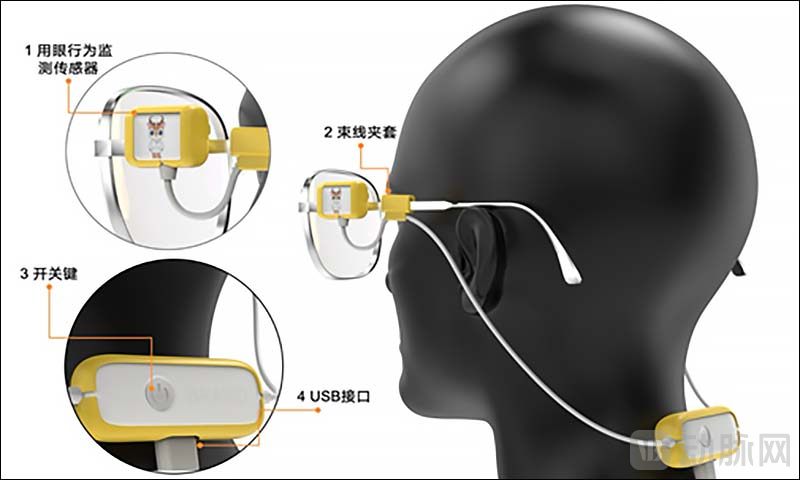
12-mm Myopia Risk Factor Monitor
Myopia Risk Factor Monitor innovatively leverages existing cutting-edge sensor technology by integrating multiple sensors into smart wearable devices. Available in forms such as eyeglass straps, earphone-style wearables, and 3D-customized eyeglass frames, the product accommodates individual differences to ensure comfortable wear, thereby enabling precise collection of eye-use habits and environmental data. This smart wearable device incorporates dual-distance sensors with ranging capabilities, accelerometers, gyroscopes, ambient spectral sensors, eye-tracking sensors, and vertex distance sensors, among others. It accurately captures multidimensional data, including reading distance, head tilt angle during reading, motion status, ambient light brightness and intensity, duration of eye use, time spent indoors and outdoors, and vertex distance.
By integrating multiple sensors with a vision prevention and healthcare mini-program, the system can continuously capture and record the visual environments and behaviors of myopic patients and children and adolescents with insufficient hyperopic reserves, aged 4 to 18, in real-world settings. This includes uploading and analyzing visual usage data to assess myopia-related factors such as visual habits, environments, and duration of use. By comprehensively evaluating the progression of myopia in conjunction with other physiological status indicators, the system enables personalized myopia prevention and control.
Such products can serve as the “sentinel” component in myopia prevention and control systems, track the implementation of intervention strategies, establish a negative feedback mechanism, and thereby complete a closed-loop myopia prevention system.
12mm, in collaboration with the Hainan Eye Hospital of Zhongshan Ophthalmic Center at Sun Yat-sen University, has jointly developed a central data analytics platform for B-side clients focused on myopia risk factors. The platform comprises a clinical data acquisition subsystem and a multimodal data analysis subsystem. By leveraging artificial intelligence technologies, it integrates users’ visual habits and environmental parameters with biological metrics to identify causal relationships underlying the onset and progression of myopia.
Upon obtaining an individual’s myopia risk factors, professional physicians convert the analytical results into a “digital prescription” to intervene in the user’s visual habits and visual environment, thereby forming a closed-loop system for primary and secondary myopia prevention in conjunction with the myopia risk factor detector.
In 2024, the 12mm Myopia Risk Factor Monitor received approval from the Hainan Provincial Medical Products Administration (MPA), completed its classification determination, and is currently undergoing the innovative medical device application process, with the product having entered the type-testing phase. It is the first innovative medical product designed for myopia prevention and control, and currently the only wearable, medical-grade myopia prevention and control product system recognized by the MPA. Furthermore, it is the only medical-grade myopia prevention and control product currently applicable to children under eight years of age. The Central Station for Myopia Risk Factor Data Analysis has also been put into use at the Zhongshan Ophthalmic Center, Hainan Eye Hospital, where it is now leveraging the value of specialized optometry clinical electronic medical records.
Prolonged near-work activities are widely recognized as a significant risk factor influencing the onset and progression of myopia, showing a positive correlation with its development. In addition to the total amount of near-work, other risk factors for myopia include prolonged continuous duration of near-work (>45 minutes) and short reading distance (<33 cm).
Despite years of public education, the general population in China is well aware of the strong correlation between near-work activities and myopia in children and adolescents, and understands the need to relax the ciliary muscles and alleviate eye strain by gazing into the distance after prolonged periods of near work. However, heavy academic burdens make it difficult to implement this practice. Furthermore, many schools currently restrict outdoor activities during breaks due to limited space, resulting in students spending extended periods engaged in near-work tasks.
On the other hand, the use of devices such as tablets and computers in education has become increasingly prevalent. Leveraging these digital technologies, it has become a reality in recent years to artificially create an environment for distance viewing, enabling students to perform alternating distance-and-near vision training amidst their intense academic pressures, thereby exercising and relaxing the ciliary muscles.
Leveraging BOE’s years of expertise in display technology and integrating optical principles, BOE Health has independently developed the Yuanwang Learning Screen. Its core mechanism combines cutting-edge freeform optics and beam modulation technologies to “create” an environment conducive to myopia prevention and control.
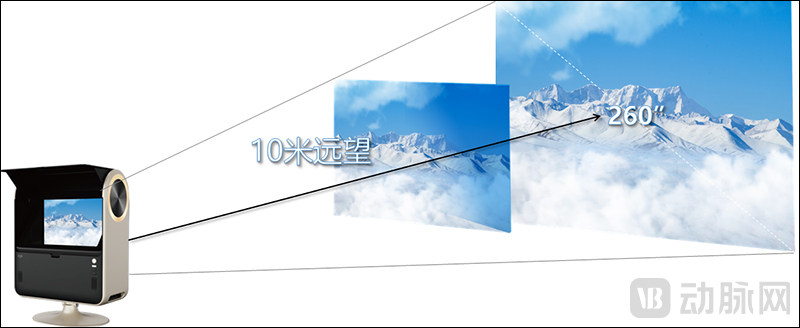
BOE Health Yuanwang Learning Screen
The Yuanwang Learning Screen employs AR freeform surface technology to simulate distance viewing, enabling children to view a 260-inch large-screen image at a virtual distance of 10 meters while sitting just 40–50 cm from the physical screen. This transforms "near" viewing into "far" viewing, thereby reducing the rate of myopia onset and progression caused by prolonged near-work eye strain, and effectively addressing visual health concerns associated with close-range activities such as online classes and reading or writing on paper.
Furthermore, when the Yuanwang Learning Screen is used in conjunction with the customized Yuanwang Screen training host, it enables dual-screen near-far interactive training to relax and dilate the ciliary muscles, alleviate visual fatigue, and improve accommodative ability.
Leveraging BOE’s display technology, the Yuanwang Learning Screen features eye-care functionalities such as full-spectrum illumination, low blue light emission, anti-glare properties, and flicker-free performance. Paired with a long-focus HD document camera, it replicates the reading scenario and experience of paper books. Additionally, it employs advanced beam modulation technology to modify the composition of incident light, making it softer, clearer, and more comfortable, thereby reducing visual fatigue caused by electronic screen exposure.
In terms of product design, the Yuanwang Learning Screen has been meticulously crafted. Its ultra-slim body, with a thickness of only 18–20 cm, is compatible with the vast majority of study desks and writing tables. The posture reminder function consistently alerts children to maintain a viewing distance of 40–50 cm, thereby naturally correcting their sitting posture. The device also incorporates ergonomic design principles, featuring a stepless tilt adjustment ranging from 5° forward to 10° backward, and includes a light shield designed to block ambient glare and prevent dust accumulation.
Guangzhou Shijing Medical Software Co., Ltd. (hereinafter referred to as “Shijing Medical”), which has accumulated years of experience in the field of ophthalmology, has leveraged virtual reality technology to create training scenarios suitable for myopia prevention and control. Its VR Holographic Vision Enhancement Device is primarily used for the treatment of myopia and amblyopia and has obtained a Class II medical device registration certificate.
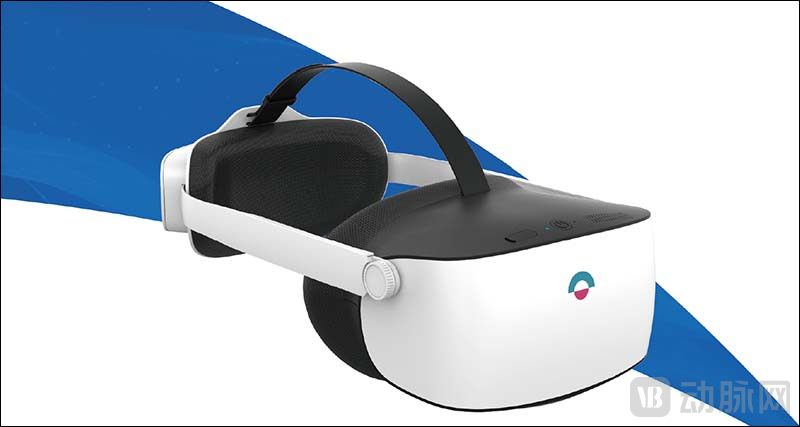
VR Holographic Vision Enhancement Device primarily leverages digital DOT technology to deliver myopia prevention and control training through VR accommodative training and VR visual function training.
Accommodative function training simulates real-world environments in three-dimensional space through patented dynamic stepless zoom technology. By integrating VR with optical zoom technology, it enables training for accommodative facility within the range of -6.00 to +2.50 D and for accommodative amplitude within the range of 0 to 16 D.
Based on varying visual acuity, the built-in mechanically adjustable refractive system drives the electronic screen to move from far to near, while dynamic objects within the game simultaneously shift in depth accordingly. During training, patients must engage their ciliary muscles and crystalline lenses to accommodate, requiring both eyes to track the true changes in distance of the visual targets. This process exercises the ciliary muscles, thereby improving their function and enhancing the elasticity of the crystalline lens. Ultimately, this helps eliminate pseudomyopia, slow the progression of myopia, and prevent its onset.
Meanwhile, the training process utilizes interactive games as a medium and adopts hand-eye-brain coordinated training. By “integrating training with enjoyment,” it offers strong engagement, enhances children’s initiative and compliance in training, and enables them to adhere to the program over the long term.
VR-based visual function training includes pursuits, saccades, fusion, and stereopsis training. By combining various visual function exercises—such as basic visual skills (pursuits and saccades), fusion, and stereopsis—this approach enhances the coordination of extraocular muscles, corrects imbalances in ocular muscle strength, improves the accommodative function of the ciliary muscle, and mitigates the impact of visual dysfunction on myopia progression, thereby helping to slow the advancement of myopia.
In addition, users of the VR holographic vision enhancement device can manage the equipment via a companion mobile app, with core parameters supporting cloud-based configuration. Its cloud system leverages big data and intelligent analytics to generate personalized training plans, provide scheduled training reminders, and track training records, thereby helping users cultivate consistent eye-care training habits.
In addition to treating pseudomyopia and providing adjunctive therapy for mixed myopia and refractive myopia, it can also serve as an adjunctive treatment for amblyopia in children and adolescents, indicating a broad range of indications.
Building on this foundation, Shijing Medical has also developed a visual function assessment system capable of conducting comprehensive tests, including amplitude of accommodation, accommodative facility, Worth four-dot test, ocular dominance, subjective angle of deviation, random-dot fusion, and line stereopsis. The system can generate intuitive and professional visual function reports based on binocular vision data. With the support of this system, ophthalmology clinics and optometry centers are empowered to enhance their services, while even optical retailers without professional ophthalmologists or optometrists can offer visual function assessment services.
In addition to Shijing Medical, Shenzhen Huoyan Jingjing Medical Technology Co., Ltd. (Huoyan Jingjing) is also introducing virtual reality technology into myopia prevention and control. Beyond leveraging visual training to replicate the benefits of outdoor distance viewing, Huoyan Jingjing has collaborated with the Zhongshan Ophthalmic Center of Sun Yat-sen University to develop digital defocus technology based on ray-tracing techniques. Targeting the choroid and ciliary muscle, this approach integrates defocus and accommodation theories, achieving significant efficacy in clinical comparisons. Notably, Phase I clinical trials demonstrated outstanding outcomes in both axial length control and refractive error management.
In recent years, technological innovation has played a crucial role, becoming a key driver in advancing myopia prevention and control efforts. Relevant national authorities have also proposed launching pilot programs for appropriate technologies in myopia prevention and control among children and adolescents, organizing professional institutions to provide targeted technical guidance by region and zone, thereby further promoting the application of these appropriate technologies for myopia prevention and control.
This also indicates that technological innovation is fostering the emergence of interdisciplinary new technologies and methodologies, bringing an increasing number of innovative solutions to the field of myopia prevention and control, and demonstrating the greater potential of digital technologies in this area.
We also look forward to innovative technologies demonstrating broader application potential in myopia prevention and control as more research is conducted and data accumulates, thereby facilitating more effective implementation of myopia prevention efforts and providing stronger safeguards for the visual health of adolescents.