

Taimei Medical Technologies, China's Largest Digital Solutions Provider for Pharma and MedTech R&D and Marketing, Goes Public on HKEX

Taimei
Life Sciences Industry Digital-Intelligence Operations Platform
Today, Taimei Medical Technology, a leading provider of digital healthcare solutions in China, officially listed on the Hong Kong Stock Exchange.
Founded in 2013, Taimei is among the earliest companies in China to provide services for digital transformation in healthcare. Based on 2023 revenue, Taimei is the largest provider of digital solutions in the research and development and marketing sectors of the pharmaceutical and medical device industries in China, with a market share of 5.9%. As of March 31, 2024, Taimei had served more than 1,400 pharmaceutical companies and contracted research organizations, including 21 of the top 25 global pharmaceutical companies and 90 of the top 100 innovative pharmaceutical companies in China.
Before its IPO, Taimei was already a star project in the primary market. Since its inception, Taimei has completed eight rounds of financing, raising over RMB 2 billion in total and attracting top-tier investors such as Tencent, GL Ventures, SoftBank China, Matrix Partners China, and 5Y Capital. Now, launching an IPO against the trend amid the ongoing contraction cycle of China’s innovative drug industry, how will Taimei sustain long-term growth to continue winning the recognition of the capital markets?
1. The “Water Sellers” of Innovative Drugs
Back in 2013, the wave of innovative drugs that would later reshape the trajectory of China’s pharmaceutical industry was still in its nascent stages. Multinational pharmaceutical companies began establishing R&D centers in China, while a large number of outstanding drug development scientists returned home. These professionals either joined these R&D centers or launched their own startups, driving a profound transformation of China’s pharmaceutical industry from generic drug manufacturing to innovative drug R&D. It was against this backdrop that Taimei Medical Technology was founded.
New drug development has always been a challenging endeavor.On the one hand, new drug development carries extremely high risks.The journey from drug discovery to approval takes 10–15 years. This protracted and complex process involves massive data management and coordination among multiple stakeholders, including pharmaceutical companies, regulatory agencies, CROs, SMOs, clinical research institutions, researchers, and trial participants. Often, a single oversight in detail can lead to ultimate failure.On the other hand, regulatory oversight of new drug development is extremely stringent.Drug developers must conduct drug R&D, new drug registration, and subsequent marketing activities in strict compliance with rigorous regulatory requirements and routine inspections, which undoubtedly increases the difficulty of new drug development.
At its inception, Taimei Medical Technology entered the core segment of new drug development—clinical trials—by pioneering cloud-based digital solutions. It provided cloud-hosted systems such as Clinical Trial Project Management Systems, Electronic Trial Master File (eTMF) Management Systems, and Electronic Data Capture (EDC) Systems to enable tracking, monitoring, and planning of clinical trial data, thereby helping China’s biopharmaceutical industry enhance R&D efficiency.
However, at that time, very few users were willing to pay for these SaaS products.The barriers to new drug development are high; if digital solutions lack practicality and their maturity is less than ideal, it will be difficult for them to deliver value in day-to-day R&D operations. In this sense, medical digital solutions cannot rapidly capture the market; instead, sustained efforts are required to refine the product and penetrate the market.
Therefore, since its inception, Taimei has maintained high levels of investment in both R&D and sales. These sustained investments have translated into strong market recognition and brand loyalty. In addition to serving the majority of top-tier pharmaceutical and medical device companies as previously mentioned, Taimei boasts an exceptionally high customer repurchase rate. According to its prospectus, Taimei’s overall customer retention rates from 2021 to 2023 were 82.0%, 82.8%, and 77.8%, respectively, while the retention rates for core customers reached even higher levels at 91.2%, 94.7%, and 87.3%, respectively.
At this stage, Taimei Medical Technology primarily delivers its services based on two digital collaboration platforms: TrialOS and PharmaOS.The former focuses on the research and development of new drugs and medical devices, while the latter primarily serves the marketing processes for pharmaceuticals and medical devices. As a result, Taimei has become the only enterprise in China capable of providing one-stop digital solutions for both the R&D and marketing of pharmaceuticals and medical devices. Compared with pure SaaS software, platform-based digital solutions place greater emphasis on collaboration among all relevant stakeholders.
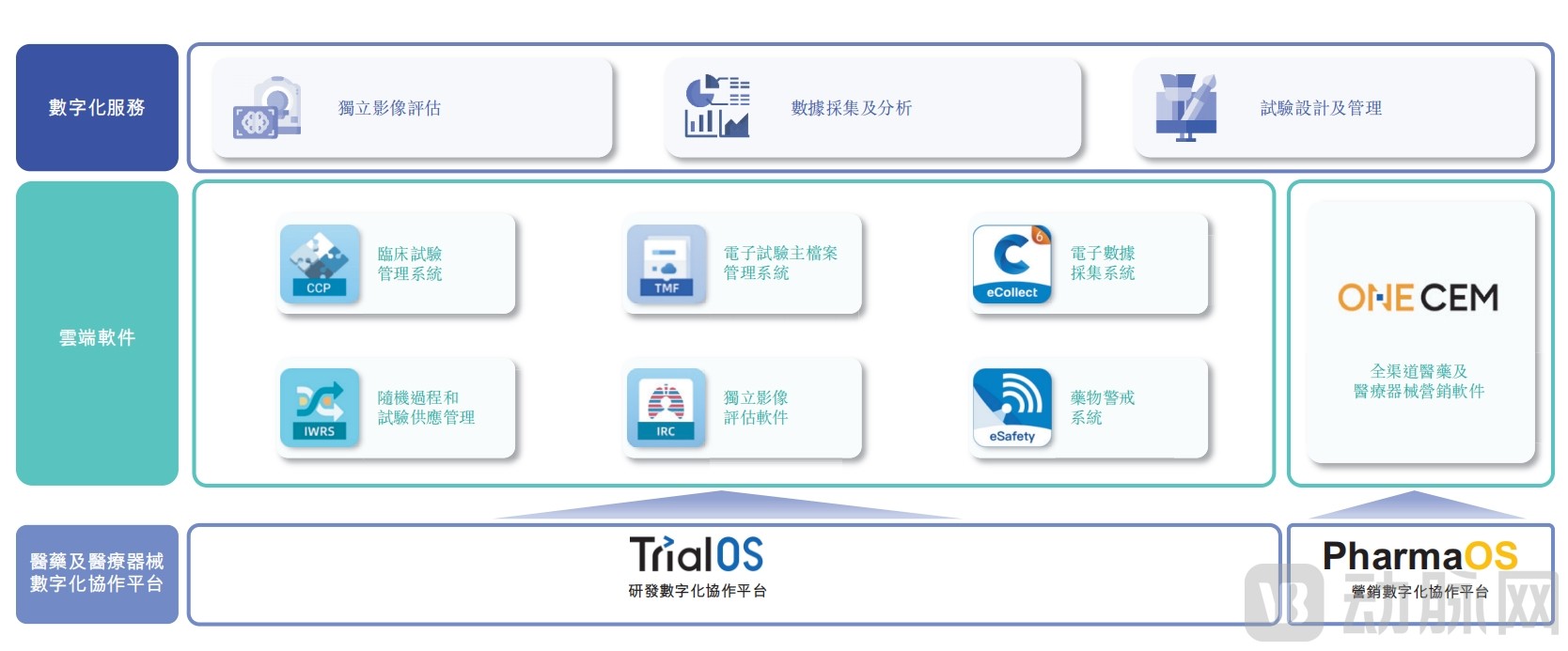
Taimei’s Main Products | Image Source: Prospectus
In 2019, building upon its clinical trial SaaS software, Taimei Medical Technology launched TrialOS, a digital collaboration platform for pharmaceutical and medical device R&D. TrialOS integrates Taimei’s cloud-based software products and digital services with key data resources, including clinical research institution information from the Center for Drug Evaluation (CDE), digital SMO partner information, independent imaging assessment data, and pharmacovigilance-related information. By accessing the platform via website or mobile application, employees of pharmaceutical companies, hospitals, CROs, and other stakeholders can achieve efficient data transmission and seamless process collaboration throughout the drug and device development lifecycle, thereby optimizing workflow organization.
In 2021, Taimei Medical Technology launched PharmaOS, a digital collaboration platform for pharmaceutical and medical device marketing, extending its business chain into the marketing segment of drugs and devices. As Zhao Lu previously stated, Taimei Medical Technology’s growth has largely evolved in tandem with market changes.
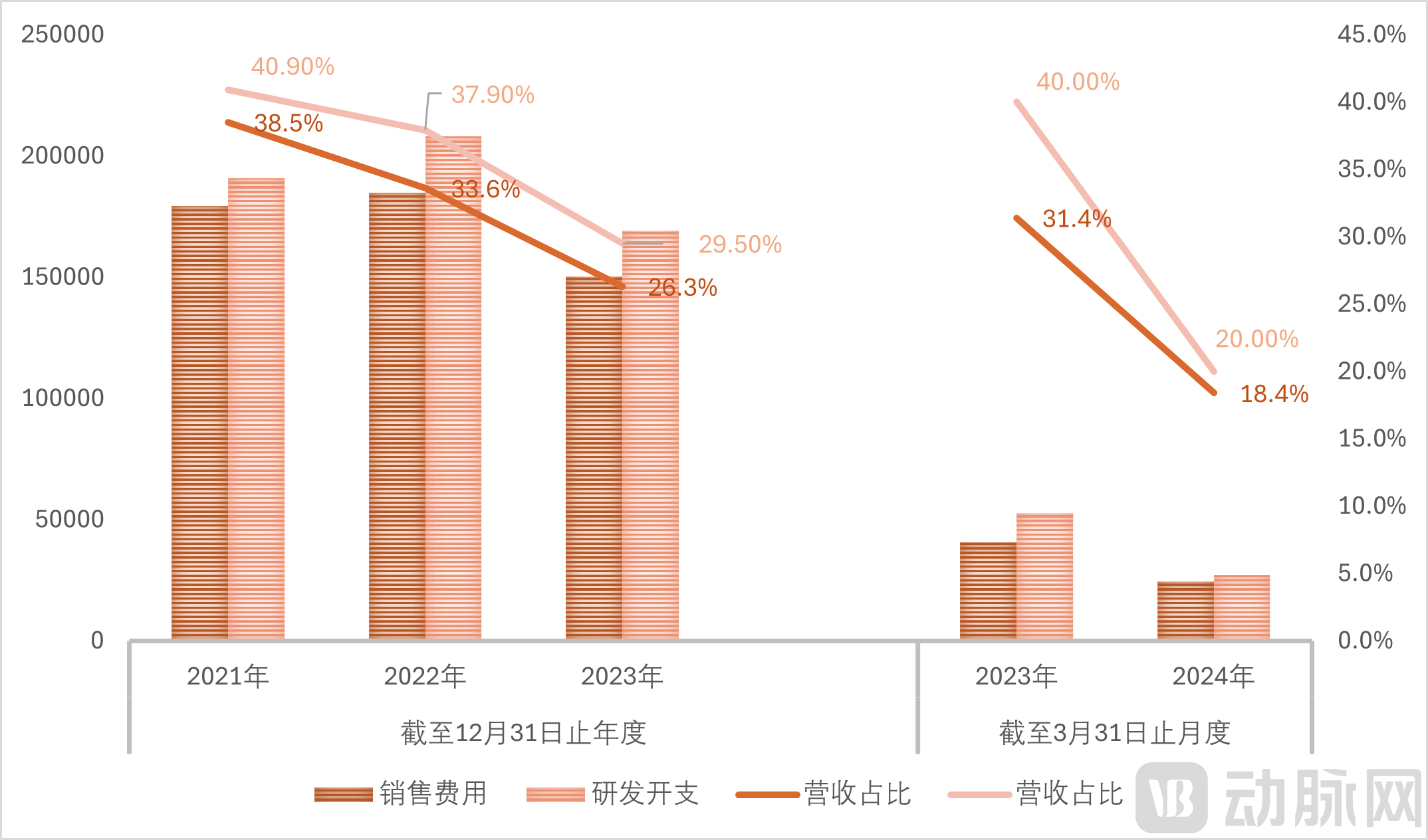
Changes in Sales and R&D Expenses of Taimei Medical Technology During the Reporting Period Data Source: Prospectus
To date, as the “water seller” in the wave of innovative drug development in China, Taimei Medical Technology has shared in the dividends of the rapid growth of the innovative drug industry and has participated in and driven the evolution of China’s healthcare digitalization sector from its nascent, unregulated stage to maturity. According to the prospectus, around 2023, both sales and R&D expenses as a percentage of operating revenue for Taimei Medical Technology reached a clear inflection point. This signifies that after more than a decade of entrepreneurship, Taimei Medical Technology has completed the initial development of its business and products and has entered a new phase of more stable operations.
2. Jumping the Gun: Digital Services Become the Primary Growth Driver
In practice, Taimei’s digital solutions primarily consist of two major modules: SaaS products and customized services (i.e., cloud-based software) for the digitization of clinical research and site management organizations (SMOs), independent imaging assessment, pharmacovigilance, and pharmaceutical and medical device marketing; and digital services that have emerged as a key growth driver, mainly comprising digital independent review center (IRC) services and digital clinical trials.
It is worth noting that, according to the prospectus,Digital services have become the primary revenue source for Taimei, accounting for approximately 60% of its total revenue and continuing to expand;Cloud-based SaaS products constitute Taimei’s second-largest product category, with revenues maintaining a growth trajectory during the reporting period. From 2021 to 2023, Taimei’s digital service revenues amounted to RMB 268 million, RMB 338 million, and RMB 368 million, respectively. Of these, revenues derived from IRC and digital clinical services accounted for 95.6%, 97.5%, and 98.9%, respectively.
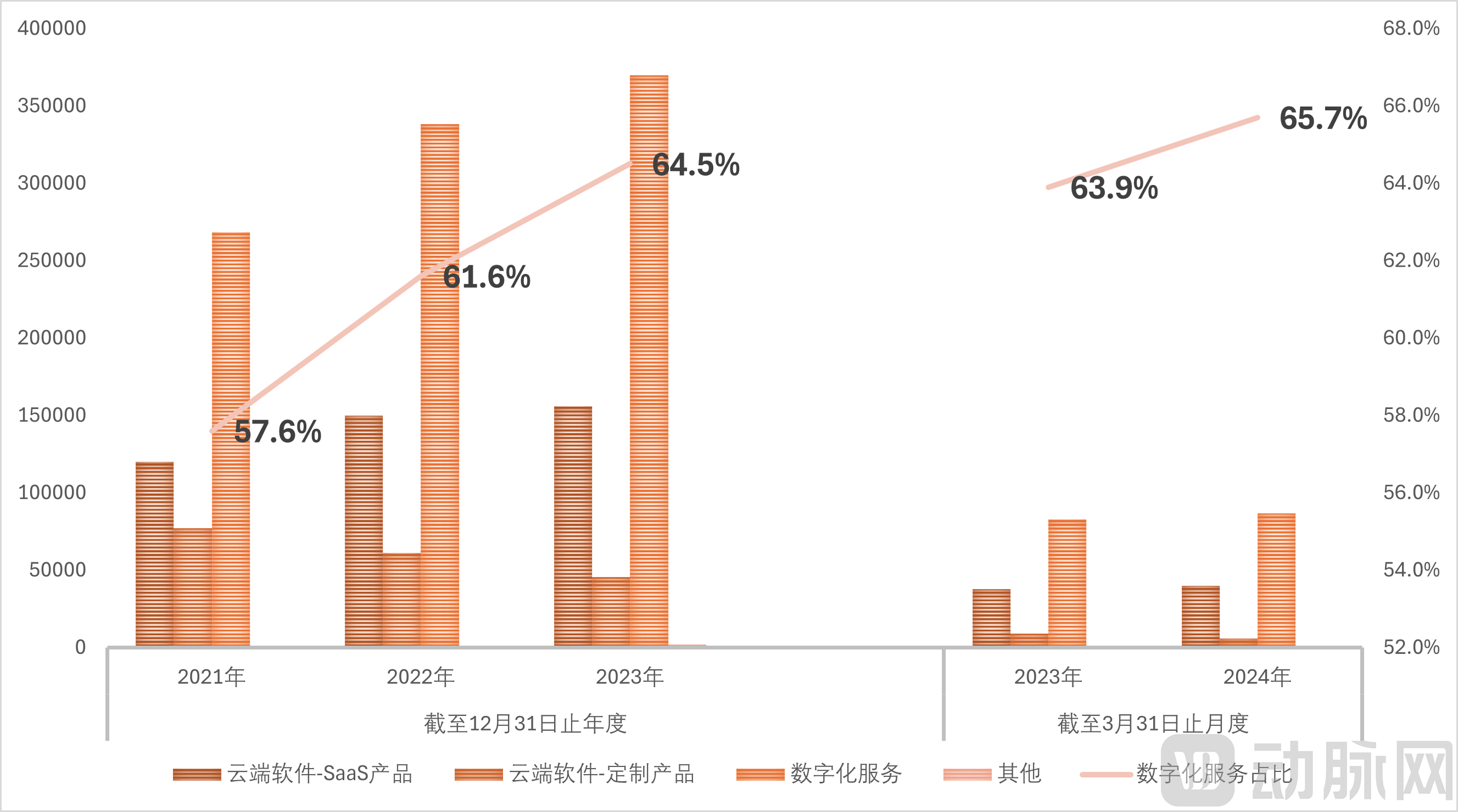
Sales Performance of Taimei Medical Technology’s Main Products During the Reporting Period Data Source: Prospectus
Certain features of digital services rely on cloud-based software; however, compared with earlier cloud solutions, digital services connect a broader range of stakeholders in pharmaceutical and medical device R&D and optimize the logic for processing massive datasets, thereby significantly enhancing R&D efficiency.
For example, Taimei’s digital clinical trial services have optimized data processing logic on the basis of cloud-based software, enabling the application of digital intelligence across multiple stages.Currently, clinical digital service capabilities have covered multiple areas, including SMO (Site Management Organization) business management services, pharmacovigilance services, and clinical trial data services.
Among these, Taimei’s digital SMO business management services leverage the platform’s SMO software to add value by connecting Clinical Research Coordinators (CRCs) to the cloud. In the on-site management of clinical research institutions, it provides integrated services related to SMO resource allocation, CRC training and management, task execution and supervision, and data visualization to support decision-making.
Among Taimei’s digital services, IRC has evolved into one of the single largest revenue-generating business lines.According to the prospectus, Taimei Medical Technology’s IRC service revenue amounted to RMB 89.976 million, RMB 101 million, and RMB 898.28 billion from 2021 to 2023, respectively.
Taimei’s Independent Review Committee (IRC) services help pharmaceutical and medical device developers, as well as relevant Contract Research Organizations (CROs), connect with more independent readers, thereby improving the efficiency of medical imaging assessments in clinical trials. Specifically, pharmaceutical and medical device companies and CROs with needs for independent imaging assessment can enter into IRC service contracts with Taimei. Taimei then procures independent medical imaging assessment services from independent readers and other providers, and feeds back the reviewed assessment results to the pharmaceutical and medical device companies and CROs. The entire process is completed on a digital platform.
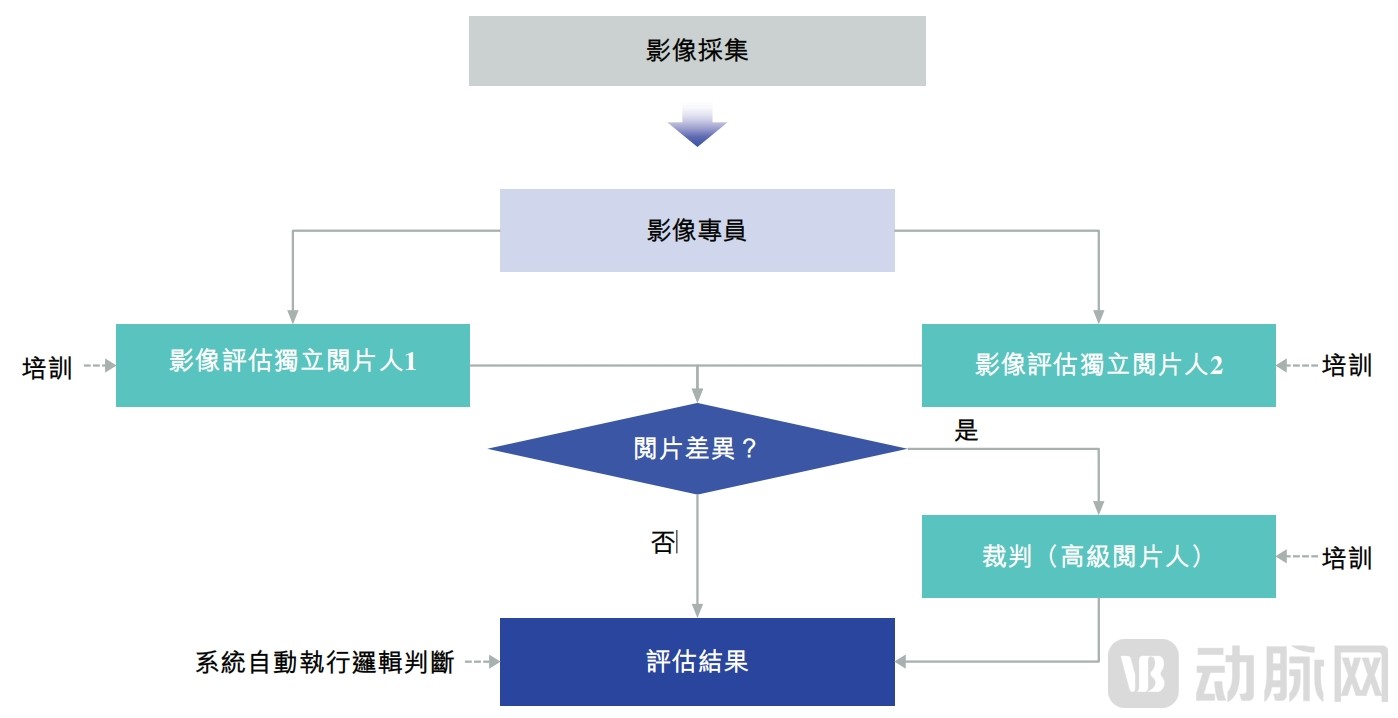
Taimei Medical Technology’s IRC Service Process | Image Source: Prospectus
In addition, Taimei is developing new digital services centered on the formulation and drafting of project management plans, as well as the writing of medical monitoring reports and clinical monitoring reports, thereby gradually building a comprehensive service capability that covers all stages of pharmaceutical and medical device R&D.
In China, the journey of medical digitalization has progressed through early stages such as informatization and digitalization, and is now transitioning toward “digital-intelligence” integration. From operational data, Taimei Medical Technology has taken the lead in this new arena of digital-intelligence transformation. As it embarks on its second growth curve, Taimei Medical Technology may once again be at least half a step ahead of the market.
3. The New Wave of Digitalization
In recent years, China’s innovative drug industry has entered a prolonged contraction cycle. As a key service provider to this sector—often described as the “water seller”—Taimei Medical Technology has also seen its growth slow down, with revenue growth declining from 17.8% in 2022 to 4.35% in 2023, and further dropping to 2.18% in the first quarter of 2024. For Taimei Medical Technology and many other healthcare digitalization companies, the external environment is becoming increasingly challenging. However, a closer look within the industry reveals that there is still room for growth in healthcare digitalization.
First, the trend in the development of innovative drugs and medical devices remains.Currently, China has developed into the second-largest pharmaceutical and medical device market globally. Between 2019 and 2023, the domestic market size for pharmaceuticals and medical devices grew from RMB 2.29 trillion to RMB 2.94 trillion, representing a compound annual growth rate (CAGR) of 6.5%. The market is projected to expand further at an accelerated pace, reaching RMB 4.46 trillion by 2028.
Throughout this process, R&D and marketing expenditures for pharmaceuticals and medical devices will continue to grow at a high rate. At present, it has become a consensus among pharmaceutical and medical device companies to maintain market competitiveness through innovation, leading enterprises across the sector to increase their R&D investments. Statistics show that domestic R&D spending on pharmaceuticals and medical devices rose from RMB 139.8 billion in 2019 to RMB 261.2 billion in 2023, and is projected to further increase to RMB 512.3 billion by 2028. Meanwhile, marketing expenditures will also continue to rise, helping these companies build market awareness for new products and therapies. As an important component of the pharmaceutical industry ecosystem, the growth in upstream R&D and marketing spending will inevitably continue to raise the market ceiling for the healthcare digitalization industry.
Secondly, increasingly stringent regulations in the pharmaceutical and medical device industry are driving up the penetration rate of digital solutions.More robust compliance policies for clinical trial data are encouraging more pharmaceutical and medical device companies to proactively adopt digital solutions to ensure the compliance and quality of their clinical trial data. Meanwhile, amid a tight external environment, these companies are placing greater emphasis on the efficiency of R&D and marketing activities, making them more willing to leverage digital solutions to gain a competitive edge.
Taking the market for digital pharmacovigilance solutions as an example, the number of reports submitted to the National Medical Products Administration (NMPA) increased from 1.514 billion in 2019 to 2.419 billion in 2023. Stricter regulatory requirements and the growing complexity of drug safety monitoring have driven demand for digital pharmacovigilance solutions. During this period, the compound annual growth rate (CAGR) of China’s digital pharmacovigilance solutions market was 32.3%, with its size expanding from RMB 89.8 million to RMB 275 million. The market is projected to further grow to RMB 675 million by 2028, at a CAGR of 19.7%.
Finally, the integration of innovative technologies such as artificial intelligence has expanded the application scenarios for digital solutions, thereby meeting the diverse needs of pharmaceutical and medical device companies.With the continuous advancement of technologies such as low-code development, artificial intelligence (AI), big data, and cloud computing, these cutting-edge innovations are increasingly being applied to the research, development, and marketing of pharmaceuticals and medical devices. This trend is making digital solutions more intelligent and rendering their development processes ever more flexible.
Currently, the diverse values of AI in the clinical research industry are being validated, including CRF form creation, automated testing, data auditing, intelligent coding, and custom function development. It is understood that AI applications have already yielded significant results in Taimei’s EDC products. In the future, as the number and complexity of research projects increase, unlocking the value of clinical research data will become a new challenge. Intelligent analysis of real-time data will not only provide managers with risk warnings and high-level corrective recommendations but also help decision-makers accumulate valuable industry experience, further expanding the application boundaries of digital solutions in the pharmaceutical and medical device industries.
With its listing on the Hong Kong stock exchange, Taimei Medical Technology has entered a new phase of operations. Whether this pioneer in China’s healthcare digitalization sector can continue to shine in the new competitive cycle remains to be seen.