

Matchpoint Therapeutics Files for IPO Following $100M Backing Led by Sanofi Ventures to Advance Covalent Drug Platform in Immunology
Matchpoint Therapeutics
Covalent Drug Developer
Covalent drugs inhibit the biological functions of target proteins by forming covalent bonds with amino acid residues, thereby conferring additional binding affinity. This enhanced affinity enables prolonged target engagement, resulting in unique pharmacodynamic profiles and high biochemical efficiency. Consequently, covalent drugs exhibit significantly potentiated efficacy and more sustained inhibitory effects compared to conventional small-molecule drugs.
Looking back at the century-long history of drug development in modern medicine, aspirin and penicillin are arguably the two most widely used and best-known classes. However, many important covalent drugs in human history emerged from routine screening or serendipitous discovery, with their mechanisms of action being elucidated only in subsequent research.
Behind serendipitous discoveries lies humanity’s insufficient understanding of the “inevitabilities” in drug discovery, molecular design, and compound screening. In recent years, rational development strategies for covalent drugs have achieved multiple breakthroughs, leading to the emergence of several blockbuster therapies for oncology indications. Representative examples include various small-molecule covalent inhibitors targeting KRAS G12C, such as Amgen’s Sotorasib and Mirati’s Adagrasib, which have already received marketing approval.
To date, with advances in the study of protein pathogenic mechanisms, continuous progress in technologies such as high-throughput proteomics and artificial intelligence algorithms, along with innovations in underlying logic, frontier drug development approaches represented by chemical proteomics have ushered in entirely new rational development strategies for covalent drugs.。
Matchpoint Therapeutics is an innovative company that applies chemical proteomics technologies to develop novel covalent small-molecule drugs. Notably, Matchpoint’s current pipeline of covalent drug candidates is focused on the field of immunology, which holds substantial untapped potential. Previously, Matchpoint was named one of BioSpace’s Top Biotech Startups of 2024, underscoring the critical importance of chemical proteomics as an innovative strategy for drug development.
The structure of covalent drugs typically consists of two parts: a reactive group (covalent warhead) that forms a covalent bond with the target protein, and a “guiding system” that directs the inhibitor’s targeting action. Once bound, an irreversible bond is formed between the covalent drug and its target protein, yielding unique pharmacological benefits.
We can envision the target protein as a port, with covalent drugs likened to high-affinity vessels and conventional small-molecule drugs to low-affinity vessels. Entry of these vessels into the port blocks traffic and modulates signal transduction, thereby controlling diseases associated with the target. Low-affinity vessels may enter the port under certain conditions but struggle to remain docked for extended periods. In contrast, high-affinity vessels can “drop anchor” at the target port, exerting more potent and durable regulatory effects.
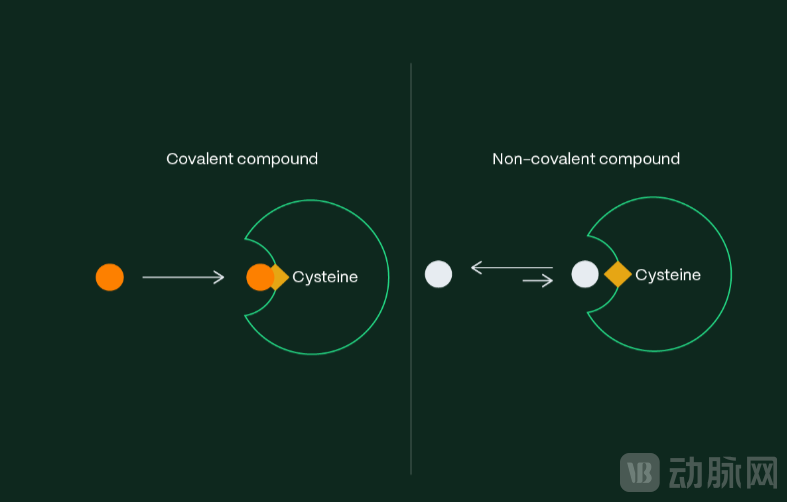
The key lies in the “anchor” (covalent bond) possessed by high-affinity covalent drugs, which enables them to form tight and durable connections with protein targets that are difficult to engage and lack well-defined binding pockets—commonly referred to in drug development as “undruggable” targets. In this way, covalent molecules significantly expand the number of disease-causing protein targets amenable to therapeutic intervention.
In terms of pharmacodynamics, covalent molecules form irreversible bonds with proteins via a single reactive amino acid. When this amino acid is present exclusively in the disease-causing protein, it enables precise targeting while sparing other closely related proteins (including members of the same family and wild-type forms of mutants), thereby achieving high target selectivity. Furthermore, the prolonged duration of action characteristic of covalent molecules decouples pharmacokinetics from pharmacodynamics, resulting in PK-PD decoupling. Sustained efficacy after metabolic clearance has been observed in experiments, along with superior metrics unattainable by other drugs or therapeutic regimens.
In 2021, the founders of Matchpoint Therapeutics co-authored a paper pointing out that,Chemical proteomics strategies have revealed thousands of proteins that can be covalently modified by reactive small molecules, while covalent fragment-based ligand discovery has provided a wealth of potent and synthetically accessible covalent fragments for drug discovery, making it possible to design covalent warheads for target proteins.To date, many proteomes that can be targeted by covalent drugs have not yet been discovered using standard chemical proteomics methods.
Guided by this approach, the founders launched the Advance Covalent Exploration (ACE) platform at Matchpoint Therapeutics, achieving breakthroughs in chemical proteomics, machine learning, and covalent compound libraries to discover innovative covalent binders that engage disease-causing proteins. Nathaniel Gray, Co-founder and Professor of Chemical and Systems Biology at Stanford University, stated that the ACE platform can maximize the detection of novel covalent targets at “active sites, allosteric sites, and cryptic pockets,” including multiple targets that are difficult to address with small-molecule drugs.

Matchpoint employs a proprietary, innovative labeling technology to conduct high-throughput, in-depth proteomic profiling, enabling the identification of novel binding sites on disease-causing proteins. The ACE platform facilitates screening for low-abundance targets within their native cellular environment.
Specifically, the ACE platform employs high-throughput cell screening methods to identify selective binders through two complementary approaches: first, by conducting extensive unbiased chemoproteomic screening to determine the maximum number of druggable protein key targets (hits); and second, by performing targeted chemoproteomic focused screening to identify high-priority targets among the druggable targets.
Matchpoint leverages machine learning across extensive datasets—including proprietary chemoproteomics screening data, publicly available data, and state-of-the-art predictors such as protein conformations and protein-protein interactions—to develop its proprietary algorithms. These algorithms uncover principles for covalent drug discovery, guide target prioritization and predict compound scaffolds, thereby supporting medicinal chemistry and compound library design.
Matchpoint is building a proprietary covalent compound library, continuously optimizing and expanding it through predictive algorithms. The library includes probe fragments designed to maximize the identification of cryptic pockets on pathogenic proteins, as well as drug-like candidates and lead compounds that can advance into clinical development with reduced time and resource investment. As research progresses, scientists are now able to systematically use diverse probes to discover allosteric, transient, and hidden binding sites, thereby avoiding the omissions common with traditional methods.
Andre Turenne, President and CEO, stated in a press release that small-molecule therapies are underutilized in the field of immunology. Matchpoint is currently advancing “highly specific covalent drugs targeting several of the most important and challenging targets,” with pipeline indications spanning a broad range of diseases, including cancer.
Matchpoint’s current R&D focus will be on cysteine covalent drugs,“It is simply the best amino acid for covalent bonding,” Turenne pointed out. Although cysteine is currently the most well-understood target, its potential as a nucleophile for targeted therapy remains largely untapped, leaving vast room for research and development to be explored. This field has already yielded several blockbuster drugs, such as Johnson & Johnson’s first BTK inhibitor ibrutinib, Amgen’s first KRAS G12C inhibitor sotorasib, and AstraZeneca’s EGFR inhibitor osimertinib.
The ACE platform is also fully applicable to other nucleophilic reagent directions, laying the foundation for future diversified exploration.
Multiple co-founders of Matchpoint Therapeutics have served or are currently serving at the Dana-Farber Cancer Institute, an affiliate of Harvard Medical School.
Dr. Nathanael Gray, who served at a research institute for over a decade, is currently a Professor in the Department of Chemical and Systems Biology at Stanford University. He is also a serial entrepreneur in the biotechnology sector, having helped found several biotech companies, including C4 Therapeutics, Syros, Allorion, Lighthorse, B2S, and Inception. In the field of covalent drugs, the Gray Laboratory has developed kinase inhibitors targeting the EGFR T790M mutation, covalent inhibitors targeting Pin1, and more.
Dr. Tinghu Zhang, a co-founder of Gray Laboratory who also holds a position at Stanford University, moved to the United States after graduating from the University of Science and Technology of China. His primary research focuses on covalent drug modalities and protein degradation. At the Dana-Farber Cancer Institute, he led the development of covalent inhibitors targeting CDK7, CDK12/13, JNK, PIP4K, MKK4, Src, and TEAD.
Professor Edward Chouchani holds appointments at Harvard Medical School and the Dana-Farber Cancer Institute. His laboratory focuses on deciphering the molecular mechanisms driving metabolic diseases and leveraging this knowledge to develop targeted therapeutic strategies. Professor Jianwei Che is a core faculty member in computational chemistry at Harvard Medical School and an expert in bioinformatics, computational chemistry, and drug discovery, providing expertise in molecular modeling, cheminformatics, and computer-aided drug design.
In October 2022, Matchpoint Therapeutics announced that it had raised $100 million in funding and emerged from stealth mode. The capital will provide the company with cash runway through 2025 to advance its proprietary platform and novel covalent molecule pipeline. Seed and Series A investors included Sanofi Ventures, Vertex Ventures HC, Atlas Venture, Access Biotechnology, Digitalis Ventures, and Alexandria Venture Investments.
As a key entry point into Sanofi’s innovation ecosystem, Sanofi Ventures focuses on investing in leading companies in the fields of biotechnology and digital health. Crucially, it strategically invests in early-stage transformative science and technologies when corporate partnerships or acquisitions by Sanofi are still premature.
Sanofi’s recent moves also reveal its significant bet on proteomics. This June, Sanofi entered into a strategic collaboration with Belharra Therapeutics, a company specializing in non-covalent chemical proteomics platforms, to jointly advance the development of novel small-molecule therapeutics targeting undisclosed immunology targets designated by Sanofi.
From a broader perspective, the “AI + Proteins” sector has quietly emerged as a key frontier for multinational corporations (MNCs) and investment and financing activities over the past three years.In April this year, Xaira Therapeutics, which focuses on proteomics and leveraging AI to reshape drug development, secured over $1 billion in seed funding. According to the VCBeat Orange Database, more than 100 financing deals occurred in this sector between January 2022 and June 2024, with total funding exceeding $6 billion.

(Data source: VCBeat Orange Database)
In the niche area of drug discovery and development, proteomics is gradually expanding its exploratory frontiers to encompass next-generation small-molecule therapeutics such as covalent PROTACs.In 2024, BridGene Biosciences entered into an agreement with Galapagos NV, with a total potential value of nearly $900 million, to leverage its IMTAC™ chemoproteomics platform for the discovery of novel small-molecule drug candidates against specific targets, and to collaboratively develop highly selective oral SMARCA2 small-molecule protein degraders (PROTACs).
As a cutting-edge and highly innovative approach to drug development, proteomics and its platform technologies have garnered significant attention and favor from the capital market within just five years. Meanwhile, the platform-based nature of these technologies, spanning multiple R&D directions and drug development scenarios, has infused startups in this sector with abundant resources and facilitated high-value collaborations involving targets and pipelines. Returning to first principles, the large-scale business development (BD) deals behind this trend reflect the “butterfly effect” driven by disruptive technologies—representing both the aspiration to break through barriers posed by “difficult-to-drug” and “undruggable” targets, and the practical need to deploy these technologies into real-world R&D settings for tangible translational applications.
References:
https://mp.weixin.qq.com/s/t5OOgi7K29mW-1l1IhV4sQ
https://www.vbdata.cn/1518977222