

Chinese Firm JingCe Medical Secures Approval for Innovative Non-Invasive Glucose Monitor, Challenging Apple and Google in a Coveted Market
Another Non-Invasive Glucose Monitor Hits the Market!
In April this year, the National Medical Products Administration approved Jingce Medical’s self-developed combination glucose meter, with its market launch officially announced in October. This product is a non-invasive glucose meter comprising a non-invasive blood glucose detection module, an invasive blood glucose detection module, a metabolic heat probe, an ambient temperature and humidity monitoring module, and a display screen. It is suitable for daily self-monitoring of blood glucose levels in patients with type 2 diabetes.
It is reported that the combined glucose meter entered the Special Review Channel for Innovative Medical Devices (Green Channel) as an innovative product in 2021, and underwent clinical trial validation at Peking University People’s Hospital, the Chinese PLA General Hospital (301 Hospital), and Pinggu Hospital from 2021 to 2023.
Clinical data show that, compared with venous blood glucose measurements, this non-invasive glucose meter achieved a mean absolute relative difference (MARD) of 10.69%, with 94.72% of values in Zone A and 99.7% in Zones A+B on Clarke Error Grid Analysis, and a linear correlation coefficient of 0.93. These performance metrics are comparable to, and in some cases surpass, those of certain continuous glucose monitoring (CGM) products.
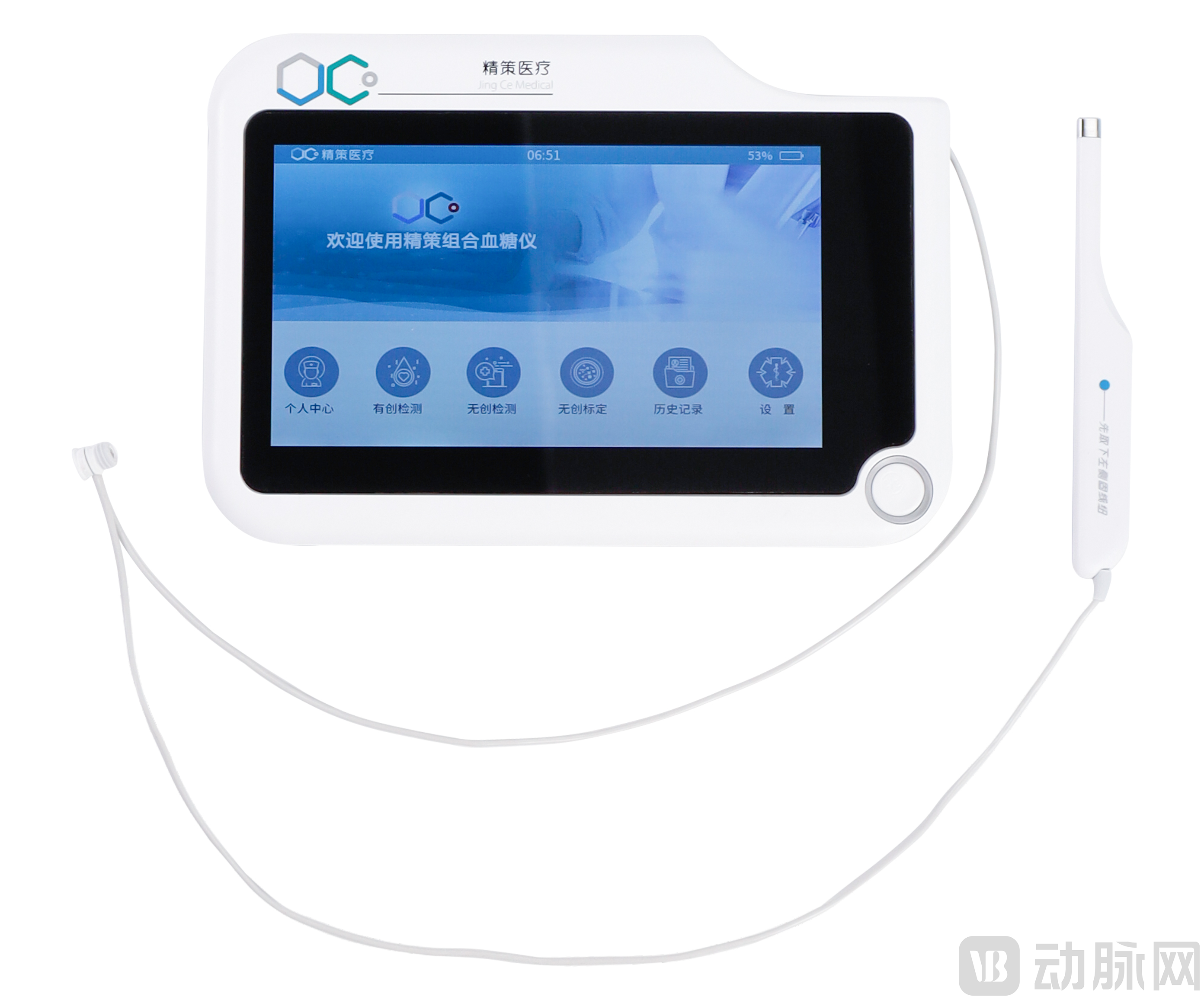
Regarding its usage, Dr. Yin Ke from Jingce Medical explained: “The combined glucose meter consists of two parts: a main unit and a metabolic heat probe. The main unit resembles an iPad, while the metabolic heat probe is shaped like a thermometer. For first-time use, users need to perform approximately 10 calibrations. Thereafter, no further calibration is required unless significant changes occur (such as initiating insulin therapy or starting medication). To measure blood glucose, the user places the thermometer-shaped metabolic heat probe under the tongue for 90–180 seconds, after which the main unit displays the blood glucose level.”
In terms of pricing, the combination glucose meter also holds an advantage. According to reports, the planned retail price for the combination glucose meter is 3,900 yuan per unit. Unlike continuous glucose monitoring (CGM) and blood glucose monitoring (BGM) systems, this product involves a one-time purchase for permanent use, with no additional charges or costs for consumables. The cost of BGM includes the device and test strips, amounting to approximately 100–200 yuan per month. The cost of CGM includes the device and sensor consumables, totaling around 300–600 yuan per month. Over a five-year period, the monthly cost of the combination glucose meter amounts to only 65 yuan. For diabetic patients requiring long-term blood glucose monitoring, the combination glucose meter offers a significant cost advantage.
According to Wang Dong, Chairman of Jingce Medical, “The company has currently promoted and trialed its combination glucose meter in multiple communities, earning high recognition from elderly users. Meanwhile, the product has also gained popularity in departments such as endocrinology at public hospitals.”
Non-invasive, high accuracy, ease of use, and lower cost—non-invasive glucose monitoring has once again captured the collective attention of diabetes patients. However, whether this newly approved combined glucose meter can break into the market remains to be seen over time. After all, the narrative around non-invasive glucose monitoring has been ongoing for quite some time. Tech giants such as Apple, Google, Samsung, and Huawei have all entered the field, but some have retreated in defeat, others have abandoned their efforts, and some continue to conduct research quietly.
With the recent approval of a non-invasive glucose meter, can it tell a new story? Can Chinese-made non-invasive glucose meters break into the non-invasive glucose monitoring market that has attracted the interest of Apple and Google? Where lie the commercialization challenges and breakthrough points?
Blood glucose monitoring is a core component of blood glucose management. Currently, the primary methods for blood glucose monitoring are self-monitoring of blood glucose (SMBG) and continuous glucose monitoring (CGM), both of which are invasive to patients. In particular, SMBG requires patients to perform fingerstick blood sampling for each measurement, causing significant pain and resulting in poor patient adherence.
Naturally, non-invasive blood glucose monitoring has emerged as a new direction for research and development. To date, hundreds of research teams worldwide have launched studies on non-invasive blood glucose measurement.
Based on different technical approaches, non-invasive blood glucose monitoring methods can be classified into optical and non-optical categories.
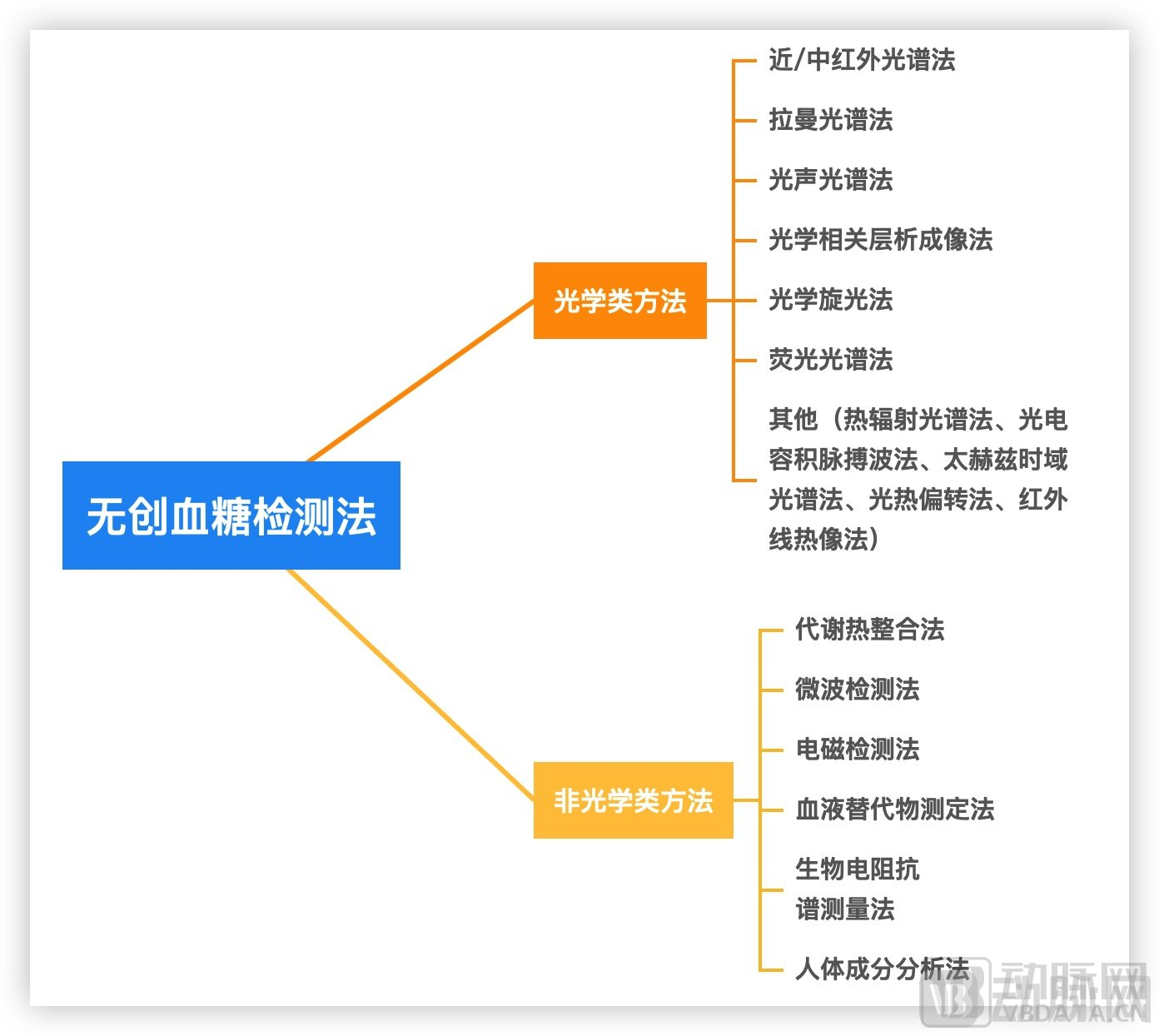
Optical detection methods use light as an information carrier by focusing a beam of light onto the human body. These methods leverage the close correlation between blood glucose concentration and parameters such as the intensity, phase, polarization angle, and frequency of transmitted light, as well as the scattering coefficient of target tissue. By extracting changes in these parameters, blood glucose levels are indirectly calculated. Examples include near/mid-infrared spectroscopy, Raman spectroscopy, and photoacoustic spectroscopy.
Non-optical detection methods derive blood glucose concentration by measuring information such as heat, glucose phase, or electrical properties within the human body, or indirectly estimate blood glucose levels by measuring glucose-related substances or physical characteristics in the body. Examples include metabolic heat integration, microwave detection, body composition analysis, and blood substitute measurement.
Among them, tech giant Apple adoptsRaman SpectroscopyLaw. Data indicate that Raman spectroscopy determines the molecular structure of substances based on the frequency difference between Raman scattering and Rayleigh scattering generated when a laser interacts with the analyte, thereby enabling the determination of the composition of different substances.
In recent years, Raman spectroscopy has achieved milestone progress. Scientists have directly observed the Raman peak of glucose on the skin of living pigs in vivo, with signal intensity proportional to the reference glucose concentration. This evidence demonstrates that transcutaneous glucose sensors can detect glucose Raman spectra in vivo, dispelling long-standing skepticism within the industry.
However, there are still many bottlenecks in the measurement of blood glucose using Raman spectroscopy. For example, the equipment is bulky and inconvenient to carry; signal stability issues caused by external factors such as human movement, pressure, and angle during data collection; and interference with algorithms due to individual differences.
In response, Apple’s patent application documents indicate that it has improved Raman spectroscopy to enhance measurement accuracy and achieve signal stability. However, according to reports from foreign media,Currently, Apple's non-invasive blood glucose monitoring product is about the same size as an iPhone.Industry ExpertsConsideritsAt least 3 more years are needed to enter the mass production stage.-7 Years。
In addition to Apple, the South Korean company Apollon is also developing non-invasive blood glucose monitoring products based on Raman spectroscopy. Reportedly, Apollon disclosed its technical approach in the journal Science Advances; this Raman spectroscopy device integrates a laser emitter, an imaging spectrometer, and a detector, and identifies characteristic glucose peaks by irradiating the ear.
Another Tech GiantGoogle employs a blood surrogate assay.This technical approach involves sampling body fluids such as sweat, tears, saliva, and interstitial fluid, followed by chemical analysis of the biomarkers contained therein to determine blood glucose levels.
This technology requires companies to master the biochemical composition of body fluids such as sweat and tears, as well as their relationship with blood chemistry, and to eliminate interference from environmental factors and individual physiological differences by upgrading sensors and algorithms.
SemenDr. He Zongyan, Founder and Chief Scientist of Ce Medical, stated, “One challenge with optical methods is that the consumption of certain foods (such as citrus fruits) or medications (such as vitamin B2) by users can significantly compromise the accuracy of measurements. This necessitates that users control their dietary intake or report their food consumption when using the device, which is highly inconvenient. Furthermore, blood glucose measurement via bodily fluids is not only inconvenient but also suffers from a lag time of 15–30 minutes. If sweat is used, substances such as lactic acid present in it can cause significant interference.”
Due to the immense R&D challenges, Verily, a sister company of Google, abandoned the project after three years of development. In 2015, Verily announced its plan to develop smart contact lenses capable of non-invasive blood glucose monitoring via tear fluid. In November 2018, Verily announced the discontinuation of the project, citing insufficient correlation between tear glucose and blood glucose levels, which undermined the feasibility of developing glucose-monitoring contact lenses.
Although Google’s project failed, other research teams have continued to develop tear-based biomarker technologies, creating devices such as graphene–AgNW composite sensors and amperometric sensors that utilize glucose oxidase to detect glucose in tears.
Compared to Apple and Google,The Jingce Medical combination blood glucose meter approved for market launch this time adoptsImprovedMetabolic Heat Integration Method. The principle of the traditional metabolic heat integration method is based on the assumption that human metabolic heat is positively correlated with blood glucose concentration. By taking into account temperature, humidity, blood flow velocity, and blood oxygen saturation, blood glucose levels are calculated using correlative functional relationships.
Previously, Bobang Fangzhou’s non-invasive glucose meter, which received approval from the National Medical Products Administration (NMPA), was also based on metabolic heat integration method, with the measurement site being the finger skin. This product utilizes multi-sensor integration technology to achieve non-invasive blood glucose measurement within one minute. Its clip-on design ensures simple and convenient operation. Meanwhile, patients demonstrate good tolerance to this non-invasive glucose meter, allowing for multiple daily tests. The device automatically stores measurement results and intuitively displays trends in blood glucose changes. Additionally, this non-invasive glucose meter is compact and portable, supports multiple user profiles on a single device, requires no consumables for testing, and offers high cost-effectiveness.
It is understood that the metabolic heat integration method is based on the absolute balance between heat production and heat dissipation in the body, making it suitable for use in the early morning fasting state. However, during the extended period after a meal, heat production exceeds heat dissipation, causing deviations in the underlying principles of the metabolic heat integration method, which leads to reduced accuracy in postprandial blood glucose measurements.
In response, Jingce Medical employs self-developed probes with a precision of up to 0.01°C to capture subtle metabolic heat differentials where postprandial thermogenesis exceeds heat dissipation, thereby calculating user blood glucose levels. By comparing these measurements with environmental parameters and personalized calibration data to correct the results, the company has overcome the challenge of significant postprandial errors and established a novel theoretical model and computational method for integrated metabolic heat analysis in both equilibrium and non-equilibrium states.
At present, although Apple has made slow progress and Google has abandoned its project, several non-invasive blood glucose monitoring products have already been approved on the market.
For example, the Israeli company Cnoga has launched a blood glucose meter, TensorTip CoG, based on hemoglobin tissue color imaging technology, priced at approximately $2,000 in Europe. According to the manufacturer, TensorTip CoG calculates blood glucose concentration by leveraging a proprietary algorithm and a vast dataset (comprising approximately 68 billion color combinations) collected by its processor, in conjunction with the correlation between optical signals and blood glucose levels.
In terms of specific usage, TensorTipCoG requires an invasive learning period of approximately one week prior to initiating non-invasive blood glucose monitoring (comprising at least 130 sets of invasive blood glucose data and 65 sets of non-invasive optical signal data) to help the device establish the correlation between optical signals and blood glucose levels.
Due to the product's lengthy calibration time, frequent calibration requirements, and high cost, market acceptance has been limited, and it has failed to achieve significant market penetration.
Another approved product is Cygnus Medical’s GlucoWatch. As the world’s first wrist-worn, non-invasive blood glucose monitor, it received FDA approval for market launch in 2002. According to public reports, the device resembles a smartwatch in appearance and is slightly larger than a conventional digital watch.
In terms of technical principle, the GlucoWatch calculates blood glucose levels by measuring the extent of the reaction between glucose molecules and glucose oxidase within a gel. Specifically, the back of the GlucoWatch contacts the human skin via a gel pad containing two electrodes. When activated, the circuit is completed, generating a mild electric current that passes through the skin. This process draws glucose molecules from the interstitial fluid into the gel, where they react with the glucose oxidase. The GlucoWatch then calculates the blood glucose concentration based on the extent of this reaction and displays it on the screen.
Although it was the world’s first wrist-worn non-invasive glucose meter, it failed to make a significant impact in the market. This was because the device required a 2–3 hour warm-up period before use, and the electrical current it generated irritated the skin, causing discomfort to patients. The product was discontinued in 2007.
Furthermore, C8 MediSensors, a U.S.-based company, has also launched an optical blood glucose monitoring device. This product requires users to secure the device tightly against the skin at the waist using a belt. During measurement, the instrument projects a beam of monochromatic light onto the skin and analyzes the returned spectrum. However, consumer feedback indicates that the device is inconvenient to use, and signal acquisition becomes highly unstable during physical activity. Consequently, this product has failed to gain market traction.
In addition to the aforementioned marketed products failing to gain market traction, some companies focused on technological R&D have also encountered financial crises. For example, Rockley Photonics, a former blood glucose monitoring partner of Apple Inc., was forced into bankruptcy restructuring due to commercialization challenges.
As an innovative enterprise, Rockley Photonics was once regarded as a global leader in silicon photonics-based health monitoring and communication solutions. The company developed a silicon photonics sensing platform capable of non-invasively and continuously monitoring biomarkers such as blood glucose, lactate, hydration levels, blood pressure, and body temperature, securing 236 patents.
Although Rockley Photonics has been continuously expanding the range of biomarkers that its silicon photonics sensing platform can monitor, the commercialization of its products has progressed extremely slowly. For a long period, the company released only one product, the Bioptx Baseline wristband. It was not until August 2022 that Rockley Photonics announced it had received its first commercial purchase order. However, this failed to alleviate its deteriorating financial condition. As of September 2022, Rockley Photonics reported sales of $3 million and a net loss of $152 million. In January 2023, Rockley Photonics filed for bankruptcy protection.
Overall, approved or certified non-invasive blood glucose monitoring products have made little progress in commercialization. At present, no non-invasive glucometer has truly broken through into the mainstream market. This presents both opportunities and challenges for Jingce Medical’s newly approved combination blood glucose meter. How can companies specializing in non-invasive blood glucose monitoring devices, such as Jingce Medical, break through in the market?
As of now, there are still multiple bottlenecks in the commercialization of non-invasive glucose meters.
First, non-invasive glucose meters are bulky and inconvenient to carry. For diabetic patients who need to measure their blood glucose multiple times a day, blood glucose monitoring is an essential requirement; therefore, portable and wearable glucose monitors would be more appealing.
To address this pain point, Jingce Medical plans to develop a new generation of products. It is reported that the second-generation product will be significantly smaller in size, resembling a voice recorder in form factor, and can be used in conjunction with a smartphone for utmost convenience. The third-generation product will be further miniaturized and designed in the form of earphones.
Secondly, another issue with non-invasive glucose meters is their high cost. By eliminating certain hardware components, the cost of non-invasive glucose meters is expected to be further reduced.
Finally, non-invasive glucose monitors are inconvenient to use and exhibit low accuracy. For instance, one model requires users to secure the device tightly against the skin at the waist using a belt, while another delivers electrical stimuli to the user’s skin during detection. The inconvenience of use imposes stringent operational requirements; even minor user errors can significantly compromise accuracy. This greatly limits the application of non-invasive glucose monitors.
In response, new technologies and methods are continuously emerging in the market to address the aforementioned issues. For instance, Know Labs is continually optimizing its Bio-RFID technology platform for non-invasive blood glucose monitoring. In July 2023, Know Labs announced its latest research findings, revealing that the Mean Absolute Relative Difference (MARD) of its Bio-RFID technology platform was approximately 11.3%, marking significant improvement compared to the previous values of 20% and 12.9%.
For another example, HAGAR’s non-invasive continuous glucose monitor, GWave, uses radiofrequency waves to measure blood glucose levels non-invasively. Published clinical study data comparing GWave with conventional CGM show that 97% of GWave readings matched those of traditional CGM; two separate GWave devices yielded consistent results; and the mean absolute relative difference (MARD) for GWave was 6.7%.
It is foreseeable that, as market education advances, non-invasive glucose meters will accelerate their market penetration. As companies continuously optimize and innovate their technologies, launching next-generation non-invasive glucose monitoring devices, the concept of non-invasive glucose measurement will gain market acceptance and gradually increase its penetration rate.