The last “major leap forward” for organ-on-a-chip technology occurred approximately two years ago. In 2022, the U.S. Food and Drug Administration (FDA) took frequent actions: data from organ-on-a-chip models were used for the first time in FDA new drug applications; driven by the FDA, pharmaceutical companies, and biotech firms, the U.S. Congress, from the Senate to the House of Representatives, finally codified the non-mandatory nature of animal testing into law. Alongside these significant moves by the FDA, market sentiment steadily rose. The period around 2022 also marked the emergence of China’s organ-on-a-chip sector, with several companies in this field securing financing. Over the past two years, with the resurgence of the AI wave, organ-on-a-chip technology has undergone significant transformations. One of the most notable changes is the integration of artificial intelligence and machine learning. AI is being utilized to analyze the vast amounts of data generated by these systems, optimize chip design, predict cellular behavior, and simulate complex biological interactions. The pharmaceutical industry’s trust in organ-on-a-chip models during drug development has increased, leading to an expansion in collaborative efforts. On a global scale, organ-on-a-chip technology is increasingly resembling “TechBio” rather than being purely “biotechnology.”
AI Is Now a Must-Have Option
The introduction of AI technology has significantly enhanced the precision and efficiency of organ-on-a-chip technology. AI is capable of processing vast amounts of biological data obtained from organ-on-a-chip systems and identifying complex biological response patterns. The data generated by organ-on-a-chip systems are complex and diverse, encompassing cell viability, metabolite levels, and electrophysiological signals. Artificial intelligence, particularly deep learning algorithms, can effectively process these multidimensional datasets. AI is capable of identifying subtle patterns that are difficult for humans to detect, such as minute changes in cellular behavior. Furthermore, it can integrate and analyze heterogeneous data types—including gene expression, protein levels, and metabolite concentrations—to derive comprehensive conclusions. Furthermore, AI excels in anomaly detection, identifying data points that deviate from the norm, which may signal early signs of disease or adverse drug reactions. Through such comprehensive and in-depth data analysis, AI provides researchers with unprecedented insights, enabling them to better understand complex biological systems. By leveraging machine learning algorithms, researchers can establish complex predictive models. These models can predict the likely responses of new drugs on organ-on-a-chip platforms based on historical data, significantly accelerating the drug development process. Meanwhile, these models can also simulate disease progression in organ-on-a-chip systems and predict changes in biomarkers at different stages. More importantly, AI models are capable of predicting the long-term effects of drugs or environmental factors, thereby overcoming the temporal limitations inherent in organ-on-a-chip experiments. AI systems can monitor organ-on-a-chip devices 24/7, significantly enhancing experimental precision and reliability. They can simultaneously track multiple physiological parameters, such as pH levels, oxygen concentration, and cell morphology. Upon detecting any anomalies, the system immediately issues alerts, enabling researchers to intervene promptly. More advanced AI systems can even automatically adjust experimental conditions based on monitoring data to maintain optimal states, making long-term, complex experiments more feasible and reliable. In accordance with cellular needs, AI can dynamically adjust the composition and supply rate of culture media, ensuring cells grow under optimal conditions. Furthermore, AI can simulate various in vivo stimuli, such as mechanical forces and electrical signals, to study organ responses to these stimuli. This highly automated and intelligent control not only enhances the precision and reproducibility of experiments but also makes long-term, complex experiments more feasible. For example, Yaosu Technology's AI algorithms can automatically analyze imaging data to accurately predict drug effects on organs, significantly shortening the drug development cycle and enhancing the reliability of experimental results. YaoSu Tech has proposed a series of application achievements in the fields of computer vision and image analysis through continuous innovation based on AI technology for cell morphology, and has published related research results at top conferences such as CVPR (Conference on Computer Vision and Pattern Recognition), ECCV (European Conference on Computer Vision), and SBI2 (International Society for Biomedical Imaging and Optics). These studies demonstrate how AI technology can be used for high-throughput drug screening and organ function simulation, making large-scale automated analysis on chips possible. Furthermore, organ-on-a-chip technology generates a wide variety of highly complex data types, including time-series data, spatial data, and multimodal data. The heterogeneity and complexity of these data pose significant challenges to AI algorithms. To process such data, AI systems must undergo sophisticated preprocessing and analysis to accurately capture and interpret the biological information embedded within. For instance, time-series data may reflect dynamic cellular changes over time, while spatial data can reveal intercellular interactions. AI algorithms must be capable of integrating these diverse data types to extract meaningful patterns and insights. Furthermore, AI models, particularly deep learning models, are often regarded as "black boxes," with decision-making processes that are difficult to understand and interpret. This poses a significant challenge in the biomedical field, where researchers require a thorough understanding of the basis for model decisions to ensure that results possess biological significance and interpretability. Consequently, developing interpretable AI models has become a critical challenge. Researchers need to design AI systems that provide clear decision pathways, enabling scientists to comprehend how specific conclusions are reached, thereby enhancing trust in AI-assisted research outcomes. Effective integration of AI technologies with organ-on-a-chip systems requires close collaboration among biomedical engineers, computer scientists, and clinicians. This interdisciplinary cooperation demands not only technological breakthroughs but also consensus on methodologies and professional terminology. For instance, computer scientists need to gain a deep understanding of biological processes, while biologists must master the fundamental principles of AI. This cross-disciplinary knowledge exchange and integration is an ongoing process that necessitates the establishment of effective communication mechanisms and collaborative platforms. Furthermore, specialized tools and frameworks must be developed to facilitate effective cooperation among experts from diverse disciplinary backgrounds, ensuring that AI technologies truly serve the needs of biomedical research.
The Gap Between China and Other Countries May Have Widened
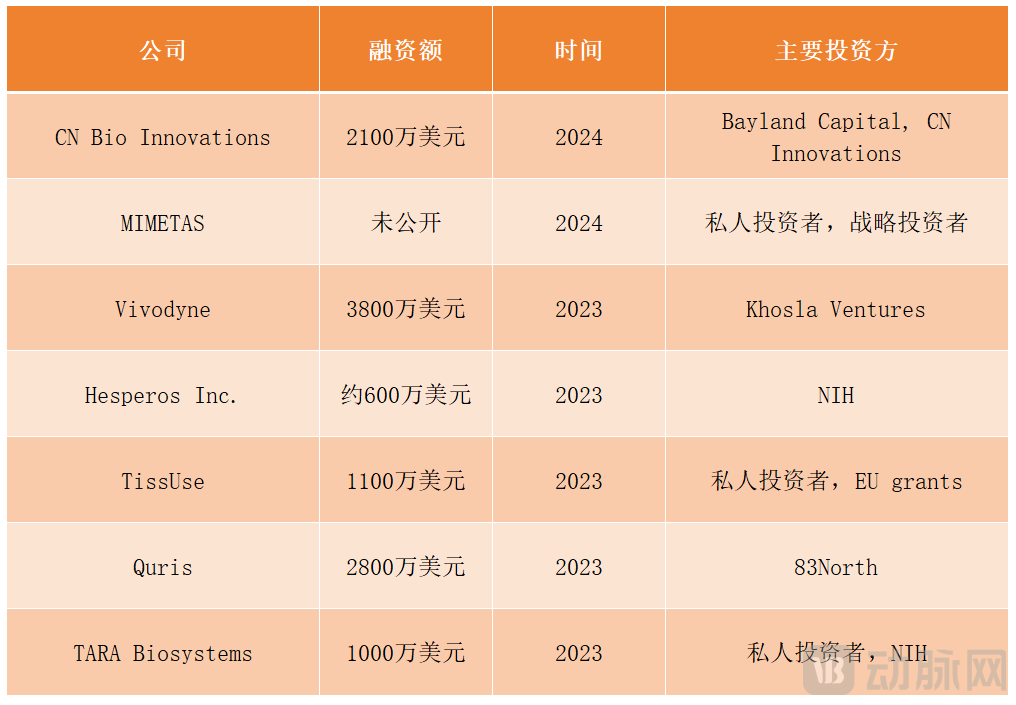
Phase I of U.S. organ-on-a-chip research, traceable to 2012, focused on developing foundational chips, organoids, and cell cultures. Phase II, launched in 2015, integrated chips with cells and initiated drug-testing collaborations with 40 pharmaceutical companies, including GlaxoSmithKline. Phase III began in 2017, establishing various disease models for drug screening, and was nearing completion by 2022. Although China’s organ-on-a-chip industry started relatively late, it has undergone a period of rapid development. Particularly in the second half of 2022, when the broader biotechnology sector faced a downturn, multiple organ-on-a-chip companies successively secured financing. Moreover, Chinese companies have begun to take the lead in establishing various standards for organoid models and organ-on-a-chip technologies. However, from 2023 to 2024, the global organ-on-a-chip industry entered a new phase. On one hand, European and American organ-on-a-chip companies saw a significant surge in financing. For instance, CN Bio, a well-established player in the organoid and organ-on-a-chip sector, secured $21 million in funding, while Quris, an emerging company in the field, raised $28 million. The latter’s AI-driven “Patient-on-a-Chip” platform represents a major innovation in drug development, combining artificial intelligence with organ-on-a-chip technology to simulate individual patient responses to drugs on chip. Meanwhile, another emerging organ-on-a-chip company, Vivodyne, secured $38 million in seed funding. Vivodyne’s technology platform enables high-throughput drug testing on thousands of functional human tissue samples, leveraging AI for data analysis. Furthermore, Vivodyne can evaluate a wide range of therapies, from small molecules to advanced biologics, including cutting-edge treatments such as mRNA nanoparticles and cell therapies.
On the other hand, collaborations between multinational corporations (MNCs) and organ-on-a-chip companies in Europe and the United States have also increased. Johnson & Johnson Deepens Collaboration with CN Bio Innovations. This partnership primarily focuses on liver-on-a-chip models, aiming to enhance the predictability of drug-induced liver injury. The two companies have been committed to reducing preclinical failures by leveraging human-relevant organ-on-a-chip models to advance drug metabolism studies. AstraZeneca Expands Partnership with Emulate. The collaboration focuses on using Emulate’s liver and lung chip models for drug safety testing. This partnership aims to address drug toxicity issues at an early stage. Merck collaborates with Hesperos to conduct cancer drug testing using multi-organ platforms. These models provide more accurate simulations of the microenvironment, enabling Merck to evaluate the efficacy and toxicity of novel cancer therapies. Notably, organoids and organ-on-a-chip technology constitute one of the three key technologies Merck has heavily invested in for future new drug development, with the other two being artificial intelligence (AI) and laboratory automation. As one of the first multinational corporations (MNCs) to explore organoids and organ-on-a-chip technologies, Roche has continued to intensify its efforts in the organ-on-a-chip field in recent years, with a primary focus on cardiac and oncology applications. For instance, Roche has partnered with TARA Biosystems to evaluate drug-induced cardiotoxicity using its "Heart-on-a-Chip" model. Additionally, Roche’s Organoid Research Institute has expanded its R&D team from 50 members two years ago to nearly 200 researchers today. Furthermore, multinational corporations (MNCs) such as Sanofi, GSK, Pfizer, and Novo Nordisk are all utilizing organoid and organ-on-a-chip technologies in drug development. In addition, the FDA has jointly established the OASIS Consortium, which includes 17 multinational pharmaceutical companies and eight biotechnology firms, including Yaosu Technology, to collaboratively develop AI-, multi-omics-, and multimodal-based next-generation tools for evaluating drug-induced liver toxicity, as well as to establish related standards. In contrast, the relatively small scale of organ-on-a-chip financing in China over the past two years has resulted in comparatively insufficient investment in the development of this original technology. “Adequate capital support is a prerequisite for startups to engage in long-term R&D, enabling them to avoid being forced into the predicament of pursuing short-term gains. Over the past two years, many domestic organoid and organ-on-a-chip companies have shifted their focus toward areas such as reagent sales, which offer relatively easier revenue generation. This shift reflects, to some extent, the current reality of financing difficulties,” an industry practitioner told VCBeat. Furthermore, the multiple collaborations involving multinational corporations (MNCs) indicate that organ-on-a-chip technology in European and American markets is primarily applied to new drug development, reflecting both advanced technological capabilities and the specific needs of pharmaceutical companies. In contrast, the domestic market in China focuses more on applying organoid technology to relatively mature areas such as drug sensitivity testing. However, China is not without its pioneers; several new drugs leveraging organ-on-a-chip data have already been approved to enter clinical trials. For example, Hengrui Medicine commissioned the Suzhou Medical Device Research Institute of Southeast University and Jiangsu Aiweide Biotechnology Co., Ltd. to conduct in vitro screening. Using human heart-on-a-chip technology, they successfully screened hundreds of compounds over a period of more than eight months. The screened candidate, HRS-1893, has been approved by the National Medical Products Administration (NMPA) to enter clinical trials. In addition, Qilu Pharmaceutical’s bispecific antibody oncology Class I innovative drug, QL F3108 for injection, has received clinical trial approval, with advanced solid tumors as the target indication. During its development, Beijing Daxiang Technology Co., Ltd. leveraged its self-developed IBAC O2 chip to establish a tumor organoid immune co-culture model that highly recapitulates the human tumor immune microenvironment, and conducted pharmacodynamic evaluation of QL F3108, thereby providing a more effective approach for drug development and assessment. Overall, an increase in Investigational New Drug (IND) applications and practical use cases based on organ-on-a-chip technology is expected over the next three to five years, particularly in the field of drug safety assessment. As collaborative projects with the U.S. Food and Drug Administration (FDA) near completion, industry standards and regulatory approval processes will become more standardized and unified, providing clear guidance for technological adoption. In terms of technical application, breakthroughs are likely in drug repurposing research leveraging high-throughput organ-on-a-chip screening. Therefore, from a rational perspective, non-animal technologies remain in their early stages and still rely on traditional methods to advance non-clinical research. Furthermore, the industry is actively embracing innovation, with the aim of better validating the reliability of non-animal technologies through clinical and animal data in the future. Over the past two years, the integration of organ-on-a-chip technology with cell therapy and tumor immunology has accelerated the marketization of related therapies, providing strong support for the development of more innovative treatment options.