

SugArLink Biologics Pioneers Disaccharide-Based Site-Specific Glyco-ADC Conjugation Technology, Driving Innovation in Antibody-Drug Conjugate Development

GlycanLink
ADC Drug Developer
Recently, GlycanLink announced that an innovative achievement in the field of antibody-drug conjugates (ADCs) has been granted a patent by the China National Intellectual Property Administration. The patent is titled “Disaccharide Linkers, Disaccharide-Small Molecule Drug Conjugates, and Site-Specific Glycan-Directed Antibody-Drug Conjugates, Their Preparation Methods and Uses.” This patent covers an innovative site-specific ADC conjugation method that leverages the conserved glycosylation site at the N297 position of the antibody Fc domain for site-specific drug conjugation.
The disaccharide-linker structure described in the patent represents a novel linker design that achieves highly efficient site-specific conjugation of drugs by binding to the glycosylation sites of antibodies through specific chemoenzymatic reactions. This design not only improves the stability and safety of antibody-drug conjugates (ADCs) but also enhances their cytotoxic efficacy against tumor cells through optimized drug release profiles. Figure 1 illustrates the schematic structures of the protected glycoengineered antibody and the glycan-site-specific ADC compound.
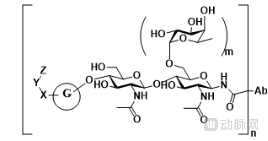
Figure 1. Schematic diagram of glycoengineered antibodies and site-specific glycan ADC compounds
Specifically, the patent protection includes:
① Disaccharide-linker structure and preparation method thereof (Claims 1-14)
The G ring represents structures derived from the monosaccharide molecules galactose, N-acetylgalactosamine, and glucose; Z-Y-X- denotes substituents on the G ring, where Z-Y-X- comprises various branched or unbranched linker-functional molecule complexes (in which the functional molecules contain various functional groups, cytotoxins, etc., or refer to sugar structures modified by functional molecules, wherein the functional molecules contain various functional groups, cytotoxins, etc.).
② Disaccharide-linker-based glycoengineered antibodies and site-specific glycoconjugated ADCs: structures, preparation methods, and uses (Claims 15–38)
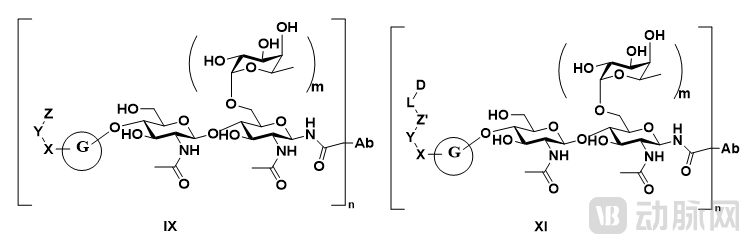
Figure 2. Schematic structures of glycoengineered antibodies (IX) and site-specific glycan ADCs (XI)
Formulas IX and XI illustrate the structures of protected glycoengineered antibodies and site-specific glycan ADCs, respectively. Herein, the G ring represents a structure derived from monosaccharide molecules such as galactose, N-acetylgalactosamine, glucose, and mannose; the definition of Z-Y-X- is consistent with that defined for the disaccharide-linker; m is selected from 0 or 1, and n is selected from 1 or 2. The site-specific glycan ADCs shown in Formulas IX and XI can be directly achieved via one-step transglycosylation using an endoglycosidase, or by first introducing bioorthogonal groups at the antibody glycosylation sites using an endoglycosidase, followed by conjugation with functional molecules. Readers may refer to Claims 20–23 (glycoengineered antibodies) and Claims 24–31 (site-specific glycan ADCs) for more detailed information on the relevant preparation methods.
In recent years, the rapid development of the antibody-drug conjugate (ADC) field has not only fueled a wave of innovation in the pharmaceutical industry but also triggered a series of business activities, including corporate acquisitions, pipeline transactions, and technical collaborations. The complexity and frequency of these operations have been breathtaking. Amidst this biopharmaceutical boom, major pharmaceutical companies and biotechnology firms are actively strategizing to secure a foothold in the ADC market.
Currently, 15 antibody-drug conjugate (ADC) drugs have been approved for marketing worldwide. These agents cover a variety of cancer types, including breast cancer, non-small cell lung cancer, and hematologic malignancies. The successful launch of these drugs not only signifies the maturity of ADC technology in clinical applications but also reflects the global pharmaceutical market’s high recognition of this innovative therapeutic class.
In terms of corporate acquisitions, many large pharmaceutical companies are sparing no expense to acquire small biotechnology firms with promising ADC projects, aiming to rapidly secure technologies and product pipelines in the antibody-drug conjugate (ADC) field. These acquisitions involve not only substantial financial investments but also strategic adjustments to future development plans and enhancements in market competitiveness. Pipeline transactions are equally active, with many companies acquiring or divesting ADC drug development pipelines through collaborative development, licensing agreements, or technology transfers. Such deals often entail complex intellectual property rights and distribution of commercial interests, requiring meticulous negotiation and strategic planning. Technical collaboration represents another common business model in the ADC sector. Companies share technical resources, R&D platforms, and expertise to jointly advance the development of ADC drugs. This collaborative approach helps reduce R&D costs, mitigate risks, and accelerate the market launch of new therapies.
However, as the commercial prospects of antibody-drug conjugates (ADCs) become increasingly clear, related patent disputes are also on the rise. While patent litigation is not uncommon in the pharmaceutical industry, patent controversies in the ADC field tend to be more intense and high-profile due to the technology's complexity and high value. In particular, the linker patent dispute between Daiichi Sankyo and Seagen has become a focal point within the industry. This lawsuit involves not only substantial economic interests but also bears on the future trajectory of ADC technology development. The patent battle between Daiichi Sankyo and Seagen centers primarily on critical linker technologies in ADCs. Linkers serve as the bridge connecting antibodies to small-molecule drugs, and their stability, release characteristics, and biocompatibility are crucial to the efficacy and safety of ADCs. Both companies have made significant investments in the research, development, and application of linker technologies; therefore, the outcome of this lawsuit will not only affect the commercial interests of both parties but may also have far-reaching implications for the entire ADC sector.
Research and development of next-generation antibody-drug conjugates (ADCs) are increasingly focusing on site-specific conjugation technologies for the payload-linker. Compared with traditional random conjugation methods, site-specific ADCs demonstrate significant advantages in pharmacokinetics, efficacy, and safety, providing a more precise weapon for cancer therapy. In terms of quality control, site-specific ADCs exhibit markedly improved homogeneity, meaning that the drug distribution on each antibody molecule is more consistent, which helps reduce unexpected toxicity in vivo. Regarding efficacy, site-specific conjugation technology ensures precise release of the payload within tumor cells, increasing local drug concentration and thereby enhancing the cytotoxic effect on tumor cells. In terms of safety, site-specific ADCs minimize damage to normal cells, reduce side effects, and improve patients’ treatment experience.
GlycanLink has its own DisaclinkTMTechnical Service Platform, DisacLinkTMThis technology features high versatility and is among the most valuable site-specific conjugation technologies. It is applicable to antibodies or fusion proteins containing human Fc regions, leveraging the conserved N-glycosylation modifications within the Fc domain as sites for site-specific conjugation. This approach requires no prior engineering of the antibody sequence and does not alter the antibody’s intrinsic specificity or molecular stability. Furthermore, GlycanLink’s one-step glycan site-specific conjugation technology utilizes ENGase enzymes to attach linkers and payloads to antibodies in a single step within four hours. Compatible with diverse linkers and payloads, this method offers superior stability, hydrophilicity, and safety, representing the only single-enzyme, one-step glycan site-specific conjugation technology currently available on the market.
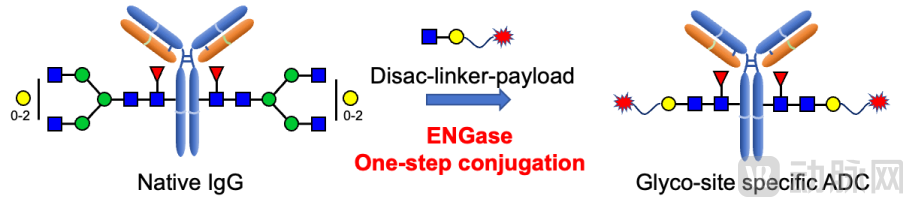
The application of this technology enables GlycanLink to rapidly and efficiently modify payloads at the glycosylation sites of antibodies, paving new avenues for the diverse preparation and druggability evaluation of site-specific glyco-ADCs, thereby significantly accelerating the drug development process. Through precise chemical or enzymatic reactions, GlycanLink’s technology ensures uniform drug distribution on the antibody, thus enhancing the homogeneity and efficacy of ADCs. Furthermore, the site-specific glyco-conjugation method reduces drug release in non-target cells, mitigates side effects, and improves therapeutic safety. This not only enhances the therapeutic effectiveness of ADC drugs but also provides patients with safer treatment options. Under the leadership of Dr. Yang Yang, GlycanLink’s business development team is rapidly advancing external collaborations and technology licensing to ensure that this innovative technology is swiftly translated into commercial success.

Professor Huang Wei, founder of GlycanLink and a senior researcher at the Shanghai Institute of Materia Medica, Chinese Academy of Sciences, is a National Distinguished Young Scientist, a Shanghai Pujiang Talent, and a Hangzhou Leading Talent in Innovation and Entrepreneurship. He has transferred his breakthrough technologies in the field of antibody-drug conjugates (ADCs) to GlycanLink. Professor Huang’s innovative achievement—glycan-site-specific ADC preparation technology based on disaccharide linkers—has been formally transferred from the Shanghai Institute of Materia Medica to Shanghai GlycanLink Biopharmaceutical Co., Ltd. through a formal agreement, marking a successful practice of industry-academia-research collaboration. This technology transfer not only demonstrates the translation of academic research outcomes into industrial applications but also highlights the pivotal role of enterprises in driving technological innovation and commercialization. We are optimistic about the future applications and commercial potential of this technology and are committed to developing it into a leading technology in the ADC field.
GlycanLink will continue to uphold its innovation-driven development philosophy, dedicating itself to applying its proprietary site-specific glycan conjugation technology to the development of antibody-drug conjugate (ADC) therapeutics, with the aim of providing global patients with more effective and safer treatment options. Meanwhile, the company looks forward to achieving technological breakthroughs in the ADC field and contributing to the advancement of China’s biopharmaceutical industry.
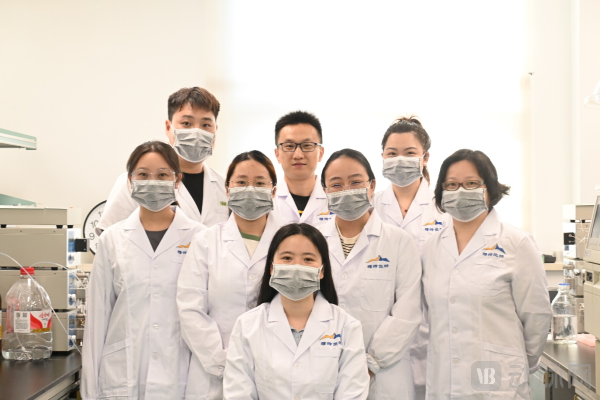
(GlycanLink Laboratory Team Photo)
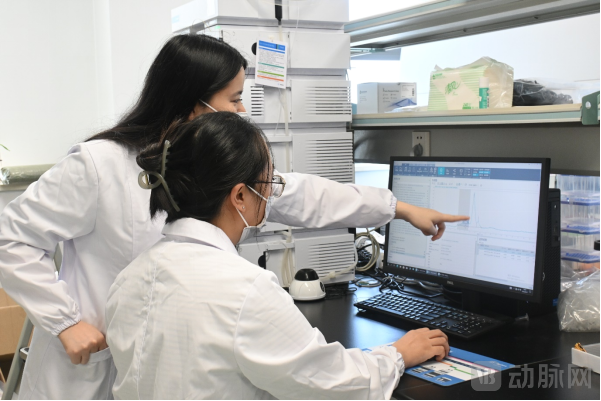
(GlycanLink technical staff group photo)
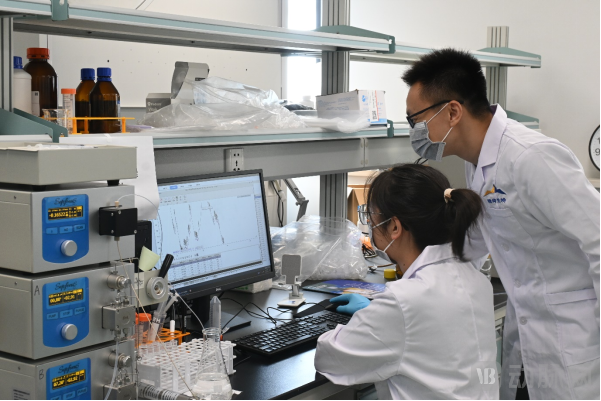
(GlycanLink technicians group photo)