

RemeGen's HER2 ADC Disitamab Vedotin Expands into New Indication: Can China's ADC Leader Turn Around?

RemeGen
Biological New Drug Developer
Today (October 15), according to the latest announcement on the official website of the Center for Drug Evaluation (CDE) under China’s National Medical Products Administration, RemeGen’s marketing application for a new indication of its HER2-targeting antibody-drug conjugate (ADC), disitamab vedotin for injection, has been accepted. According to the CDE website, this marketing application was included in the priority review program this September. It is indicated for patients with HER2-positive advanced breast cancer with liver metastases (HER2 immunohistochemistry score of 3+ or FISH-positive) who have previously received treatment with trastuzumab or its biosimilars and taxanes.
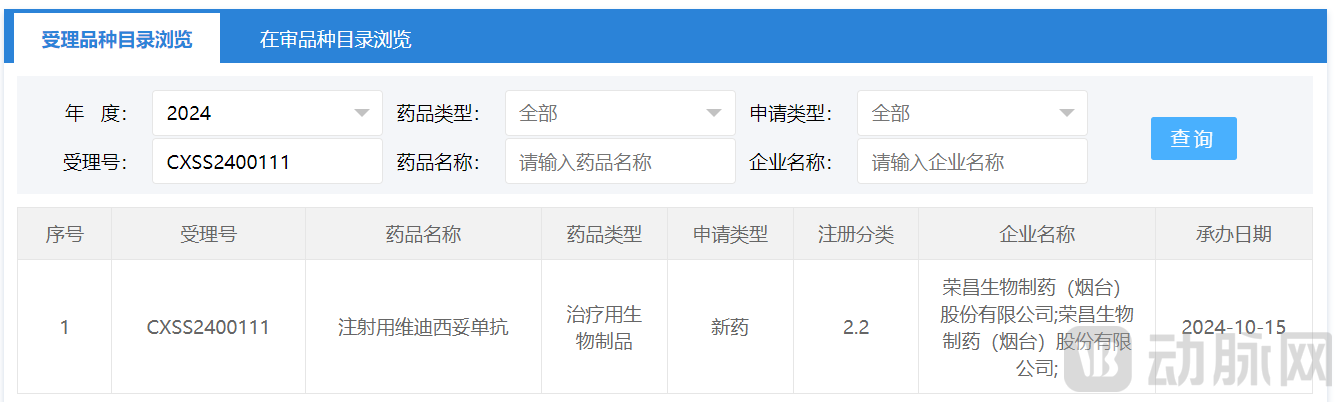
This marks the third indication for which disitamab vedotin is seeking marketing approval; previously, two major indications—gastric cancer and urothelial carcinoma—had already been approved in China. In 2021, disitamab vedotin received conditional approval from the National Medical Products Administration (NMPA) through its priority review process for the treatment of HER2-overexpressing locally advanced or metastatic gastric cancer, including gastroesophageal junction adenocarcinoma, in patients who had received at least two prior lines of systemic chemotherapy. It became the first China-originated HER2-directed antibody-drug conjugate (ADC) to gain NMPA approval and the first ADC to receive Breakthrough Therapy Designation from both the U.S. Food and Drug Administration (FDA) and the NMPA. In December of that year, disitamab vedotin was further approved for the treatment of urothelial carcinoma.
According to the CDE website, two new indication applications for disitamab vedotin have been accepted this year. In addition, RemeGen is exploring the potential of combination regimens involving disitamab vedotin with PD-1 inhibitors and chemotherapy for the treatment of various solid tumors, including breast cancer and gynecologic malignancies.
As a pioneer among China’s innovative pharmaceutical companies, RemeGen has weathered market trials ranging from its post-IPO slump to deeper troughs. On September 16, its intraday share price fell to HK$10.2, representing a 93% decline from its 2021 high of HK$149.8. Amid a broader market recovery and the release of new developments, RemeGen’s Hong Kong-listed shares have seen a modest rebound, rising to HK$15.
What's wrong with RemeGen?
Since the beginning of this year, rumors of cash flow shortages at RemeGen have been rife in the market. Although the company has repeatedly stated that its cash on hand is sufficient to meet funding needs for the next two years, its stock price has still been affected.
In August, RemeGen disclosed its 2024 interim results, showing that the total operating revenue for the first half of the year reached RMB 742 million, an increase of RMB 319 million compared to the same period last year, marking three consecutive years of growth and a year-on-year rise of 75.59%. However, the net profit attributable to shareholders of the parent company was -RMB 780 million, a decrease of RMB 77.099 million compared to the same period last year. The net cash inflow from operating activities was -RMB 820 million, representing a decrease of RMB 112 million compared to the same period last year.
Looking back at the listing history of RemeGen, the “leader in ADCs,” the company listed in Hong Kong and on the STAR Market, leveraging its R&D capabilities in the autoimmune and antibody–drug conjugate (ADC) sectors, respectively. It raised more than RMB 6 billion in total, becoming the first pharmaceutical and biotechnology company in Shandong Province to achieve a dual “A+H” listing. Moreover, its Hong Kong IPO set the global record for the largest fundraising by a biotech initial public offering in 2020.
The following year, RemeGen successfully launched two innovative drugs: telitacicept and disitamab vedotin. Notably, the overseas rights to disitamab vedotin were acquired by Seagen for a $200 million upfront payment and a total transaction value of $2.6 billion, setting a record at the time for the highest overseas licensing deal for a single Chinese innovative drug. Driven by the success of disitamab vedotin, RemeGen’s revenue reached RMB 1.426 billion in 2021, with a net profit of RMB 276 million. This period arguably marked the peak moment for RemeGen since its public listing to date.
From 2020 to mid-2024, RemeGen’s net profits were RMB -697.8 million, RMB 276.3 million, RMB -998.8 million, RMB -1.511 billion, and RMB -780 million, respectively, with cumulative losses exceeding RMB 3.8 billion. All these losses can be traced back to RemeGen’s strong emphasis on research and development.
From 2021 to mid-2024, RemeGen’s R&D expenditures were RMB 711 million, RMB 982 million, RMB 1.306 billion, and RMB 806 million, respectively, totaling RMB 3.805 billion. According to a research report by SPDB International Securities, two international Phase III clinical trials of disitamab vedotin are scheduled to begin patient enrollment in the second half of this year, and it is conservatively projected that R&D expenses in the second half will increase compared with the first half. While such intensive R&D investment underscores RemeGen’s commitment to technological innovation and new drug development, it also exacerbates its financial burden.
RemeGen is not a typical biotech company, as it already has two successfully launched and commercialized drugs—telitacicept and disitamab vedotin. Centered on these two products, RemeGen has established two commercialization teams with a combined workforce of over 1,300 employees. From 2021 to mid-2024, RemeGen’s sales expenses amounted to RMB 263 million, RMB 441 million, RMB 775 million, and RMB 187 million, respectively, totaling RMB 1.666 billion.
However, its substantial sales expenses have failed to generate commensurate revenue. Telitacicept, launched in 2021, reported sales revenues of RMB 131 million, RMB 330 million, and RMB 520 million from 2021 to 2023, respectively, demonstrating strong growth momentum. In contrast, Disitamab Vedotin, also launched in 2021, achieved sales revenue of RMB 84 million in its first year, followed by RMB 405 million and RMB 530 million in the subsequent two years, with its growth rate showing a marked slowdown.
Both drugs were included in the National Reimbursement Drug List in their respective launch years. The price of disitamab vedotin was adjusted from an initial RMB 13,500 per vial to RMB 3,800 per vial, representing a price reduction of 71.85%. However, this price cut did not lead to a significant increase in sales volume, and the drug continues to face direct competition from peers in the same therapeutic class.
Currently, although RemeGen’s commercial performance has improved this year, its R&D investment remains substantial. This means that striking a balance between commercialization and R&D will be the most critical challenge for RemeGen in the near future.
Can Expanding Indications Open Up New Commercialization Opportunities?
Returning to disitamab vedotin, whose marketing application for a new indication was accepted today, this is RemeGen’s undisputed flagship ADC.
In June, RemeGen announced that the Phase 3 clinical trial of disitamab vedotin for the treatment of patients with HER2-positive advanced breast cancer and liver metastases yielded positive results, meeting its primary endpoint. This multicenter Phase 3 clinical study (RC48-C006), conducted in China, was designed to evaluate the efficacy and safety of disitamab vedotin for injection compared with lapatinib plus capecitabine in patients with HER2-positive advanced breast cancer. According to the final analysis of the study, disitamab vedotin for injection significantly prolonged progression-free survival (PFS) compared with lapatinib plus capecitabine. The safety profile was consistent with known risks, and no new safety signals were identified.
Furthermore, a retrospective study published in the American Journal of Cancer Research in February this year evaluated the efficacy and safety of disitamab vedotin in real-world clinical practice for the treatment of HER2-positive metastatic breast cancer. The study enrolled 81 patients with metastatic HER2-positive breast cancer, including 36 patients with liver metastases. The primary endpoints were real-world progression-free survival (RWPFS) and objective response rate (ORR), while secondary endpoints included safety and exploratory subgroup analyses. The results showed that the median RWPFS was 5.9 months, and the ORR was 29.6%, with one patient achieving a complete response. Among patients who were resistant or refractory to trastuzumab, the median RWPFS with RC48 was 6.5 months and 5.6 months, respectively.
Researchers believe that disitamab vedotin demonstrates favorable efficacy and manageable toxicity in HER2-positive metastatic breast cancer, particularly in patients who have previously received trastuzumab and those who have been extensively pretreated. Furthermore, disitamab vedotin exhibits significant activity in patients with trastuzumab-resistant or refractory disease.
Currently, three HER2-targeted antibody-drug conjugates (ADCs) have been approved worldwide, including disitamab vedotin. However, multiple innovative products are in Phase III clinical trials and are poised to enter the market for competitive positioning. Consequently, RemeGen has been focusing on expanding the indications for disitamab vedotin, including myasthenia gravis, IgA nephropathy, and rheumatoid arthritis. In addition to disitamab vedotin, RemeGen currently has 13 pipeline candidates in Phase III clinical trials, with eight molecules in various stages of clinical development.
Whether or not this new indication further opens up RemeGen’s path to commercialization, it represents a victory for innovation. From 2022 to 2024, during a period of frenzied deal-making among domestic ADC companies, RemeGen, having been an early mover in going global, chose instead to continue focusing on R&D and advancing commercialization. Regardless of the progress of RemeGen’s business development (BD) efforts, the statement made by its founder, Wang Weidong, in an interview—“Innovation is the most powerful tool for navigating market cycles; for biopharma companies, the most important thing is to remain unwavering in their commitment to original and independent innovation”—provides the best answer regarding the essence of innovation.
Reference Article:
1. “After Two IPO Fundraising Rounds, Why Is RemeGen Still Short of Cash?” Market Cap Ranking
2. “The More RemeGen Sells, the More It Loses?” Jian Shi Ju
3. “Market Cap Plummets by 55 Billion: The ‘King of Innovative Drugs’ Loses Momentum” – China Entrepreneur Magazine