

Rescond Medical Launches China's First NMPA-Approved AED with 120J Low-Energy Biphasic Rectangular Wave Defibrillation Technology
Electrical DefibrillationElectrical defibrillation is an emergency treatment that delivers a high-energy electrical shock to the heart over a short period, causing instantaneous depolarization of the entire myocardium to terminate ectopic rhythms and restore sinus rhythm. Currently, electrical defibrillation is widely regarded as the most effective treatment for ventricular fibrillation, with higher success rates associated with earlier implementation.
Although news reports frequently highlight successful rescues by laypersons using automated external defibrillators (AEDs) in public settings, in clinical practice, many patients do not achieve successful defibrillation with a single shock. Particularly in hospital settings, some patients even require repeated defibrillation therapies to terminate ventricular fibrillation.
However, successful defibrillation does not equate to successful resuscitation.The therapeutic efficacy of defibrillation is reflected not only in the immediate restoration of cardiac rhythm but also influences the recovery of cardiac output within 24 hours, 72 hours, and even one week post-cardioversion, as well as the occurrence of complications such as myocardial injury caused by excessive defibrillation energy. These factors, which impact long-term survival rates and post-treatment prognosis, are closely related to the choice of defibrillation technology.
Looking at the current mainstream global defibrillation technology pathways, monophasic wave defibrillators, which originated in 1965, have been replaced by biphasic wave defibrillators due to their high transthoracic current, significant myocardial damage, and inability to automatically adjust based on impedance. During defibrillation, biphasic wave defibrillators deliver electrical pulses in opposite directions sequentially to the heart, aligning better with the heart's electrophysiological characteristics compared to monophasic waves. Additionally, they can detect varying levels of transthoracic impedance in different individuals and compensate for them, ensuring a higher success rate of defibrillation for patients with high impedance.
Biphasic waveforms are primarily represented by the Biphasic Truncated Exponential (BTE) waveform and the Rectilinear Biphasic Waveform (RBW). The BTE technology, derived from Implantable Cardioverter Defibrillators (ICDs), has mitigated the issue of defibrillation current decay to some extent. However, when defibrillating patients with high impedance, it requires prolonged discharge duration. Such extended discharge times may induce secondary ventricular fibrillation, significantly compromising therapeutic efficacy. Furthermore, due to the persistently high peak current, the application of this technology in external defibrillators can cause certain degrees of myocardial injury.
Biphasic Rectangular Wave (RBW) can automatically measure transthoracic impedance and rapidly adjust the digitally controlled internal impedance of the defibrillator during discharge, maintaining constant total impedance (internal impedance plus transthoracic impedance). This ensures the stability of defibrillation current and discharge duration, significantly reducing the risk of inducing secondary ventricular fibrillation and markedly improving success rates in patients with high impedance. Furthermore, it eliminates peak current, ensuring better protection of the myocardium during defibrillation in patients with low impedance.
Leveraging the advantages of biphasic square waves, RESCOND has developed“Low-Energy Biphasic Rectangular Wave (RBW)” Technology.Compared with the traditional biphasic truncated exponential (BTE) waveform,Low-Energy Biphasic Rectilinear Waveform (RBW) technology delivers an initial defibrillation energy of only 120 J, achieving lower peak current, higher average current, and consistent discharge duration. This not only improves defibrillation success rates but also reduces myocardial injury, enhances patient prognosis, and minimizes the risk of recurrent arrhythmias.
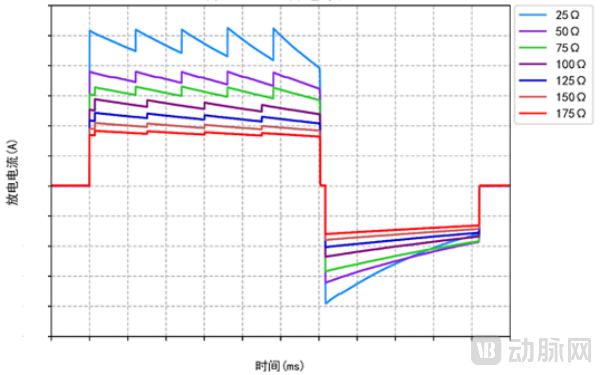
Low-Energy Biphasic Square Waveform
Currently, the company’s independently developed automated external defibrillators, RCD-600 (for adults) and RCD-600E (for adults and children), have both received approval from the National Medical Products Administration (NMPA).

RESCOND's RCD-600 Series Products
Before delving into RESCOND’s low-energy biphasic square wave (RBW) technology, we must first clarify two key concepts:
1. “Low Energy” Is Not Equivalent to “Low Efficiency”
“The term ‘low-energy’ is often misunderstood by the public as synonymous with ‘low efficiency,’ a misconception that is particularly prevalent in China, where low-energy defibrillation has not yet been widely adopted. However, this is not the case.”
“Low energy” corresponds to “high average current” and “high efficiency.”Defibrillation success is not determined solely by energy, but primarily by average current. The 120 J low-energy rectilinear biphasic waveform (RBW) technology achieves the same defibrillation success rate with lower energy, demonstrating its "high efficiency."
The American Heart Association’s Guidelines for Cardiopulmonary Resuscitation clearly state: “Although healthcare providers select the defibrillation energy (in joules, J) when operating a defibrillator,However, it is the current (ampere A) that truly depolarizes the myocardium.. Although the term “energy” is deeply entrenched in current industry parlance, it is not directly related to the physiological changes occurring during the defibrillation process.”[1]
In other words,During defibrillation, the factor that truly determines success is the intensity of the "mean current" during the defibrillation process.Due to the electrical impedance of the human body, heat is inevitably generated during the transmission of electrical energy through the body. This thermal energy can cause varying degrees of damage to the myocardium and should therefore be minimized as much as possible.
2. “Low Energy” Does Not Mean “Reduced Defibrillation Success Rate”
“The waveform is the key factor that truly determines low energy.”
Zhang Yaosong, founder of RESCOND, pointed out that defibrillators terminate ventricular fibrillation by generating an electric current, thereby restoring the heart to normal sinus rhythm. The efficacy of defibrillation primarily depends on the average current; user-selected energy levels are merely a proxy, as it is the actual current that depolarizes cardiomyocytes. Different defibrillation waveforms generate varying currents, and both the magnitude and peak of the current directly impact the efficacy and safety of defibrillation.
“Features a high first-shock success rate and effectively reduces myocardial injury”Low Energy,is true low energy.”Zhang Yaosong concluded.
Initial defibrillation energy is only 120 J, resulting in a high defibrillation success rate and minimal myocardial injury.
Improve Patient Outcomes with High-Stability, Low-Energy Flexible Defibrillation
Zhang Yaosong told VCBeat that biphasic defibrillation technology has actually existed for over 40 years, but it is crucial to reduce peak current and perform impedance compensation during the discharge process. The core challenge in simultaneously achieving reduced peak current, increased average current, and impedance compensation lies in precisely controlling the current flowing through the heart within the instantaneous discharge time.
After a decade of dedicated research and development, RESCOND has pioneered internationally leading 120J low-energy Rectilinear Biphasic Waveform (RBW) defibrillation technology. Requiring only 120J for the initial shock, this technology achieves lower peak current, higher average current, and consistent discharge duration, significantly improving defibrillation success rates. It also effectively reduces myocardial injury and thermal damage to surrounding tissues, thereby enhancing patient post-defibrillation outcomes.[2], which is particularly important for patients with heart disease or other health issues.
When encountering patients with high impedance, such as athletes, individuals with a muscular build, or those with pneumothorax, this technology relies on advanced impedance compensation to maintain a high average current and constant discharge duration, thereby more effectively improving defibrillation success rates.
The RCD-600 series of automated external defibrillators (AEDs) is RESCOND’s flagship product. The RCD-600 employs Rectilinear Biphasic Waveform (RBW) technology, delivering an initial shock energy of 120 J. This design ensures a high defibrillation success rate while minimizing myocardial cell injury caused by excessive peak current and avoiding the risk of secondary ventricular fibrillation induced by prolonged trailing waveform current.

In April this year, on the men’s pacemaker-assisted half-marathon course at the Hangzhou Qiantang Women’s Marathon, a RESCOND AED successfully saved the life of a male runner. The patient achieved successful cardioversion with just one defibrillation shock and was discharged smoothly on the same day.
Building a Complete Emergency Care Product Line of “Defibrillation + Life Support”
Partnered with Volvo Cars and Amazon’s Nationwide Data Centers in China
RESCOND is committed to becoming the leading force in China’s cardiac resuscitation field.In terms of overall product portfolio, the company has established a comprehensive emergency care product pipeline, anchored by defibrillation products and complemented by life support solutions.
In addition to the B2B-oriented RCD-600 series introduced above, the company is committed to expanding its product pipeline by launching the RCD-500 Automated External Defibrillator (AED) and concurrently developing the Wearable Cardioverter Defibrillator (WCD). In the life support product line, the company’s automatically powered cardiopulmonary resuscitation (CPR) devices and emergency ventilators have successively entered the regulatory approval process.
RESCOND not only focuses on patient treatment but also places significant emphasis on the long-term prognosis of patients following defibrillation, aiming to establish a comprehensive ecosystem for cardiac arrest care in China. In addition to its hardware products, the company continuously tracks patient outcome data and is building a database of lethal electrocardiogram (ECG) patterns. This initiative seeks to leverage AI for predictive judgment and early warning before cardiac arrest occurs, thereby transforming the current model of post-event intervention for fatal heart conditions into a proactive, pre-event intervention strategy.

RESCOND Partners with Volvo to Launch the Road Ambassadors Alliance Campaign
Leveraging its advantages in flexible defibrillation, high safety, reliable therapeutic efficacy, and ease of operation, RESCOND has partnered with Volvo to become its supplier of onboard emergency medical devices. Furthermore, the company has established collaborations with industry giants such as Amazon’s China data centers, China Unicom, and Sinopec, providing them with end-to-end support encompassing installation, remote intelligent management, and post-rescue data analysis.
RESCOND’s impressive commercial performance also enabled it to complete a tens-of-millions-yuan Pre-A financing round in September this year, exclusively invested by Hongrun Venture Capital.
Finally, Zhang Yaosong stated that domestically produced AEDs have already addressed the challenge of going from nothing to something. Moving forward, RESCOND will continue to track cutting-edge international science, focus on resolving clinical pain points associated with fatal cardiac conditions, and truly align the technological standards of Chinese-made cardiopulmonary resuscitation (CPR) equipment with international benchmarks, ensuring that more globally leading CPR technologies are implemented in China.
References:
[1] AHA Guidelines 2005. Circulation. 2005; 112[suppl IV].
[2] Li, Y et al. A Comparison of Defibrillation Efficacy Between Different lmpedance Compensation Techniques in High Impedance Porcine Model. Resuscitation. Nov 2009.
[3] Huang, J et al, Ascending-Ramp Biphasic Waveform Has a Lower Defibrillation Threshold and Releases Less Troponin l Than a Truncated Exponential Biphasic Waveform. Circulation. Sep 2012.