

Domestic Medical Devices 'Storm' Global Markets as the 90th CMEF Shines in Shenzhen with Cutting-Edge Innovations
The world’s smallest 8K endoscope, oxygen concentrators with purification capabilities, and PET/CT systems featuring “precise sampling” and “fully digital processing”… Cutting-edge global medical device innovations are shining in Shenzhen. From October 12 to 15, the 90th China International Medical Equipment Fair (hereinafter referred to as “CMEF”) was held at the Shenzhen World Exhibition & Convention Center (Bao’an), where more than 4,000 domestic and international companies showcased tens of thousands of medical device products.
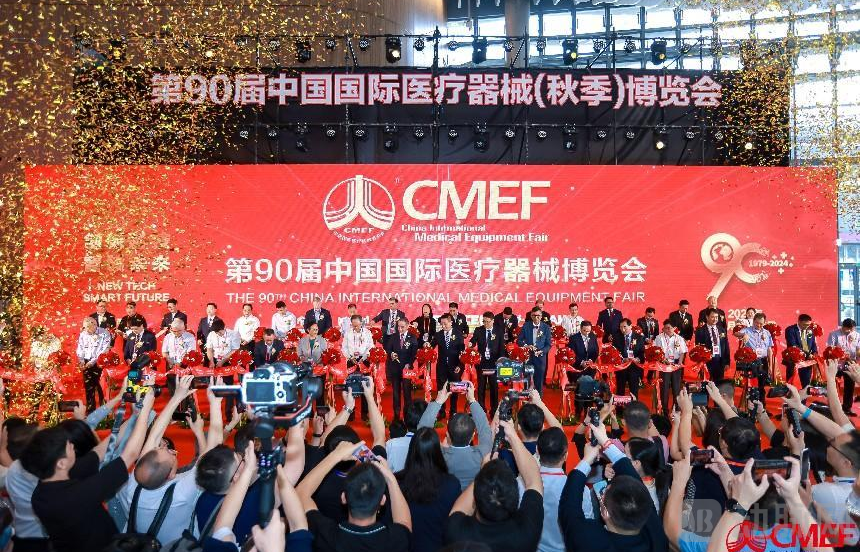
At the opening ceremony, the organizer, Sinopharm Reeds Exhibitions, signed a cooperation agreement with the Association of Private Hospitals of Malaysia (APHM). Next year, the two parties will jointly host an exhibition in Malaysia, helping more Chinese medical device products expand overseas, compete on the global stage, and promote the deep integration of the global medical device industry.
CMEF is hailed as the global healthcare “barometer.” Themed “Innovative Technology, Leading the Future with Intelligence,” this year’s CMEF spans four days and covers nearly 200,000 square meters of exhibition space. During the event, nearly 60 forums and conferences were held concurrently, bringing together almost 600 industry luminaries, elites, and thought leaders in Shenzhen to deliver a medical feast that explores cutting-edge advancements and offers insights into the future of the global health industry.
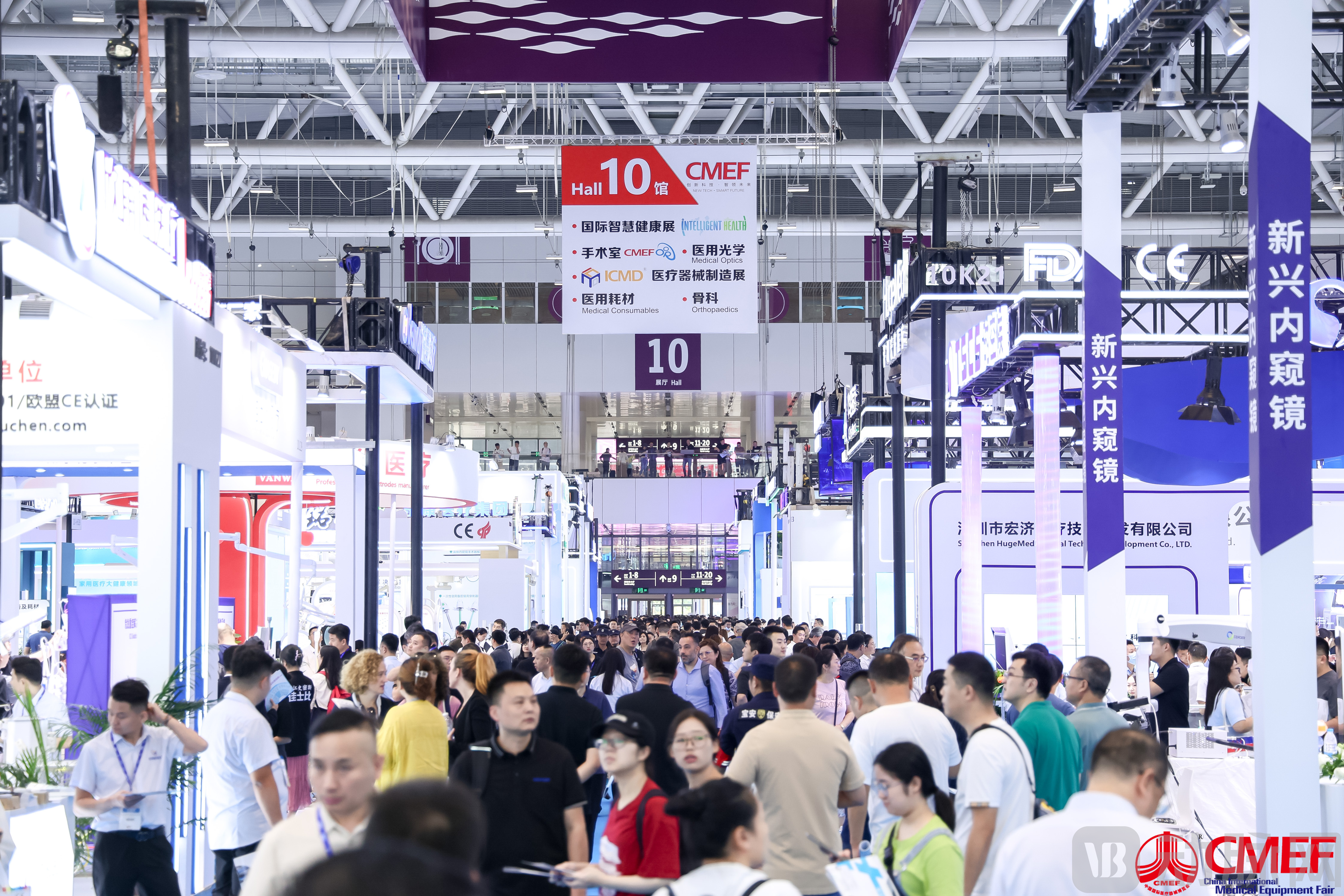

This edition of CMEF gathered renowned enterprises, with exhibitors covering the entire industrial chain of the medical device sector, including medical imaging, in vitro diagnostics (IVD), and medical electronics. Tens of thousands of products integrating cutting-edge technologies such as AI, big data, and cloud platforms were showcased, fully demonstrating the innovative strength of high-end medical equipment. In terms of exhibition areas, the event featured 14 major zones, including medical imaging, in vitro diagnostics, medical electronics, medical optics, hospital construction, operating rooms, disinfection and infection control, medical consumables, and orthopedics, providing a panoramic view of the entire medical industry chain.
Inside Hall 12, a wide array of cutting-edge innovative products from medical device companies around the world are on display. Booths featuring medical imaging, radiation therapy, remote diagnosis and treatment, and surgical robots are bustling with visitors. Among the many global frontier achievements in medical devices, there are not only large-scale medical imaging systems occupying several square meters but also “small yet elegant” ventilators. Notably, there is no shortage of domestically produced high-end medical devices bearing labels such as “world’s first,” “first made in China,” and “the only one in the industry.”
At the Ruishi Medical exhibition booth, the DigitMI series of all-digital PET/CT systems represents a global first and is currently the only PET/CT medical equipment featuring the dual advantages of “precise sampling” and “fully digital processing,” achieving the world’s fastest single-bed scan time of 20 seconds. Additionally, on display was Ari Medical’s globally pioneering adhesive, portable, two-in-one insulin pump, as well as Angel Medical Systems’ f-DR, the world’s only system capable of stereoscopic 3D volumetric imaging, enabling 3D imaging of the entire spine and lower extremities.
As a “star exhibition zone” of the CMEF, the Medical Robotics Exhibition Area showcased multiple new products independently developed in China, including an orthopedic joint surgical robot capable of covering both hip and knee procedures—breaking the long-standing monopoly of imported systems—and the first domestically approved intelligent orthopedic surgical system with integrated navigation and automated execution.
Expanding and decentralizing high-quality medical resources, while ensuring a balanced regional distribution, is one of the key priorities in building a high-quality and efficient healthcare service system. In response to the substantial demand for primary healthcare services, many exhibitors told VCBeat that they are actively leveraging digital empowerment to bring about revolutionary changes in healthcare delivery.
“Our sleep apnea ventilators, powered by advanced algorithms and equipped with imported sensors, ensure rapid pressure escalation and precise therapy, enabling users to enjoy hospital-grade products and medical services at home for effortless and unobstructed breathing,” said Tong Ying, Deputy General Manager of Aeonmed. As a leading Chinese R&D and manufacturing enterprise in anesthesia and respiratory medical equipment, Aeonmed has actively expanded into digital smart healthcare, mechanical ventilation, and sleep health in recent years. It has launched products such as the VS600S neonatal ventilator, filling multiple domestic gaps, and safeguarding users’ “every breath” through a “full-scenario + full-lifecycle” approach.
From ventilators and sleep therapy devices to AI-powered medical imaging and surgical robots, domestically produced medical devices are making significant strides into the high-end “competitive arena.” In recent years, as policy support for innovation in high-end medical devices has intensified and the approval process for such innovations has been further accelerated, more high-end domestic medical devices with independent intellectual property rights are expected to reach the market rapidly.
Aligning closely with industrial policies, the current CMEF has not only established multiple specialized exhibition zones but also hosted sub-brand exhibitions in high-demand sectors such as “Medical Device Design and Manufacturing,” “Smart Health,” “Emergency Rescue,” and “Pet Health.” This initiative provides a global healthcare industry with an international platform integrating exhibition, communication, and collaboration, thereby building a comprehensive ecosystem covering the entire industry chain from source to end-user.
“The exhibits are becoming increasingly diverse, featuring not only mature finished medical device products but also covering the entire industry chain of medical device design and manufacturing, including R&D and design services, in vitro diagnostics, and manufacturing equipment.” On-site, multiple exhibitors told VCBeat that these exhibits not only demonstrate the breadth and depth of the medical device industry but also provide abundant resources and solutions for the R&D and production of medical devices.
VCBeat has learned that, as an innovative sub-brand launched by CMEF, the 37th China International Medical Device Design and Manufacturing Technology Exhibition (ICMD) focuses on the upstream supply chain of medical device manufacturing. The event has gathered more than 500 domestic and international upstream enterprises and over 10,000 products, with both the number of exhibitors and products achieving multiplicative growth, thereby contributing to the transformation and upgrading of the upstream medical device industry.
Behind the manifold growth figures lies the high-quality development of China’s medical device industry chain. Public data shows that as of December 31, 2023, there were 36,675 medical device manufacturers nationwide. Among them, 25,817 enterprises were capable of producing Class I medical devices, 17,187 could produce Class II medical devices, and 2,670 could produce Class III medical devices, representing year-on-year increases of 9.68%, 8.50%, and 15.48%, respectively. Currently, Guangdong Province has 5,052 medical device manufacturers, ranking first in the country, with a total of 38,871 medical device product varieties registered across the province.
Fan Daiming, an academician of the Chinese Academy of Engineering, stated that medical devices are a “national cornerstone” of the broader health industry. The current exhibition features a rich array of exhibits spanning multiple medical fields, reflecting the continuous rise in public health awareness. In terms of product performance, there is a growing number of domestically produced medical devices with independent intellectual property rights, including high-end products that fill gaps both internationally and domestically, demonstrating China’s increasing capacity for independent innovation in the medical device sector. “The high-quality development of healthcare quality and patient safety cannot be achieved without the support of high-end medical devices. As a physician, I am full of confidence in this development trend,” said Fan Daiming.
In Fan Daiming’s view, China’s medical device industry is entering a takeoff phase of rapid development. Shenzhen’s medical device sector started early and boasts a solid foundation, having formed a relatively complete industrial structure with a cluster of leading enterprises. As the “City of Innovation,” Shenzhen enjoys a vibrant innovation ecosystem and possesses unique advantages in promoting collaborative industrial innovation, tackling key challenges in high-end medical devices, and gradually achieving self-reliance and controllability in core technologies.

In recent years, Chinese medical device companies have been stepping more firmly into the “deep waters” of internationalization, exploring a second curve for growth. Looking back at the track record of Chinese-made medical devices going global, leading enterprises have pioneered overseas markets, setting benchmarks for “Made in China” and achieving remarkable results; meanwhile, mid-tier and start-up companies have emerged in large numbers, illuminating the path to “setting sail” with noteworthy achievements.
According to statistics from the General Administration of Customs of China, the total value of China’s medical device exports reached RMB 484.30187 billion in 2023, with exports of medical equipment rising by 5.4% year-on-year and increasing by 54.8% compared with 2019.
“In recent years, Aeonmed has continuously accelerated its global expansion. By leveraging independent innovation and acquiring overseas companies, it has extended its product reach to more than 160 countries and regions worldwide. Its path toward internationalization is becoming increasingly smooth, with steady growth in overseas revenue that is gradually converging with domestic market revenue,” said Tong Ying. He noted that the global medical device market is large and continues to grow. Benefiting from China’s comprehensive supply chain in the medical device industry, Chinese enterprises have been able to expand into overseas markets. These companies have gradually built up their capabilities for global expansion and explored viable business models, with market penetration expected to rise steadily.
As a flagship global medical device exhibition platform, CMEF attracts a large gathering of international buyers on-site. With over 40 years of development, CMEF has amassed abundant high-quality international resources and established strong global brand influence, becoming the preferred overseas expansion platform for many leading enterprises seeking to enter international markets.
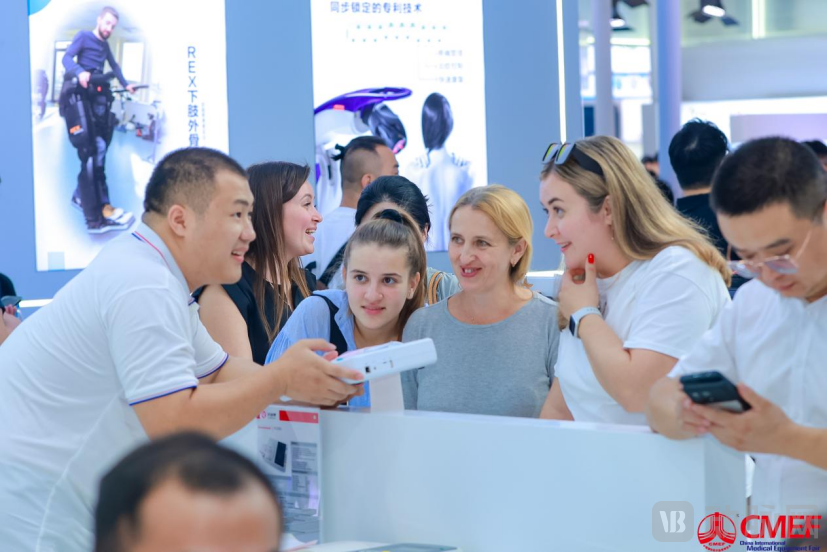
The International Exhibition Area of this CMEF welcomed representatives from more than 20 countries and regions, including Germany, the United States, Canada, South Korea, Japan, the United Kingdom, France, Singapore, Malaysia, Thailand, Australia, Russia, Pakistan, Poland, Hong Kong (China), and Taiwan (China), who brought new products to exhibit.
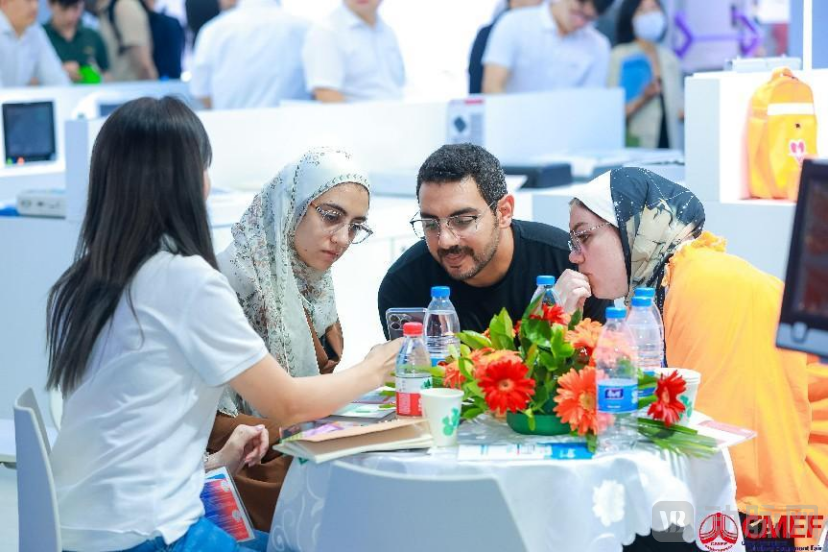
On the opening day, the number of international buyers attending the exhibition has already far exceeded expectations. According to the organizers, the CMEF’s level of internationalization continues to rise, and when combined with the favorable visa-free transit policy in Shenzhen, it has provided greater convenience for inviting international clients. Currently, the number of pre-registered international attendees is more than double that of the same period last year, attracting professional visitors from over 150 countries and regions worldwide. The CMEF exhibition is set to become a high-quality “incubator” for global trade.
Notably, at this year’s exhibition, Sinopharm Reeds Exhibitions signed a cooperation agreement with the Association of Private Hospitals of Malaysia (APHM). Next year, Sinopharm Reeds Exhibitions’ Health Industry Series of Exhibitions (ASEAN Edition) will collaborate with the APHM International Healthcare Conference and Exhibition, organized by the Association of Private Hospitals of Malaysia, to bring a Chinese medical device enterprise exhibition to Malaysia for the first time, thereby facilitating the expansion of more Chinese medical device products into overseas markets.
“Chinese medical device products offer strong performance, high quality, and excellent cost-effectiveness, making them highly sought after in the Malaysian medical device market,” said Datuk Dr. Kuljit Singh, President of the Association of Private Hospitals of Malaysia (APHM). He noted that this collaboration marks the first large-scale collective debut of Chinese medical device companies in Malaysia, facilitating a better understanding of Chinese medical device products among Malaysian healthcare institutions while providing a platform for these companies to further expand into overseas markets.
Meanwhile, Datuk Dr. Kuljit Singh also spoke highly of this year’s CMEF. He stated, “For Malaysian representatives, the opportunity to engage directly with manufacturers and distributors is particularly valuable. Such experience not only facilitates the procurement of medical devices but also promotes deeper cooperation between Malaysia and China in the healthcare sector.”
(The images in this article are provided by the CMEF Organizing Committee.)