Shanghai Ninth People's Hospital Licenses Nipple-Incision Tension-Relief Device Patent for RMB 500,000
In August 2024, Shanghai Ninth People’s Hospital, Shanghai Jiao Tong University School of Medicine, publicly announced the transfer of its entire patent rights for “A Tension-Reducing Device via Areolar Incision” (Patent No.: ZL202321399792.5) to Shanghai Zhizhong Medical Technology Co., Ltd. for RMB 500,000.
This patented achievement was developed by the team led by Dr. Xu Hua in the Department of Plastic and Reconstructive Surgery at Shanghai Ninth People’s Hospital. The team possesses extensive professional expertise in oculoplastic and rhinoplasty aesthetics, breast reconstruction and augmentation, and facial rejuvenation. Dr. Xu Hua, in particular, brings over two decades of experience in plastic and reconstructive surgery, with notable accomplishments in post-mastectomy breast reconstruction.
The transferee, Shanghai Zhizhong Medical Technology Co., Ltd., was established in 2016 and is primarily engaged in research and experimental development, according to information from Tianyancha. In May 2024, the company was recognized as a Shanghai Specialized, Refined, Differential, and Innovative (SRDI) Small and Medium-sized Enterprise.
The tension-reducing device for areolar incisions is a medical device specifically designed for breast plastic surgery. Areolar incisions are widely adopted due to their concealment; however, the convex, rounded shape of the breast makes postoperative wound stabilization difficult and results in high tension, which predisposes patients to hypertrophic scarring. To address this issue, Xu Hua’s team developed this tension-reducing device for areolar incisions.
The tension-reducing device features an ingenious design, comprising a main body, inner and outer adhesive fixation films, and curved adhesive strips. By tightening the distance between the inner and outer films using fixation straps, the device promotes wound approximation, effectively reduces tension, prevents wound widening, and thereby accelerates the healing process. Additionally, the device optimizes the dimensions of the inner adhesive film to conform to the contour of the areola, preventing areolar deformation.
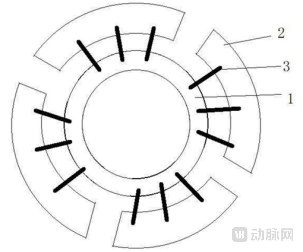
As shown in the figure above, the main body of the tension-relieving device comprises an inner adhesive film 1 and an outer adhesive film 2, which are connected by multiple fastening straps 3. The inner adhesive film is formed by splicing four arc-shaped first adhesive strips into a closed annular structure, while the outer adhesive film is formed by splicing four arc-shaped second adhesive strips into an annular structure.

Among them, the fastening strap includes two mounting bases 4 fixed on the inner adhesive film and the outer adhesive film, with a pull-out rack 5 installed on each mounting base. The distance between the inner and outer films can be adjusted by pulling the rack, thereby achieving a tension-reducing effect.
Tension is one of the key factors influencing scar morphology. During wound healing, elevated tension can lead to scar widening, compromising aesthetics and potentially causing functional impairment. Therefore, reducing tension in the wound area is crucial for improving both the appearance and function of scars.
Compared with traditional suture closure, skin tension reducers offer superior tensile strength and tension-reducing effects, while avoiding the issue of uneven tension distribution in the periwound skin caused by suture traction; therefore, they have been widely adopted in the field of plastic surgery.
Currently, there are various types of wound tension-reducing devices available on the market, such as skin zippers, tension-relieving tapes, and skin traction devices. Although these products differ in design and usage, their fundamental principle is to reduce wound tension through physical means.
For example, some products may employ a self-locking mechanism to adjust and secure tension-reducing force, while others may prioritize comfort and breathability. When selecting a tension-reducing device, factors such as adhesiveness, allergenicity, ease of use, and applicable wound types should be considered.
Among these, skin tension reducers and tension-reducing strips are two commonly used products for skin tension reduction. Given their similar names and overlapping application scenarios, VCBeat’s Orange Bureau hereby provides a comparative analysis of the two to facilitate better understanding and differentiation.
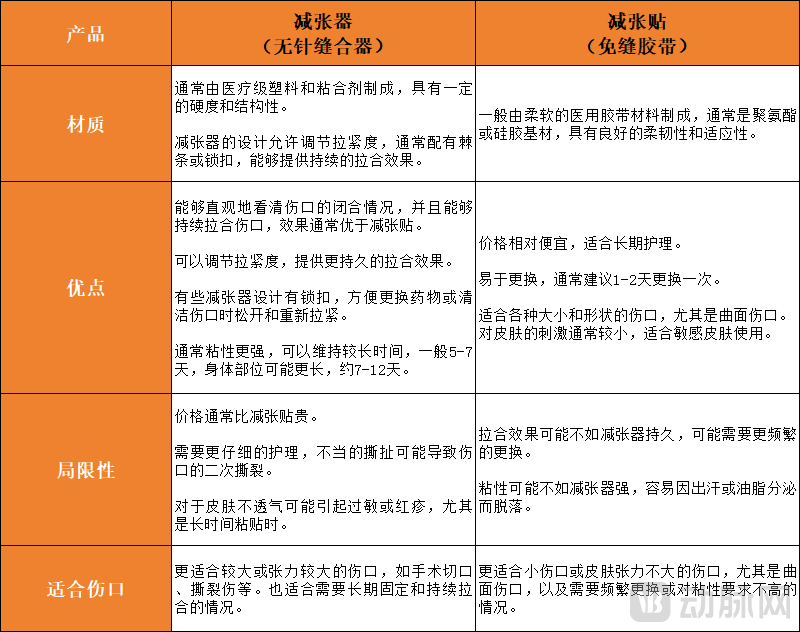
As this article primarily introduces tension-reducing devices, no extensive discussion on tension-reducing strips will be provided.
Skin Tension Reducer, also known as a needle-free skin tension-reducing suture device, is primarily used to reduce tension on both sides of an incision and prevent hypertrophic scarring and widening. It is commonly applied to areas with high skin tension following surgery or trauma, such as surgical incisions on the chest, abdomen, back, and extremities. It is the most common adjunctive method in scar prevention and treatment.
Its mechanism of action lies in the fact that tension on both sides of a wound can cause progressive widening, resulting in larger and broader scars. To prevent this phenomenon, skin tension reducers can be employed to alleviate tension on the wound edges, thereby controlling scar widening, promoting wound healing, reducing the risk of infection, and minimizing scar formation.
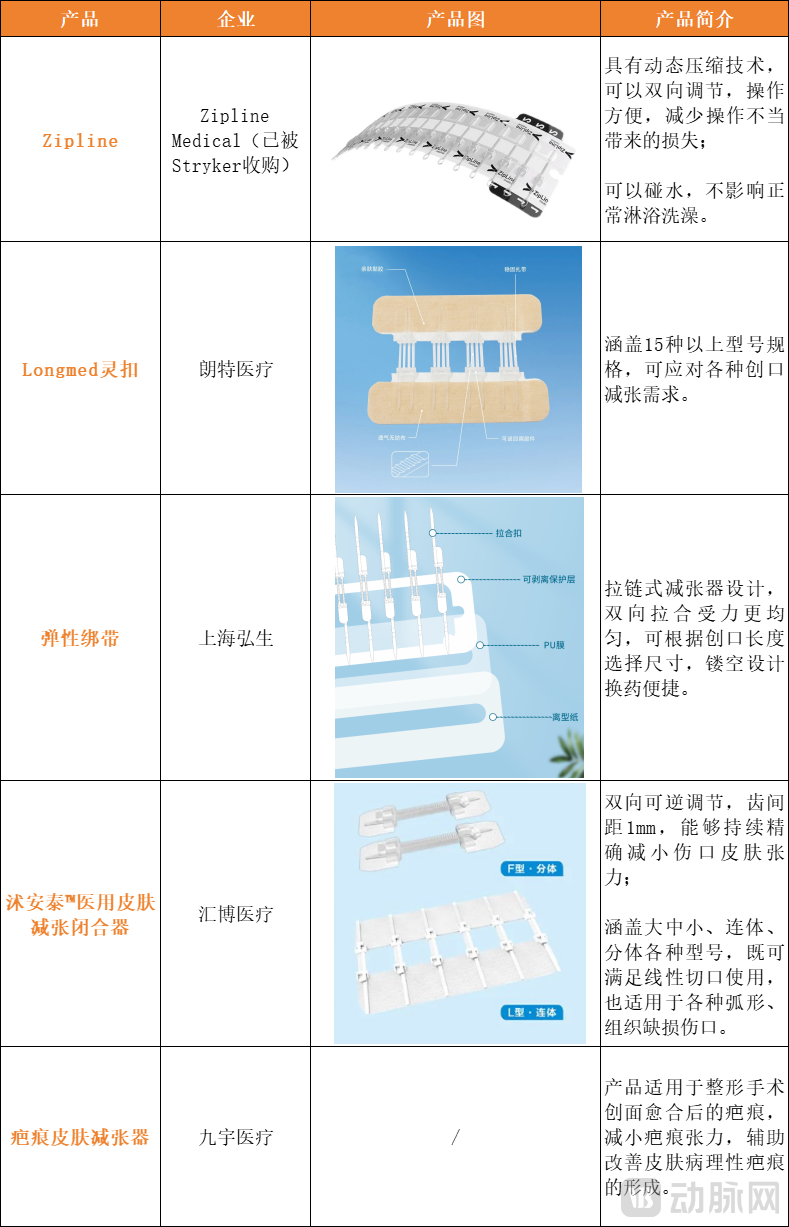
VCBeat has conducted a brief review of tension-reducing devices already approved in China, though omissions are inevitable. Should you have any additions or corrections, please feel free to contact us at any time.