

Hologic Acquires Gynesonics for $350 Million to Expand Minimally Invasive Uterine Fibroid Treatment Portfolio

Hologic
Developer of Medical Imaging Systems and Diagnostic and Surgical Products

Gynesonics
Minimally Invasive Solutions Developer for Uterine Fibroids
Following its $340 million acquisition of Endomagics in July, global women’s health leader Hologic has announced a definitive agreement to acquire Gynesonics, a provider of minimally invasive treatments for uterine fibroids, for $350 million (approximately RMB 2.489 billion). This move aims to bolster Hologic’s product pipeline and solidify its leading position in the women’s health sector.
The acquisition target, Gynesonics, specializes in providing minimally invasive solutions for symptomatic uterine fibroids. Its core product, the Sonata System, is an ablation device for treating uterine fibroids. By employing a minimally invasive, incision-free, uterus-preserving, transcervical approach, the system significantly reduces patient treatment risks. With a procedure time of under one hour, it enables a "treat-and-release" outpatient model, thereby avoiding the high risks and prolonged recovery periods associated with traditional treatments.
The Sonata System has received FDA clearance in the United States and CE marking in the European Union, and has been successfully launched in multiple countries and regions, including the United States, the European Union, the United Kingdom, and Switzerland. It is a product characterized by both high commercial viability and mature clinical application.
Uterine fibroids, known as the “most common tumor in obstetrics and gynecology,” are the most frequent benign tumors of the female genital tract. Composed of smooth muscle and connective tissue, they commonly affect women aged 30–50 years, with a prevalence rate of up to 25% among women of reproductive age. However, given that many uterine fibroids are asymptomatic, their true incidence may be far higher than indicated by clinical statistics. Symptoms include heavy menstrual bleeding, prolonged menstruation, abdominal masses, increased vaginal discharge, and difficulty urinating.
In the treatment of uterine fibroids, while pharmacological and hormonal therapies can temporarily alleviate symptoms or reduce fibroid volume, they cannot provide a definitive cure. Long-term use of these medications may lead to side effects such as headache, nausea, diarrhea, and menstrual irregularities.
Surgery is the primary treatment for uterine fibroids, encompassing three main procedures: myomectomy, subtotal hysterectomy, and total hysterectomy. These surgeries can be performed either via minimally invasive laparoscopy or through open abdominal surgery. The choice of surgical approach requires a comprehensive evaluation of hospital capabilities, patient preferences, fibroid size, age, fertility desires, and acceptance of hysterectomy.
Although myomectomy preserves the uterus, it requires general anesthesia, involves significant surgical trauma and blood loss, and may result in permanent scarring. Hysterectomy also necessitates general anesthesia, entails a recovery period of up to six weeks, leads to irreversible loss of fertility, and may have psychological impacts on patients. Furthermore, surgical procedures carry the risk of injuring surrounding organs, blood vessels, and nerves, potentially causing intraoperative or postoperative complications and even disrupting endocrine balance in women.
Although uterine artery embolization (UAE) has since emerged, this treatment involves injecting micro-particles into the blood vessels surrounding the uterus to block blood flow, thereby causing uterine fibroids to gradually shrink or undergo necrosis. While effective, this therapy may cause significant discomfort and increase the risk of pregnancy-related complications.
In light of the aforementioned issues, Gynesonics developed the Sonata System. Comprising components such as Image-Guided Software (GGS), a radiofrequency energy generator, an intrauterine ultrasound probe, and radiofrequency ablation electrodes, the system integrates real-time intrauterine ultrasound guidance with targeted radiofrequency ablation technology. It enables the transvaginal treatment of uterine fibroids of various types, sizes, and locations—including submucosal, intramural, transmural, and subserosal fibroids—without incising the uterus, allowing for the treatment of multiple fibroids in a single procedure.
This procedure is scarless, requires no tissue resection or removal, and preserves the patient’s uterus, offering significant benefits to those who wish to maintain fertility or avoid hysterectomy.
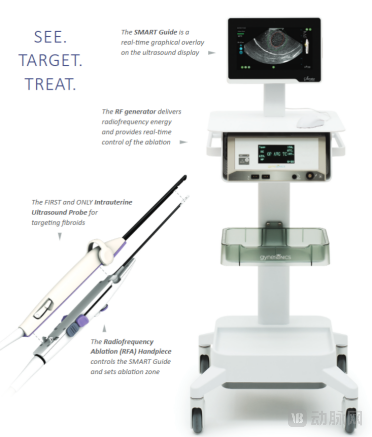
Sonata Image-Guided Software (GGS) features intelligent targeting, ablation, and planning capabilities. It overlays the ablation zone and thermal safety margins onto ultrasound images, assisting physicians in precisely selecting ablation targets and deployment positions to avoid damage to healthy tissue. During the procedure, the physician inserts the Sonata treatment device through the vagina and cervix into the uterine cavity, uses an intrauterine ultrasound probe to accurately locate fibroids, and adjusts the size and depth of the ablation zone via a purple joystick on the handpiece. Ablation time depends on fibroid size and typically ranges from 1 to 7 minutes.
Following the procedure, the physician performs real-time assessment of the ablated uterine fibroids using an intrauterine ultrasound probe to ensure treatment efficacy. The entire surgical process typically takes less than one hour, depending on the number and size of the fibroids.
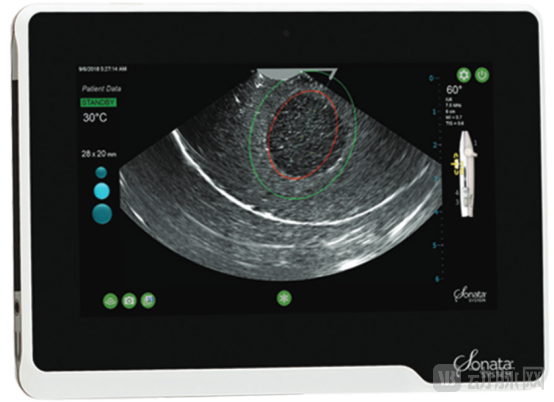
In the video, the red ellipse indicates the designated ablation zone, and the green ellipse represents the thermal safety margin; the thermal safety margin must remain within the uterine serosa throughout the entire procedure.
Clinical evidence for the Sonata system demonstrates that it significantly reduces heavy menstrual bleeding (HMB), lowers the rate of surgical reintervention, and is associated with short hospital stays and rapid recovery, enabling patients to quickly resume normal activities and work. Specifically, 52% of patients resumed normal activities by the second day post-procedure; 95% experienced significant improvement in HMB symptoms at 12 months post-procedure; 92% did not require subsequent surgery for HMB within three years; and 88% reported symptom improvement after three years.
On this occasion, VCBeat’s Orange Fruit Bureau provides a brief overview of domestically available non-invasive uterine fibroid treatment devices. We welcome corrections from our readers should any omissions have occurred.
Haijieya: Combo Knife
Hejia's ComboKnife®Innovatively integrating ultra-low temperature cryoablation (-196°C) with high-intensity heating (+85°C), the system generates substantial thermal stress through an ultra-wide temperature differential of nearly 300°C, thereby efficiently and thoroughly eradicating tumors. High-intensity rewarming (+85°C) mitigates the risks of needle-track bleeding and seeding metastasis. With its comprehensive advantages—including high treatment efficiency, operational safety, low running costs, and ease of application—Comboknife® provides a powerful, original tool for minimally invasive interventional tumor therapy. Comboknife®Indications include solid tumors, excluding cavitary tumors. It can be used for the treatment of tumors in multiple sites, such as liver cancer, lung cancer, renal cell carcinoma, breast cancer, uterine fibroids, prostate cancer, pancreatic cancer, bone and soft tissue tumors, retroperitoneal metastases, and head and neck regions.
Studies have shown that cryoablation is an effective treatment for uterine fibroids, with minimal impact on organ function, reduced intraoperative trauma, less postoperative pain, high safety, and shorter hospital stays and recovery times.
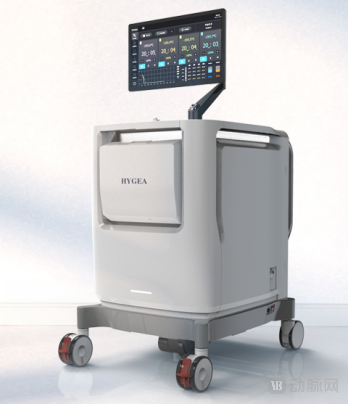
Zhonghui Medical: Ultrasound-Guided Phased Array Focused Ultrasound Therapy System (USg-PHIFU)
Zhonghui Medical’s Ultrasound-Guided Phased-Array High-Intensity Focused Ultrasound Therapy System (USg-PHIFU) leverages phased-array high-intensity focused ultrasound (PHIFU) to achieve electronic focusing on spatial target areas through phase control of multiple array elements, thereby enabling more precise treatment, coverage of larger target volumes, and more flexible multimodal therapy. The system offers advantages including short treatment duration, high therapeutic precision, accurate energy control, conformal therapy, and multimodal capabilities.
This treatment method is non-invasive and painless, requiring no surgery, causing no bleeding, and needing no anesthesia, thereby avoiding complications associated with wound infections. Meanwhile, phased-array focused ultrasound therapy also avoids the incisions on the uterus caused by resection surgery, or even hysterectomy. It maximizes the preservation of uterine integrity, accelerates uterine recovery, protects uterine fertility, and does not affect female endocrine function.
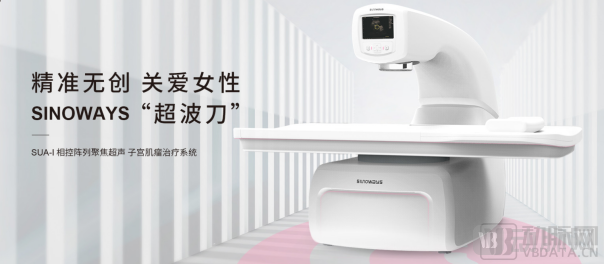
ProMed: PRO2008 Non-Invasive Focused Ultrasound Therapy System
PRO2008 is a non-invasive focused ultrasound system for the treatment of uterine fibroids, independently developed by ProMed. Equipped with the latest generation of ring-shaped self-focusing transducers, it is one of the first certified large-scale medical devices in China specifically designed for non-invasive gynecological treatments.
Its ablation mode employs a posterior-layer volumetric ablation strategy, which not only significantly reduces treatment time and protects the normal tissue behind the fibroid but also progressively improves the ablation rate. With precise positioning, a small focal spot, and high energy output, it substantially minimizes energy-induced damage to the surrounding normal tissue. Through electronic and mechanical control, the focal zone can progressively cover the target treatment area within the body in a point-to-line, line-to-plane, and plane-to-volume manner, ultimately achieving complete ablation of the entire target region.
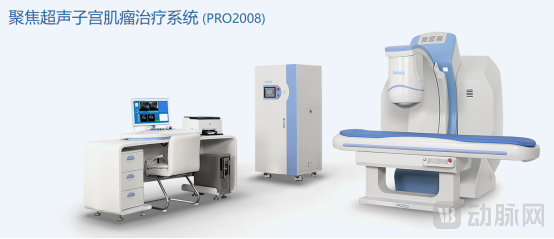
Image from the official website of ProMed
Shende Medical: Magnetic Resonance-Guided High-Intensity Focused Ultrasound Treatment System
Shende Medical’s MRI-guided high-intensity focused ultrasound (HIFU) therapeutic system applies phased-array technology to the HIFU treatment of uterine fibroids, addressing key challenges such as phased focusing, MRI guidance and monitoring, and MRI electromagnetic compatibility. The company has secured multiple patents with independent intellectual property rights in these core technologies.
This device utilizes artificial intelligence to formulate treatment plans, automatically delineating the target area on images of the patient’s lesion and marking regions to be avoided; physicians can adjust the treatment boundaries based on their clinical experience. During treatment, magnetic resonance imaging (MRI) provides real-time monitoring of the entire procedure, tracking patient movement, temperature elevation both inside and outside the target zone, and the volume of tissue reaching the ablation threshold. Post-treatment, imaging is used to assess therapeutic efficacy in real time. The procedure requires neither hospitalization nor anesthesia, truly making uterine fibroid treatment a walk-in, walk-out outpatient surgery.
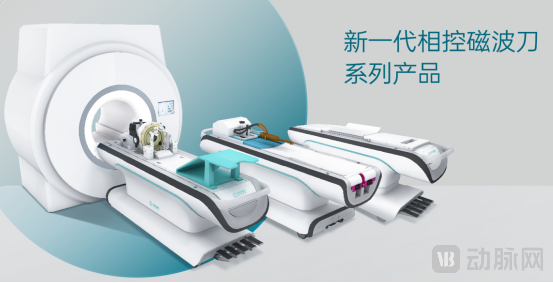
Image from the official website of Prome Medical