

Undervalued Billion-Dollar Market Heats Up as Fosun and Huadong Enter the Botulinum Toxin Arena
Fosun Pharmaceutical
Healthcare Industry Group
Huadong Medicine
Large Comprehensive Pharmaceutical Product Developer
Recently,Fosun PharmaceuticalThe disclosure announcement stated that Daxxify, its injectable botulinum toxin type A product, had been officially approved, making it the sixth botulinum toxin approved in China. Three days after the release of this news,Huadong MedicineIt also welcomed significant news: the Phase III clinical trial of its strategically collaborative product with Chongqing Yuyan Pharmaceutical, Recombinant Botulinum Toxin Type A for Injection (YY001), for the indication of treating moderate to severe glabellar lines, has been successfully completed and is about to enter the new drug registration stage.
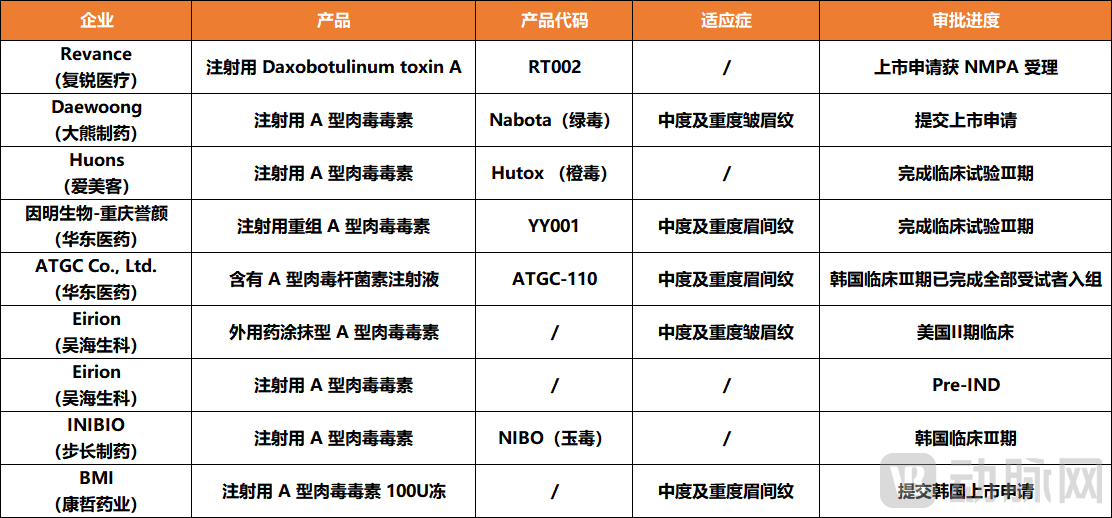 Figure 1. Other botulinum toxin products under development in China (Data source: CITIC Securities)
In fact, the buzz surrounding botulinum toxin extends far beyond this, with several blockbuster products currently in late-stage clinical trials. For example,Junhemeng BiotechJHM03, whose Phase II clinical trials are nearing completion, is about to enter Phase III clinical trials;Yinming BiologyAll subjects in the Phase III clinical trials of YY001-002 have completed the study, leaving only the final step before commercialization. In addition,DaXiong Pharmaceutical, Imeik, PPD, CMS Pharma, Haohai Biological TechnologyThe in-development products of these companies are also advancing rapidly,Based on current clinical approval timelines, more than 10 botulinum toxin products are expected to be launched in the next 3–5 years.。
This is truly an unimaginable scene,It is worth noting that until 2020, only two botulinum toxin products had been approved in the Chinese market.. Therefore, botulinum toxin has achieved explosive growth in a short period, which not only validates the market value of this sector but also signals that more intense competition is inevitable in the future. So, what exactly is driving the surge in popularity of botulinum toxin? Furthermore, who will emerge as the ultimate winner in the impending industry battle? The answer lies within the products themselves.
Industry Giants Go on a Buying Spree: Why Has Botulinum Toxin Become the New Battleground?
In recent years, as the high-profit market logic of hyaluronic acid has gradually lost its effectiveness, the entire medical aesthetics industry has been searching for the next blockbuster product. Judging from current market developments, botulinum toxin is clearly being pinned with high expectations, having already attracted significant bets from many leading enterprises.
withBloomage BiotechFor example, as early as 2015, it identified Medytox’s botulinum toxin products as a target and invested nearly HK$100 million to establish Huaxi Medytox, thereby promoting the exclusive development, market expansion, and sales of these botulinum toxin products in mainland China. One of the “Three Musketeers,”ImeikSimilarly, in 2021, Imeik invested RMB 886 million from its oversubscribed funds to acquire a 25.42% equity stake in Huons at a premium of 74 times, thereby securing the exclusive distribution rights for Hutox botulinum toxin products in China.
Of course, it is not only medical aesthetics companies that are betting heavily; a wave of pharmaceutical companies from other sectors are also rushing into the market. TakingFosun Pharmaceuticalas an example, as early as 2018, it obtained the commercialization rights for Daxxify in China from the medical aesthetics company Revance, with a licensing fee of $88 million and up to $172.5 million in sales milestone payments; furthermore, over the following five years, Fosun Pharmaceutical invested more than RMB 300 million in the product’s research and development.
Another typical representative isHuadong Medicine. In October 2023, it formally licensed ATGC-110, an injectable formulation of type A botulinum toxin from ATGC, with an upfront payment of USD 13 million; one month later, Huadong Medicine further invested RMB 150 million in Chongqing Yuyan Pharmaceutical to secure exclusive commercialization rights for the medical aesthetic indications of recombinant type A botulinum toxin YY001 in mainland China, the Hong Kong Special Administrative Region, and the Macao Special Administrative Region.
According to incomplete statistics from VCBeat, nearly 30 pharmaceutical companies in China have increased their investments in the botulinum toxin sector over the past five years, with total investment exceeding RMB 10 billion.. Yet behind the fervent trading activity, a question has grown increasingly prominent: What exactly is the appeal of botulinum toxin?
In fact,As a medical aesthetics product, any discussion of its value inevitably centers on two key aspects: efficacy and market performance.. Let’s start with its efficacy. Botulinum toxin, scientifically known as botulinum neurotoxin, is a toxic protein secreted by Clostridium botulinum during its reproduction. It possesses potent neurotoxicity and acts on the motor nerve endings to interfere with the release of acetylcholine, thereby preventing muscle fiber contraction and inducing muscle relaxation. In aesthetic medicine, botulinum toxin is widely used to reduce facial wrinkles; in recent years, popular treatments such as wrinkle-reducing injections, leg-slimming injections, and face-slimming injections are all derivative products of this toxin.
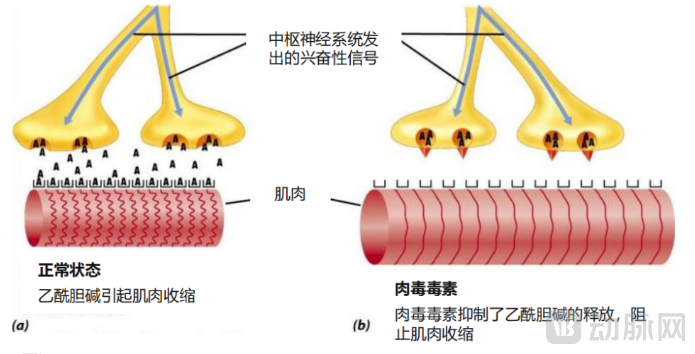
Figure 2. Mechanism of action of botulinum toxin (Image source: Brock Biology of Microorganisms)
Like hyaluronic acid, botulinum toxin is not a single entity; it comprises seven serotypes: A, B, C, D, E, F, and G.Currently, Botulinum Toxin Type A is the most widely used in clinical practice. This is primarily due to its highest potency and stability, which result in relatively superior efficacy. Additionally, its ease of preparation and storage offers significant cost advantages.。
Next, we turn our focus to the market. According to a report by Frost & Sullivan,China's botulinum toxin market size reached RMB 3.9 billion in 2021 and is projected to reach RMB 39 billion by 2030, with the market poised for explosive growth.。
In this regard, a senior investor in the medical aesthetics sector remarked, “First, from the perspective of demand, botulinum toxin’s primary applications—wrinkle reduction and facial slimming—represent ‘essential’ expenditures for women across all age groups. Second, regarding usage frequency, botulinum toxin has consistently served as a ‘customer acquisition tool’ for medical aesthetics clinics, given that reinjection is required on average every three to four months, resulting in exceptionally strong consumer stickiness. Finally, in terms of scope of application, botulinum toxin, as a biopharmaceutical product, is not confined to medical aesthetics; it is also widely used in therapeutic settings such as the treatment of blepharospasm, hemifacial spasm, related dystonias, and strabismus.”
Coupled with rising market penetration and the logic of replacing gray-market products amid tightening regulatory compliance, expectations for the botulinum toxin market have clearly reached their peak. It is precisely this dynamic that has attracted a wave of pharmaceutical giants, urgently seeking new growth curves, to significantly increase their investments and enter the fray.
Who Can Challenge Botox’s Position as the “Global Sales Champion”?
Although botulinum toxin is an emerging market, there are already blockbuster products available.
This is Allergan’s Botox. As the world’s first botulinum toxin product, it has maintained a dominant market position since its launch. According to financial reports,Botox generated $5.673 billion in sales in 2023, with $2.682 billion from aesthetic applications and $2.991 billion from therapeutic indications.. In 2009, Botox was officially approved for entry into the Chinese market, establishing its presence in China; domestic sales reached approximately RMB 687 million in 2023.
Although Botox has begun to face challenges from newcomers such as Dysport, Letybo, and Xeomin in recent years, its market share still exceeds 50%, and its position as the “global sales champion” remains unshakable. So, what exactly is Botox relying on?
From the perspective of many industry professionals,Botox stands out largely due to its extensive range of approved indications.It is reported that Botox currently has more than 27 approved indications worldwide. In addition to cosmetic applications, it can be used to treat migraines, back pain, hyperhidrosis, eyelid twitching, and strabismus. This is not the end of its expansion; according to the content of Allergan’s earnings conference call for the fourth quarter of last year, Botox will also target the weight-loss market, with a focus on treating “Ozempic face.”
Moreover, in addition to having a wide range of indications,Another key advantage of Botox is reflected in its marketing efforts.. In fact, as the pioneer of botulinum toxin, Botox enjoys a certain first-mover advantage in the market and has already established a mature promotional system. Taking the Chinese market as an example, Botox has consistently adhered to a physician training and certification program. Through its “Allergan Academy,” it has long collaborated with major medical aesthetic institutions on “injection physician training.” This approach has not only precisely expanded Botox’s market reach but also helped the brand build a strong reputation.
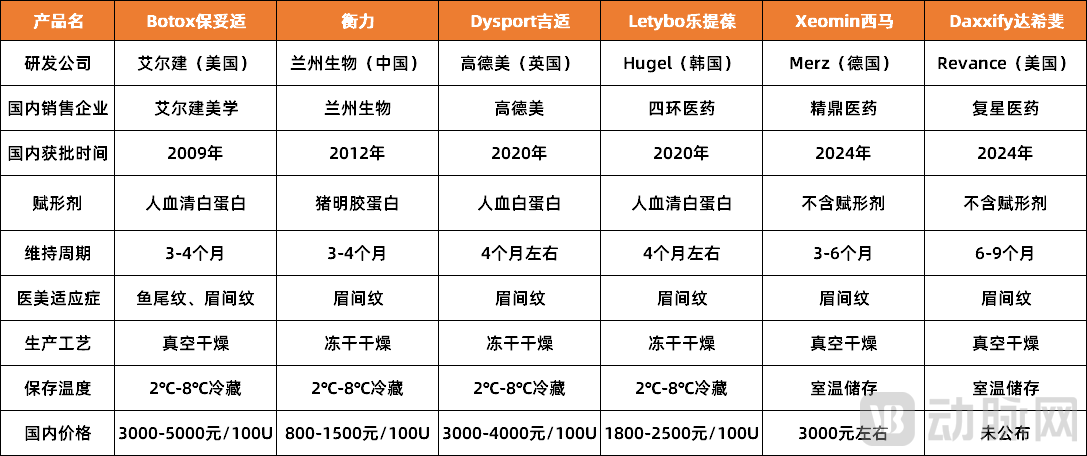 Figure 3. Six botulinum toxin products have currently been approved in China (Source: Public information)
So, as more and more new products gain approval, who can truly compete with them? In response, a senior figure in the medical aesthetics industry remarked, “Although Botox currently demonstrates strong market performance, the future botulinum toxin market remains open. Time to market, product efficacy, and indications will always be the core competitive factors in the botulinum toxin sector.。”
First, let’s discuss the duration, which primarily refers to the maintenance period of botulinum toxin.. As previously mentioned, the duration of botulinum toxin effects is generally short, typically lasting 3–4 months. This is primarily because botulinum toxin is essentially a heterologous protein with immunogenicity; long-term use may induce the production of neutralizing antibodies, leading to drug resistance or secondary treatment failure after repeated injections.
To address this issue, new market entrants have explored various approaches. Taking Daxifei, which has just received approval, as an example, it is the world’s first patented long-acting botulinum toxin type A formulated with peptides. Its duration of effect has been extended to 6–9 months. This extension is attributable, on one hand, to its proprietary peptide exchange technology (PXT), and on the other hand, to its excipient formulation, which is free from human serum albumin and animal-derived components, thereby reducing the likelihood of allergic and immune reactions during treatment and consequently prolonging the duration of effect.
Next, focus on product strength.. In fact, as a "latecomer," product efficacy is clearly the key to overtaking competitors on the bend. Currently, existing botulinum toxin products generally have a short duration of action and often contain exogenous or inactive auxiliary proteins as well as other clostridial proteins, posing certain risks of immunogenicity. Therefore, the development of novel botulinum toxin products with longer duration, higher purity, and greater safety has become a prerequisite for future success.
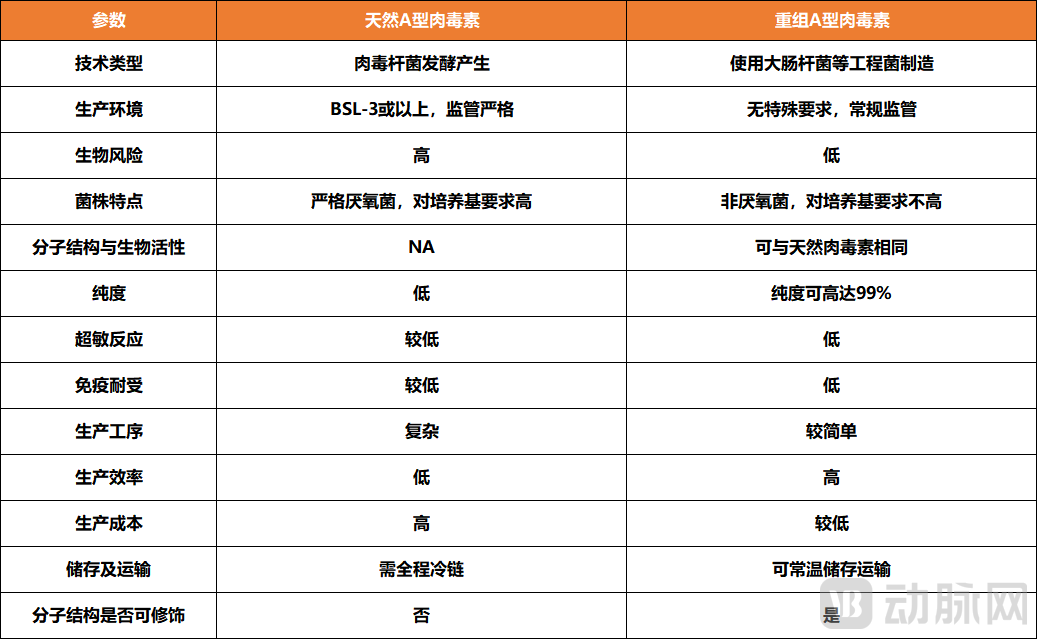 Figure 4. Differences Between Natural Botulinum Toxin and Recombinant Botulinum Toxin (Source: Frost & Sullivan)
In this context,Recombinant Technology Begins to Be Widely Applied in the Botulinum Toxin Field, Poised to Usher in a New Era for Botulinum Toxin. Specifically, recombinant technology enables engineered designs that effectively enhance the affinity of botulinum toxin for its receptors and promote internalization, while also reducing the risk of diffusion into surrounding tissues and improving patient tolerability.
Taking Huadong Medicine’s recombinant botulinum toxin type A, YY001, as an example, its purity exceeds 99%, which implies higher potency and, consequently, superior efficacy. Furthermore, high purity reduces the immunogenicity risk associated with the introduction of exogenous proteins into the human body, thereby enhancing the overall safety of administration. Currently, in China, in addition to YY001, JHM03 from Junhemeng Biopharma and YY001-002 from Yinming Biotech also utilize recombinant protein technology and have all entered late-stage clinical trials.
The final focus is on indications.. It is evident from the market growth logic of Botox, the top-selling product, that developing new indications is undoubtedly a key strategy for enhancing the competitiveness of botulinum toxin products. At present, domestically marketed botulinum toxin products are primarily concentrated in the consumer healthcare sector, with limited applications in serious medical fields, which will represent a future incremental market.
For instance, Junhemeng Biologics is targeting the treatment of upper limb spasticity in adults after stroke with its injectable recombinant botulinum toxin type A, JHM03. On September 14, Junhemeng announced that the clinical study of JHM03 for upper limb spasticity in adults after stroke had completed enrollment of the first subject, with approval imminent. In fact, botulinum toxin also has clinical application scenarios in gastroenterology, urology, pain management, rehabilitation, and neurology, indicating significant market potential yet to be tapped.
Therefore, from an overall perspective, Botox, which currently holds the market initiative, is not invincible. As more players enter the field and products continue to iterate, the market landscape will undergo further reshuffling.
Botulinum Toxin: When Will It Become the Next Hyaluronic Acid?
In fact, since the advent of botulinum toxin, it has been constantly compared with hyaluronic acid, with claims that it aims to become the “next hyaluronic acid” and recreate the miracle of a single blockbuster product in the medical aesthetics industry.
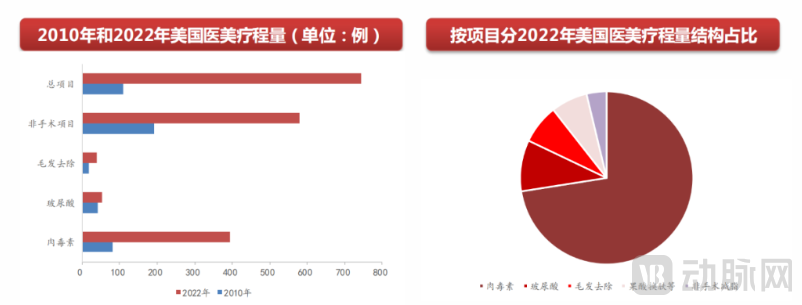 Figure 5. Product Share in the U.S. Medical Aesthetics Market (Source: "Special Series Report on the Medical Aesthetics Industry: Hyaluronic Acid and Botulinum Toxin in Injectable Medical Aesthetic Products")
However, achieving this goal is no easy feat for botulinum toxin at present, with a challenging road still ahead. According to data from LeadLeo Research Institute,The consumption volume of botulinum toxin products in China is far lower than that of hyaluronic acid, with an overall market share of less than half that of hyaluronic acid.. This stands in stark contrast to the international landscape. Globally, botulinum toxin accounts for 43% of the medical aesthetics market, while hyaluronic acid holds a 28% share. This comparison clearly indicates that botulinum toxin is an undervalued segment in the domestic Chinese market.
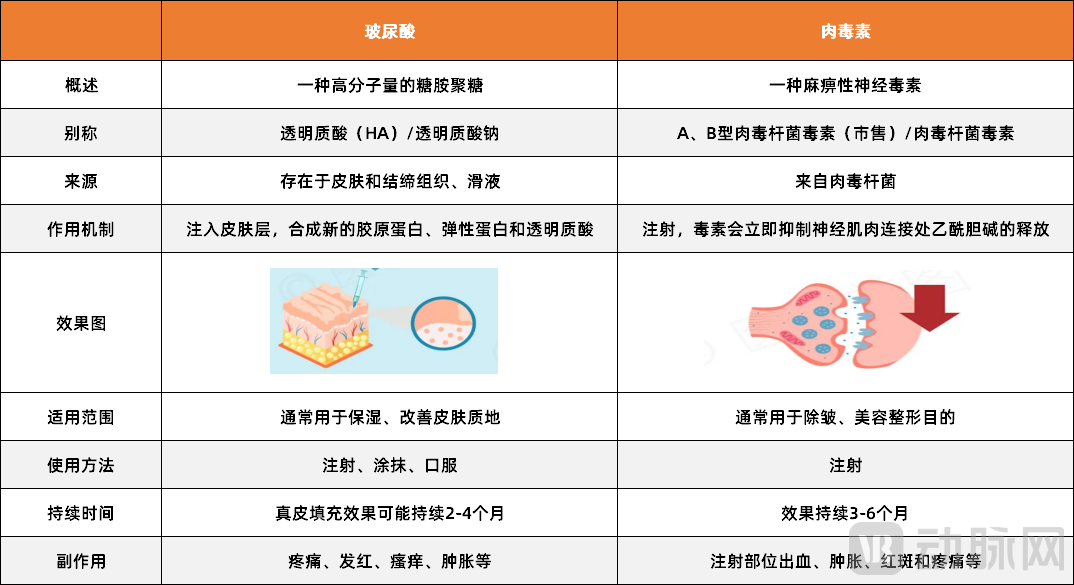 Figure 6. Comparison between Hyaluronic Acid and Botulinum Toxin
There are, of course, reasons for this.First, botulinum toxin involves high technical barriers and stringent regulatory oversight.According to Imeik’s prospectus, the construction period for the Hutox botulinum toxin facility is as long as 65 months, while the approval cycle for a botulinum toxin product takes at least six years. Therefore, while hyaluronic acid products flourished across the market, only two botulinum toxin products—Botox and Hengli—were available. Although the number of approved botulinum toxin products has increased to six in recent years, this still lags significantly behind the more than 30 categories of hyaluronic acid products.
Another obstacle lies in the profit margins.. As is well known, hyaluronic acid is often referred to as the “Moutai of medical aesthetics,” primarily due to its exceptionally high gross profit margin, which averaged over 90% at its peak, roughly on par with Kweichow Moutai. Botulinum toxin clearly does not share this characteristic; influenced by R&D and production costs, its average market gross margin remains around 60% to 80%. Furthermore, as market competition intensifies and information becomes increasingly transparent and accessible, the average price of botulinum toxin products is expected to continue declining, thereby further compressing profit margins.
The final point focuses on the level of market risk.. In February 2023, Bloomage Biotech announced that its wholly-owned subsidiary, Julang Company, had filed a claim against South Korea’s Medytox, signaling that its nearly seven-year endeavor in the botulinum toxin business had ultimately come to naught. Reportedly, the partnership was terminated due to Medytox’s falsification of materials and its prolonged failure to deliver the product. Although Bloomage Biotech maintains that it will not abandon its botulinum toxin strategy, it has clearly lost its first-mover advantage.
This undoubtedly serves as a wake-up call for companies heavily investing in botulinum toxin. In recent years, major domestic manufacturers have entered the Chinese market by acting as distributors for foreign-approved botulinum toxin products. While this strategy can accelerate market entry and secure a first-mover advantage, it also carries significant risks, including uncertainties related to R&D progress and the likelihood of successful market penetration in China.
However, every coin has two sides. Although it is unlikely that botulinum toxin will recapture the past market glory of hyaluronic acid in the near term, the sector’s market potential remains promising. This is driven by the increasing entry of leading enterprises, the introduction of innovative technologies, and the urgent need to expand clinical application scenarios. Competition within the industry is expected to intensify significantly, with product quality and market strategy emerging as the key differentiators for success.
1. “The Most Beautiful Poison: How Imeik and Bloomage Biotech Are Curing the Worst Coughs” – TMTPost;
2. “Disputes Among Industry Giants Persist: How Far Is the ‘Next Hyaluronic Acid’ from Market Saturation?” – Amino Observation;
3. “Technological Iteration: Recombinant Technology Poised to Usher in a New Era for Botulinum Toxin” – Frost & Sullivan.