

Weijing Medical Accelerates Market Expansion as Its Laparoscopic Surgical Robot Nears Regulatory Approval

Wiseking Medical
Medical Robot R&D and Production Manufacturer
If one had to describe wiseking in a single word, that word would likely be “fast.”
In August 2022, Wiseking held the clinical trial kick-off meeting for its first three-arm laparoscopic surgical robot in the Department of Urology at Sir Run Run Shaw Hospital, Zhejiang University School of Medicine. In September of the same year, the surgical robot successfully completed three minimally invasive urological procedures, including one laparoscopic radical prostatectomy and two adrenalectomies.
Just six months later,In March 2023, wiseking successfully completed clinical validation surgeries for all 120 planned enrolled cases (including the da Vinci control group) at two major clinical trial centers: Sir Run Run Shaw Hospital, Zhejiang University School of Medicine, and Zhejiang Provincial People's Hospital., covering all urological surgical procedures, with a 100% surgical success rate.
Subsequently, in October 2023, wiseking’s four-arm multi-port laparoscopic surgical robot completed its first clinical procedure in general surgery at Sir Run Run Shaw Hospital, Zhejiang University School of Medicine...
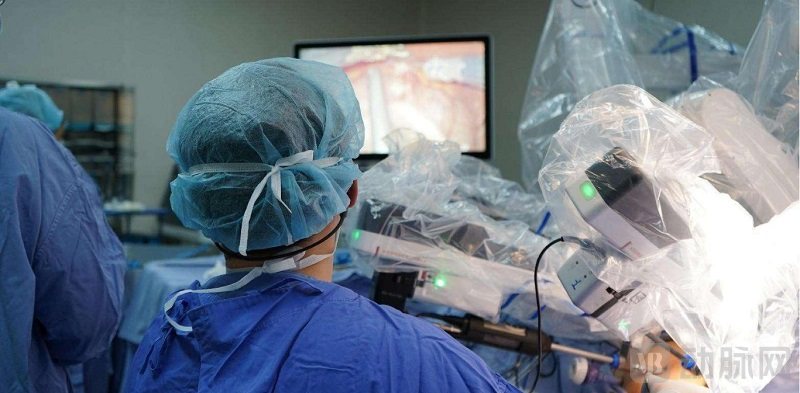
Nowadays, wiseking’s four-arm laparoscopic surgical robot is on the verge of obtaining regulatory approval. According to Pan Bo, General Manager of wiseking, itsThe laparoscopic surgical robot is expected to receive regulatory approval by the end of this year or early next year, with registered indications covering urology, general surgery, and gynecology. Indications for thoracic surgery are also being expanded and supplemented.
A Chinese-made laparoscopic surgical robot manufacturer is about to obtain certification, adding another player to the market with strong competitiveness.
During abdominal surgery, traditional laparoscopic procedures face several challenges. For instance, due to the confined space of the abdominal cavity, surgeons often struggle to visualize certain organs or lesion areas. Even when using 2D monitors to observe the surgical field, extensive hand-eye coordination training is required, and the lack of depth information in the images may lead to errors in delicate maneuvers such as suturing. Furthermore, limited flexibility of surgical instruments often hinders their ability to reach the lesion sites.
That is, traditional laparoscopic surgery faces numerous challenges, such as “visibility” and “accessibility.”
Laparoscopic surgical robots can effectively address issues such as "poor visibility" and "limited maneuverability" during surgery.Wiseking's laparoscopic surgical robot has developed innovative products to address the aforementioned pain points:
First, to address the issue of “unclear visualization,” Wiseking’s laparoscopic surgical robot adopts a compact dual-screen 4K display solution and achieves compatibility between the endoscope and instrument channels.On one hand, the high-resolution dual-screen 4K display allows for the presentation of more surgical details, with finer zooming capabilities in the surgical field and adjustable zoom ratios selectable by surgeons. Furthermore, wiseking plans to further expand its optical fluorescence and AI image navigation functionalities in the future to fully meet intraoperative observation needs. On the other hand, the endoscope adopted by wiseking is reportedly the smallest in diameter among similar products currently available in the industry, enabling interchangeability between the endoscope and instrument channels during surgery, thereby assisting surgeons in observing different surgical areas as needed. Moreover, to better deliver real-time visualization performance, wiseking has reduced image latency to under 55 ms.
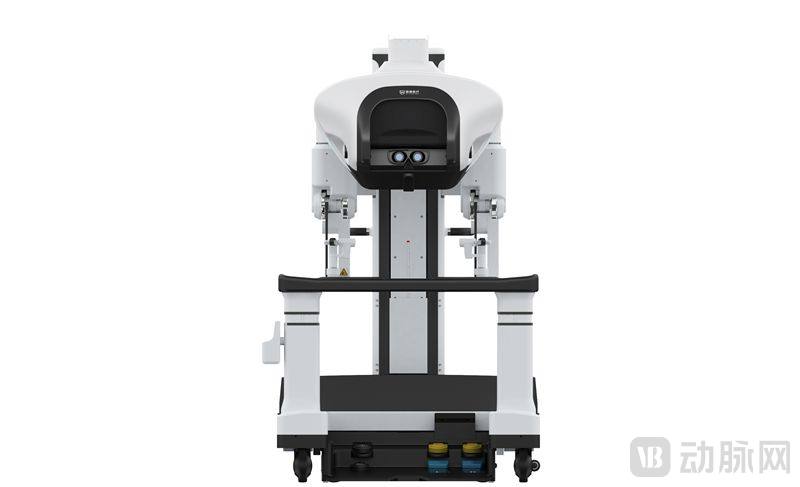
Secondly, to address the issue of “inability to perform,” wiseking has resolved the problem of manipulation precision through its self-developed master-slave hand control system, while also addressing intraoperative detailed maneuvers through bionic minimally invasive surgical instruments.
Wiseking’s laparoscopic surgical robot adopts a master-slave haptic feedback control system with exceptionally high precision.On one hand, the master-slave repeatability accuracy is achieved to be less than 0.5 mm; on the other hand, the variable-impedance-based force-feedback master console developed by Wiseking further enhances operational comfort through master console force compensation and tremor filtering technologies; furthermore, variable impedance control based on motion intent prediction further reduces human-machine interaction forces. Ultimately, this enables precise control of the device.
Wiseking Laparoscopic Surgical Robot with Full Series of Bionic Minimally Invasive Surgical Instruments, including both active and passive devices, rigid and flexible instruments, as well as therapeutic and auxiliary devices, have all been deployed. Notably, its self-developed ultrasonic scalpel overcomes manufacturing constraints; the increased length expands its operational range, it can be reused up to five times, and it demonstrates superior efficacy in sealing blood vessels of 3–5 mm in diameter. During surgery, it better assists physicians in achieving precise surgical dissection. To better meet clinical needs, Wiseking Medical is continuously innovating in device design to further enrich its product portfolio.
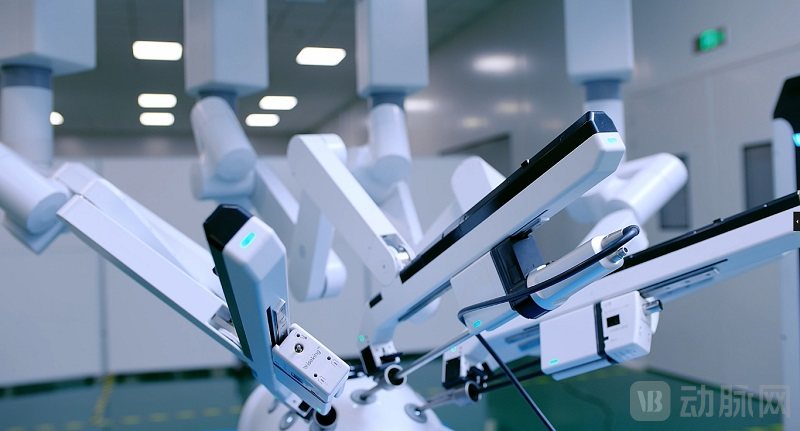
Thanks to the design of wiseking’s laparoscopic surgical robot, the system has completed multi-department clinical trials at Sir Run Run Shaw Hospital and the Second Affiliated Hospital of Zhejiang University School of Medicine. It has also successfully performed routine and typical procedures in urology, general surgery, and gynecology, achieving a 100% surgical success rate, with its safety and efficacy fully validated. While rapidly advancing product development and regulatory registration, wiseking has maintained its unwavering commitment to product quality and performance.
Professor Li Gonghui, Director of the Department of Urology at Sir Run Run Shaw Hospital, Zhejiang University School of Medicine, once commented: “The key features of the wiseking surgical robot are mainly reflected in three aspects. First, the master-slave control is precise, with no intraoperative lag or perceptible delay. Second, the arrangement and configuration of the robotic arms are rational, preventing collisions during surgery and ensuring smooth operational flow. Third, its advanced control algorithms enable the surgical instruments to perfectly replicate the surgeon’s hand movements, demonstrating significant advantages in delicate procedures such as anastomosis.”
As Wiseking’s laparoscopic surgical robot is on the verge of obtaining regulatory approval, we have also learned that a new multicenter clinical trial for the device has recently been launched. AndIn addition to laparoscopic surgical robots, wiseking’s single-port endoscopic surgical robots and bionic minimally invasive surgical instruments are rapidly advancing in clinical development.
The rapid advancement of wiseking’s laparoscopic surgical robot in clinical trials is attributable to the strengths of its surgical robotics team.
Pan Bo, General Manager of Wiseking Medical, is a graduate of Harbin Institute of Technology and has been conducting research on common key technologies in the field of surgical robots since 2003;Its team is the only one in the industry to have consecutively undertaken minimally invasive surgical robot projects under the Ministry of Science and Technology’s National High-Tech Research and Development Program (“863 Program”) and Key R&D Programs in the field of advanced manufacturing during the 11th, 12th, and 13th Five-Year Plan periods.Currently, R&D personnel account for over 60% of the team, with approximately 50% of them holding master’s or doctoral degrees.
Taking the low-latency performance of wiseking’s laparoscopic surgical robot as an example, Pan Bo pointed out in his introduction that it is closely related to product architecture, hardware manufacturing, and algorithm optimization. Behind this lies wiseking’s more than 20 years of industry research and technological accumulation. TheyConquered and mastered core technologies, including structural design, control architecture, core algorithms, intelligent control, and system integration of minimally invasive surgical robots, while implementing the "industry-academia-research-clinical-testing" R&D model.For example, with the unveiling of the jointly established training center with Sir Run Run Shaw Hospital, they are not only sharing the clinical application outcomes of wiseking’s surgical robots but also further advancing surgeon operational training. Feedback from physicians during practical operations and clinical practice will, in turn, facilitate the iterative improvement of wiseking’s products.
In 2018, to facilitate the commercialization of academic research achievements, Wiseking Medical formally launched its industrialization process and established its headquarters in Hangzhou in 2021. At this stage, Pan Bo also recognized that “with product approval, the key challenge would be how to introduce high-performance products into hospitals and gain acceptance from both physicians and patients.”
In 2022, Wiseking received strategic investment from the listed company Kangji Medical.
Over the past two decades of development, Kangji Medical has been both a driver and a witness to the evolution of surgery in China from the era of open procedures to the minimally invasive age. Through its strategic partnership with Wiseking Medical, Kangji Medical is committed to building a comprehensive, high-quality, and reliable portfolio of minimally invasive surgical products and solutions encompassing “equipment + instruments + consumables + surgical robots,” thereby advancing surgical practice from the minimally invasive era into the robot-assisted era.

Kangji Medical is itself a leading enterprise in the field of minimally invasive surgical instruments., with a deep focus on departments such as obstetrics and gynecology, urology, general surgery, and thoracic surgery, the company has long maintained the number one market share in China for products including disposable trocar cannulas and polymer ligation clips; the company is alsoThe only enterprise in China that sells minimally invasive surgical instruments and supporting consumables to the top 20 hospitals domestically ranked in the aforementioned four departments, with its distributors covering the entire country, enablingCovering more than 3,500 hospitals, including 1,000 Grade-A tertiary hospitals; overseas marketIn terms of market reach, Kangji Medical can also access more than 60 countries and regions worldwide.Across all dimensions—including expert resources, customer relationships, academic promotion systems, and distributor networks—Kangji Medical’s resources are perfectly aligned with laparoscopic surgical robots.
With the strategic synergy between wiseking and Kangji Medical established, and with substantial resources accumulated for subsequent device production and commercialization, wiseking is fully prepared, awaiting only the product launch.
Surgery Is Entering Its Third Wave of Development.
In traditional open surgery, large incisions and significant trauma lead to slow patient recovery and a high risk of postoperative complications. With the advancement of minimally invasive surgery, incisions have become smaller, patient recovery has accelerated, and hospital stays have been substantially reduced. However, both open and minimally invasive surgeries remain highly dependent on physician experience, resulting in a steep and prolonged learning curve for surgeons.
Robot-assisted surgery has dramatically transformed this landscape. It significantly eliminates intraoperative hand tremors and enables precise control, while reduced blood loss translates to faster postoperative recovery.The shortening of the learning curve for physicians enables junior doctors to rapidly acquire surgical skills, and the development of remote surgical robots will help enhance the capacity of primary healthcare services.
Robotic-assisted surgery has become an unstoppable trend. In 2006, the first imported da Vinci S surgical robot was introduced to the Chinese People's Liberation Army General Hospital. As of now, the number of da Vinci surgical robots installed in China has reached 402 units. Globally, as of mid-2024, the installed base of da Vinci surgical robots has exceeded 9,200 units.
The high priority given to surgical robots in China’s 11th, 12th, and 13th Five-Year Plans has also helped the industry rapidly accumulate talent. Currently, the industry is further achieving domestic substitution of imported surgical robots through industrialization. Policies have also played a promoting role in this process. Before 2018, China implemented strict allocation management for large-scale medical equipment. Demand-side entities such as hospitals not only needed sufficient financial strength but also had to hold government-issued allocation permits to configure large-scale equipment like surgical robots.Nowadays, surgical robots have been reclassified under Category B management, significantly shortening the approval process and cycle. In June 2023, the National Health Commission released the “14th Five-Year Plan” for the Allocation of Large-Scale Medical Equipment, further increasing the planned allocation quota for laparoscopic surgical robots.Policies are further accelerating the rapid scale-up of surgical robots.
Back in 2018, when wiseking embarked on its industrialization journey, market consensus on the development of the surgical robotics sector was far from what it is today, and the upstream and downstream supply chains were still immature. However, with a clear vision of the future and committed to the original aspiration of “domesticating high-end medical equipment,” wiseking entered the field with dedication. Its current growth has fully validated the company’s strategic foresight.
Currently,Wiseking is launching a new round of financing, with plans to use the funds to accelerate the development and technological iteration of its laparoscopic surgical robot products, thereby expanding production capacity and speeding up market entry.
There is only one goal: “to further lower the barrier to entry for laparoscopic surgical robots, benefiting a vast number of doctors and patients.”