

Cryofocus Medtech Announces Multiple Global Firsts in Respiratory Intervention with Strategic Collaborations and Innovative Cryoablation Portfolio

Cryofocus
Minimally Invasive Interventional Cryotherapy Device Developer
The treatment of respiratory diseases has always been a focal point and challenge in medical research.
As one of the four major categories of chronic diseases globally, respiratory diseases affect over 150 million patients in China. However, current effective treatment options for respiratory diseases remain relatively limited; conventional pharmacological therapies often yield suboptimal outcomes for patients with advanced-stage disease, failing to adequately meet their therapeutic needs. Consequently, interventional therapies with favorable efficacy have become a focal point of clinical research and are undergoing rapid development.
Among these, cryotechnology has demonstrated significant efficacy in the early diagnosis and treatment of clinical respiratory diseases. Since the introduction of the flexible cryoprobe in 1994, it has been widely adopted in the field of interventional pulmonology both domestically and internationally, accumulating substantial clinical experience. Today, continuous technological innovations are providing clinicians with even more effective therapeutic solutions:Cryofocus has taken an innovative approach by utilizing liquid nitrogen as the cryogenic medium and flexible catheters as the delivery device, thereby creating a comprehensive portfolio of cryotherapy products for respiratory diseases.
It is worth noting that, in addition to continuously optimizing and iterating its products, Cryofocus has also been expanding market boundaries and deepening its industrial layout through collaborations since the beginning of this year. The company has not only actively expanded partnerships within the industry,Strategic Partnership with Boston Scientific, leveraging both parties’ business layouts, expertise, and resources in the field of respiratory interventions to lay the foundation for creating synergies in this area. Recently, the company’s wholly-owned subsidiary, Ningbo Shengjie Kang Biotechnology Co., Ltd. (“Ningbo Shengjie Kang”), also announced that it would collaborate withThe First Affiliated Hospital of Guangzhou Medical UniversityJoint ParticipationGuangzhou National LaboratoryInitiated and managed research projects to explore the clinical application of cryoablation products for lung cancer, accelerating the implementation of this innovative therapy to benefit a broad population of patients in need.
It is reported thatGuangzhou National LaboratoryIt is a novel research institution in the field of respiratory diseases and their prevention and control, serving as a core scientific and technological force in this domain.The First Affiliated Hospital of Guangzhou Medical UniversityIt is the hospital affiliated with the Guangzhou Institute of Respiratory Health, the National Clinical Research Center for Respiratory Diseases, and the State Key Laboratory of Respiratory Disease.
In accordance with the scientific research cooperation agreement, Ningbo Shengjie Kang and The First Affiliated Hospital of Guangzhou Medical University will jointly participate in and completeResearch and Development of a Liquid Nitrogen-Based Ultra-Low Temperature Cryogenic System and Balloon Cryoablation for Lung Cancer, leveraging the resources of the contracting parties to jointly advance the development and completion of an innovative cryoballoon ablation product specifically designed for peripheral lung cancer, based on a liquid nitrogen ultra-low temperature freezing system.
This collaboration between the two parties not only demonstratesHigh Industry Recognition of Cryofocus’s Cryoablation Technology for Meeting Clinical Needs and Its Advanced Nature, while also marking that both parties will join hands to deeply explore the potential of cryoablation technology in the treatment of peripulmonary tumors. Through academic exchanges, clinical research, and the translation of innovative technologies, Cryofocus will accelerate the R&D and application of cryoablation technology in the field of respiratory intervention.Bringing New Breakthroughs to the Treatment of Peripulmonary Tumors, a Complex Disease.
Major Innovation!
Breakthroughs in Liquid Nitrogen Cryoablation and Flexible Catheter Technology
Cryotechnology refers to a series of procedures performed within the bronchial lumen via a flexible cryoprobe under bronchoscopic guidance, including cryoablation and cryoresection techniques. This technology is characterized by its definitive efficacy, safety and ease of operation, low complication rate, and cost-effectiveness, playing a significant role in the diagnosis and treatment of benign and malignant airway lesions as well as rare endoluminal diseases.The irreplaceable role of thermal ablation and other methods.
Cryoablation is not only used to treat pain and other symptoms associated with the spread of abnormal tissue, but also serves as a standalone therapy to alleviate cancer symptoms when surgical risks are prohibitively high. Furthermore, cryoablation can be performed without open surgery, functioning as part of a comprehensive treatment regimen to support patients who are not candidates for surgical tumor resection. Compared with other ablation techniques, it offers multiple advantages, including the use of local anesthesia, reduced pain, preservation of tumor immunogenicity, and shorter procedural times for physicians. In addition, the frozen zone created by cryoablation features well-defined boundaries and uniform temperature distribution, facilitating effective monitoring of the ablation area.
Driven by multiple factors, including accelerating population aging, rising prevalence of chronic diseases, and supportive policies, China’s cryo-interventional device market has demonstrated strong growth momentum in recent years.
Despite the significant advantages of cryoablation technology, factors such as freezing rate, rewarming rate, minimum temperature, number of cycles, and duration of freezing all influence therapeutic efficacy. To fully maximize the value of cryoablation technology, equipment manufacturers still face substantial challenges.
From the perspective of technical R&D, merely achievingPrecise Control of Cryoablation DevicesThis presents a significant challenge. It requires precise control of the cryoprobe’s temperature to ensure effective destruction of the target tissue while sparing surrounding healthy tissue. To this end, device manufacturers must develop high-precision temperature control systems and ensure a stable energy supply. Furthermore, when using cryogens such as liquid nitrogen, it is essential to effectively and accurately manage volume expansion during vaporization, preventing substantial expansion within narrow channels or pumps that could impede further cryogen flow and lead to other serious consequences.
Meanwhile,Design and Manufacturing of Cryoablation ProbesIt also represents a key breakthrough. Only by possessing adequate flexibility and stiffness, high-pressure resistance, and temperature tolerance can the probe successfully navigate the narrow, tortuous airways of the lungs. Furthermore, the material composition and structural design of the probe require continuous optimization to enhance cryoablation efficiency and minimize potential side effects.
In the face of extremely high technical detail requirements,Cryofocus has successfully achieved breakthroughs in liquid nitrogen cryoablation technology and flexible catheter technology, extending its core technologies to the field of respiratory intervention.
ItsLiquid Nitrogen Cryoablation Technology PlatformThis approach retains the high efficiency and controllability of liquid nitrogen ablation while addressing the issue of excessive volume changes associated with vaporization, thereby reducing device operating pressure and enhancing procedural safety. Building on this foundation, Cryofocus has also developed underlying and supporting technologies, such as precise temperature field control and real-time vacuum technology, to improve product efficacy and safety and advance the clinical application of cryoablation systems.
itsFlexible Catheter TechnologyIt features excellent flexibility, enabling rapid expansion upon reaching the target site. This not only allows the balloon within the cryoablation catheter to form a broad contact surface with the target tissue for cryoablation over a relatively large area, but also achieves considerable depth of penetration.
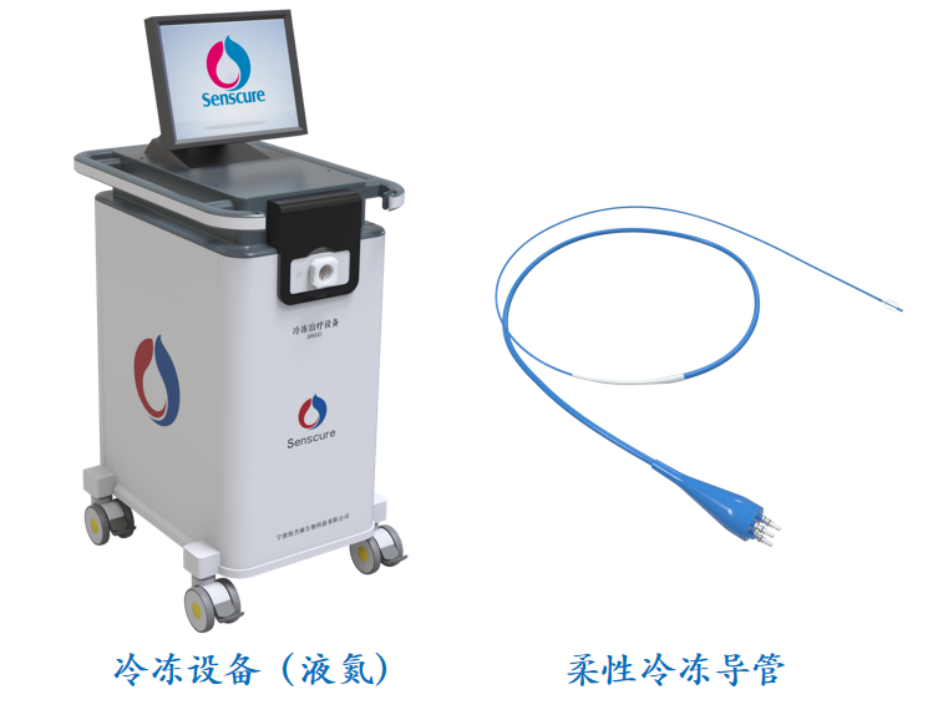
In recent years, driven by factors such as severe air pollution, a large smoking population, and the frequent occurrence of major acute respiratory infectious diseases, the number of patients with chronic respiratory diseases has continued to rise, making China a country with a high prevalence of respiratory diseases. Data indicate that the number of patients with respiratory diseases in China has exceeded 150 million.
This not only places pressure on disease prevention and control efforts in pulmonology and related departments, but also imposes higher demands on the innovative development of the respiratory discipline and therapeutic approaches for respiratory diseases: there is a clinical need for more efficient and precise treatment modalities.
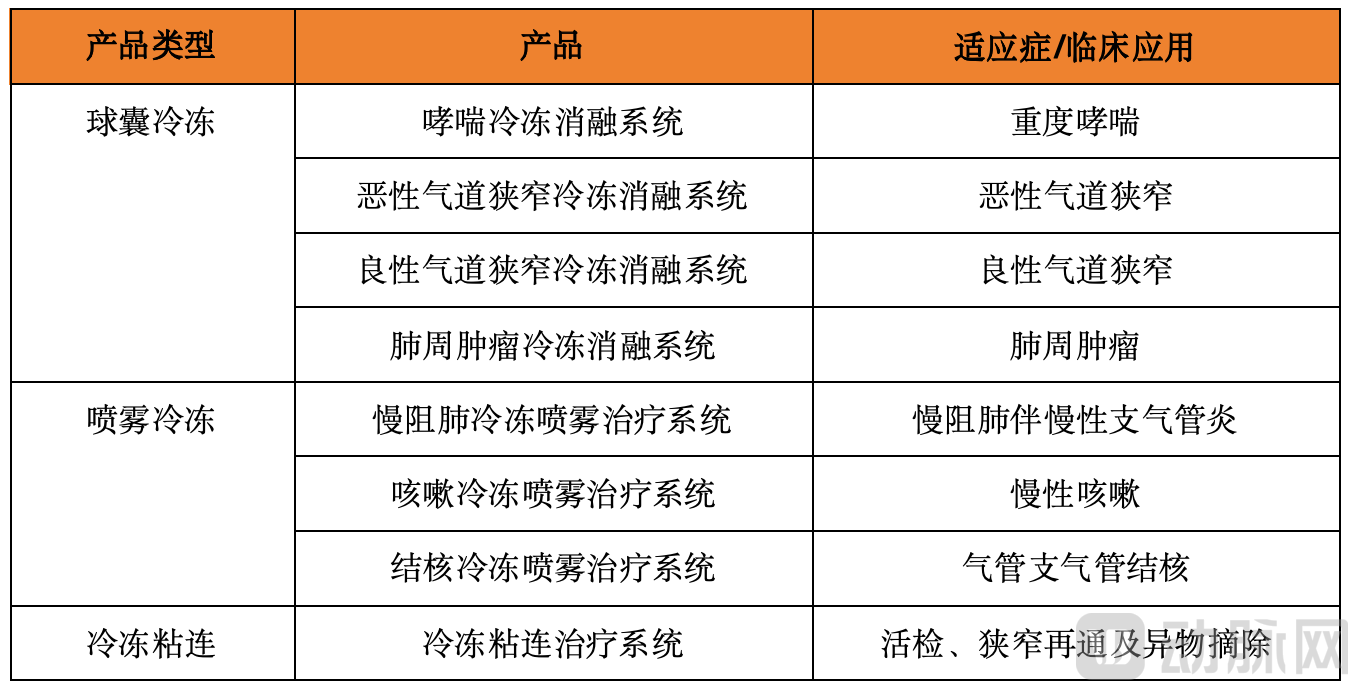
In response to this challenge, Cryofocus leverages its foundational technologies to address the clinical needs of respiratory diseases. By employing minimally invasive interventions (via natural body orifices), it provides more effective and safer solutions for a variety of respiratory conditions. With cryoablation products at its core, the company has established a portfolio coveringTreatment of Asthma, COPD, Airway Stenosis, Chronic Cough, and Peripulmonary Tumorsand other fields, achievingMultiple “First-in-Class” Products, and is scheduled toThe products will be gradually launched to the market from 2024 to 2026.
The World's First Bronchial Cryo-denervation Protocol
Asthma, a chronic inflammatory disease of the pulmonary airways, is characterized by fluctuating symptoms, reversible airflow obstruction, and heightened susceptibility to bronchospasm. In China, the prevalence of asthma among individuals aged 20 years and older is 4.2%, corresponding to a total of 45.7 million patients.
Pharmacological control, such as with inhalers or leukotriene receptor antagonists, is currently the primary management approach. However, pharmacological control has limited efficacy in severe asthma. Among all adult asthma patients, 3.6% are diagnosed with severe refractory asthma. Despite the limited efficacy of medications in severe asthma, the majority of patients with severe asthma (>99%) still rely on pharmacological therapy to manage their symptoms (Source: Frost & Sullivan).
For patients with severe asthma, non-pharmacological treatments (such as cryoablation and bronchial thermoplasty) can alleviate symptoms. To this end, Cryofocus has pioneered an asthma cryoablation system that targets and ablates the vagus nerves in the airways via freezing. This approach blocks vagal signal transmission and reduces acetylcholine release, while simultaneously decreasing airway smooth muscle tone and mucus production, thereby alleviating airway obstruction throughout the lungs and achieving therapeutic effects for asthma. Compared with radiofrequency ablation, this therapy offers greater safety, less pain, and faster recovery.
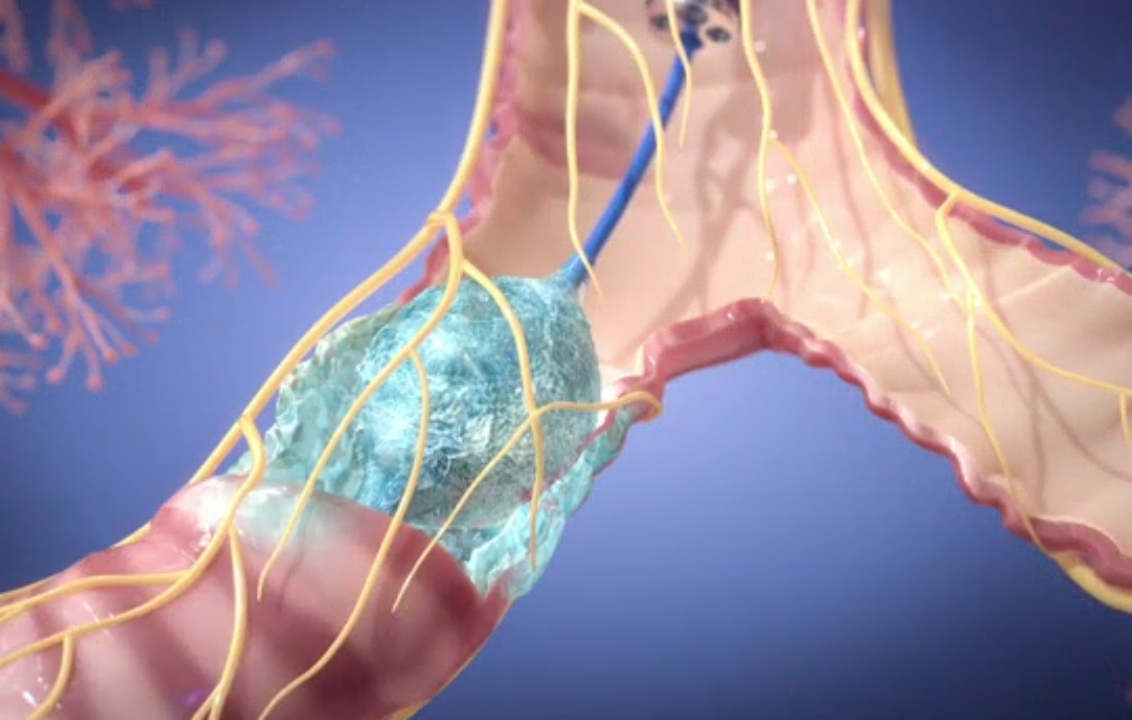
Cryogenic Targeted Denervation
China’s First Cryospray System for COPD: Liquid Nitrogen Spray Precisely Ablates Mucosal Lesion Cells
Chronic Obstructive Pulmonary Disease (COPD) is a common respiratory disorder characterized by persistent respiratory symptoms and airflow limitation. Clinically, chronic bronchitis and emphysema are closely associated with the development of COPD. According to the latest "Report on Tiered Diagnosis and Treatment of Chronic Obstructive Pulmonary Disease in China," the number of COPD patients in China is nearly 100 million, accounting for approximately 1/14 of the total population.
Based on the severity of symptoms and the progression of exacerbations, pharmacological treatment for chronic obstructive pulmonary disease (COPD) can be categorized into four classes: bronchodilators, long-acting beta-agonists, long-acting anticholinergics, and inhaled corticosteroids. To date, there is no conclusive evidence from clinical trials demonstrating that existing medications can alter the long-term decline in lung function. As a type of interventional therapy, cryoablation offers advantages such as a low complication rate and high survival rates, holding promise as an effective treatment for COPD.
Building on this foundation, Cryofocus has developed China’s first cryoablation device for the treatment of chronic obstructive pulmonary disease (COPD). This system enables circumferential, quantitative, and controlled delivery of cryogenic media within the airways, facilitating cryoreplacement of the airway mucosal epithelium. By remodeling the mucosal epithelium, the system achieves therapeutic efficacy through highly efficient, rapid, non-contact treatment.
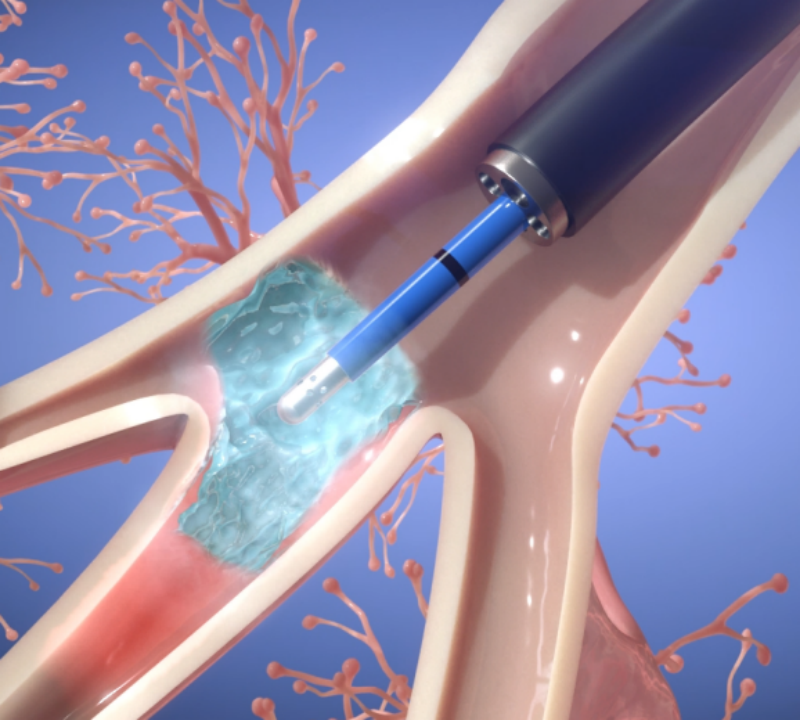
Liquid Nitrogen Spray Therapy for COPD
The First Balloon Cryotherapy Product for Bronchoscopic Interventional Treatment of Benign and Malignant Airway Stenosis
Airway stenosis is the narrowing of the airway caused by neoplastic or non-neoplastic processes.
Malignant airway stenosis is primarily treated through tumor resection and bronchoscopic interventions, whereas traditional treatments for benign airway stenosis mainly include surgical resection and reconstruction. However, surgical indications are highly limited due to surgical trauma, high risks, or poor patient health status, and the formation of postoperative anastomotic scarring may lead to restenosis. In the treatment of benign airway stenosis, cryoablation of residual lesions following thermal ablation or balloon dilation can reduce the rate and severity of scar-related restenosis. Furthermore, cryotherapy carries a lower risk of cartilage damage and perforation compared to thermal ablation, resulting in fewer complications such as airway malacia and collapse.
Now that interventional therapies such as ablation have gained professional recognition, they are expected to provide patients with more survival opportunities and extended lifespan, while also creating opportunities for subsequent treatments. For this reason, Cryofocus has pioneered a cryoablation system for the treatment of both benign and malignant airway stenosis.
During the procedure, the cryoablation system for malignant airway stenosis utilizes ultra-low temperatures generated by the system to ablate tumor cells within the tracheal lumen and on the luminal wall, as well as tissue hyperplasia occurring during treatment, and then further destroys residual cells through rewarming. The cryoablation balloon enables more thorough ablation of malignant tumors over a larger area and delays the time to restenosis. The cryoablation system for benign stenosis is fundamentally identical to that for malignant stenosis in terms of product structure and operational procedures.
Unlike traditional devices used for cryoablation of airway tissues, this product features a lower freezing temperature and a faster cooling rate, enabling rapid, extensive coverage of stenotic tissue. This further delays the time to restenosis and reduces the restenosis rate in patients. It is expected to be the first balloon cryotherapy product indicated for bronchoscopic interventional treatment of both benign and malignant airway stenosis, offering a superior solution for the management of airway stenosis.
The World’s First Transbronchial Balloon Cryoablation System for Peribronchial Lung Tumors: Ultra-Low Temperatures Achieve Complete Tumor Ablation Coverage
According to the latest data released in "The Burden of Malignant Tumors in China, 2022," lung cancer has become the leading malignant tumor in China in terms of both incidence and mortality rates, ranking first among both men and women.
As the incidence of respiratory diseases such as lung cancer continues to rise year by year, and modern medical models increasingly favor minimally invasive and precise treatments, patient demand for minimally invasive therapies is growing. The emergence of innovative technologies has further expanded the application of cryoablation in the field of interventional pulmonology.
In response to the high incidence and mortality rates of lung cancer, Cryofocus has pioneered a globally first-of-its-kind cryoablation device for transbronchial balloon cryoablation in the treatment of peripheral pulmonary tumors. By generating ultra-low temperatures (-120°C to -150°C) via the balloon, the device achieves complete ablation coverage of the tumor, resulting in in situ inactivation. The use of flexible catheters and an airway-based approach significantly reduces complications such as pneumothorax and hemoptysis. Furthermore, leveraging the potent immune response induced by cryoablation, the combination of cryoablation with immunotherapy offers expanded treatment opportunities and options for lung cancer. This approach aims to better improve patients’ quality of life, extend survival time, reduce lung cancer mortality, shorten hospital stays, and alleviate the medical burden.
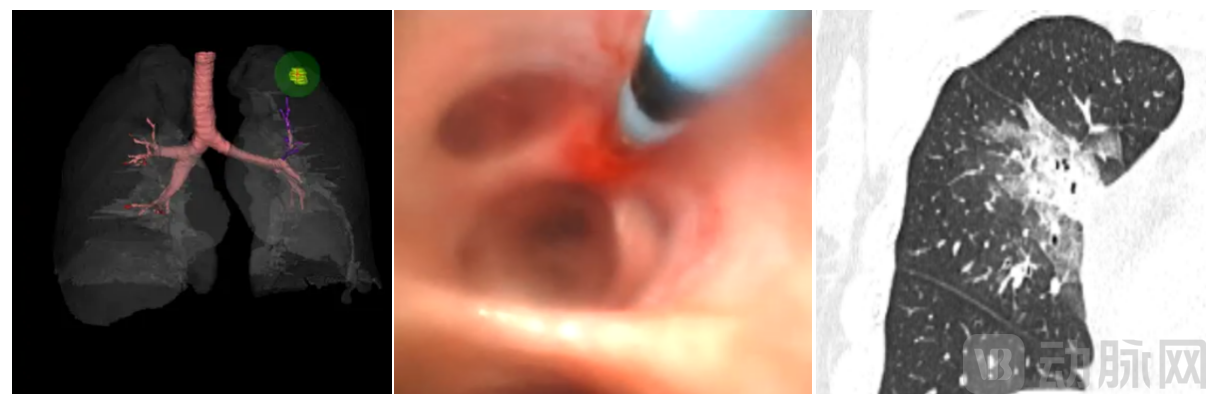
Cryoablation of Peripulmonary Tumors
Left: Preoperative planning, Middle: Flexible catheter cryoablation, Right: Ablation zone covering the tumor
World’s First: Application of Cryotherapy for the Treatment of Chronic Cough
Chronic cough is a symptom that occurs in various diseases, including cough-variant asthma and chronic obstructive pulmonary disease (COPD). The prevalence of chronic cough in China is 24.04%. Due to its complex etiology and the historical lack of awareness among clinicians, clinical misdiagnosis and inappropriate treatment are very common.
For chronic cough with a confirmed etiology, treatment is typically tailored to the underlying cause. Cryoablation treats chronic cough by targeting and ablating diseased airways in ways that pharmacological therapy cannot achieve.
Cryofocus’s independently developed Cough Cryospray Therapy System is the world’s first medical device to apply cryotechnology for the treatment of chronic cough. By cryoablating excessive and hypersensitive cough receptors in the airways, the system restores the cough threshold, thereby achieving therapeutic efficacy. It is poised to become the global first spray-based cryoablation system specifically indicated for chronic cough.
Interventional pulmonology, an emerging discipline that has gradually evolved over the past two decades, is rapidly advancing with the continuous emergence of new materials, technologies, and concepts. It plays an increasingly important role in the diagnosis and treatment of respiratory diseases, leading to a corresponding expansion of its indications.
Technologies such as balloon dilation, electrocautery ablation, cryoablation, and laser therapy, which were introduced to China only around the turn of the millennium, have gradually emerged in recent years as indispensable treatments for respiratory diseases. However, due to the high entry barriers for cryointerventional devices, developers must not only possess multidisciplinary expertise in active medical device development—covering mechanical engineering, advanced materials, and electromagnetic compatibility—but also overcome significant technical challenges. These include precisely controlling the volumetric expansion during the vaporization of cryogens, as well as designing and manufacturing slender, flexible catheters capable of reaching target sites while maintaining temperature resistance.
For this reason, only a handful of domestic enterprises have successfully developed interventional cryotherapy products for the respiratory system.
Cryofocus asOne of the first market participants in China to develop and utilize cryotherapy products employing spray and cryoballoon ablation technologies for the treatment of respiratory diseases, already has11 Years of Cryogenic Technology and Several Years of R&D Experience in Respiratory Interventional Cryotherapy Products. The company has not only achieved breakthroughs in multiple key technologies but also successfully built a comprehensive portfolio of cryotherapy products for respiratory diseases, based on long-term technological accumulation and iteration.
Furthermore, Cryofocus has continuously established external collaborations and exchanges, accumulating extensive clinical and expert resources, with its clinical centers covering most provinces and cities across China. This will also help the company develop a product portfolio that addresses unmet needs in various indications by focusing on clinical pain points and demands, thereby promoting the greater value of cryotechnology in the field of interventional pulmonology.
Since the beginning of this year,Cryofocus, Boston Scientific, and Guangzhou Institute of Respiratory HealthThe partnership further strengthens efforts to expand market boundaries, deepen industrial layout, and optimize and iterate product R&D.. Currently, among the eight products developed by Cryofocus in the field of respiratory intervention,One product has already received regulatory approval, and the remaining products will be approved and commercialized in due course.
Undoubtedly, Cryofocus has even greater potential for growth in the field of interventional pulmonology.