

Innovac Therapeutics Advances Clinical Development of Personalized mRNA Cancer Vaccine InnoPCV with Successful First-in-Human Dosing

Innovac Therapeutics
mRNA Vaccine and Therapy Developer
Prior to the COVID-19 pandemic, although mRNA technology had undergone decades of research and development, it remained primarily in the laboratory and early-stage clinical trial phases. Scientists had been exploring the potential of mRNA as a therapeutic and vaccine platform, particularly in cancer immunotherapy and for a limited number of infectious diseases. However, due to certain technical bottlenecks, mRNA technology was not widely applied in clinical practice. With the outbreak of the COVID-19 pandemic, global vaccine development entered an emergency state. Owing to its rapid development speed and high programmability, mRNA technology emerged as a leading vaccine platform. Pfizer-BioNTech (BNT162b2) and Moderna (mRNA-1273) were the first to develop COVID-19 vaccines based on mRNA technology.
Driven by the success of COVID-19 vaccines, mRNA technology’s delivery systems (such as LNPs) and manufacturing processes have been significantly enhanced. Pharmaceutical companies are now actively exploring the accelerated application of mRNA technology to the treatment of other diseases, including:
• Tumor Vaccines: Research on personalized mRNA tumor vaccines is accelerating, as scientists aim to leverage mRNA technology to activate patients' immune systems to recognize and specifically target tumor cells.
• Infectious disease vaccines: In addition to COVID-19, the mRNA platform is being used to develop vaccines for other infectious diseases, such as influenza, rabies, and Zika virus.
• Gene Therapy: mRNA technology is still exploring its potential in treating genetic diseases by encoding defective proteins to correct the disease.
Innovac Therapeutics (hereinafter referred to as “Innovac Biologics”) is a biotechnology startup dedicated to applying mRNA-LNP technology to broader fields, particularly oncology. Zhang Chi, Founder and CEO of Innovac Biologics, spent over ten years in venture capital and enterprise incubation within the pharmaceutical industries of both China and the United States prior to establishing the company. He noted that the high flexibility of mRNA technology, its ease of scalable production, and its ability to simultaneously and effectively activate both humoral and cellular immunity were the key factors that attracted him and his team to found Innovac Biologics. Through Innovac Biologics, they aim to further leverage the advantages of mRNA technology.
Co-founded by the Former Head of Moderna’s Oncology Vaccine Program, the Company Ramps Up Quickly
Zhang Chi previously served as Investment Director/Investment Manager at Lilly Asia Ventures and Managing Director at CDH Investments. He was deeply involved in multiple investments, including those in CanSino Biologics (6185.HK), 3SBio (1530.HK), MicroTech Medical (2235.HK), Kunling Pharma, and Mindray Medical (300760.SH). Prior to founding Innovac Therapeutics, Zhang Chi was a Venture Partner/Investment Director at Creacion Ventures, where he helped build several biopharmaceutical companies from the ground up, including Frontera Therapeutics and Pediatric Therapeutics.
The COVID-19 pandemic sparked Zhang Chi’s strong interest in mRNA technology, leading him to focus not only on its application as vaccines for infectious diseases but also to closely monitor the development of mRNA technology in other fields. He pointed out that while the pandemic served as a catalyst accelerating the maturation of mRNA vaccine technology, these vaccines are far from perfect. Although they significantly reduce the risk of death and hospitalization, they cannot completely block viral entry. Furthermore, there is room for optimization in areas such as expression efficiency, delivery vectors, and manufacturing processes. Meanwhile, this technology holds substantial potential for growth, with broad application prospects in both infectious disease vaccines and cancer vaccines. Consequently, Zhang Chi decided to establish a new company based on an mRNA technology platform and pathway. However, given the significant challenges that remain in the research, development, and manufacturing processes of mRNA technology, the importance of assembling top-tier talent is self-evident.
During this process, Zhang Chi met Dr. Nicholas Valiante, Co-founder and Chief Scientific Officer of Innovac Therapeutics. Dr. Valiante has over 25 years of experience in the vaccine industry, having held positions at Novartis Vaccines and GSK Vaccines. He previously served as the Global Head of Immunology and Immunotherapy at Novartis Vaccines, where he led teams to explore the application of mRNA technology in vaccine development. In 2015, he joined Moderna during its period of rapid growth, overseeing the research and development of the personalized cancer mRNA vaccine (mRNA-4157) and leading his team to advance the personalized cancer vaccine from concept to clinical stage within two years.
Almost simultaneously, Dr. Yuan Hang, Co-founder and Chief Technology Officer of Innovac Therapeutics, also joined the team. Dr. Yuan has over 15 years of experience in process development, CMC, and large-scale manufacturing of biologic macromolecule drugs, gene therapy products, and cell therapy products. He previously served as Vice President at BlueRock Therapeutics (a subsidiary of Bayer Pharmaceuticals), where he was responsible for process development and manufacturing, and as Senior Director at Takeda Pharmaceutical/Shire Pharmaceuticals, where he oversaw upstream/downstream process development and scale-up manufacturing.

From left to right: Zhang Chi, Nicholas Valiante, and Yuan Hang. Image source: Innovac Therapeutics official website
The founding team has reached a consensus on the application and market prospects of mRNA technology. Notably, according to Mordor Intelligence, the market size for mRNA vaccines and therapeutics is estimated at $54.7 billion in 2024 and is projected to reach $118.9 billion by 2029, representing a compound annual growth rate (CAGR) of 16.8% during the forecast period (2024–2029).
On September 1, 2023, Innovac Therapeutics announced the completion of an $18 million Pre-A financing round. Investors included Yuanjing Capital, Lichen Capital, Yinglian Health Fund, TG Sino-Dragon Fund, and other renowned industry institutions. The proceeds from this round will be used to develop a proprietary mRNA technology platform and build manufacturing capacity, with the aim of advancing its pipeline projects into clinical stages.
mRNA Vaccine Technology Upgrade: Therapeutic Vaccines + Personalized Customization
To maximize the potential of mRNA vaccines, Innovac Therapeutics focused on exploring therapeutic vaccines, particularly personalized cancer vaccines, from its inception. Zhang Chi pointed out that the choice of “therapeutic + personalized” is precisely based on the advantages of mRNA vaccines.
The core advantage of mRNA vaccines lies in the high modularity and flexibility of their design. Researchers can rapidly design mRNA sequences that not only accommodate multiple antigens but also allow for flexible adjustment in length, ranging from a few thousand base pairs to nearly five thousand base pairs. This means that complete antigens can be inserted, antigenic epitopes can be strategically arranged, or even tandem structures containing dozens of small antigenic epitopes can be constructed. Such capabilities are nearly unattainable with traditional vaccines, such as viral vector vaccines or recombinant protein vaccines.
From the perspective of immunological principles, the human immune response primarily operates through two major pathways: the MHC class I pathway, which mainly activates CD8+ cytotoxic T cells (CTLs) and is responsible for cell-mediated immunity; and the MHC class II pathway, which primarily involves humoral immunity and antibody production. Traditional vaccines have largely focused on eliciting antibody responses, whereas mRNA vaccines, leveraging their design flexibility, can precisely target the MHC class I pathway and effectively activate CD8+ cytotoxic T cells via antigenic epitopes. This capability is particularly critical for tumor therapy and the clearance of virus-infected cells.
It is precisely this capability for tandem design that allows the mRNA vaccine platform to demonstrate advantages in therapeutic applications, particularly in the development of personalized cancer vaccines. Compared with the limitations of recombinant protein vaccines in incorporating multiple tumor neoantigens, mRNA vaccines are inherently well-suited to address this complex task, paving new avenues for precision treatment of cancer and viral infections.
Regarding the “personalization” of mRNA, Zhang Chi cited cancer patients as an example, pointing out that Innovac Therapeutics tailors its approach to each patient’s individual condition by extracting tumor and normal gene sequences from their tumor tissue and peripheral blood, respectively. Using the company’s proprietary algorithms and computational biology platform, it precisely identifies tumor neoantigens that are unique to the patient, present exclusively in tumor cells, and absent in normal tissues.
These neoantigens serve as targets for cytotoxic T cells, significantly enhancing the T cells’ ability to recognize and attack tumors, thereby enabling effective tumor clearance or preventing recurrence in postoperative patients, and establishing a robust immune surveillance network. In short, Innovac Therapeutics’ personalized cancer vaccines equip T cells with high-precision “radar” and “eyes,” allowing them to accurately identify and eliminate tumor cells, or to intervene at the earliest stage of tumor recurrence.
Zhang Chi explained, “From the perspective of the manufacturing process, apart from outsourcing the chemical synthesis of gene sequences, all other steps—including the development of our core algorithm platform, sequence generation, plasmid construction, in vitro transcription of mRNA, nano-liposome encapsulation, and final filling and release—are completed at our own production facility in Hangzhou. This closed-loop process ensures the high efficiency, safety, and personalized customization of the vaccines, with delivery achievable within two months.”
Four Major Platforms Create Differentiated Advantages for Vaccine Products
Innovac Therapeutics has currently established four major platforms: an mRNA design platform, a computational biology platform, a delivery system platform, and an end-to-end mRNA manufacturing system.
Among these, the mRNA design platform focuses on mRNA sequence arrangement and optimization. Innovac Therapeutics has filed multiple patents in this field and collaborated with The Hong Kong University of Science and Technology to introduce cutting-edge patented technologies. Notably, the company has successfully filed international PCT patent applications for key components, particularly in tail design. Furthermore, the company possesses a proprietary codon optimization algorithm that ensures efficient mRNA translation.
The core of the delivery system platform is ionizable liposomes, also known as cationic liposomes, which are key to ensuring that mRNA effectively enters cells and exerts its function. The dosage of personalized tumor therapeutic vaccines is dozens of times higher than that of preventive vaccines such as COVID-19 vaccines, and requires continuous administration; therefore, the screening of low-toxicity liposomes is crucial. To this end, Innovac Therapeutics has de novo designed and constructed multiple unique liposome libraries, whose structures are distinctly different from those commonly available on the market, such as those used by Moderna and Pfizer. The company has already filed international PCT patent applications for multiple liposome libraries.
The computational biology platform integrates advanced algorithms and computing technologies to enable the personalized design of mRNA vaccines. Meanwhile, the end-to-end mRNA manufacturing platform involves the meticulous refinement of countless process details. Leveraging extensive data and expertise accumulated in formulation, process conditions, and equipment selection, Innovac Therapeutics ensures that every step from raw materials to the final product is optimized. Zhang Chi pointed out, “This platform is key to translating our innovations into tangible productive capacity.”
The production operations are undertaken by the company’s manufacturing base in Hangzhou, which officially broke ground in March 2023. After nearly a year of construction, the facility was completed and became operational at the end of 2023. It serves functions including process development, quality control, quality assurance, and clinical sample production. The core laboratory area houses laboratories for cell banking, purification, analytical method development, and quality control.
Leveraging its proprietary four-platform technologies and self-built manufacturing facilities, Innovac Therapeutics has independently developed InnoPCV, a personalized tumor mRNA vaccine. InnoPCV is a personalized mRNA cancer vaccine targeting specific tumor neoantigens. By performing deep sequencing on patients’ tumor tissues and normal cells, and analyzing the sequencing results through Innovac Therapeutics’ proprietary bioinformatics prediction system, InnoBINF, patient-specific tumor neoantigens are identified. Unique mRNA sequences encoding up to 50 neoantigens are then designed for each subject. These mRNA sequences are encapsulated in nano-lipid particles (LNPs) independently developed by Innovac Therapeutics, resulting in the preparation of personalized tumor neoantigen mRNA-LNP vaccines.
The vaccine demonstrated significant anti-tumor efficacy in preclinical tumor-bearing mouse models, and GMP batches for human trials have been manufactured at Innovac Therapeutics’ self-built cGMP facility in Hangzhou.
Clinical Study of Personalized Neoantigen mRNA Cancer Vaccine InnoPCV Officially Launched
The company has currently submitted a request for a Pre-IND meeting to the U.S. FDA and continues to engage in ongoing communications with the agency. The aim is to conduct in-depth discussions with the FDA on core matters, including algorithms, GLP toxicology studies, and clinical trial protocols. This dialogue is expected to facilitate the submission of an Investigational New Drug (IND) application and pave the way for initiating Phase I clinical trials in the United States. Zhang Chi stated, “If all goes well, we expect to submit the formal IND application to the FDA in the second quarter of next year.”
In China, on July 30, 2024, the kickoff meeting for the “Exploratory Clinical Study of Personalized Neoantigen mRNA Cancer Vaccine InnoPCV for the Treatment of Solid Tumors (Protocol No.: InnoPCV-001)” was successfully held at the Clinical Research Center of the Affiliated Hospital of Guizhou Medical University. This investigator-initiated trial is supported by Innovac Therapeutics, with Professor Lu Bing and Professor Su Shengfa from the Department of Oncology at the Affiliated Hospital of Guizhou Medical University serving as principal investigators. Subsequently, on August 23, 2024, Innovac Therapeutics officially launched its collaboration with The Hong Kong University of Science and Technology. This partnership aims to fully leverage the synergistic advantages of industry-academia collaboration, promote technological innovation and industrial planning, pioneer new avenues in mRNA innovation, and jointly lead the development of mRNA technology.
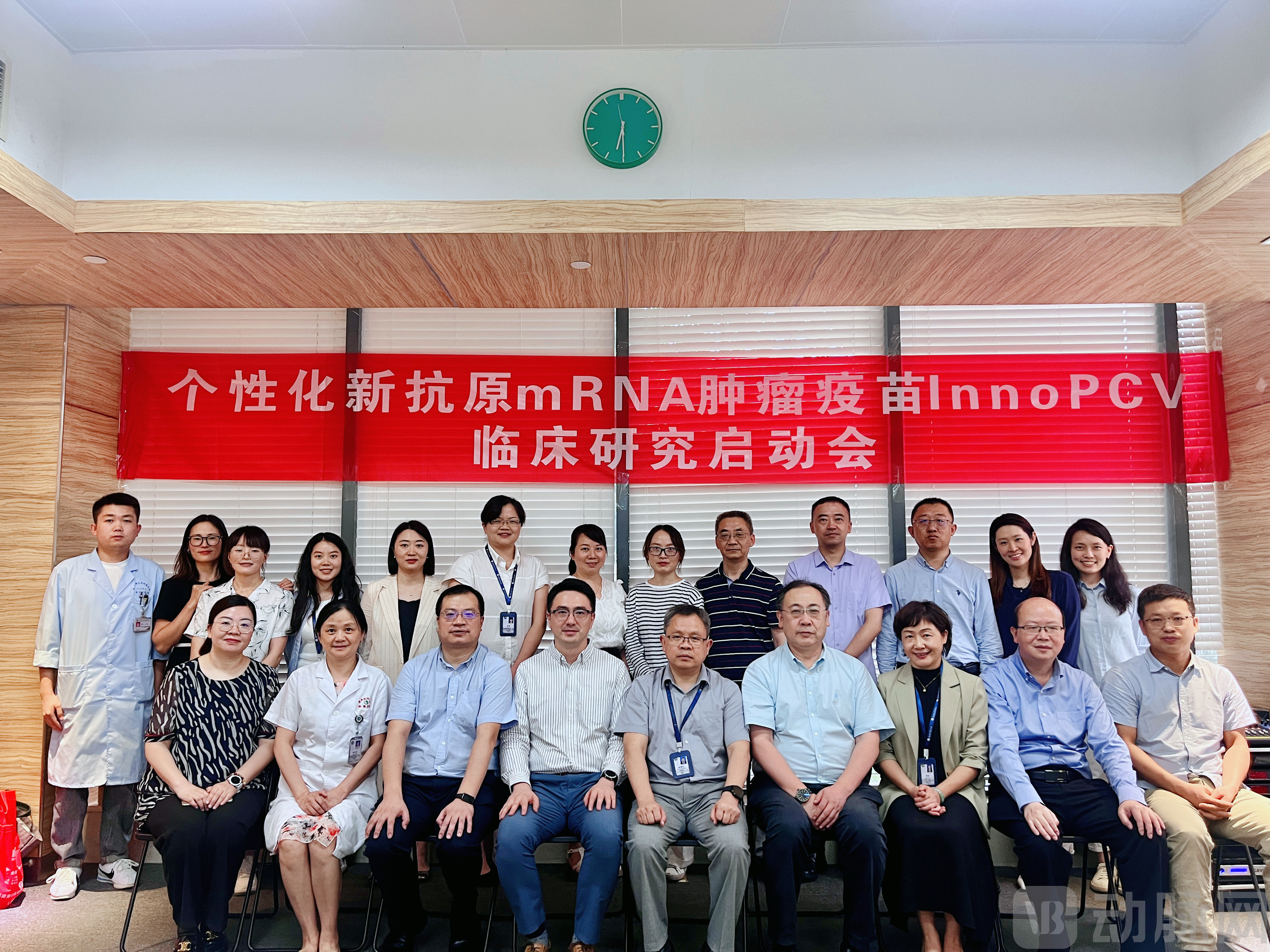
On October 10, 2024, the exploratory clinical study titled “Personalized Neoantigen mRNA Cancer Vaccine InnoPCV for the Treatment of Solid Tumors” (Protocol No.: InnoPCV-001; Registration No.: ChiCTR2400088149), initiated by Professor Lu Bing and Professor Su Shengfa from the Affiliated Hospital of Guizhou Medical University (hereinafter referred to as “Guizhou Medical University Affiliated Hospital”) as principal investigators and supported by Innovac Therapeutics, successfully completed the first dose administration to the first enrolled subject.
This clinical study is an open-label, prospective, exploratory trial designed to evaluate the safety, tolerability, and preliminary efficacy of the personalized neoantigen mRNA vaccine InnoPCV in combination with a PD-1 monoclonal antibody in patients with solid tumors. The study consists of a dose-escalation Phase Ia and a dose-expansion Phase Ib.
Under the meticulous guidance of the clinical research team at the Affiliated Hospital of Guizhou Medical University and with the active cooperation of the participants, the first participant successfully completed the initial injection of the InnoPCV vaccine. Principal Investigators Professor Lu Bing and Professor Su Shengfa emphasized the clinical team’s stringent requirements for ensuring participant safety and study quality.
Regarding the first administration of the InnoPCV vaccine, Zhang Chi stated, “InnoPCV-001 is our inaugural clinical study for InnoPCV. The successful dosing of the first subject not only marks a significant milestone for the InnoPCV-001 study but also represents a major breakthrough for our company in the field of personalized cancer vaccines.”
Notably, on July 26, 2023, Moderna and Merck announced the latest results from the pivotal Phase II clinical trial of their first mRNA personalized cancer vaccine, mRNA-4157, in combination with the anti-PD-1 monoclonal antibody pembrolizumab (Keytruda), in patients with resectable high-risk melanoma. The results demonstrated that mRNA-4157 combined with pembrolizumab provided significant clinical benefits in preventing recurrence and extending survival compared to pembrolizumab monotherapy as adjuvant treatment. At a median follow-up of 23 months for the mRNA-4157 plus pembrolizumab group and 24 months (approximately 100 weeks) for the pembrolizumab monotherapy group, mRNA-4157 significantly reduced the risk of recurrence by approximately 44% (HR=0.56) and the risk of distant metastasis by 62% (HR=0.384) in postoperative patients with high-risk recurrent melanoma. Preliminary data with a median follow-up of three years indicated that the benefit of the mRNA-4157 combination therapy further expanded relative to the 18-month mark, with the risk of recurrence or death decreasing further to 49% compared to the monotherapy group (HR=0.510).
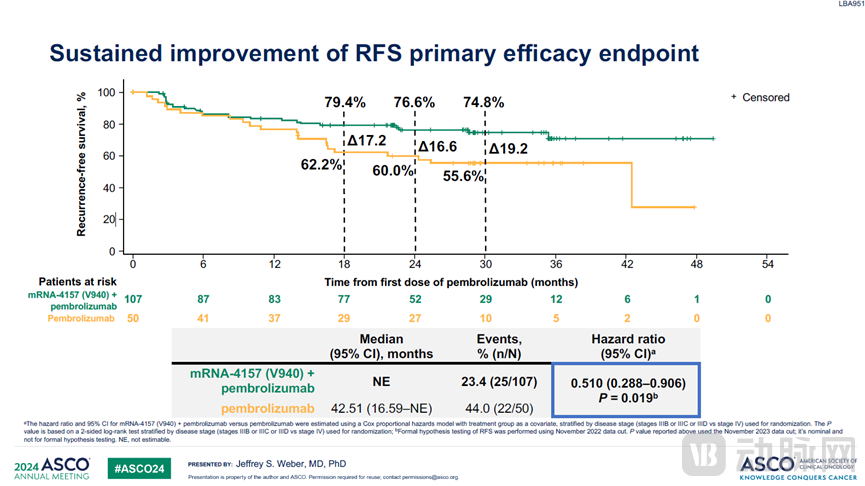
Based on the positive results from this pivotal Phase 2 clinical study, Moderna and Merck have advanced the combination therapy of mRNA-4157 and the anti-PD-1 monoclonal antibody (Keytruda) into Phase 3 clinical trials. This marks the first personalized mRNA cancer vaccine globally to enter Phase 3 clinical trials. Additionally, this year, Moderna and Merck have initiated large-scale Phase 3 clinical trials of mRNA-4157 in post-operative lung cancer patients, as well as Phase 2/3 clinical trials in cutaneous squamous cell carcinoma. The commercialization timeline for personalized mRNA cancer vaccines is becoming increasingly clear.