

JD Health Leads New Trends in Pharmaceutical Digital Marketing at the 4th Pharmaceutical Digital Marketing Forum

JD Health
Internet Medical and Health Service Platform Provider

Tencent
Internet Comprehensive Service Provider
On October 16, the 4th Pharmaceutical Digital Marketing Forum, hosted by JD Health, was held in Shanghai. Numerous industry professionals from globally renowned pharmaceutical and healthcare companies, internet platforms, and academic, research, and industrial institutions gathered to discuss key topics of interest, including omni-channel marketing in the new era, user health management, and empowerment through technological innovation. During the event, JD Health, together with multiple pharmaceutical companies, jointly launched the Preparatory Committee for the China Pharmaceutical Digital Marketing Research Association, aiming to establish an efficient and professional communication platform to contribute insights and efforts toward the healthy development of digital marketing in China’s pharmaceutical industry.
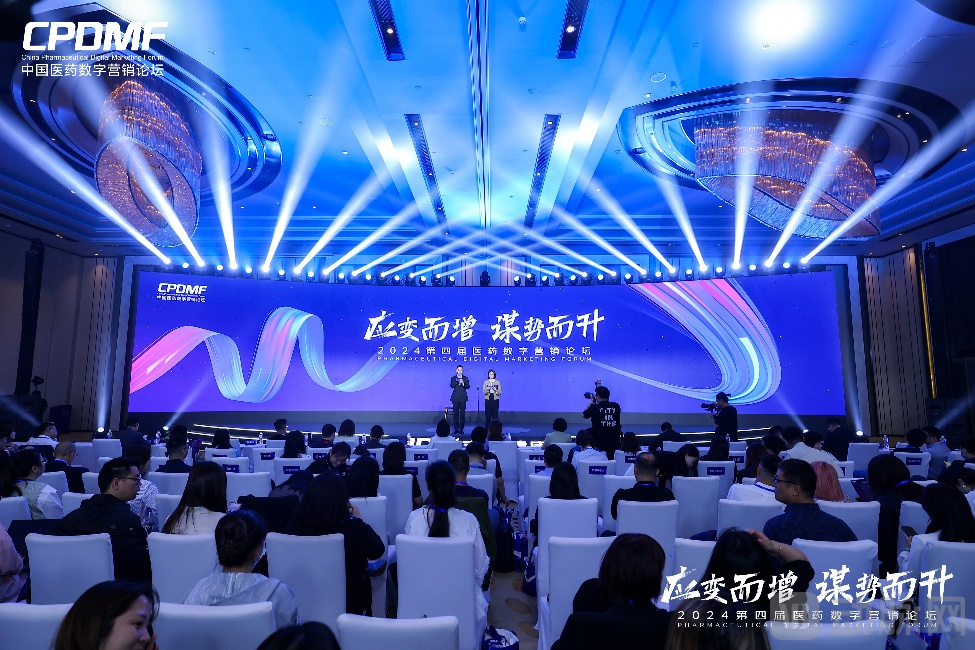
A representative from JD Health stated that the company’s digital marketing efforts have expanded beyond traditional prescription drug marketing to encompass a broader pan-health landscape, covering categories such as over-the-counter (OTC) medications, nutritional supplements and health products, medical devices, and foods for special medical purposes. Leveraging JD.com’s omnichannel marketing capabilities and JD Health’s position as the primary online gateway for health consumption, the company is extending its previous “dual-center” model focused on doctors and patients to cover “all professional service roles plus pan-health consumers.” Through intelligent, efficient, and user-centric digital marketing solutions, JD Health aims to help pharmaceutical and healthcare enterprises achieve high-quality growth.
Focusing on “Full-Stack Professional Service Roles + Mass Health-Conscious Consumers” to Upgrade New Digital Marketing Capabilities
Driven by multiple factors, including the deepening reforms of the new healthcare system and shifts in health consumption, the digitalization of the pharmaceutical industry has entered a critical phase. Key pain points—such as the complexity of data integration and analysis, compliance in content creation and dissemination, cross-channel synergy, and the evaluation and optimization of ROI (Return on Investment)—are urgent issues that need to be addressed in current pharmaceutical marketing.
Gao Rong, Vice President of Commercial and Retail at Eli Lilly China, stated that effectively integrating and analyzing massive amounts of online and offline data to better understand consumer needs and behavioral patterns is a major challenge currently facing pharmaceutical companies. Shen Bin, Head of Commercial Operations and Innovative Business Models at Organon China, emphasized that in the post-VBP era, pharmaceutical companies face greater challenges in managing product life cycles and deploying out-of-hospital channels. He noted that pharmaceutical companies must continuously develop new models featuring internal division of labor and external collaboration, while also looking forward to deeper, more comprehensive, and more efficient cooperation in digital marketing to provide patients with more trustworthy services.
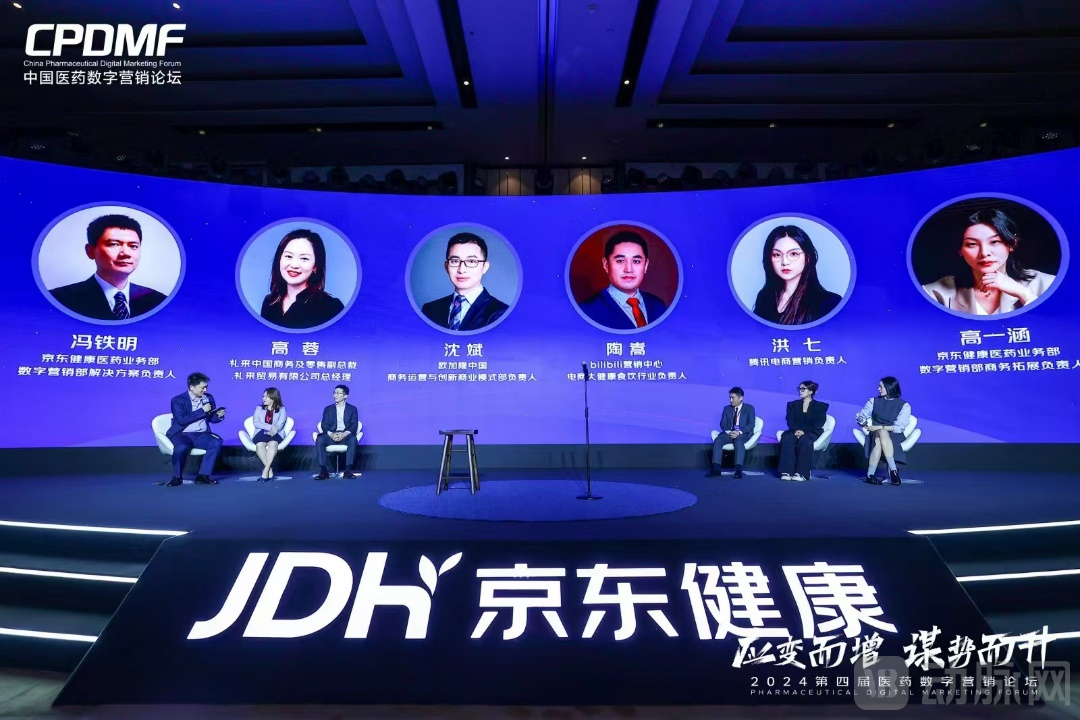 “Cross-Border Integration, Reshaping the Marketing Landscape” Session
In response to these pain points, representatives from platform companies such as JD Health, Tencent, and Bilibili proposed corresponding solutions. The representative from JD Health shared its digital marketing practices on the patient side, including innovative initiatives in patient screening, patient education, and patient management. Tencent and Bilibili focused on content marketing, highlighting their respective platforms’ advantages in algorithmic recommendation and user persona analysis, as well as how to enhance marketing effectiveness through precise targeting and content innovation.
Through long-term digital marketing practices, JD Health has developed the CAARE Patient Marketing Cycle Model, which stands for “Consciousness (Disease Awareness) – Awareness (Treatment Plan Learning) – Appeal (Interest Generation) – Response (Medication Purchase) – Extension (Loyalty).” This model covers the entire patient journey, ultimately influencing purchasing decisions and enabling more precise and efficient omni-channel pharmaceutical marketing. Currently, 378 pharmaceutical companies have established in-depth digital marketing collaborations with JD Health. By integrating on-platform and off-platform marketing strategies, JD Health has helped these pharmaceutical companies improve their marketing efficiency by 50%.

Meanwhile, JD Health has also upgraded its digital marketing system, which was previously centered on the dual pillars of “doctors” and “patients.” On the “patient” side, the focus has expanded from traditional “patients” to all users across the JD platform with general health consumption needs. On the “doctor” side, driven by business development, JD Health has connected a full spectrum of professional service roles—“physicians + pharmacists + nurses”—and established a closed-loop service chain encompassing “medical care + pharmaceuticals + testing.” This new digital marketing framework, oriented toward “comprehensive professional service providers + broad health-conscious consumers,” integrates a wider array of professional medical service providers and reaches a more extensive target consumer base.
Comprehensive, Personalized User Service Experience Covering the Full Health Management Lifecycle
In current health management, users face numerous pain points, such as cumbersome offline medical consultation processes, brief communication time with doctors, and a lack of professional disease indicator monitoring and medication guidance in out-of-hospital care. These issues significantly reduce user satisfaction with the health management experience.
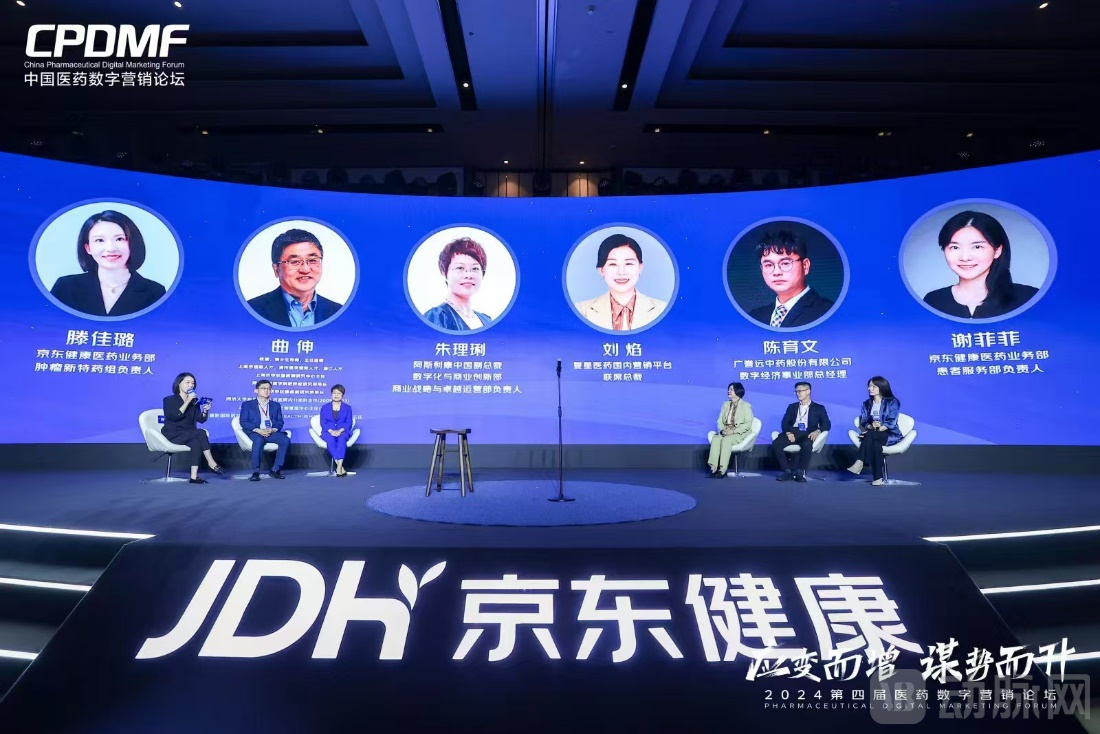 “User-Centric, Building Personalized Experiences” Session
JD Health’s patient service model not only focuses on patients’ health benefits but also emphasizes the evaluation and feedback of service effectiveness. By continuously tracking patients’ health status and service satisfaction, JD Health constantly optimizes service processes and enhances service quality. Whether through patient answers during online consultations or meticulous care in offline services, JD Health is committed to providing users with a more trustworthy service experience.
In terms of patient services, JD Health has expanded its service radius to comprehensively meet patients’ needs across the “hospital visit–online–home care” spectrum, addressing diverse demands throughout the entire disease lifecycle. Whether it is outpatient appointment scheduling, expedited hospital admission, online consultations, or health data services, JD Health provides one-stop solutions. Meanwhile, JD Health boasts a multi-disciplinary patient service team comprising professional pharmacists, physicians from Grade 3A hospitals, and health managers, enabling the delivery of comprehensive health management services. Currently, JD Health’s single-disease care centers have achieved full-cycle patient management, extending Duration of Therapy (DOT) by 45%. Through academic marketing solutions, JD Health helps pharmaceutical companies reach physicians online, increasing prescription rates to 67%.
To address patients’ personalized needs, JD Health has developed hundreds of disease management pathways based on evidence-based medicine, establishing a closed-loop management system encompassing “data collection, health assessment, plan formulation, follow-up intervention, outcome evaluation, and plan optimization.” Leveraging comprehensive patient profiles that include disease and behavioral data, JD Health delivers personalized service plans. Throughout this process, JD Health integrates full-chain data collection from patients’ online behaviors, follow-up records, medical visit information, and IoT devices to accurately identify and address patient needs. Meanwhile, it also enables precise user identification based on patient information, providing pharmaceutical companies with stratified intervention strategies.
At the forum, guests including Zhu Lipi, Vice President of AstraZeneca China and Head of the Digital & Commercial Innovation Department as well as the Commercial Strategy & Excellence Operations Department; Liu Yan, Co-President of Fosun Pharma’s Domestic Marketing Platform; and Chen Yuwen, General Manager of Guangyuyuan’s Digital Economy Business Division, shared insights through specific case studies on how pharmaceutical companies can leverage digital intelligence technologies and platforms to enhance the convenience and accessibility of medication for patients, thereby meeting users’ personalized health management needs.
AI Applications Cover the Entire Diagnosis and Treatment Process, Balancing Service Efficiency and Personalized Experience
As the application and innovation of technologies such as artificial intelligence and big data accelerate, their use in the healthcare sector is becoming increasingly widespread. From intelligent diagnostics to the formulation of personalized treatment plans, and from patient management to drug development, AI technology is profoundly transforming traditional healthcare service models.
 “Innovation-Driven, Seizing the Revolution in Productive Forces” Session
At this forum, representatives from academia, industry, and research institutions engaged in in-depth discussions on the application of technological innovation in the healthcare sector. Among them, Pang Jingyan, Head of Commercial Operations for Greater China at Teva Pharmaceutical Industries, and Xiao Jing, Vice President of InnoCare Pharma, shared their companies’ explorations and practices in technological innovation. Ye Genshen, Chairman of the Shanghai Chongming Zhiyan Institute of Health Sciences, introduced innovative measures undertaken by research platforms to enhance physicians’ work efficiency and improve patient experience.
In 2023, JD Health released its self-developed “Jingyi Qianxun” medical large language model, which has become an intelligent engine driving continuous innovation in healthcare services. Equipped with capabilities in evidence-based medical knowledge, empathetic interaction, complex multimodal understanding, and autonomous reasoning and decision-making, the model covers more than 140 online medical specialties, providing physicians with comprehensive, AI-powered clinical decision support.
Currently, JD Health’s large language model applications cover the entire healthcare process, including pre-diagnosis, during-diagnosis, and post-diagnosis stages. In the pre-diagnosis stage, an intelligent health assistant provides conversational consultations and health recommendations. During the diagnosis stage, tools such as intelligent medical records and intelligent clinical decision support enhance physicians’ work efficiency and the quality of diagnosis and treatment. In the post-diagnosis stage, measures such as intelligent follow-ups and intelligent prescription reviews strengthen patient management and medication guidance. These AI applications not only improve the efficiency and quality of medical services but also offer patients a more convenient and personalized healthcare experience.
 JD Health Joins Forces with Multiple Pharmaceutical Companies to Launch the Preparatory Committee for the China Pharmaceutical Digital Marketing Research Association
Looking ahead, with continuous innovation and integration in technology applications, the digital transformation of the pharmaceutical industry will continue to accelerate, delivering more efficient, convenient, and personalized healthcare services to a broader user base. JD Health will continue to collaborate with partners across various sectors, deepen its engagement in digital marketing, and persistently explore and practice new approaches, committed to building a more integrated and open collaborative ecosystem to contribute to the high-quality development of the pharmaceutical industry.