

Element Drive Biotech Secures Nearly RMB 200 Million in Series A Funding to Accelerate Commercialization of Synthetic Biology Innovations
Element Driven (Hangzhou) Biotechnology Co., Ltd. has recently completed its Series A financing round, raising nearly RMB 200 million. Investors included Hangzhou City Construction Investment Industrial Fund, China Merchants Venture Capital, West Lake Photonics, and Yunjiu Capital, with West Lake Photonics and Yunjiu Capital making additional follow-on investments. The funds raised in this round will primarily be used to strengthen cutting-edge technological research, enhance market penetration, expand green economy applications into more industrial scenarios, and achieve the goal of transforming scientific research outcomes into new quality productive forces.
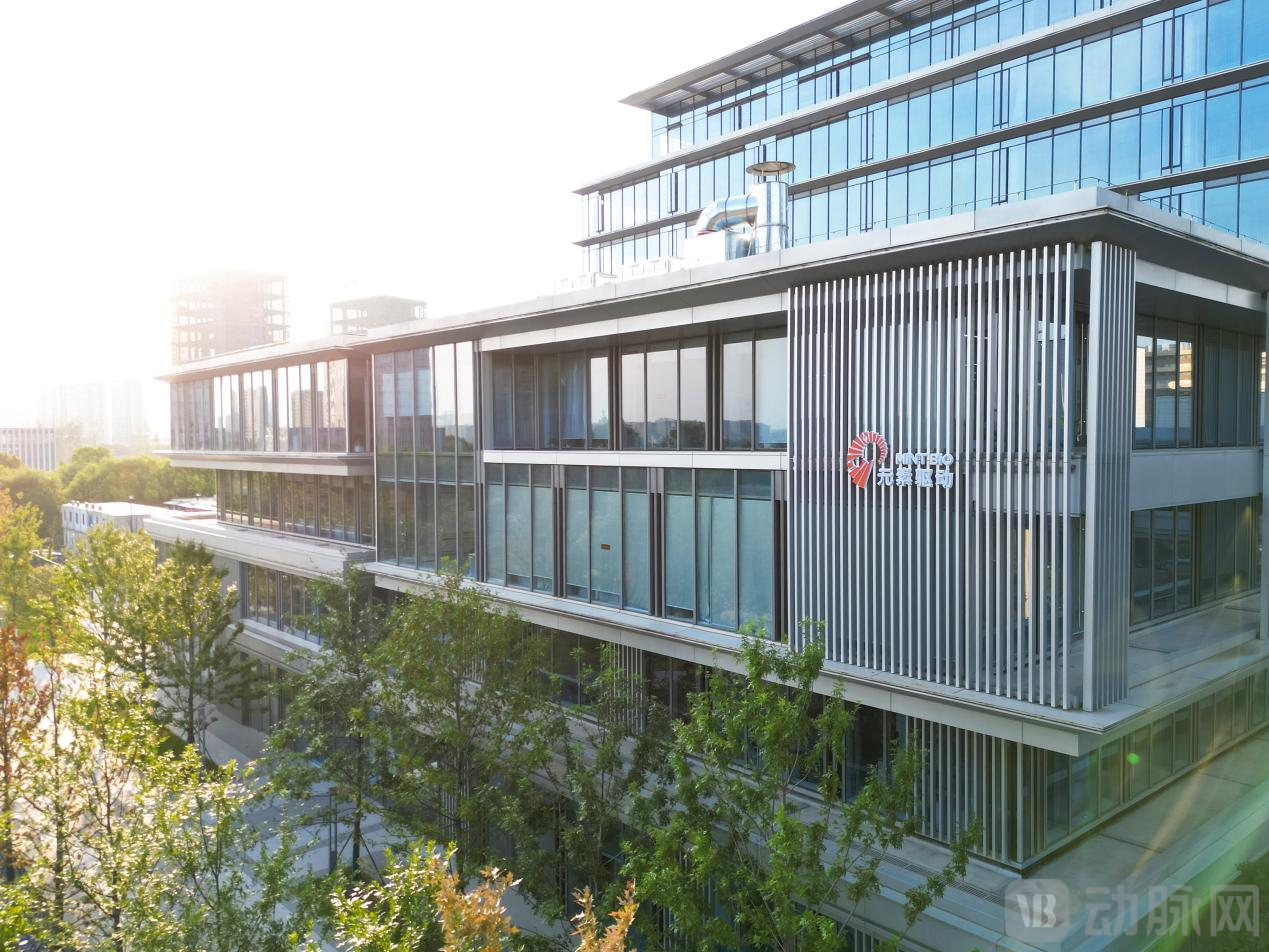
Element Driven, established in August 2021, is a key incubation project under the New Quality Productive Forces Incubation Platform of the Westlake University Center for Future Industries. Leveraging its independently developed innovative synthetic biology technologies, the company integrates R&D with production and application, focusing on technological breakthroughs and the promotion of bio-based biodegradable materials and soybean meal-free animal feed formulations.
Professor Zhang Kechun, Founder and Chief Scientist of Element Driven, earned his bachelor’s degree from the University of Science and Technology of China and his Ph.D. from the California Institute of Technology. He studied under pioneering scientists in synthetic biology, including David A. Tirrell, Frances H. Arnold (2018 Nobel Laureate in Chemistry), and James Liao, and has been engaged in synthetic biology-related research for over two decades. Professor Zhang previously served on the faculty of the Department of Chemical Engineering at the University of Minnesota, which ranks among the top three globally in chemical engineering. He was the first professor from mainland China in this department and received the University of Minnesota’s highest honor for young faculty, the “McKnight Land-Grant Professorship.” Before returning to China, he held tenured professor status at the University of Minnesota. Upon his return in 2019, he joined Westlake University, where he established the Laboratory for Biomanufacturing and New Materials, leading his team to continue frontier exploration in the field of biomaterials. Leveraging Professor Zhang’s research achievements, Element Driven has made breakthroughs in two key areas: soybean-meal-free animal feed and bio-based biodegradable materials. Both areas represent innovative fields that have garnered global attention, national priority, and policy support.
In 2023, approximately 733 million people worldwide faced hunger, meaning one in every eleven individuals suffered from food insecurity. Food security is a fundamental issue concerning human survival. China has always been an active force in safeguarding global food security. As the world’s largest importer of soybeans, China’s import dependency rate exceeding 80% not only poses significant risks to the development of its livestock industry but also constitutes a serious threat to national food security. The Three-Year Action Plan for Reducing and Substituting Soybean Meal in Feed, released by the Ministry of Agriculture and Rural Affairs in 2023, emphasizes the need to adopt a holistic approach to food resources, guide the feed and livestock industries to reduce soybean meal usage, promote conservation and efficiency in feed grain consumption, and contribute to ensuring a stable and secure supply of food and important agricultural products.
Element-Driven Soybean Meal-Free Diet Solutions Timely Respond to Policy Requirements. Adopting the principles of green synthetic biology, this solution features a disruptive, source-level redesign of amino acid biosynthetic pathways, enabling livestock enterprises to implement soybean meal-free feeding using crystalline amino acids without compromising animal production performance. Widespread adoption of soybean meal-free diets is expected to reduce China’s annual soybean imports by 40 million tons, save tens of billions in breeding costs, help resolve China’s strategic dependency on soybeans, ensure food security, meet rising consumer demands for upgraded products, and support sustainable agricultural development. Furthermore, this technology contributes to reduced land use for soybean cultivation and lower emissions of nitrogenous gases and greenhouse gases, thereby playing a positive role in farmland conservation and environmental protection.
The "white pollution" caused by global plastic waste is becoming increasingly severe. Microplastics are damaging the ecological environment and posing a serious threat to the health of humans and various other organisms, making the plastic crisis a global challenge. In 2023, the Ministry of Industry and Information Technology and five other departments jointly issued the Three-Year Action Plan for Accelerating the Innovative Development of Non-Grain Bio-based Materials, vigorously supporting the innovative development of bio-based materials and striving to make certain non-grain bio-based products competitive with fossil-based counterparts.
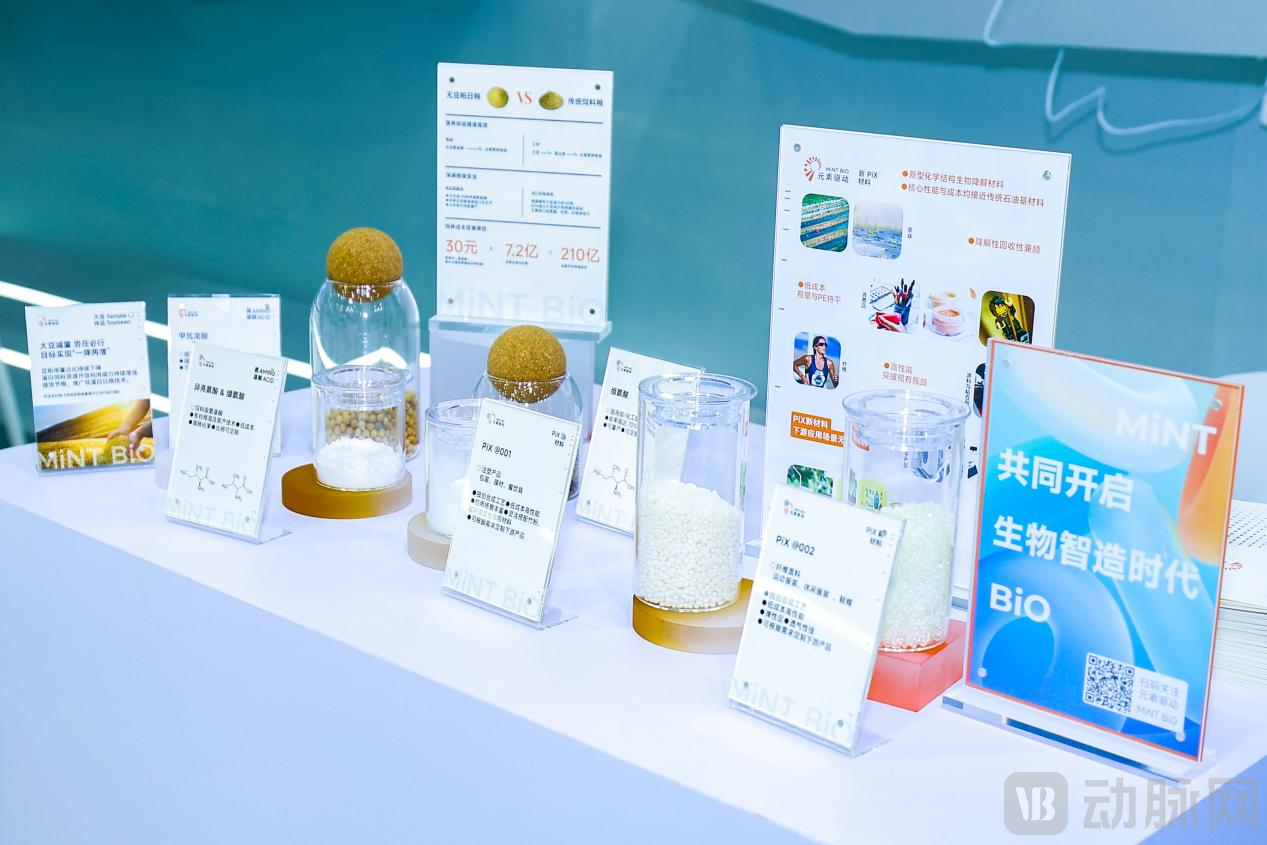
Bio-based biodegradable materials are also one of Element Driven’s core business segments. Leveraging de novo designed synthetic biology technologies, Element Driven has pioneered the development of a new generation of low-cost, high-performance biodegradable materials. Derived from bio-based sources and featuring a novel chemical structure, these materials are manufactured through a pollution-free process. They are both biodegradable and recyclable, offering significant performance advantages over traditional biodegradable materials while achieving lower costs. The company has completed pilot-scale trials for multiple downstream application scenarios. This new material can be applied in the vast majority of use cases currently dominated by petroleum-based plastics, holding promise as a China-led solution to address the global challenge of plastic pollution.
As a high-tech enterprise incubated with priority by Westlake University, Element Driven has been making steady progress in transforming scientific research into new quality productive forces. This path of exploration is also being pursued by Liu Minhao, Special Advisor to the President of Westlake University, Deputy Director of the Center for Future Industry Research, and Head of the Platform for Cultivating New Quality Productive Forces. Alongside the announcement of this round of financing, Element Driven announced that Liu Minhao will assume the role of Chairman of the Board starting October 1, overseeing the company’s strategy, operations, and management, thereby accelerating the conversion of Element Driven’s scientific achievements into market-ready products.
Liu Minhao graduated from Imperial College London with a Ph.D. in Biophysics. Her 15 years of scientific research cultivated her analytical mindset and capabilities, enabling her to directly and accurately grasp scientists’ perspectives during the translation of research achievements into industrial applications, thereby laying a solid foundation for her subsequent career transition. Liu Minhao has been described as “the scientist who best understands business management, and the businessperson who best understands scientific research.”
During her time at Tsinghua University, Liu Minhao participated in the preparatory work for Westlake University, playing a key role in its establishment from the ground up. She served as Secretary-General of the Westlake Education Foundation and as the first Board Secretary of the Founding Board of Trustees of Westlake University. Through these roles, she accumulated extensive experience in foundation operations and management and established strong collaborative relationships with numerous enterprises.
During this period, Liu Minhao has also been exploring how charitable foundations can better unlock their potential and seeking effective pathways for the commercialization of scientific research achievements, gradually establishing a novel model for charitable foundations to nurture and incubate the translation of scientific outcomes. This model not only provides the primary impetus for converting high-quality research results into productive forces but also identifies a new approach to university-industry collaboration, thereby enabling charitable foundations to achieve a positive feedback loop.
Under the new model, Liu Minhao has re-engaged in the zero-to-one development of new quality productive forces by launching the Westlake University New Quality Productive Forces Incubation Platform. Focusing on future industries such as artificial intelligence, bio-manufacturing, new energy, and healthcare, he has invested in and incubated high-potential startups including Element Driven, Westlake Xinchen, Binuozhi, and Westlake Optoelectronics, helping scientists take their first steps in entrepreneurship. Looking ahead, Dr. Liu Minhao will leverage his extensive experience to accelerate the research translation and industrialization of Element Driven.
Scientific research often begins with “samples,” whereas industry demands “products.” Element Driven’s current offerings have reached mass-production scale, successfully bridging the “valley of death” between scientific research and commercialization. Both of Element Driven’s existing mass-production facilities were developed by addressing specific challenges within the industrial supply chain, embedding synthetic biology research achievements into practical industrial problems to integrate frontier technological innovation with the bioindustry.One facility is the Muyuan Anliang project plant located in Nanyang, Henan Province, which produces essential amino acids for soybean-free animal feed using green synthesis methods. Phase I of this facility is scheduled to commence operations in late October 2024. Additionally serving as a pilot-scale platform, this site will gradually evolve into an open, large-scale experimental base accessible to the broader society.The other facility is the Element Intelligent Manufacturing project plant in Jiande, Zhejiang Province, which produces high-performance, low-cost bio-based biodegradable new materials. Upon completion, Phase I is set to begin production by the end of 2025, with an annual capacity of 30,000 metric tons. All mass-produced products have established deep strategic collaborations with industry leaders.
McKinsey research data indicates that 60% of global material production could be achieved through bio-manufacturing in the future. Element Driven will continue to rely on cutting-edge synthetic biology technologies as its foundational support, committed to becoming a model of new-quality productive forces and driving the development of China’s bio-manufacturing industry.