

Shanghai Jiao Tong University to Transfer Six Therapeutic Electronic Capsule Patents for RMB 317,400

SJTU
Shanghai Jiao Tong University, located in Shanghai, China’s economic and financial hub, is a comprehensive national key university directly under the Ministry of Education. With a distinctive strength in science and engineering, it encompasses nine major academic disciplines: science, engineering, medicine, economics, management, humanities, law, and others. It is among the first seven universities included in the “211 Project” and the first nine designated for priority construction under the “985 Project.” The university has been selected for several national initiatives, including the “Peak Plan,” the “111 Plan,” the “2011 Plan,” the “Excellent Doctor Education and Training Plan,” the “Excellent Legal Talent Education and Training Plan,” the “Excellent Engineer Education and Training Plan,” and the “Excellent Agricultural and Forestry Talent Education and Training Plan.” It is also a prominent member of the “C9 League,” Universitas 21, and the Academic Alliance of the 21st Century.As of December 2017, the university comprised 29 schools/departments directly under its administration, 24 research institutes, 13 affiliated hospitals, two affiliated medical research institutes, 12 directly affiliated units, and six directly affiliated enterprises. It enrolled 16,221 full-time undergraduate students (domestic) and 30,895 graduate students (domestic), including 14,532 full-time master’s candidates and 7,236 full-time doctoral candidates. Additionally, there were 2,722 international degree-seeking students.
Recently, Shanghai Jiao Tong University issued a public announcement, proposing toRMB 317,400the price will“Vibrating Electronic Capsule System and Control Method Thereof”six scientific and technological achievements, includingRelated Transferconversion. Currently, the transaction has passed the public notice period.
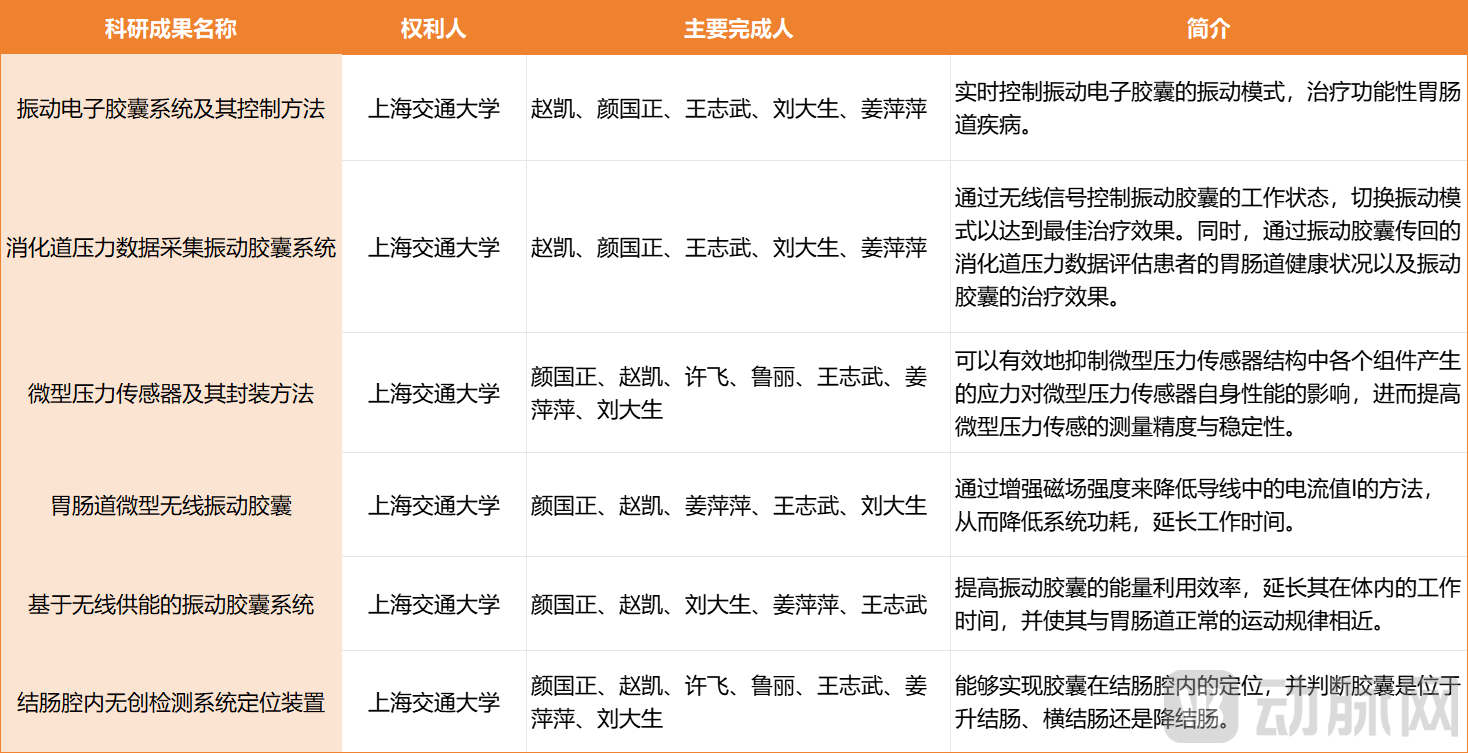
Overview of Six Achievements from Shanghai Jiao Tong University
Professor Yan Guozheng, the primary inventor of this patent series, specializes in research on microrobots, medical precision instrument engineering, and intelligent robotics. He has participated in multiple projects funded by the National Natural Science Foundation of China, most of which focus on micro-bionic robots for gastrointestinal diseases.
The World’s Only Approved Vibrating Electronic Capsule Originates from China
Functional gastrointestinal disorders are a group of conditions characterized primarily by gastrointestinal symptoms in the absence of organic pathology. Examples include functional dyspepsia, irritable bowel syndrome, and functional constipation, all of which fall within the spectrum of functional gastrointestinal disorders.
According to a special issue on functional gastrointestinal disorders published in The Lancet, the prevalence and healthcare-seeking rates for these conditions have shown an upward trend in recent years. The incidence rate in the general population ranges from 10% to 20%, accounting for 40%–50% of patients attending specialized gastroenterology outpatient clinics. Furthermore, results from global studies conducted by the Rome Foundation indicate that the worldwide prevalence of functional gastrointestinal disorders has exceeded 40%. Functional gastrointestinal disorders not only severely impair patients’ quality of life but also impose a substantial burden on healthcare services and society as a whole.
However, the exact etiology of such diseases cannot be identified through routine examinations, including laboratory tests, abdominal ultrasound, gastroscopy, or colonoscopy. Therefore, clinical management is limited to interventions such as modulation of the gut microbiota and psychological intervention.
To address such diseases, researchers have begun to propose the development ofTherapeutic Electronic Capsule, the vibrating electronic capsule developed by Yan Zhengguo’s team also belongs to this category of products.
Vibrating capsules are primarily developed for patients with functional constipation.Its mechanism of action involves stimulating the inner lining of the gastrointestinal (GI) tract through vibration. To prevent adverse effects on the rhythmic motility of the GI tract caused by a mismatch between the capsule’s vibration frequency and normal peristaltic patterns, the team-designed vibrating capsule can wirelessly connect to an external console. It features multiple adjustable settings, allowing for tailored vibratory stimulation as needed. Additionally, the capsule is equipped with detection devices to assess therapeutic efficacy, enabling physicians to make real-time, personalized adjustments to patient treatment plans.
Relevant products of this type of vibrating electronic capsule have already been approved for market launch. In February 2022, the “WeiTong Vibrabot Capsule,” a gastrointestinal vibrating capsule system independently developed by Shanghai Anhan Medical Technology Co., Ltd., received approval through the National Medical Products Administration’s (NMPA) Innovative Medical Device Registration pathway. It is indicated for the treatment of functional constipation in patients who have responded poorly to pharmacological therapy.Notably, this product is the first of its kind, with no comparable products currently available on the market either domestically or internationally.
II. Commonly Used Electronic Capsules in Clinical Practice: Video Capsules and Parameter-Based Capsules
Clinically, electronic capsules are more commonly used for non-invasive and painless examination of the gastrointestinal tract. The main features of such systems are miniaturization, non-invasiveness, and the ability to perform long-term in-body monitoring.
Electronic capsules can be classified according to their intended use intoVideo Capsule EndoscopyandParametric Electronic CapsuleTwo categories.
Video electronic capsule, commonly known as capsule endoscopy. Patients undergo painless endoscopic examination of the digestive tract by swallowing a small camera capsule. The video capsule endoscope can capture and transmit tens of thousands of images of the intestinal lining, making it particularly suitable for detecting occult gastrointestinal bleeding and abnormalities on the inner surface of the small intestine.
However, the movement of traditional video endoscopy capsules relies on the peristalsis of the gastrointestinal tract itself. For large-space organs such as the stomach, this may result in incomplete examination findings. Based on this limitation, magnetically controlled capsule gastroscopy has been developed from video capsule endoscopy. This type of capsule gastroscope uses magnetic fields to control the movement of the capsule within the stomach, enabling nearly comprehensive, blind-spot-free detection.
Parametric electronic capsules not only feature video capabilities but also enable the measurement of other physiological parameters., such as temperature, pH, pressure, and gas sensing. Parameter-based electronic capsules can be used to monitor gastrointestinal motility, such as by assessing gastrointestinal dynamics through the measurement of pressure changes. Some parameter-based electronic capsules are also capable of performing specific therapeutic interventions, such as targeted drug delivery, hemostasis, and promotion of defecation.
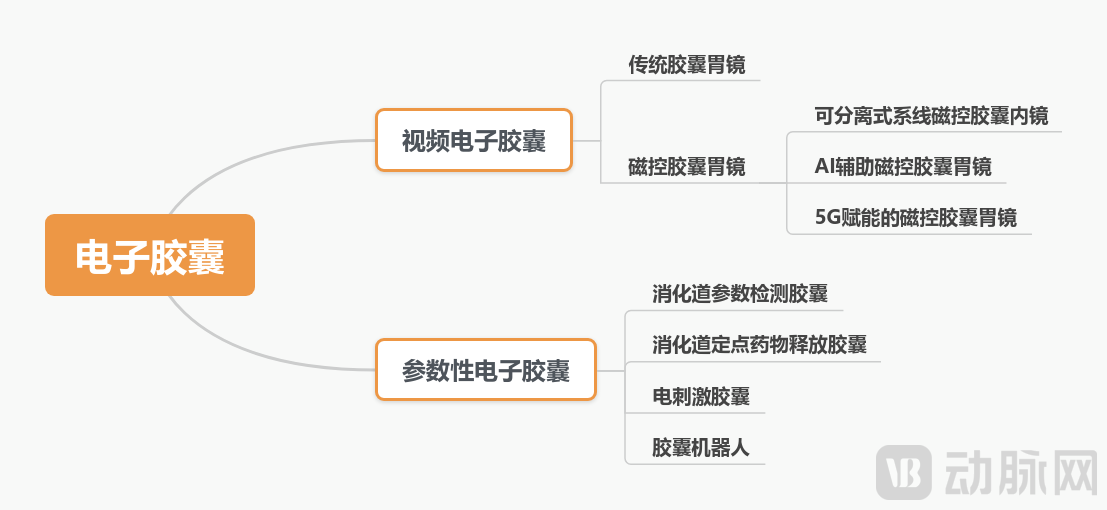 Classification of Commonly Used Electronic Capsules in Clinical Practice
23 Domestic Electronic Capsules Approved, Mostly Capsule Endoscopes
As public demand for comfortable medical experiences continues to grow, China’s electronic capsule market is experiencing explosive growth, spurring domestic manufacturers to accelerate product development. As of October 2024, data from the National Medical Products Administration shows that currently23 Chinese-made electronic capsules have been approved for market launch。
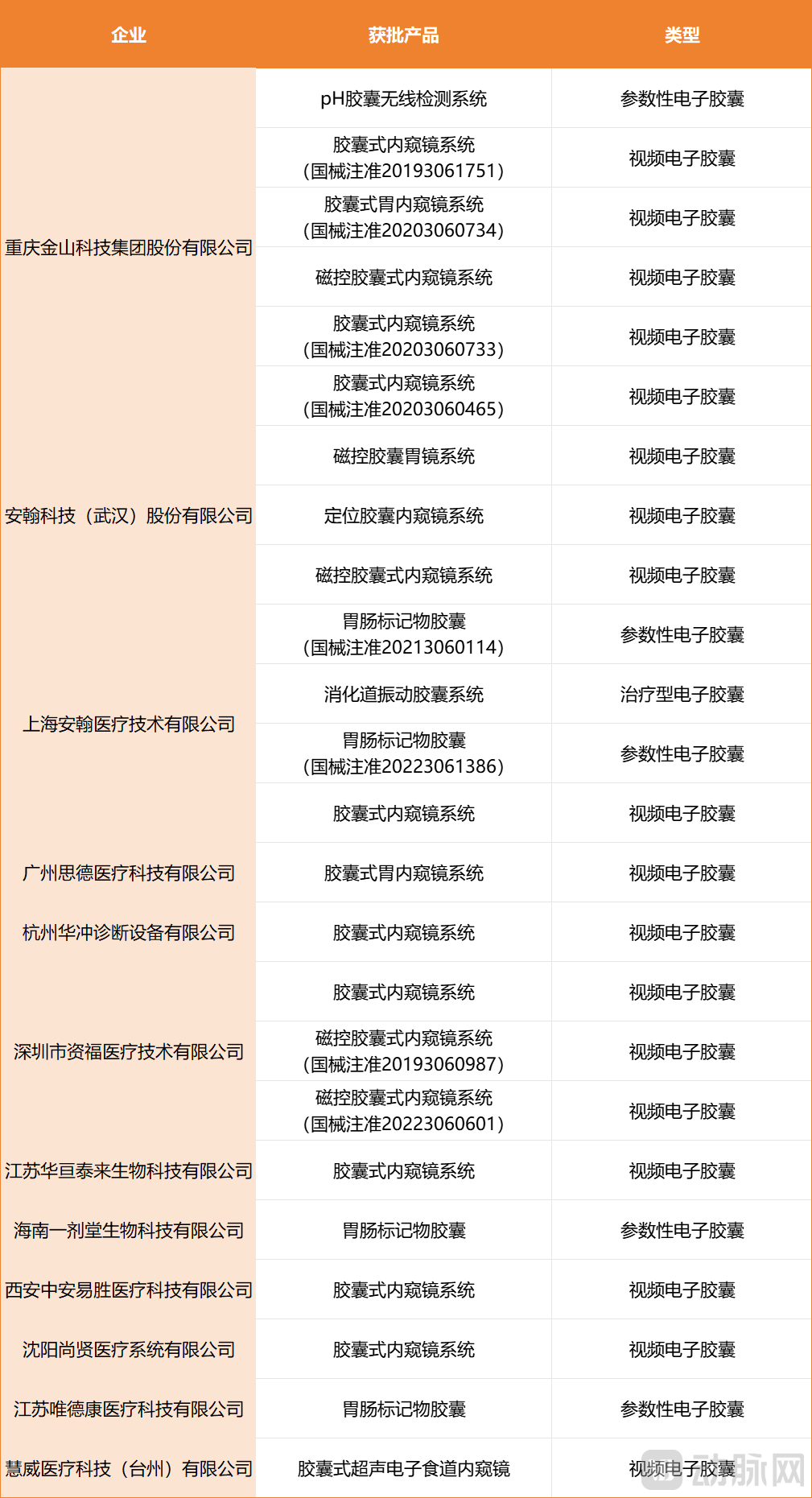
Inventory of Approved Domestic Electronic Capsule Products (Data Source: National Medical Products Administration)
Based on the data, a total of 12 domestic manufacturers have received product approvals in the field of electronic capsules. Among them, Jinshan Technology, Anhan Medical (including Anhan Technology Wuhan), Zifu Medical, and Huachong Technology are currently the mainstream manufacturers in the market.
Most approved products are video capsule endoscopes, with traditional capsule gastroscopes predominating.. There is substantial market demand for such products, and the technology is relatively mature. In recent years, several magnetically controlled capsule gastroscopes have received regulatory approval, indicating that capsule gastroscopy is evolving toward greater accuracy and safety.
It is worth noting that although the number of approved parametric and therapeutic electronic capsules remains limited, these products exhibit considerable diversity and address existing clinical pain points. For instance, the wireless pH capsule monitoring system developed by Jinshan Science & Technology can continuously monitor esophageal acid-base variations for 96 hours, providing data support for physicians to formulate personalized treatment plans. This product can completely replace traditional catheter-based pH-impedance monitoring currently used in clinical practice. For patients, it significantly improves comfort; for physicians, its extended monitoring capability enables more comprehensive and precise diagnostic reports, thereby optimizing therapeutic outcomes.
Overall, electronic capsule technology has demonstrated significant potential in the diagnosis and treatment of gastrointestinal diseases. Chinese manufacturers are also quite active in this field, with their products increasingly evolving toward multifunctionality and therapeutic applications.