

AI Drug Discovery Firms Are Driving a Surge in High-Value BD Deals
CSPC
Developer of finished drugs and active pharmaceutical ingredients
Recently, CSPC Pharmaceutical Group Limited signed an exclusive licensing agreement with AstraZeneca for YS2302018, a preclinical innovative small-molecule lipoprotein(a) (Lp(a)) inhibitor. Under the terms of the agreement,CSPC Pharmaceutical Group Limited will receive a $100 million upfront payment and is entitled to receive up to $370 million in potential development milestone payments, as well as up to $1.55 billion in potential sales milestone payments.。
Judging by the transaction amount and the parties involved, this is clearly not a simple drug. In its official press release, CSPC Pharmaceutical Group Limited specifically emphasized that the drug is a highly potent Lp(a) inhibitor selected through the company’s use of AI technology to analyze the binding modes between target proteins and existing compound molecules, thereby optimizing druggability. This signifies another major business development (BD) deal finalized in the field of AI-driven drug discovery.
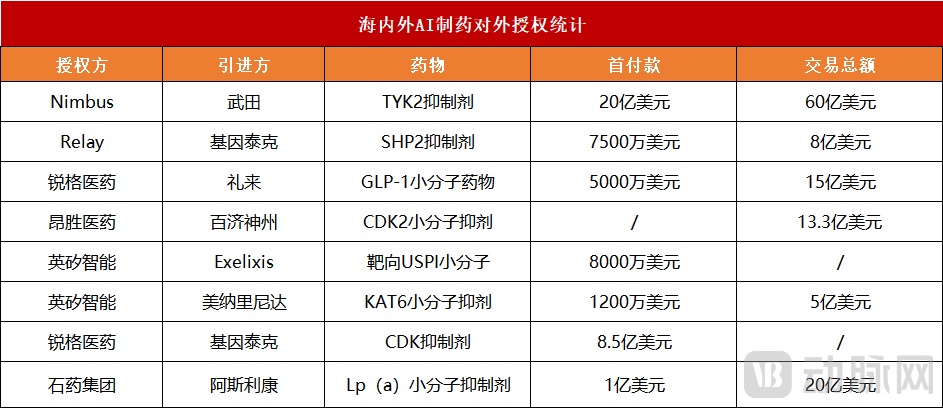 Figure 1. Major Transactions in AI Drug Discovery (Data Source: Zhiyaoju)
In fact, this is only the tip of the iceberg. Over the past three months, industry giants including Eli Lilly, Novartis, Genentech, and Gilead have all significantly increased their investments in AI-driven drug discovery. Taking Genentech as an example, on September 30, it entered into a definitive purchase agreement with the AI pharmaceutical company Rigor Therapeutics to acquire a portfolio of next-generation CDK inhibitors for the treatment of breast cancer. Under the terms of the agreement,Genentech will pay an upfront payment of $850 million, setting a new record for upfront payments in AI-driven drug development.。
As one blockbuster deal after another is sealed, a definitive answer is emerging for the industry: AI-driven drug discovery is generating a wave of high-value business development (BD) deals.
Uniting for Strength: The Curtain Officially Rises on AI Drug Discovery Consolidation
In December 2021, Roche entered into a landmark deal with AI drug discovery giant Recursion, featuring an upfront payment of $150 million and a total transaction value of up to $12.15 billion. This agreement not only set a global record for the highest value in AI-driven pharmaceutical transactions but also sparked a surge of industry interest, establishing the integration of AI as a key trendsetter in the pharmaceutical sector.
A set of data can demonstrate this trend. According to the latest “2024 Medical Artificial Intelligence Report” released by VCBeat, the number of AI-driven innovative drugs entering clinical trials was in the single digits before 2021. However, by 2021, this figure had rapidly grown to over 100, continued its upward trajectory in 2022 to surpass 200, and further increased in 2023, with the pipeline count breaking the 300 mark.
The key driver behind this explosive growth lies in the immense application value that AI brings to drug development. Dr. Du Tao, Chairman of Eglin Pharma, mentioned in an interview that,The application of AI in clinical development is primarily focused on three areas: indication selection, patient screening, and determination of clinical endpoints.Specifically, AI can analyze clinical phenotypes and genomics to collect high-quality data, using this data as the basis and foundation for clinical research and development, thereby enabling the development of therapies with better efficacy. In short, the integration of AI not only accelerates the drug development process but also significantly reduces costs.
According to statistics from the authoritative technology media Tech Emergence,AI Technology Can Save the Pharmaceutical Industry Up to $26 Billion in R&D Costs Annually. Research by Boston Consulting Group also indicates that AI-generated drug molecules achieve a success rate of 80%–90% in Phase I clinical trials, surpassing the historical average of 50%; in Phase II clinical trials, the success rate stands at 40%, still at the upper end of the historical range.
However, as the industry gradually advances, an unavoidable reality has come to the fore, namelyCurrent AI technologies cannot fully overcome the high risks and long development cycles inherent in new drug R&D, with insufficient commercialization gradually becoming a prominent issue.. According to VCBeat, no AI-driven drug has yet successfully gained regulatory approval for market launch; consequently, amid the tightening climate of a contracting capital market, the entire industry is now forced to confront the challenge of securing funding.
This August, two AI drug discovery giants, Recursion and Exscientia, announced their merger, with Recursion acquiring Exscientia in an all-stock transaction valued at $688 million. In fact, this is the largest M&A deal by value in the AI drug discovery sector to date. However, the industry’s focus lies not on the transaction size, but rather on the “strategic alliance for mutual survival” between these two established AI drug discovery companies.
Reportedly, both Recursion and Exscientia are publicly listed companies and among the earliest pioneers in the global AI-driven drug discovery sector. During their initial public offerings, both companies enjoyed considerable prominence, attracting significant investments from major industry players. However, this momentum was short-lived. Due to sluggish progress in their subsequent drug pipelines and poor financial performance, Recursion and Exscientia have gradually entered a period of decline: Recursion’s market capitalization has fallen from a peak of $3.2 billion to under $2 billion today, while Exscientia has weathered a series of setbacks, including pipeline failures, the dismissal of its CEO, and workforce reductions. These developments have served as a stark warning, making strategic collaboration an inevitable choice for both companies.
In this regard, a senior AI investor remarked, “In fact, as of today,AI-driven drug discovery has moved beyond the early stage dominated by technical discussions and conceptual hype, becoming more pragmatic and increasingly focused on products and pipelines with greater industrial certainty.“Based on this, the commercialization challenges facing AI-driven drug development are becoming increasingly pronounced. Coupled with a narrowing IPO exit channel and a significant decline in primary market financing volumes, many companies are seeking survival through acquisitions or mergers, thereby ushering in a new wave of industry consolidation.”
Consequently, starting in 2023, many AI-driven drug discovery companies began to establish or expand their business development (BD) teams. The objective is clear: to accelerate the identification of more partners for licensing out portions of their internal pipelines, thereby increasing out-licensing deals and converting them into cash flow.
AI Technology Alone Fails to Command Premium Valuations; Products and Pipelines Become Key Bargaining Chips
In 2015, a U.S. biopharmaceutical company used Insilico Medicine’s AI system to identify a critical protein alteration during embryonic development, uncovering a promising target applicable to cancer therapy. The company later established a new entity based on the patent for this target and went public on the U.S. stock market, bundling it with other patents. Following its IPO, the company reached a market capitalization of $115 million, yet ultimately paid Insilico Medicine only $300,000 for the collaboration.
This came as a major shock to the Insilico Medicine team, who also realized thatMerely providing software services or drug R&D services for a specific phase is clearly insufficient to establish a solid foothold in the industry. Only by continuously expanding drug R&D capabilities, advancing proprietary projects to the clinical stage, and demonstrating the safety and efficacy of AI-developed drugs can commercial value be truly enhanced.。
In fact, this collaboration by Insilico Medicine represents the first type of AI-driven drug discovery M&A model, namelyTechnology-Centric Solution for Augmenting Enterprise AI R&D PlatformsAccording to VBInsight’s observations, the vast majority of current M&A activities in AI-driven drug development are concentrated in this category, with acquirers primarily being AI pharmaceutical companies, CDMOs, or publicly listed firms. To facilitate business transformation, accelerate pipeline development, or expand into new niche indications, these companies directly acquire high-quality teams or technology platforms from leading AI firms.
This type of M&A approach is relatively simple and straightforward, making it difficult to command a high price. For transactions exceeding $1 billion in the market, the primary acquisition targets remain products and pipelines. This constitutes the second M&A model in AI-driven drug discovery, namelyCentered on pipeline assets, aimed at supplementing the acquirer’s product capabilities in a specific therapeutic area。
In this regard, a senior investor in the AI sector remarked, “Biotech’s largest buyers have always been multinational pharmaceutical companies. However, these multinationals have either built their own AI teams or already secured multiple partnerships, so their demand for acquiring AI technology platforms is actually quite low.”What they truly value are core pipeline assets. Products and pipelines with superior efficacy, larger market potential, and more advanced development stages command high transaction values, as they help alleviate multinational pharmaceutical companies’ anxieties over the patent cliff.。”
Taking Takeda’s $4 billion upfront payment to acquire Nimbus’s TYK2 inhibitor as an example, this highly selective TYK2 inhibitor was ultimately identified through large-scale free energy perturbation (FEP+) computational assessments conducted by Nimbus. Clinical data indicate that its efficacy in the treatment of psoriasis is comparable to Bristol Myers Squibb’s (BMS) Phase II results and superior to BMS’s Phase III data, thereby demonstrating “best-in-class” potential. It is well-positioned to compete with BMS’s Sotyktu and capture share in the psoriasis market.
There are also typical cases in China, such as the recent landmark collaboration between CSPC and AstraZeneca. Reportedly, the licensed product, a small-molecule Lp(a) inhibitor, has demonstrated excellent pharmacokinetic profiles and superior efficacy in both in vitro studies and animal models, with no serious safety risks. Therefore, it holds the potential to become a novel therapy for managing cardiovascular risk in populations with elevated Lp(a) levels.
Currently, similar M&A activities are on the rise. This indicates that the M&A model in China’s AI-driven drug discovery sector is undergoing reshaping.An increasing number of AI-driven pharmaceutical companies are no longer content with playing a supporting role by merely providing “buyout” services for drug R&D; instead, they are gradually becoming the main protagonists in advancing drug development, navigating challenges throughout the entire drug discovery lifecycle, and assuming risks to secure greater returns.。
In response, the founder of a Chinese AI-driven pharmaceutical company remarked, “Spurred by higher upfront payments, AI drug discovery firms are no longer content with simple technology licensing deals; instead, they are engaging more deeply in the drug development process. In fact, as the industry continues to mature and deepen, a number of AI drug discovery companies have now acquired the core capabilities needed to build blockbuster pipelines and products.”
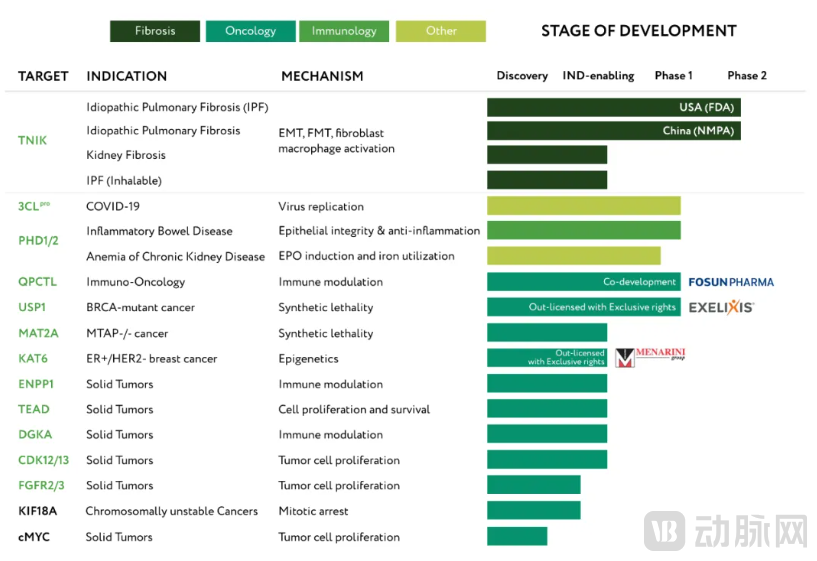 Figure 2. Progress of Insilico Medicine’s Pipeline (Image source: Insilico Medicine official website)
For instance, XtalPi, known as the first Chinese AI-driven drug discovery company to go public, has secured R&D contracts from 16 of the top 20 global pharmaceutical companies, including Pfizer and Eli Lilly, leveraging its portfolio of proprietary products. Similarly, Insilico Medicine began building its clinical trial team as early as late 2022 and has since advanced multiple pipeline candidates into Phase I or Phase II clinical trials.
This is an inevitable trend, yet the challenges are highly specific. After all, as drug development progresses through later clinical stages, capital expenditure intensifies. Particularly in the current market downturn, balancing the financial risks of high cash burn with the need to generate stronger cash flow has become a shared imperative for AI-driven pharmaceutical companies.
AI Drug Discovery: Still Infinite Possibilities
At the recently concluded Nobel Prize award ceremony, AI undoubtedly emerged as the biggest winner, securing two major scientific awards: the Nobel Prize in Physics and the Nobel Prize in Chemistry. Amidst this spotlight, market discussions about AI have proliferated, rapidly channeling this momentum into the field of AI-driven drug discovery.
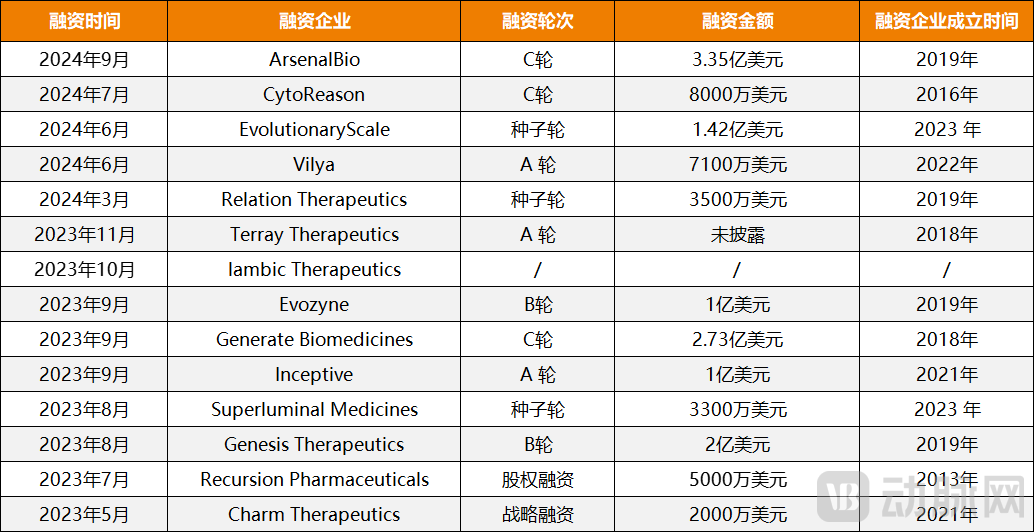
Figure 3. NVIDIA’s Investments in AI Drug Discovery Companies, 2023–August 2024 (Data source: VCBeat)
In fact, AI-driven drug discovery has remained at an industry high since the beginning of this year. In addition to frequent large-scale business development (BD) deals, the investment and financing market is also heating up rapidly. In April this year, Xaira Therapeutics, an AI drug discovery company founded just one year ago, announced the completion of a $1 billion seed funding round, setting a record for the largest seed round this year. Meanwhile, NVIDIA, which invested in more than ten AI drug discovery companies last year alone, continues to expand its efforts. As of September this year, NVIDIA had invested nearly $1 billion in the AI drug discovery sector and is still actively seeking new investment opportunities.
All signs indicate:The industry remains firmly convinced that AI-driven drug discovery holds immense opportunities.。
First, in terms of product quantityAccording to research by Boston Consulting Group, since 2015, 75 drug molecules discovered by AI have entered clinical trials, with 67 of them still in clinical trials as of 2023, indicating that only a small fraction of the answers have been revealed. Furthermore, an overview of the global AI-driven drug pipelines entering clinical stages shows that the vast majority are still focused on old targets, with many innovative targets yet to be explored.
Secondly, in terms of capability optimization. As machine learning and neural network algorithms continue to undergo technological iterations, the core capabilities of AI in drug R&D are rapidly improving. In the future, AI will be applied and optimized in clinical scenarios such as patient recruitment, screening, optimization of experimental design, data quality control, data monitoring, and management of adverse reactions. This means that the efficiency and success rate of clinical trials will significantly increase, which can not only improve the quantity and quality of the pipeline but also further reduce R&D costs.
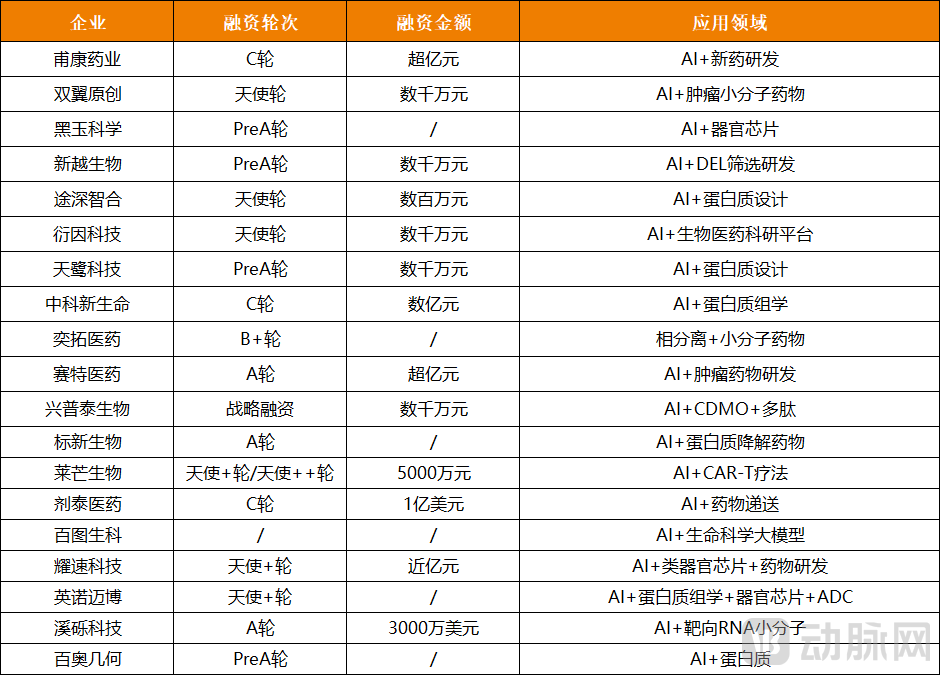 Figure 4. Financing Status and Application Areas of 18 AI Drug Discovery Companies in China in H1 2024
Finally, in terms of application areas. In the view of many industry professionals,The Next Development Trend in AI-Driven Drug Discovery Hinges on Expanding Beyond Small MoleculesCurrently, AI combined with macromolecular therapeutics is highly anticipated. It encompasses not only monoclonal and bispecific antibodies but also antibody-drug conjugates (ADCs), thereby opening up greater possibilities for novel therapeutics such as nucleic acid drugs, gene therapies, and cell therapies. However, the active ingredients of these emerging drugs are mostly unstable in vivo, necessitating complex delivery systems. Consequently, drug delivery technology constitutes a critical component in the research and development of these novel therapeutics, and AI-enabled R&D in drug delivery holds significant promise.
Yet behind the opportunities, industry challenges are becoming increasingly clear. In fact, as the market gradually returns to rationality, AI drug discovery has reached a critical stage where it must prove its capabilities. Undergoing a “cooling-off” period characterized by survival of the fittest, the threshold for entry is steadily rising, with technologies and business models evolving in tandem.
But no matter how things change, AI drug discovery must always return to the pharmaceutical industry’s most fundamental expectations of AI: innovation, efficiency enhancement, and cost reduction. Therefore,Future competition will largely depend on who can acquire high-quality, structured data at lower costs and higher throughput, while possessing core capabilities for market implementation.。
1. “What’s Actually Happening with AI Drug Discovery This Year” – Zhiyao Bureau;
2. “AI Drug Discovery Kicks Off the Breakout Race: The Dawn of a New Era” – Amino Observation;
3. “Insilico Medicine’s 7-Year Evolution: Securing China’s ‘Largest AI Drug Discovery Deal,’ with Milestone Payments Totaling Up to $1.2 Billion” — Leiphone.