

Archimedes Optical Files for IPO, Offering Clinically-Backed, Custom Freeform Lens Solutions to Over 300 Vision Centers in China
Stepping out of Danyang Railway Station in Danyang City, Jiangsu Province, the sign for “China Danyang Glasses City” across the street is particularly eye-catching.
“Wear Danyang glasses, see a beautiful China.” This city, with a population of less than one million, is the world’s largest production base for eyeglass lenses.
Wang Chenji, who grew up in Danyang since childhood, naturally embarked on a career in the optometry and vision care industry.
“I started my side hustle in the eyewear business back in college,” Wang Chenji, founder of Ajimide, told VCBeat with a smile. Because Danyang glasses were affordable, many classmates would ask him to purchase them on their behalf. At that time, although Danyang had driven down lens prices, domestically produced lenses remained predominantly mid-to-low end due to a lack of core technologies and expertise. The market for lathes and raw materials required for high-end lenses was still controlled by companies in Europe, the United States, Japan, and South Korea. Despite China having the highest myopia rate and the largest myopic population globally, its ophthalmic lens market size was less than one-third that of the United States. Gradually, Wang Chenji nurtured the dream of “building China’s Zeiss.”
He first co-founded an eyewear SaaS company as a partner, and later established a new retail chain brand, building it into the leading eyewear retail brand in East China.
In 2021, Wang Chenji had the privilege of meeting his future partner, Professor Cheng, a Chinese professor. Professor Cheng is a leading expert in the field of manufacturing systems in the UK. His research team achieved domestic substitution for freeform surface ophthalmic lens processing equipment, and he is a globally recognized expert in the field of ultra-precision machining.
Like the distant mountains gazed upon in youth, after a long trek, one suddenly finds oneself at their foot. The wish buried deep in the heart years ago has now become increasingly clear. Wang Chenji feels that “the time has come.”
In 2022, RGBALANCE, a premium Chinese optical brand dedicated to providing personalized, clinical-grade optometric solutions, was established. Leveraging its independently developed digital AI platform for optometric prescription analysis and customized optical surface design and manufacturing, RGBALANCE has transformed the traditional model that separates optometric prescriptions from eyewear products. It pioneered an integrated C2M (Customer-to-Manufacturer) solution combining diagnosis with customized fitting products and technical services, truly delivering tailored interventions for each patient with refractive errors and safeguarding the eye health of the Chinese population.
In February 2023, the company secured tens of millions of yuan in angel-round financing, led by TusStar Venture Capital. In May of the same year, Version 1.0 of the Ajimide Digital AI Optometric Prescription Testing IoT Platform was launched.
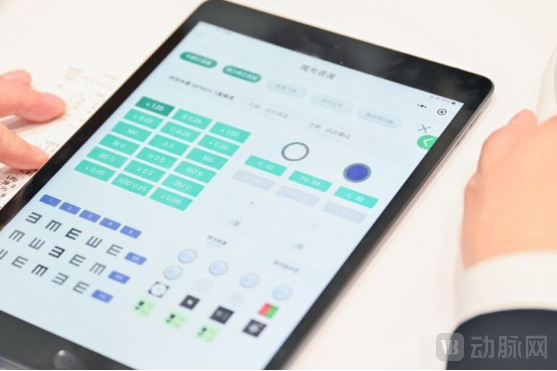
Agimide Fitting System
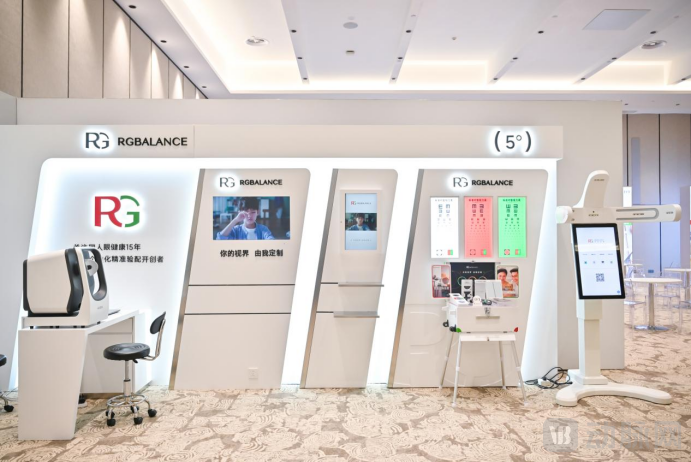
Meanwhile, the company has secured three patents for its proprietary lens optical surface designs, including one invention patent, thereby achieving the commercialization of independently developed domestic designs. Its self-developed customized progressive multifocal lenses are designed based on the regulatory mechanisms of visual function in middle-aged and elderly individuals. Furthermore, the company has launched China’s first clinical collaboration project focused on adult progressive multifocal lenses with the Eye Hospital of Wenzhou Medical University, a leading ophthalmology and optometry institution in China. This milestone marks another step forward for Ajimide in the field of professional optometric research.
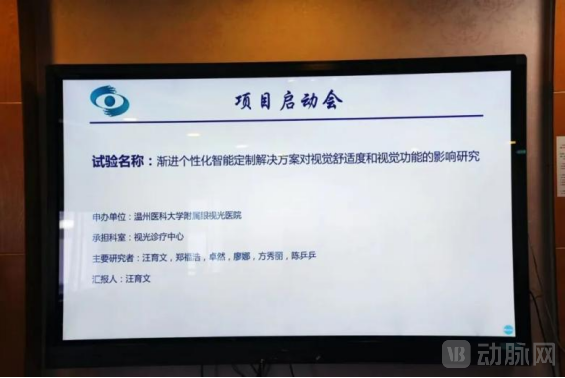
On November 15, 2023, Agimede Optics and the Eye Hospital of Wenzhou Medical University
"Clinical Project for Progressive Personalized Customization Solutions" Officially Launched
Achieving an integrated hardware-software production closed loop for freeform lenses through the “3+1” model,
“Building the Infrastructure” for China’s High-End Domestic Optometry and Ophthalmic Industry
Freeform LensesFreeform lenses are optical lenses that utilize freeform surfaces, typically composed of one or more aspheric elements. Unlike traditional spherical lenses, freeform lenses can be personalized based on the physiological structure of the human eye and individual visual requirements, thereby better accommodating the diverse visual needs of different populations.
Freeform lenses enhance visual clarity and comfort through optimized design. Particularly in high-prescription lenses, they reduce weight and thickness, thereby improving aesthetics and comfort. Additionally, they simplify the optical system, lower costs, and increase efficiency and flexibility.
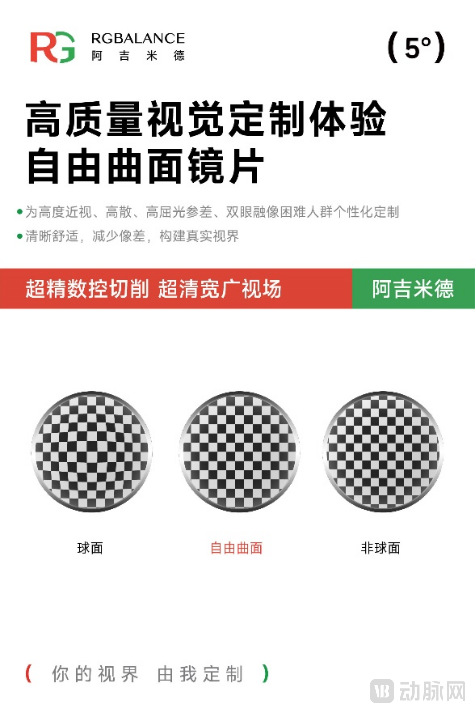
Freeform lens technology presents high technical barriers, involving advanced optical technologies such as design optimization, precision manufacturing, performance testing, ray-tracing simulation, personalized customization, and aberration suppression. Currently, the core technologies are dominated by international giants, resulting in high production costs. Market prices typically range from 3,000 to 4,000 yuan, while premium customized brands can reach tens of thousands of yuan.
Examining the inevitable path taken by leading enterprises worldwide, it is clear that maintaining independent and controllable capabilities is fundamental. For the future of China’s domestic high-end optometry and ophthalmology industry, achieving such independence and controllability is even more critical, serving as the cornerstone for ensuring the sector’s steady and robust development.
In this context,Agimide has built a “3+1” platform system, integrating three core technologies: proprietary personalized optical lens surface design, proprietary freeform precision manufacturing technology, and self-developed digital AI optometry detection system, along with robust market brand operation capabilities.
Leveraging its profound expertise in clinical medicine and optical design, Agimed has achieved breakthroughs in the optical design of progressive multifocal, defocus control, and personalized single-vision lenses. The company has successfully developed CAD software for lens surface design and CAM software for surface forming, both with independent intellectual property rights. This accomplishment has broken the software monopoly held by foreign enterprises such as IOT, Crossbows, Kodak, SEIKO, and Opotech, enabling Agimed to provide users with more precise and efficient personalized optical solutions.
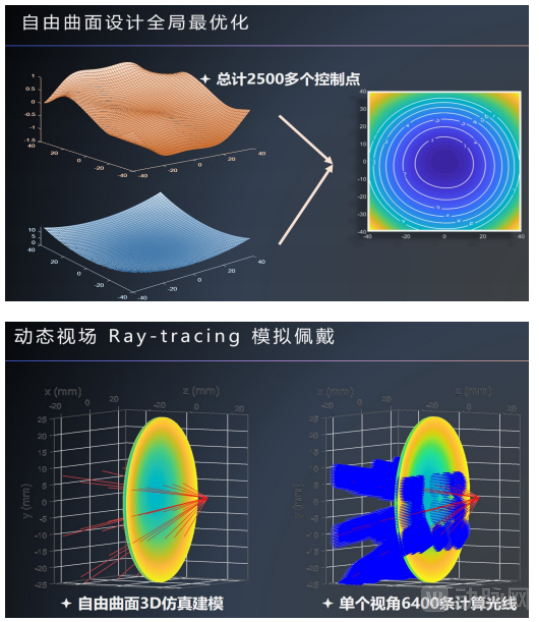
In terms of hardware manufacturing, Agimed pioneered the independent and controllable production of clinical-grade freeform lens technology in China. Breaking the monopoly held by European companies such as Satisloh, Opotech, and Schneider in equipment and technology, Agimed was the first in China to develop ultra-high-precision machining machine tools and successfully achieve industrial mass production. By integrating its self-developed CAD-CAE-CAM software, the company has established a software-hardware integrated, digital, and intelligent manufacturing center, ensuring precise personalized customization of “one pair of lenses per individual” and realizing domestic independence and controllability in the freeform custom lens manufacturing process.
Furthermore, Ajimid has mastered the manufacturing process for high-precision lenses with 5-degree increments. Compared to traditional adjustments in 25-degree steps, these 5-degree increment lenses provide more refined vision correction, reduce discomfort such as dizziness, and enhance wearer comfort and natural visual experience. Particularly for special visual conditions like amblyopia in children, the high precision and personalized design of 5-degree increment lenses enable more accurate treatment.
Meanwhile, Agimide has also launched a digital AI optometric examination system to address the inefficiencies, labor shortages, and human-induced inaccuracies inherent in traditional fitting processes. The system standardizes the collection of multidimensional data—including eye health, refraction, and visual function—and intelligently matches personalized optical design solutions.
Building upon traditional optometry, it incorporates comprehensive visual function assessments, enabling the issuance of medical optometry prescriptions, analysis of refractive issues, myopia control, vision improvement, patient education, and the establishment of visual health records. This approach not only enhances professional diagnostic capabilities and service quality, providing data support for lens design, but also optimizes the user experience.
Agimide’s “3+1” platform has established a comprehensive optometric profiling system, encompassing precise refraction, optometric consultation, visual function assessment, and frame parameter collection. This system provides data support for lens design and the formulation of future standards, ensuring continuity from design to production and laying a solid foundation for the development of China’s high-end optometry industry.
Through the C2D2M full-process bidirectional fully closed loop,
Implementing a Systematic Optometric Solution with “One Person, One Lens” and “One Person, One Record”
“Lenses are products that use optical principles to solve optical problems,” introduced Wang Chenji. He explained that, much like fingerprints, each person’s eyes are unique, and the visual issues vary from individual to individual. As a medical-grade product, the core value of lenses lies in providing customized solutions based on clinical assessments of each patient’s specific refractive errors; hence, they are “products that use optics to resolve optical issues.”
However, the current eyewear industry operates as a “semi-medical, semi-commercial” sector. Most eyewear companies adopt the “M2C” (Manufacturer-to-Consumer) model, which involves large-scale standardized production of lenses using molds, followed by sales from existing inventory, leaving human eyes to passively adapt to the glasses. Even for customized lenses from internationally renowned brands, the customization process is typically opaque to domestic consumers.
“We offer not just lenses, but comprehensive optometric solutions.” Wang Chenji further explained that Agimede has launched its “C2D2M” custom lens service, which leverages a digital AI-driven IoT optometry platform for precise measurements and the acquisition of personalized data. By employing CAD-CAM technology and freeform surfacing processes, each lens is meticulously crafted with 4,000 cutting points per square centimeter. Customized based on ergonomic data, this approach enables eyewear to proactively adapt to the wearer’s eyes, thereby enhancing visual comfort.
Within Agimide’s C2D2M system, users can witness the entire process from optometry consultation to lens design, manufacturing and assembly, and final product delivery. Each pair of lenses is traceable to its raw materials and personalized parameters, and a dedicated eye health record is established for each user, enabling personalized services characterized by “one person, one pair of lenses” and “one person, one record.”
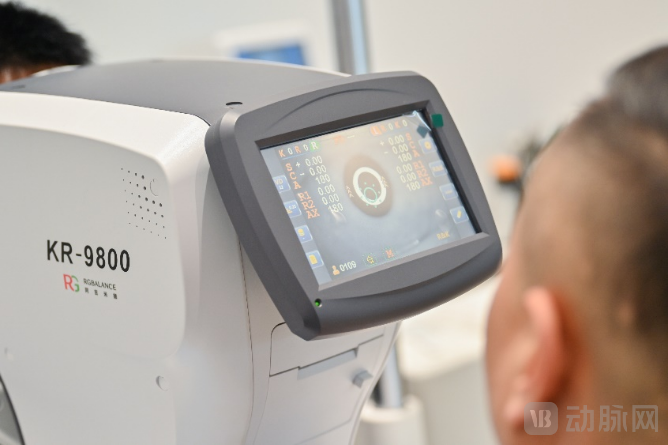
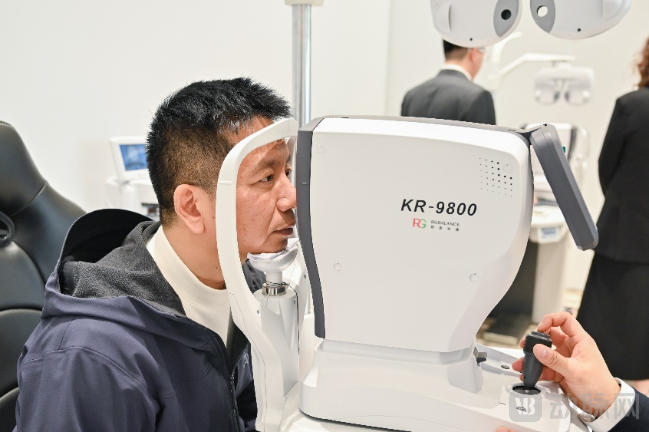
Serving over 400 end-users and 50 hospitals,
Achieved monthly sales of 3,000 units in the early stages of commercialization
In December 2023, Agimide hosted an event in Shanghai to showcase its personalized AI-powered visual intelligence solutions and officially launched “RGBALANCE Agimide.” Within less than ten months, the company has served over 400 end clients and more than 50 hospitals, with its customer base spanning optometry centers, private hospitals, chain optical stores, and other sectors.
Wan Shengdong, Deputy General Manager of TusStar Venture Capital, once remarked, “Compared with the more mature optometry markets in Europe and the United States, differentiated and customized lenses and frames will undoubtedly become the mainstream consumer demand in the future. Meeting such demands requires eyewear manufacturers to master three core technologies: 360-degree precise measurement of consumers’ eyes and facial structures, professional customization services, and accurate, rapid production. In all three areas, Archimedes Optics has industry-leading partners spearheading R&D efforts. Coupled with its independently owned intellectual property rights and equipment that far surpasses industry standards in both precision and processing speed, we are confident that Archimedes Optics will effectively meet market needs.”
It is reported that the company will next focus on customized myopia defocus solutions for adolescent prevention and control, while continuing to strengthen its capability platform construction.
As a rare domestic high-end optometry brand with comprehensive, independently controlled capabilities in both hardware and software, Agimede is exploring the essential path toward maturity for Chinese high-end optometry brands. It is building foundational infrastructure for China’s high-end optometry industry while opening up broader horizons for Chinese high-end optometry to step onto the global stage.