

60-Year Monopoly in Neurosurgical Hemostats Challenged by Chinese Innovator
The market for high-value consumables in neurosurgery is welcoming a wave of Chinese challengers.
For a long period, the neurosurgery market was monopolized by overseas giants such as Medtronic, Stryker, Johnson & Johnson, and B. Braun. Taking high-end hemostatic products in neurosurgery as an example, in 1960, Johnson & Johnson developed and launched oxidized regenerated cellulose absorbable hemostatic gauze. Due to its advantages, including ease of handling, pliability, firm adhesion to wound sites, and increased hemostatic surface area, the product, after its market launch,Rapidly became the most widely used medical consumable for hemostasis in neurosurgical procedures。
To date, Johnson & Johnson’s SURGICEL™ hemostatic gauze series has been a global bestseller for over 60 years, enabling Johnson & Johnson to nearly monopolize the high-end hemostasis market in neurosurgery worldwide.
Yet today, Chinese companies are challenging the market for high-value neurosurgical consumables. Among them, Medprin, a domestic innovator, developed “Jisuting,” the first domestically produced absorbable regenerated oxidized cellulose hemostatic product, breaking Johnson & Johnson’s monopoly; Saikesaisi pioneered China’s first absorbable dural sealant medical adhesive; Kangtuo Medical launched the first all-PEEK solution for skull fracture fixation and defect repair; Pulimon’s first domestically produced antibacterial barbed suture was recently approved; and Tuolan Jingchuang independently developed the first domestically created intracranial pressure monitor and sensor kit, ending the more than two-decade-long technological monopoly held by imported products...
Beyond technological breakthroughs and product approvals, domestic companies have also achieved significant progress in the neurosurgery market. For instance, Medprin Regenerative Medical Technologies Co., Ltd. reported revenue of RMB 120 million in the first half of 2024, a year-on-year increase of 42.39%; Double Medical Technology Inc. generated RMB 48 million in revenue from its neurosurgical products during the same period, up by 58.42% year on year; Kangtuo Medical recorded RMB 133 million in revenue from its neurosurgery business in the first half of 2024, representing a 7.97% year-on-year growth. Companies such as Guan Hao Biotechnology, Zhenghai Biological Technology, BaiRen Medical, and Tianxinfu have collectively raised the localization rate of dural substitutes to 90%.
What Does the Monopolized Neurosurgery Market Look Like? How Are Domestic Companies Breaking Through? How Will the Neurosurgery Industry Develop at the Current Stage?
When it comes to neurosurgery, many people’s first impression is neurointervention. In fact, neurosurgery is a clinical surgical specialty that primarily employs surgical procedures to treat neurological conditions such as traumatic brain injury, brain tumors, cerebrovascular diseases, intracranial infections, and spinal cord disorders.
Neurointerventional procedures refer to the collective term for interventional surgeries used to treat cerebrovascular diseases. In other words, neurointervention is a subspecialty within neurosurgery. VCBeat has previously reported on neurointervention multiple times; this article primarily reviews the neurosurgery market outside of the neurointerventional segment.
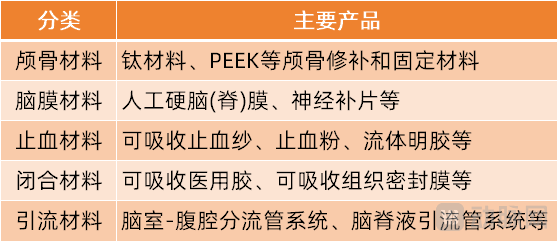
(Neurosurgery Classification and Major Products)
According to the "China Health Statistics Yearbook," approximately 900,000 craniotomies were performed in China in 2022. This annual volume of nearly one million procedures has spurred a substantial market: the size of China’s neurosurgical consumables market is projected to approach RMB 10 billion by 2027. Additionally, data released by the healthcare industry research firm Evaluate Medtech indicates that the global market for neurosurgical medical devices reached USD 15.8 billion in 2023.
The neurosurgery market is vast, but Chinese companies in this sector have a short development history and entered the market late, currently remaining in a catch-up phase. It is reported that high-value consumables for neurosurgery include cranial materials, dural materials, hemostatic materials, closure materials, and drainage materials. To date, except for dural materials (with a domestic production rate of 90%), the markets for other high-value neurosurgical consumables are dominated by overseas brands. Meanwhile, at present, only foreign enterprises can fully cover all five major product categories, whereas domestic companies typically enter through one or two niche segments and gradually expand their product portfolios.
The condition associated with cranial material products is skull defect. As a barrier protecting the brain, skull defects can easily lead to brain tissue injury. By repairing and treating skull defects with cranial materials, patients’ skull morphology will be restored to normal. Corresponding products include cranial repair products and cranial fixation systems, such as cranial locks, cranial meshes, cranial screws, cranial connecting plates, and cranial burr hole covers.
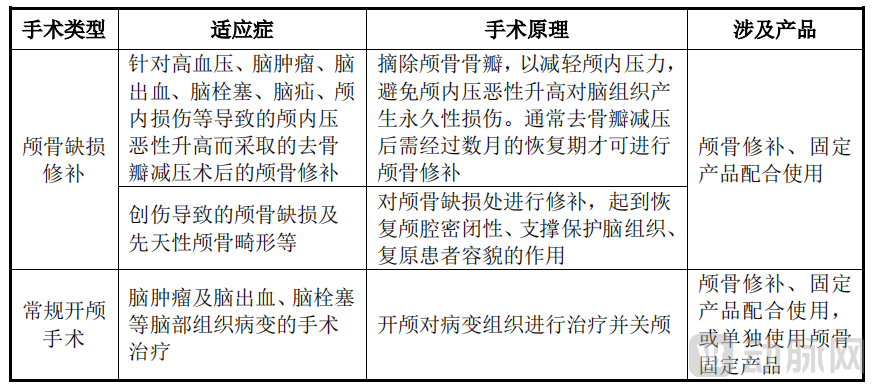
By raw material, cranial implant products can be categorized into autologous bone, polymethyl methacrylate (PMMA), silicone rubber, bone cement, titanium, and polyether ether ketone (PEEK). Currently, the first four types have gradually withdrawn from the market due to various limitations related to source availability and performance. Titanium-based materials dominate the mainstream market, while PEEK has a relatively low penetration rate but is regarded as a key direction for future development in cranial implant materials.
It is understood that,Due to its early market introduction, low cost, and excellent performance, titanium material has become the currentClinical ApplicationsMostExtensive Craniomaxillofacial Repair Materials,Market participants mainly include Medtronic, Stryker, Johnson & Johnson, etc.However, titanium materials also have certain limitations: as a metal, titanium exhibits thermal expansion and contraction and has high thermal conductivity, which can cause heat sensitivity in the patient's head; it produces metal artifacts during imaging examinations, affecting subsequent medical imaging; and its material strength is lower than that of the human skull, making it prone to deformation under stress.
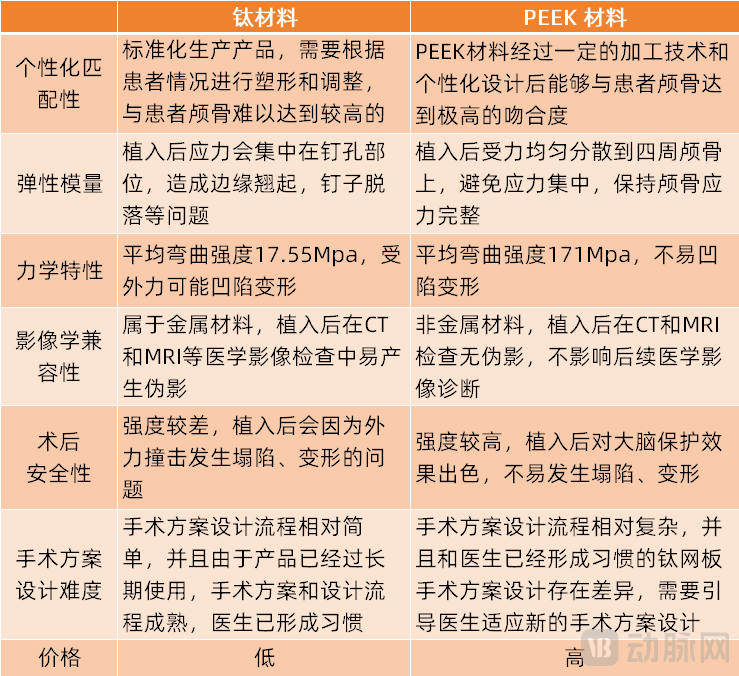
(Comparison of Cranial Repair and Fixation Products Made from Different Materials)
Addressing the various clinical pain points associated with titanium, innovators have attempted to use alternative synthetic materials for cranioplasty, achieving significant success with polyether ether ketone (PEEK). PEEK is a synthetic semi-crystalline thermoplastic material that has demonstrated elasticity, hardness, and thermal conductivity highly similar to those of the human skull in research on cranioplasty materials. Furthermore, PEEK exhibits excellent biocompatibility, radiation resistance, compressive strength, and mechanical properties.
Compared with titanium materials, PEEK-based cranial repair products exhibit higher average flexural strength, are less prone to indentation and deformation, and provide superior protection for the brain. Through advanced processing techniques and personalized design, PEEK materials can achieve an extremely high degree of conformity with the patient’s skull. In contrast, titanium implants are mass-produced as standardized products that require intraoperative shaping and adjustment by surgeons, making it difficult to achieve a high level of fit with the patient’s skull. Furthermore, PEEK has a low thermal conductivity and a thickness similar to that of natural bone, providing thermal insulation comparable to the native skull and remaining unaffected by external temperature variations.
Additionally, as a non-metallic material, PEEK produces no artifacts during post-implantation CT or MRI scans, thereby not compromising subsequent medical imaging diagnosis for patients.
Currently, several innovative domestic companies have developed PEEK material cranial repair products. For instance, the PEEK cranial mesh plates from Kangtuo Medical, Medprin Regenerative Medical Technologies, Double Medical, Kang'er Medical, Weigao Haixing, and Meiyida Medical have all received market approval. Notably, Kangtuo Medical’s latest PEEK cranial fixation system was approved by the NMPA in August 2024. Combined with its previously approved PEEK-based products, Kangtuo Medical is now able to provide comprehensive all-PEEK solutions for cranial fracture fixation and defect repair.
Although PEEK-based cranial repair products outperform titanium materials in terms of personalized fit, medical imaging compatibility, physical and mechanical properties, and patient comfort, their market penetration in China’s cranial repair sector remains low. This is primarily due to the relatively short time since PEEK cranial repair and fixation products entered the market, the greater complexity of surgical planning processes, the need for specialized training, and their higher price. However, PEEK materials are expected to significantly increase their market penetration, driven by their superior performance and the impact of centralized procurement policies, and are poised to become the mainstream product in the future.
Notably, overseas giants have long launched PEEK-based cranial repair products in international markets, yet their offerings in the Chinese market remain predominantly titanium-based. Only Johnson & Johnson has introduced PEEK-based cranial repair products in China.
Domestic companies must continue to strive to ensure that more patients have access to PEEK cranial repair products with superior performance.
Hemostatic materials are widely used in surgical procedures, but neurosurgery presents unique challenges. Compared to other surgical sites, brain tissue is highly vascularized and features a complex micro-neural network structure. Additionally, some surgical sites are deep-seated, offering a narrow field of view and making operative maneuvers difficult. Under the influence of these multiple factors, neurosurgical procedures often involve numerous bleeding points that are challenging to control. Consequently, the ability to manage intracranial hemorrhage frequently becomes a critical determinant of the success or failure of neurosurgical operations.
Meanwhile, compared with other surgical specialties, neurosurgery involves greater complexity and imposes higher safety requirements on hemostatic materials. Low- to mid-end hemostatic products such as ordinary gauze and cotton balls cannot fully meet clinical needs. Instead, it is necessary to select advanced, novel hemostatic materials that can be injected via endoscopy, solidify and conform to shape after injection, are biodegradable and absorbable, exhibit no volume expansion upon blood absorption, and offer superior biocompatibility.
Currently, there are multiple products available internationally for hemostasis in neurosurgery; however, few hemostatic products have been approved for neurosurgical use in China. The mainstream product is Johnson & Johnson’s oxidized regenerated cellulose-based hemostatic material (Surgicel).
Commonly used hemostatic materials in the neurosurgery market can be categorized into cellulose-based, gelatin-based, collagen-based, fibrin sealants, and bone wax. Among these,Oxidized Regenerated Cellulose Hemostatic GauzeYesThe Medical Consumables with the Highest Usage Proportion in Hemostasis During Neurosurgical Procedures。
It is reported that regenerated oxidized cellulose is derived from plant fibers and manufactured through rigorous regeneration and oxidation processes. Clinically, oxidized regenerated cellulose hemostatic materials offer advantages such as rapid placement at the target site, ease of shaping, firm adherence to wounds, increased hemostatic surface area, and absorption within 7–14 days of retention.
Sixty years after Johnson & Johnson developed oxidized regenerated cellulose-based hemostatic materials, innovative Chinese enterprises have finally broken through the technical barriers to develop similar products. In 2021, Medprin Regenerative Medical Technologies launched China’s first absorbable oxidized regenerated cellulose hemostatic product for neurosurgical hemostasis. In fact, there are currently multiple domestically produced oxidized regenerated cellulose-based hemostatic materials available; however, due to limitations in performance parameters, some of these products are not suitable for neurosurgical applications.
It is worth noting that since the launch of the first-generation standard oxidized regenerated cellulose hemostatic material, Johnson & Johnson has successively introduced enhanced versions, including the thickened, fibrillar, and snowflake formulations. In 2022, Johnson & Johnson innovatively launched China’s first granular oxidized regenerated cellulose hemostatic product—Surgicel Fibrillar Aggregates. Compared with previous-generation products, Surgicel Fibrillar Aggregates can achieve intraoperative hemostasis within an average of 30 seconds, whereas traditionalAbsorbable Hemostatic GauzeIt takes 3–5 minutes to achieve the same effect. In addition, SURGICEL® Aggregated features an innovative granular morphology that enables physicians to more easily locate and manage bleeding sites when addressing irregular, extensive wounds.
Absorbable fluid gelatin hemostats are also frequently used for hemostasis in neurosurgery. These products consist of fluid gelatin and thrombin, and are generally applied to the bleeding site using a long applicator. The advantages of such products include their fluid form, which allows for precise hemostasis in deep cavities and complex wounds, as well as ease of handling without obstructing the surgical field. However, their disadvantages include the potential to cause perilesional edema if excessive post-hemostatic residue is not removed, or to induce thrombosis, anemia, infection, and hemorrhage if inadvertently injected into blood vessels.
As of now, several absorbable hemostatic fluid gelatin products have been approved for marketing in China, such as Bornier, Huanuo Bio, and Nash International Bio. However, the indications for these companies’ absorbable hemostatic fluid gelatin do not include neurosurgery, urology, or ophthalmology.
Nevertheless, these companies are expanding their indications. For instance, in October 2024, Braincare’s independently developed absorbable hemostatic fluid gelatin successfully completed full enrollment for its neurosurgical registration clinical trial. According to the study results, there was no significant difference in hemostatic efficacy between this product and imported products of the same type. Furthermore, no statistically significant differences were observed in metrics such as ease of use, adherence to the wound surface, and application upon contact with the wound. This indicates that the product demonstrates non-inferior performance compared to imported alternatives and is poised for comprehensive promotion and application in neurosurgery.
Fibrin glue is another high-performance implantable hemostatic material that achieves hemostasis by combining fibrinogen with thrombin to activate the coagulation cascade. The advantages of this product include non-toxicity, excellent tissue compatibility, and effective hemostatic properties; it promotes wound healing and is absorbable by the human body over time. However, its drawbacks include the need for frozen storage, preoperative water-bath heating to body temperature, and a cumbersome preparation process. Additionally, it takes 1–2 minutes for a clot to form after application. Therefore, fibrin glue is not suitable for cases of rapid arterial bleeding or accidental hemorrhage.
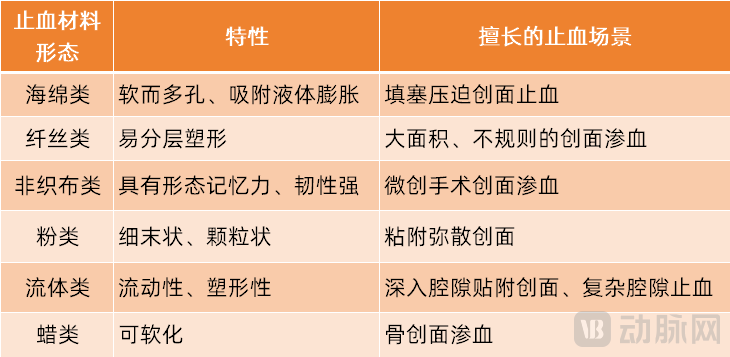
Overall, neurosurgical procedures are highly complex. Due to variations in surgical sites and operative techniques, different procedures have distinct requirements for hemostatic materials: some require sponge forms, others powder forms, and still others fluid forms. In terms of material composition, needs vary among cellulose-based, gelatin-based, collagen-based, and bone wax products. For domestic companies, the current priority is to develop a broader range of high-end hemostatic products to meet market demand and accelerate commercialization, thereby using commercial success to fuel technological innovation.
Closure materials are primarily used to prevent cerebrospinal fluid (CSF) leakage. The dura mater serves as a barrier that protects the brain and prevents CSF from coming into contact with the external environment; however, factors such as craniotomy, tumor erosion, and traumatic brain injury can compromise its integrity. Clinically, repair is typically performed by suturing the dura mater, but this process creates microscopic needle holes, making it difficult to achieve a completely sealed environment and thereby posing a risk of CSF leakage.
In response, the market has seen the innovation of absorbable medical adhesives to prevent cerebrospinal fluid (CSF) leakage. Currently, only Integra and Stryker have launched absorbable medical adhesives in the international market. In the domestic market, Saikesaisi has developed China’s first absorbable dural sealant medical adhesive, providing a new solution for sealing CSF leaks following dural suturing.
Compared with conventional repair methods, the innovation of this product lies in its ability to rapidly polymerize upon spraying onto the surgical site, forming an adhesive hydrogel with a three-dimensional network structure, which provides auxiliary sealing for cerebrospinal fluid leaks that persist after dural suturing.
According to Saikesaisi's prospectus, the sales volume of its absorbable dural sealant medical adhesive has grown rapidly, with a compound annual growth rate (CAGR) of 43.36% from 2021 to 2023.
In addition to breakthroughs in cranial bone materials, hemostatic materials, and closure materials, domestic enterprises have also achieved breakthroughs in markets for dural materials, drainage materials, and intracranial pressure monitors.
Specifically, in the field of meningeal materials, companies such as Guan Hao Biotech, Zhenghai Biological Technology, Bairen Medical, and Tianxinfu have jointly increased the domestic production rate of dural patches to 90%;
In the field of drainage materials, companies such as Baiduoan, Dazheng Medical, Weihai Shichuang, Boke Medical, Huisen Medical, Yike Yigong, Seven Stars Medical, and Yudong Medical have developed and launched external ventricular drainage systems with pressure monitoring devices; meanwhile, Haopu Bio, Cushing Medical, and Kexi Medical have obtained approval for lumbar external drainage systems.
The intracranial pressure monitoring market was previously dominated by Raumedic, Sophysa, Integra, and Natus. Currently, domestic innovative enterprises such as Tuolan Jingchuang and Puhui Medical have launched related products and achieved commercial success.
An overview of the neurosurgery industry reveals that it is thanks to the pioneering and breakthrough efforts of domestic innovative enterprises that patients in China have gained access to the latest generation of products available on the global market. Due to their relatively short development history, domestic companies often enter the neurosurgery sector with a single product and gradually expand into other product lines.
Taking Medprin as an example, the company entered the market with dural patches and gradually expanded its product portfolio to include cranial materials, high-end hemostatic materials, and sealing materials. In the first half of 2024, Medprin’s dural products generated sales revenue of RMB 69.1193 million, a year-on-year increase of 36.68%; its cranial material products recorded revenue of RMB 35.4937 million, up 32.79% year on year; while its hemostatic and sealing materials, having been launched for a relatively short period, achieved a combined revenue of RMB 14.2114 million, yet demonstrated rapid growth with a year-on-year increase of 145%.
In addition to expanding product portfolios and increasing indications, innovative domestic neurosurgery companies also face challenges such as centralized procurement. On one hand, centralized procurement will compress the prices of high-value neurosurgical consumables; this has a relatively minor impact on imported products that have been marketed for many years, but significantly affects domestic companies that have invested heavily in R&D and recently launched their products. On the other hand, centralized procurement can help domestically produced products accelerate market capture and increase penetration rates.
Based on this, most domestic neurosurgery companies have chosen to actively participate in centralized procurement bidding, trading price for volume. For example, Kangtuo Medical adjusted its business strategy by participating in various academic conferences, increasing promotional efforts and market education for its PEEK material products, and penetrating grassroots markets to accelerate coverage in lower-tier markets and enhance the penetration rate of its PEEK-based products. In the first half of 2024, it achieved a “zero breakthrough” in PEEK material repair surgeries at multiple primary-care hospitals.
Meanwhile, Kangtuo Medical also leveraged centralized procurement to exchange price for volume. In the first half of 2024, sales of its PEEK material products surged significantly, driving continuous growth in neurosurgery business revenue (RMB 133 million, a year-on-year increase of 7.97%).
In addition, Kangtuo Medical has also set its sights on overseas markets. In the first half of 2024, it expanded the scope of promotion and registration for its neurosurgical product portfolio in major global markets, while its overseas subsidiary advanced the localization of PEEK bone plate production in the United States, thereby enhancing its comprehensive competitiveness in the global market. Benefiting from its international expansion strategy, the company’s overseas revenue reached RMB 16.2212 million in the first half of the year, representing a year-on-year increase of 14.97% and demonstrating a trend of sustained and stable growth.
Today, the neurosurgery market has largely broken through technological barriers, and the next phase will be a fierce commercial battleground. We believe that domestic neurosurgery companies will accelerate their growth, leveraging advantages such as import substitution, localization, and cost efficiency!