

China Resources Jiangzhong Acquires 51% Stake in Jiangzhong Chinese Herbal Slices for RMB 86.12 Million

JZJT
Traditional Chinese Medicine Manufacturer
On October 26, Jiangzhong Pharmaceutical Co., Ltd. (JZJT) (Stock Code: 600750) announced that it intends to sign an "Equity Transfer Agreement" with China Resources Jiangzhong Pharmaceutical Co., Ltd. to purchase its 51% equity interest in Jiangxi Jiangzhong Traditional Chinese Medicine Decoction Pieces Co., Ltd. (hereinafter referred to as "Jiangzhong Decoction Pieces") for RMB 86.1238 million. The transaction shall be settled entirely in cash. JZJT shall make a one-time payment of the cash consideration of RMB 86.1238 million for the target company to the transferor within five working days from the date of signing the agreement.
This transaction does not involve changes in the management of Jiangzhong Yinpian, employee placement, or land leasing. Upon completion of the transaction, Jiangzhong Yinpian will become a controlled subsidiary of JZJT and be included in its consolidated financial statements. This move will facilitate JZJT’s strategic layout in upstream resources of traditional Chinese medicine (TCM), improve the construction of the TCM industrial chain, and reduce related-party transactions.
Jiangzhong Pharmaceutical (JZJT) is a household name in China. Guo Donglin’s tagline, “Keep Jiangzhong Brand Jianwei Xiaoshi Pian (Digestive Tablets) at home,” has become ingrained in the collective memory of an entire generation. In addition to these digestive tablets, other over-the-counter (OTC) products commonly found in Chinese households include Jiangzhong Brand Lactobacillus Tablets and Jiangzhong Brand Compound Caoshanhu Lozenges. Currently, “Jiangzhong” and “Chuyuan” under Jiangzhong Pharmaceutical are recognized as Well-Known Trademarks of China, while “Yang Jisheng” and “Sanghai” are Famous Trademarks of Jiangxi Province.Jiangzhong Brand Jianwei Xiaoshi Tablets have ranked first in the traditional Chinese medicine (digestive category) of the "China OTC Product List" for 20 consecutive years.
In fact, the origins of JZJT can be traced back to 1969, when it was established as a university-run enterprise of Jiangxi University of Traditional Chinese Medicine under the name Hongqi Pharmaceutical Factory. In 1990, it was renamed Jiangzhong Pharmaceutical Factory and subsequently launched blockbuster products such as Jiangzhong-brand Sarcandra Glabra Lozenges and Jiangzhong-brand Jianwei Xiaoshi Tablets. In 1998, Jiangzhong Pharmaceutical Factory underwent asset restructuring with Dongfeng Pharmaceutical to jointly establish Jiangzhong Group. In 2002, JZJT replaced Dongfeng Pharmaceutical through an asset swap, and the stock abbreviation of “Dongfeng Pharmaceutical” was changed to “JZJT.”
This is the well-known development and evolution history of “JZJT”. However, JZJT’s development reached a turning point between 2018 and 2019.
In May 2018, the People's Government of Jiangxi Province and China Resources Group signed a strategic cooperation agreement, specifying that China Resources Pharmaceutical would restructure Jiangzhong Group. In July of the same year, China Resources Pharmaceutical and Jiangzhong Group entered into an agreement under which China Resources Pharmaceutical would become the controlling shareholder of Jiangzhong Group with a 51% equity stake through capital increase and share expansion.
In February 2019, following the strategic restructuring of China Resources Pharmaceutical, the actual controller of Jiangzhong Pharmaceutical (JZJT) changed from the State-owned Assets Supervision and Administration Commission of Jiangxi Province to China Resources Limited, with the ultimate actual controller being the State-owned Assets Supervision and Administration Commission of the State Council. In March 2019, “Jiangxi Jiangzhong Pharmaceutical (Group) Co., Ltd.” was renamed “China Resources Jiangzhong Pharmaceutical Group Co., Ltd.” (abbreviated as CR Jiangzhong), formally integrating into the China Resources family. It became a directly managed business unit of China Resources Group and a first-tier profit center within the group.
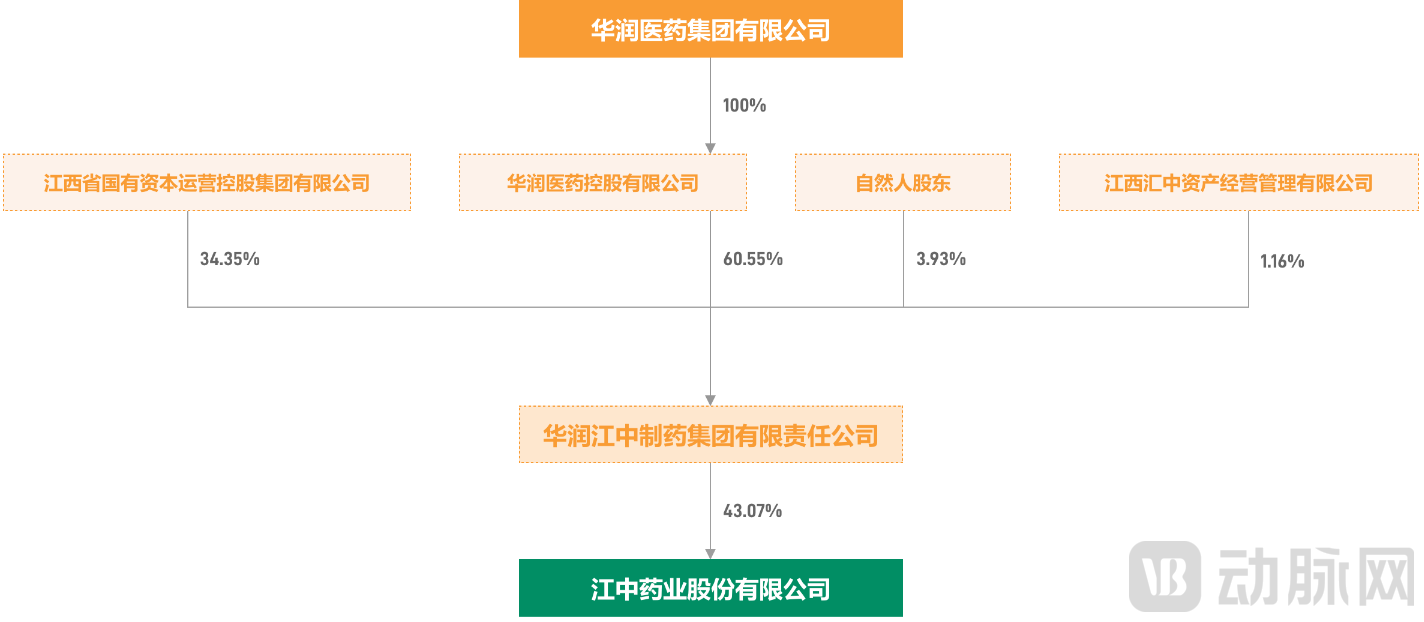
Current Equity Structure of JZJT, Source: Official Website of Jiangzhong Pharmaceutical Co., Ltd.
JZJT, as a core subsidiary of Jiangzhong Pharmaceutical Co., Ltd., has also been officially included in the list of “China Resources-affiliated” enterprises.
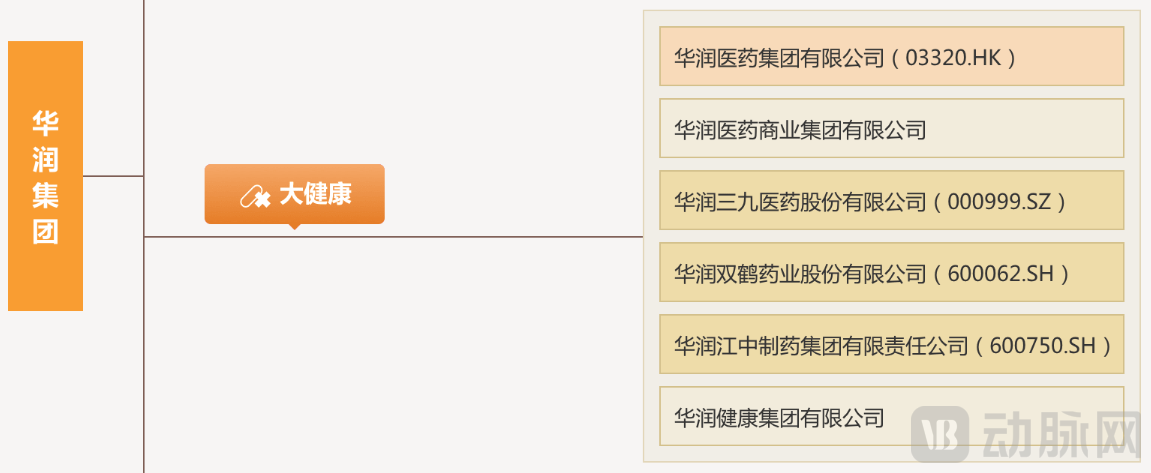
Composition of China Resources Group’s Healthcare Business Unit, image source: China Resources official website
In addition to Jiangzhong Pharmaceutical (JZJT) being backed by China Resources Jiangzhong, the target company in this transaction, Jiangzhong Yinpian, is also a subsidiary of China Resources Jiangzhong, which holds a 51% stake in Jiangzhong Yinpian.
Jiangzhong Yinpian was established in 2004, primarily engaged in the production of traditional Chinese medicine (TCM) decoction pieces, TCM products for health preservation and beauty, and the cultivation of TCM medicinal materials. The company boasts three major research platforms: a provincial-municipal level technical center, a municipal-level engineering technology research center, and a key laboratory in Jiujiang City. It has established five production lines for ordinary TCM decoction pieces, toxic TCM decoction pieces, directly oral-administered TCM decoction pieces, food products, and medical devices. The company has created the "Huizhongtang" brand for TCM decoction pieces and the "Hengkangtai" brand for health and wellness products. It offers over 600 varieties of TCM decoction pieces, with an annual production capacity exceeding 3,000 tons.
Upon completion of this acquisition, Jiangzhong Yinpian will become a holding subsidiary of JZJT and be included in JZJT’s consolidated financial statements. This move will facilitate JZJT’s strategic layout of upstream resources in traditional Chinese medicine (TCM), enhance the development of the TCM industry chain, and reduce related-party transactions.
Since China Resources Pharmaceutical assumed control of JZJT in 2019, the company has achieved consecutive growth in its performance.In 2023, JZJT achieved an operating revenue of RMB 4.39 billion, a year-on-year increase of 13.00%; and realized a net profit attributable to shareholders of the parent company of RMB 708 million, a year-on-year increase of 18.40%. In addition, according to the 2023 "China's Most Valuable Brands" ranking released by World Brand Lab, the brand value of "Jiangzhong" exceeded RMB 30 billion, ranking sixth in the pharmaceutical industry.
According to publicly available information, JZJT has achieved consecutive growth in performance in recent years, with mergers and acquisitions being one of the key driving forces.In January 2019, JZJT acquired a 51% equity stake in Sanghai Pharmaceutical and Jisheng Pharmaceutical through cash capital increases. In September 2021, JZJT acquired a 36% equity stake in Jincheng Haisi Pharmaceutical Co., Ltd. through a public listing delisting process.
Behind these transactions, China Resources Pharmaceutical (CR Pharma) likely played a significant role. Public records indicate that CR Pharma is particularly adept at seizing M&A opportunities involving local state-owned pharmaceutical enterprises. In addition to Jiangzhong Pharmaceutical (JZJT), other A-share listed pharmaceutical companies under its umbrella—such as China Resources Sanjiu, China Resources Double-Crane, Dong-E-E-Jiao, and Boya Bio-pharmaceutical—were all incorporated into the CR Pharma portfolio through acquisitions from state-owned assets authorities in relevant provinces and municipalities. Similar to JZJT, these “China Resources-affiliated” enterprises have undergone multiple rounds of mergers, acquisitions, and integration driven by CR Pharma after being brought under its control.
Following multiple acquisitions, JZJT’s market capitalization will increase significantly. Meanwhile, through resource integration, the company will further expand its footprint across the upstream and downstream segments of the pharmaceutical industry and acquire high-growth blockbuster products, gradually establishing a scaled pharmaceutical business system with coordinated upstream–downstream linkages, thereby enhancing its overall market competitiveness.
In addition to the support from China Resources Pharmaceutical, JZJT has also been actively seeking its next blockbuster “household staple” product beyond Jianwei Xiaoshi Tablets in recent years.
Since 2019, JZJT has been simultaneously advancing its three major business segments: over-the-counter (OTC) drugs, prescription drugs, and general health plus other products.
JZJT’s over-the-counter (OTC) drug business primarily focuses on four core categories—“spleen and stomach, intestinal health, throat and cough/asthma, and nutritional supplements and minerals”—to develop blockbuster products and major product lines. In the spleen and stomach and intestinal health sectors, its flagship product, Jianwei Xiaoshi Tablets, generated RMB 1.1 billion in revenue in 2023. Additionally, JZJT has heavily promoted two key products, Lactobacillus Tablets and Bifidobacterium Triple Viable Capsules (Beifeida), each of which achieved annual revenues exceeding RMB 500 million in 2023. In the throat and cough/asthma category, the combined revenue from Compound Caoshanhu Lozenges and Compound Fresh Bamboo Juice exceeded RMB 300 million.
In the broader health sector, JZJT primarily focuses on traditional Chinese medicine (TCM), medicinal and edible homologous products, and Western dietary vitamins and minerals. The company is developing four core business areas: premium tonics, rehabilitation nutrition, gastrointestinal health, and liver health. The rehabilitation nutrition segment is represented by the “Chuyuan” series, which mainly includes peptide-based products and protein powders. The premium tonic segment is represented by the “Shenlingcao” series, whose main ingredients are American ginseng, Ganoderma lucidum (Reishi mushroom), and Cordyceps sinensis (or Cordyceps fungal powder). The gastrointestinal health segment mainly consists of probiotic series products, while the liver health segment is primarily focused on Liver Pure Tablets. Specialty products also include Guyou Glucosamine Calcium Tablets.
Prescription drugs represent a relatively weak segment for JZJT, with most products acquired through mergers and acquisitions. These primarily include Jiangzhong-brand Lumbrokinase Enteric-coated Capsules (Boloke) and prescription drug products from Sanghai Pharmaceutical, Jisheng Pharmaceutical, and Haisi Pharmaceutical, covering therapeutic areas such as cardiovascular and cerebrovascular diseases, respiratory conditions, gynecology, urology, and gastrointestinal disorders. In this segment, JZJT is actively adapting to new changes in industry policies, promoting operational growth through compliant development. In 2023, this segment generated operating revenue of RMB 660 million, a year-on-year decrease of 16.31%.
Overall, JZJT’s strategic objectives are clearly defined. In addition to focusing on strengthening its OTC business, the company is actively advancing new business layouts, resulting in robust overall development. We look forward to JZJT, leveraging its own efforts and the support of China Resources, to accelerate the launch of its next blockbuster product with annual sales exceeding RMB 1 billion.