

West China Hospital Licenses Four Minimally Invasive Bunion Correction Patents for RMB 1.2 Million

West China Hospital
National Grade A Tertiary General Hospital
Recently, West China Hospital of Sichuan University issued an announcement to exclusively license four patents, including “Manufacturing Method for Minimally Invasive Surgery Guides for Hallux Valgus, the Guides, Equipment, and Storage Media,”Proposed transaction price: RMB 1.2 millionRMB transferred toCyberpie (Wuxi) Technology Co., Ltd.。
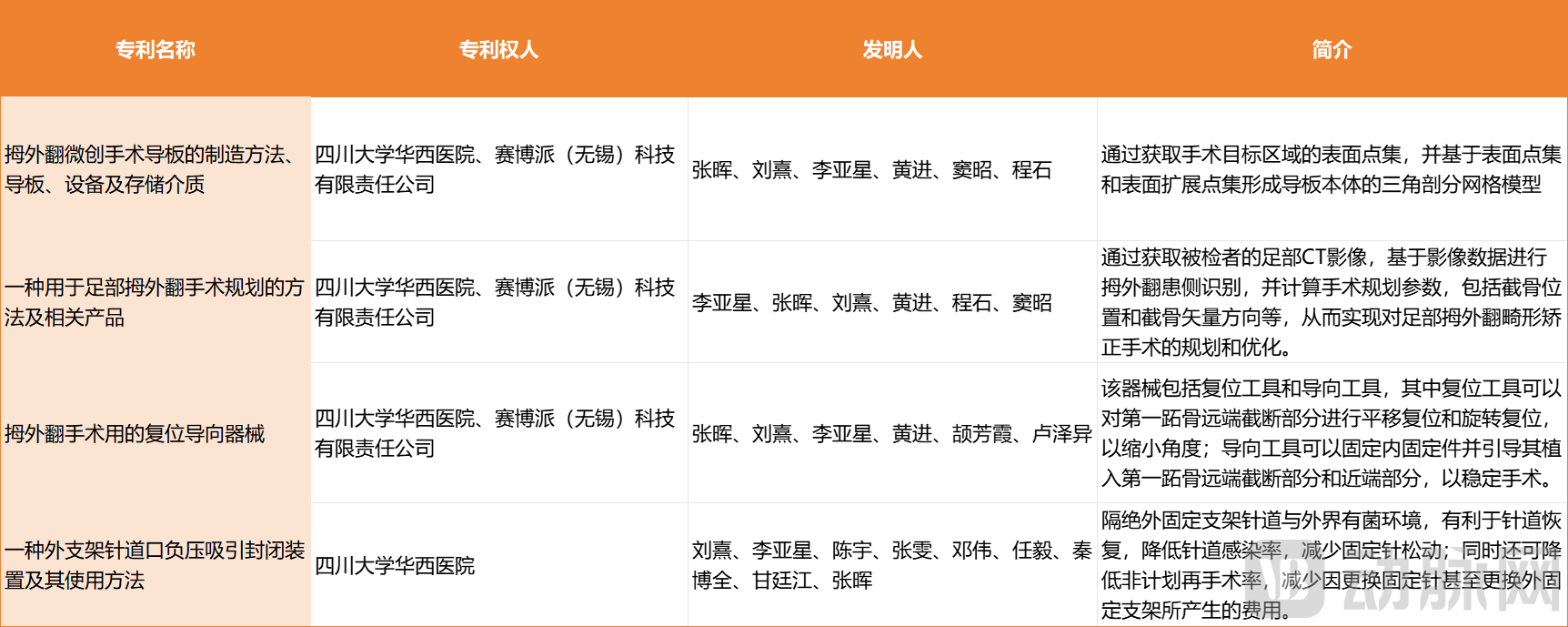
Four Translational Achievements
Zhang Hui, the primary inventor of the patent, serves as the Head of the Foot & Ankle and Orthopedic Deformity Subspecialty Center within the Department of Orthopedics at West China Hospital, Sichuan University. He has long been dedicated to clinical practice, teaching, and research in areas such as foot and ankle trauma, foot and ankle bone diseases, correction of foot, ankle, and lower limb deformities, as well as lower limb bone infections and bone defects. He has published more than 50 papers in high-impact-factor journals.
Low-Risk, High-Technical-Demand Minimally Invasive Surgery for Hallux Valgus
Hallux valgus is a common, progressive, and complex deformity of the first metatarsophalangeal joint, often accompanied by pain or a bony prominence over the medial aspect of the first metatarsal head. The etiology of hallux valgus is multifactorial, including prolonged wear of footwear with a narrow toe box, genetic predisposition, and systemic arthropathies.
Based on the severity of the patient's hallux valgus, either conservative or surgical treatment may be selected. Conservative management primarily involves corrective measures such as physical therapy, heat application, and the use of orthotic devices. For patients with severe hallux valgus, surgical intervention is the preferred first-line treatment. Currently, common surgical procedures include resection of medial exostoses of the metatarsal head, osteotomy of the first metatarsal shaft or base, arthrodesis of the first metatarsophalangeal joint, and artificial joint replacement. Most of these procedures are performed using minimally invasive techniques.
Compared with other orthopedic surgeries, although this procedure has a lower risk factor, it places higher demands on the surgeon’s operative experience.Due to the small incision size and narrow interstitial spaces in hallux valgus surgery, it is challenging for surgeons to determine intraoperatively whether the osteotomy fixation angle has been corrected to the target range. Furthermore, the correction angle of the phalanges must account for their interdependence; improper coordination between the phalanges may compromise postoperative motor function. Therefore, while hallux valgus surgery carries a higher safety profile compared to other procedures, insufficient surgical experience can still lead to complications such as postoperative joint stiffness, nerve injury, and transfer metatarsalgia.
Based on this, Zhang Hui’s team has developed a series of surgical products for hallux valgus, ranging from surgical guides and positioning jigs to reduction instruments. These micro-innovations significantly reduce the complexity of hallux valgus surgery while enhancing procedural safety and patient comfort. Furthermore, the “Expert Consensus on the Treatment of Hallux Valgus” highlights personalized treatment as a key direction in the field. The team’s surgical planning solution, integrated with advanced medical imaging technologies, identifies individual patient factors to deliver the most appropriate therapeutic regimen.
Currently, 59 hospitals have established specialized foot and ankle surgery departments.
From the perspective of departmental classification, hallux valgus surgery is one of the specialized techniques in foot and ankle surgery. Foot and ankle surgery is a specialty focused on disorders of the foot and ankle, typically affiliated with orthopedics.
Foot and ankle surgery in China started relatively late. In the 1980s, with an increasing number of patients suffering from ankle disorders, the number of physicians engaged in foot and ankle surgery in China gradually increased. As of now,A total of 59 hospitals across China have established foot and ankle surgery departments.
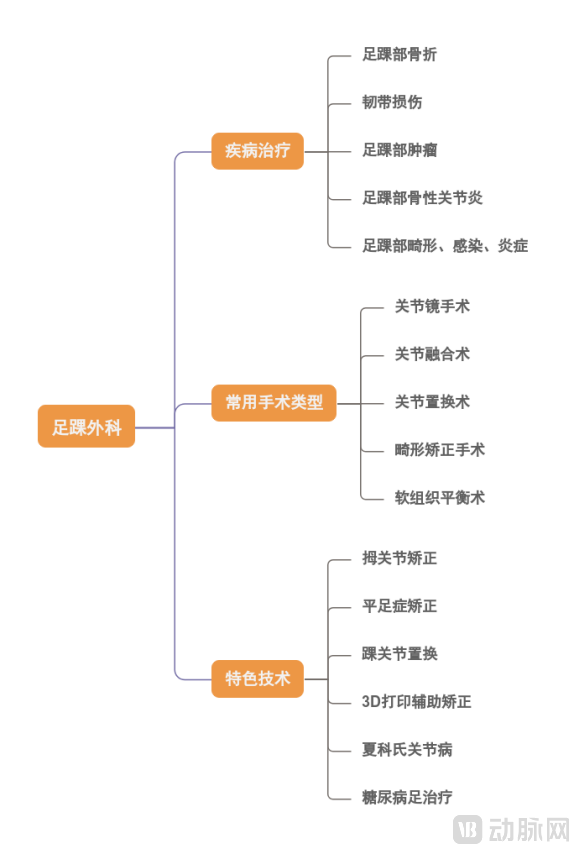
Foot and Ankle Surgery: Diseases and Surgical Procedures
According to “2023 Review: New Academic Advances in Foot and Ankle Trauma,” co-authored by Xu Hailin from Peking University People’s Hospital and Zhang Guolei from Huazhong University of Science and Technology Union Shenzhen Hospital (Nanshan Hospital), foot and ankle surgeons in China are currently focusing more on osteochondral injuries of the metatarsals and ankle fractures in the academic field.
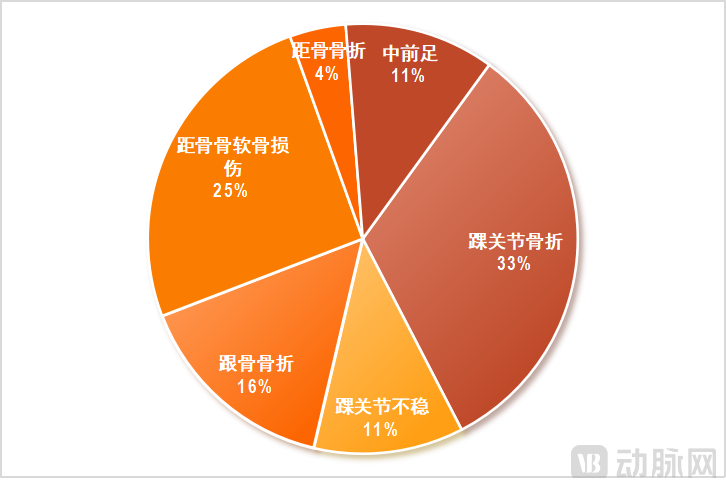
Major Categories and Proportions of Foot and Ankle Surgery Literature in 2023
These two major areas represent the traditional scope of orthopedics. Currently, China faces a shortage of specialized foot and ankle surgeons; in some hospitals, these roles are filled by general orthopedic surgeons. Consequently, they are more proficient in managing bone injuries such as fractures.
There is significant room for improvement in both academic research and clinical practice regarding the diagnosis and treatment of complex congenital and acquired deformities, as well as interdisciplinary foot and ankle disorders. Furthermore, robotic technology and 3D printing have demonstrated substantial application potential in the foot and ankle specialty, offering novel therapeutic approaches ranging from trauma repair to deformity correction.
There is still room for growth in domestically produced foot and ankle surgery-related products.
As public demand for precision medicine intensifies and the prevalence of foot and ankle conditions—such as osteoarthritis, rheumatoid arthritis, diabetic foot ulcers, and sports injuries—continues to rise, the market for foot and ankle devices has also experienced growth.
According to Mordor Intelligence research data, the foot and ankle device market size is estimated to be $4.65 billion in 2024 and is projected to reach $6.66 billion by 2029, with a compound annual growth rate (CAGR) of 7.44% during the forecast period (2024-2029).
Currently, the major players in this field includeZimmer Biomet, Smith & Nephew, Arthrex Inc., and Stryker. In recent years, the FDA has successively approved related products for market launch.
In 2022, the FDA approved the Calcaneal Fracture Plate System and the IM Fibular Implant launched by Medline UNITE Foot & Ankle. With these two plate systems, nearly all fractures requiring open reduction and internal fixation (ORIF) with plates and screws can be managed.
In the same year, Paragon 28’s Ankle Fracture and Soft Tissue Stabilization System was also approved for market launch, representing a product portfolio specifically designed for foot and ankle fractures as well as soft tissue injuries.
In January 2024, the FDA approved an expanded indication for Stryker’s Prophecy surgical planning system, enabling its use in total ankle arthroplasty for patients with end-stage ankle arthritis. Currently, this product is capable of providing comprehensive surgical planning for the entire foot.
There are few companies in China that specialize in foot and ankle surgery.Most participants in this sector are traditional orthopedic device manufacturers.Companies such as Weigao Orthopedics, Double Medical, and Ausmed have received approval for related products, including ankle locking plate systems and ankle intramedullary nail systems. To date, data from the National Medical Products Administration indicates that a total of 30 domestically produced foot and ankle products have been approved.
Notably, in January 2024Yidong MedicineIt unveiled its digital-intelligent integrated solution for foot and ankle surgery. The solution comprises five core modules: functional imaging of the foot and ankle, assessment of ankle joint motor function, evaluation of ankle joint stability, ankle joint rehabilitation, and biomechanical research on the ankle joint, thereby establishing an integrated clinical closed-loop system for digital-intelligent orthopedics.
Currently, the domestic foot and ankle surgery sector is still in a phase of rapid development, with significant potential particularly in the realm of innovative products. As medical imaging, 3D printing, and other technologies continue to advance, more innovative products will emerge in the future to meet the diverse needs of patients.