

Adicet Bio Advances Allogeneic γδ T-Cell Therapy with IND Amendment for ADI-001 in Autoimmune Diseases

Adicet Bio
Developer of Cell Immunotherapy
On October 16, 2024, Adicet Bio (NASDAQ: ACET), a publicly listed company focused on universal γδ T cell therapies for oncology and autoimmune diseases, announced that the FDA had agreed to amend the Investigational New Drug (IND) application submitted by the company to evaluate the efficacy of its pipeline candidate, ADI-001, in Phase 1 trials for idiopathic inflammatory myopathies (IIM) and stiff-person syndrome (SPS). The company plans to begin enrolling patients with IIM and SPS in the first quarter of 2025.
In recent years, the cell and gene therapy (CGT) industry has experienced robust growth. However, the complexity and specificity of CGT products pose significant challenges to the management of manufacturing changes. The production and control of CGT products are often influenced by a range of unique factors, including limited understanding of product quality attributes, limited manufacturing experience, limited availability and diversity of starting materials, small product volumes, complex manufacturing processes, and limited shelf life.
For emerging biotech companies, particularly those developing universal CAR-T therapies with a focus on commercialization advantages, achieving cost reduction (lowering the final product price) and efficiency enhancement (ensuring that the clinical efficacy of universal CAR-T therapies rivals that of autologous CAR-T therapies) necessitates manufacturing changes to their products. Such changes may be driven by the need to improve product quality, expand product supply, or increase production efficiency, which undoubtedly adds complexity to product development. Consequently, on July 13, 2023, the FDA released the draft guidance “Manufacturing Changes and Comparability for Human Cellular and Gene Therapy Products,” providing recommendations for managing and reporting manufacturing changes in CGT products and for conducting comparability studies to assess the impact of such changes on product quality. The guidance states that if previously submitted manufacturing information no longer accurately reflects the current manufacturing status, sponsors must notify the FDA of manufacturing changes through amendments during the IND stage.
The manufacturing changes involved are precisely one of the pain points that a host of emerging universal CAR-T therapies are striving to overcome.
TCRL Antibody Upgrade of Proprietary Assets
Adicet Bio, mentioned earlier, was prominently featured in Fierce Biotech’s 2016 list of the most investable biotechnology companies, just two years after its founding. Why did a newly established company garner such significant attention?
This may be related to its founding background. Aya Jakobovits, one of the founders of Adicet Bio, is the former founder and CEO of Kite Pharma (hereinafter referred to as “Kite”), which listed on the NASDAQ in June 2014 with only 19 employees and once reached a market capitalization of $1.7 billion. She is also a current partner at OrbiMed.
In 2014, the year of Kite’s successful IPO, Adicet Bio was established following its acquisition of the Israeli immunotherapy company Applied Immune Technologies (hereinafter referred to as “AIT”), a firm specializing in antibody-based drug development and target selection that offers therapeutic solutions for cancer, viral infections, and autoimmune diseases. Adicet Bio is committed to developing novel off-the-shelf cellular immunotherapies and has unveiled its core technologies: T-cell receptor-like antibody (TCRL) technology and monoclonal antibody technology. Reportedly, these antibodies can mimic the ability of human T lymphocytes to recognize intracellular antigens presented by the major histocompatibility complex (MHC). Adicet Bio also stated that it is working on the development of third-generation immunotherapy technologies.
Meanwhile, Aya Jakobovits also secured $51 million in Series A financing for the company. According to her, Adicet Bio and AIT are poised for a strong synergy: the latter focuses on T-cell receptor-like antibodies, while the former plans to develop monoclonal antibodies targeting the major histocompatibility complex (MHC). Together, they will address unmet clinical needs in patients with blood cancers, solid tumors, inflammatory conditions, and autoimmune diseases.
The core assets of AIT have become key to Adicet Bio’s expansion into other types of immunotherapy technologies. AIT focuses on the development of T-cell receptor-like antibodies (TCRLs) that target intracellularly derived peptides, mimicking the ability of human T lymphocytes to recognize intracellular antigens presented by major histocompatibility complex (MHC) molecules. This enables the immune system to rapidly eliminate identified diseased cells in the body, thereby preventing their progression into cancer or autoimmune diseases.
Furthermore, AIT’s focus on T-cell receptor-like antibodies serves as a complement to Adicet Bio’s technology. Aya Jakobovits believes that the most critical aspect of T-cell research is ensuring that immune cells can specifically recognize and eliminate tumor cells while sparing normal tissues, and AIT’s technology precisely enables Adicet Bio to achieve this.
Aya Jakobovits has stated that to obtain tumor-specific targets, it is essential to access the intracellular pool of target peptides—namely, those transported to and expressed on the cell surface in complex with MHC molecules. AIT has been at the forefront of technology for producing monoclonal antibodies that specifically bind to cell-surface peptide-MHC complexes. Furthermore, since technologies targeting peptide-MHC complexes are not limited to cancer therapy, they can also help Adicet Bio develop and optimize therapeutic approaches for autoimmune diseases.
The TCRL platform lays the foundation for Adicet Bio’s subsequent key pipeline assets. This platform enables the generation of CARs capable of recognizing tumor antigens within tumor cells, also known as intracellular proteins. These intracellular proteins are processed by cells and presented by antigen-presenting molecules encoded by the major histocompatibility complex (MHC). The ability to selectively bind to specific tumor antigens derived from intracellular proteins represents a key advantage of immune cell therapy, given the scarcity of tumor-specific surface antigens on solid tumors.
Adicet Bio successfully went public in 2020. As of October 24, 2024, the company had raised nearly $400 million.
Core Competitive Edge: γδT Cell Platform
Adicet Bio’s true trump card in off-the-shelf cell therapy was officially unveiled in 2018. At that time, Adicet Bio underwent a leadership change and explicitly stated in its official announcement that the company would focus on providing γδ T cells (gamma delta T cells) engineered with chimeric antigen receptors and chimeric adapters to enhance selective tumor targeting, promote innate and adaptive anti-tumor immune responses, and improve the persistence of durable clinical activity in patients.
γδ T cells are T cells that perform innate immune functions, with their TCR composed of γ and δ chains. γδ T cells are a type of immune cell capable of killing cancer cells and cancer stem cells, as well as recognizing tumor antigens.
The peptide chains that constitute the T-cell receptor (TCR) include four types: α, β, γ, and δ. The TCR on the surface of γδ T cells is a heterodimer composed of a γ chain and a δ chain (TCRγδ). The extracellular domain structure of the TCRγδ molecule resembles that of an immunoglobulin, with the variable region located at the end distal to the cell membrane and the constant region proximal to the cell membrane. TCRγδ is encoded by the γ gene and the δ gene, respectively.
Most γδ T cells are CD4-CD8-, meaning they do not express CD4 and CD8 molecules on their cell surface; however, a small subset can express either CD4 or CD8, enabling them to participate in immune regulation and immune responses. In healthy adults, γδ T cells account for 1%–5% of peripheral blood T cells. They are primarily distributed in mucosal tissues and subcutaneous tissues, such as the gastrointestinal tract, respiratory tract, and urogenital tract, and constitute one of the major components of intraepidermal lymphocytes and intraepithelial lymphocytes (IELs) in mucosal tissues.
Currently, Adicet Bio is engineering γδ T cells to express chimeric antigen receptors (CARs) and T cell receptors (TCRs) targeting tumor-specific cell surface or intracellular antigens, thereby enabling precise recognition and killing of tumor cells. Adicet Bio plans to generate multiple clinical product candidates for various hematologic and solid tumor cancers, as well as other diseases.
γδT cells also represent a new generation of universal cell therapies. The unique properties of γδT cells combine adaptive immunity (mediated by the γδ TCR) and innate immunity (similar to NK cells), enabling them to specifically recognize and eliminate tumor cells while sparing normal, healthy cells. Unlike αβT cells, γδT cells exert their tumor-killing functions in an MHC-independent manner, allowing their use in allogeneic settings without causing graft-versus-host disease (GvHD). Furthermore, γδT cells naturally home to various tissues for immune surveillance, giving them greater potential than αβT cells to eradicate solid tumors within tissues. Adicet Bio has demonstrated the cytotoxicity and anti-tumor activity of γδT cells in vitro and in mouse models.
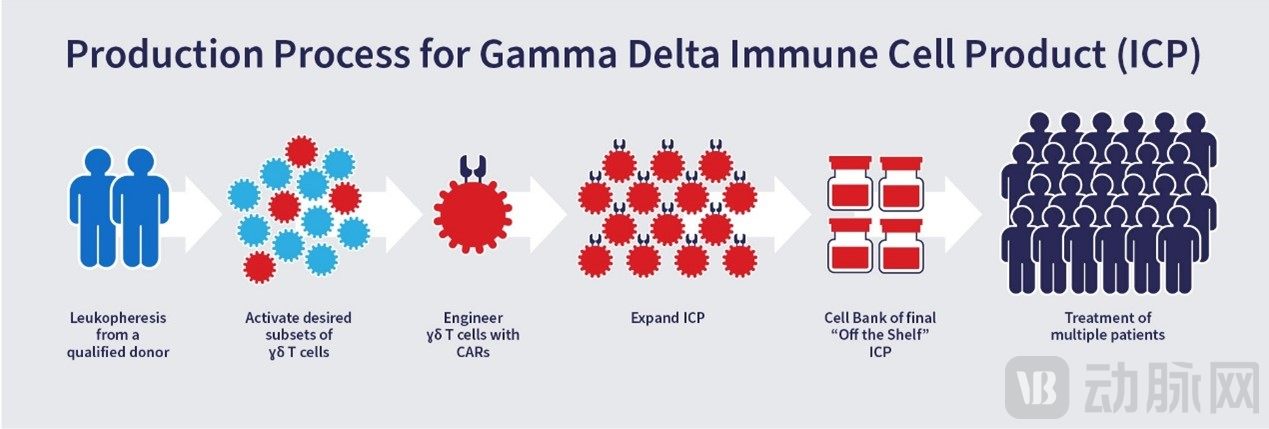
However, to date, the use of γδ T cells remains limited because they constitute only a small fraction (1–5%) of peripheral blood mononuclear cells. To address this, Adicet Bio has independently developed a manufacturing process to activate and expand distinct subsets of γδ T cells, yielding quantities sufficient for clinical application. Furthermore, the company has developed a proprietary cell platform process for the activation, engineering, and expansion of γδ T cells.
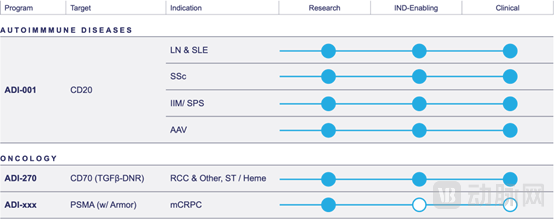
Adicet Bio’s lead candidate, ADI-001, is an investigational allogeneic γδ T cell therapy that targets B cells via an anti-CD20 CAR. ADI-001 is primarily indicated for B cell-mediated autoimmune diseases and relapsed or refractory B-cell non-Hodgkin lymphoma (NHL).
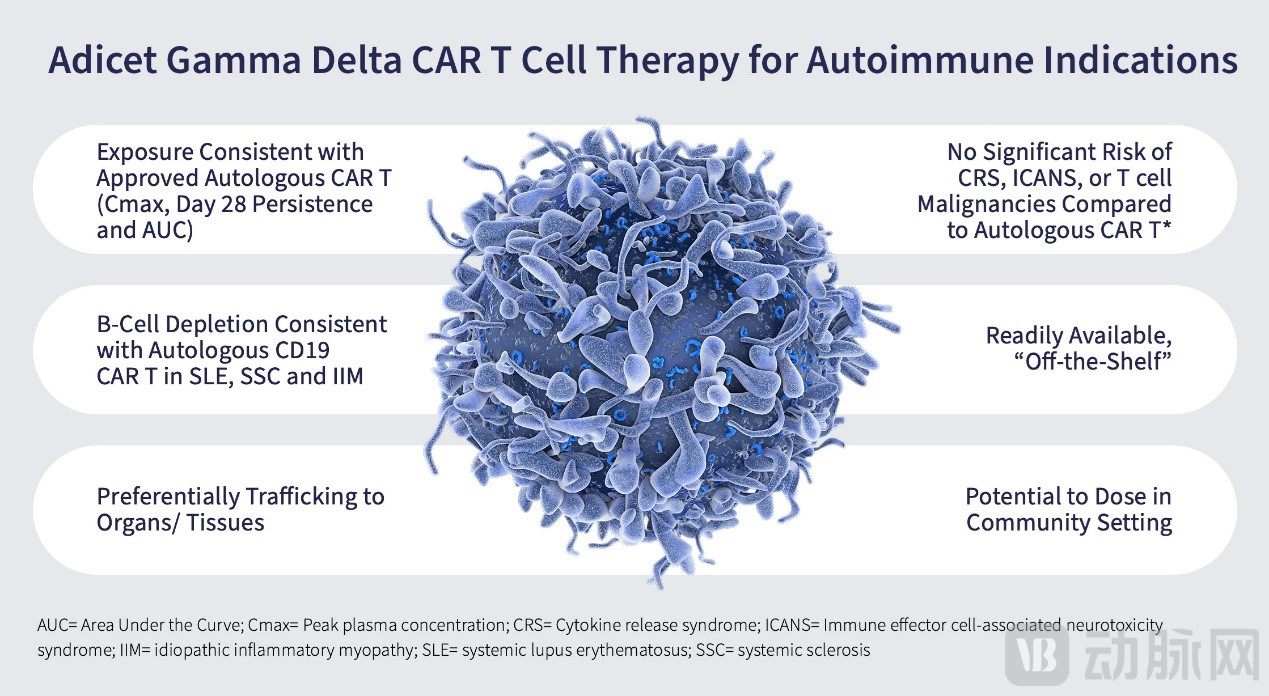
A key advantage of γδ1 T cells is their natural ability to home to or traffic into tissues, enabling precise targeting of the disease source and reducing the proliferation of aberrant B cells in peripheral tissues. This represents a theoretically ideal outcome for many patients with autoimmune diseases characterized by organ damage.
In terms of safety, ADI-001 has demonstrated favorable tolerability in clinical studies, with no significant incidence of CRS (cytokine release syndrome) or ICANS (immune effector cell-associated neurotoxicity syndrome), and a lower risk of T-cell malignancies compared to autologous CAR-T cell therapies.
Notably, on December 6, 2021, Adicet Bio announced positive interim data from a Phase 1 dose-escalation clinical trial of ADI-001, an allogeneic, “off-the-shelf” CD20-targeted CAR γδ-T cell therapy. The results demonstrated that ADI-001 achieved an objective response rate (ORR) of 75% and a complete response (CR) rate of 50% in patients with B-cell non-Hodgkin lymphoma. Furthermore, the therapy exhibited a favorable tolerability profile.
In terms of safety, ADI-001 demonstrated good tolerability. No dose-limiting toxicities, graft-versus-host disease (GvHD), immune effector cell-associated neurotoxicity syndrome (ICANS), or grade ≥3 cytokine release syndrome (CRS) were reported, indicating that ADI-001 has a wide potential therapeutic window.
Furthermore, in patients with advanced cancer, ADI-001 as a monotherapy initiated at an initial dose level of 30 million CAR-T cells has demonstrated promising early complete responses.
At the most recent 65th American Society of Hematology (ASH) Annual Meeting, Adicet Bio further presented compelling Phase 1 clinical data for ADI-001.
ADI-001 demonstrated a robust exposure profile, with positive correlations observed between exposure, pharmacodynamic (PD) markers, and clinical response, as detailed below:
At dose level 3 (DL3) and dose level 4 (DL4), the maximum plasma concentration (Cmax) and time to maximum concentration (Tmax) of ADI-001 met or exceeded the prescribing information standards for approved autologous CD19 CAR-T therapies.
As the dose level increases, Cmax and the area under the plasma concentration-time curve (AUC) also increase correspondingly, and these parameters are closely correlated with patients’ clinical responses.
ADI-001 stimulation and expansion correlated with peak levels of CAR+ cells and higher production of polyfunctional cytokines, particularly in patients achieving the best overall responses (complete or partial response).
Elevated levels of endogenous cytokines, including stem cell factor and IL-15, may have promoted the expansion of ADI-001 and enhanced clinical responses.
Furthermore, no correlation was observed between the level of exposure to or clinical response to ADI-001 and the degree of HLA allele sharing between patients and ADI-001.
Leading from Phase I
Based on historical clinical data, there remains a notable gap between universal CAR-T and autologous CAR-T therapies in terms of both efficacy and durability. Constrained by immune rejection responses, universal CAR-T can achieve lower costs but struggles to deliver high efficacy, reflecting a stark reality.
Therefore, for universal CAR-T to make a comeback in this competitive landscape and even surpass autologous CAR-T therapies in the future, it cannot rely solely on low-price competition; instead, it must focus on enhancing efficacy and durability. After all, as manufacturing processes mature, price reductions for autologous CAR-T therapies will become inevitable. This explains why the recent disclosure of the maximum plasma concentration (Cmax) and time to reach maximum concentration (Tmax) for ADI-001 is highly significant.
Adicet Bio is actively developing γδ T cell therapies, and Chinese companies such as Legend Biotech and Boshengji have also launched pipelines in this area. Notably, Legend Biotech’s manufacturing process can generate differentiated CAR-NK γδ T cells. Its pipeline candidate LB2103, a BCMA-targeted CAR-γδ T cell therapy developed by Legend Biotech, demonstrates significantly less cytokine release than CAR-T therapies while achieving superior efficacy, holding promise as a more effective and safer cellular therapy for multiple myeloma.
Based on the allogeneic UCAR-61T platform, Gracell Biotechnologies has developed five γδ T-cell therapeutics targeting CD19, B7-H3, BCMA, and other antigens.
Overall, γδT cell therapies in China remain in the preclinical stage. Globally, registered clinical trials for γδT cell therapies are predominantly in Phase I, with Adicet Bio positioned in the first tier of this competitive landscape. However, whether Adicet Bio will emerge as the ultimate winner depends on its ability to overcome multiple challenges, including demonstrating efficacy and achieving scalable manufacturing. From a broader perspective, the cost-reduction trend for autologous CAR-T therapies will become more pronounced as technology matures, while a head-to-head trial comparing autologous and allogeneic CAR-T therapies still appears to be lacking. Furthermore, companies with universal CAR-T products that have successfully entered clinical trials will face even more intense competition.