

Huahao Zhongtian Biopharma, the First Synthetic Biology-Driven Oncology Company in China, Surges 34.38% on HKEX Debut

Biostar
Developer of Novel Anti-Cancer Drugs
Today, the Hong Kong stock market welcomed its first listed company in pharmaceutical synthetic biology.
Biostar, a biopharmaceutical company driven by synthetic biology technologies and dedicated to the R&D of innovative oncology drugs, rang the bell for its listing on the Hong Kong Stock Exchange.
Biostar's IPO price was HK$16 per share,Net proceeds from the global offering amounted to approximately HK$196 million,Opening price: HK$21.5, up 34.38%, market capitalization: HK$7.529 billion.As of press time,Biostar's share price stood at HK$23.3, surging over 40%.
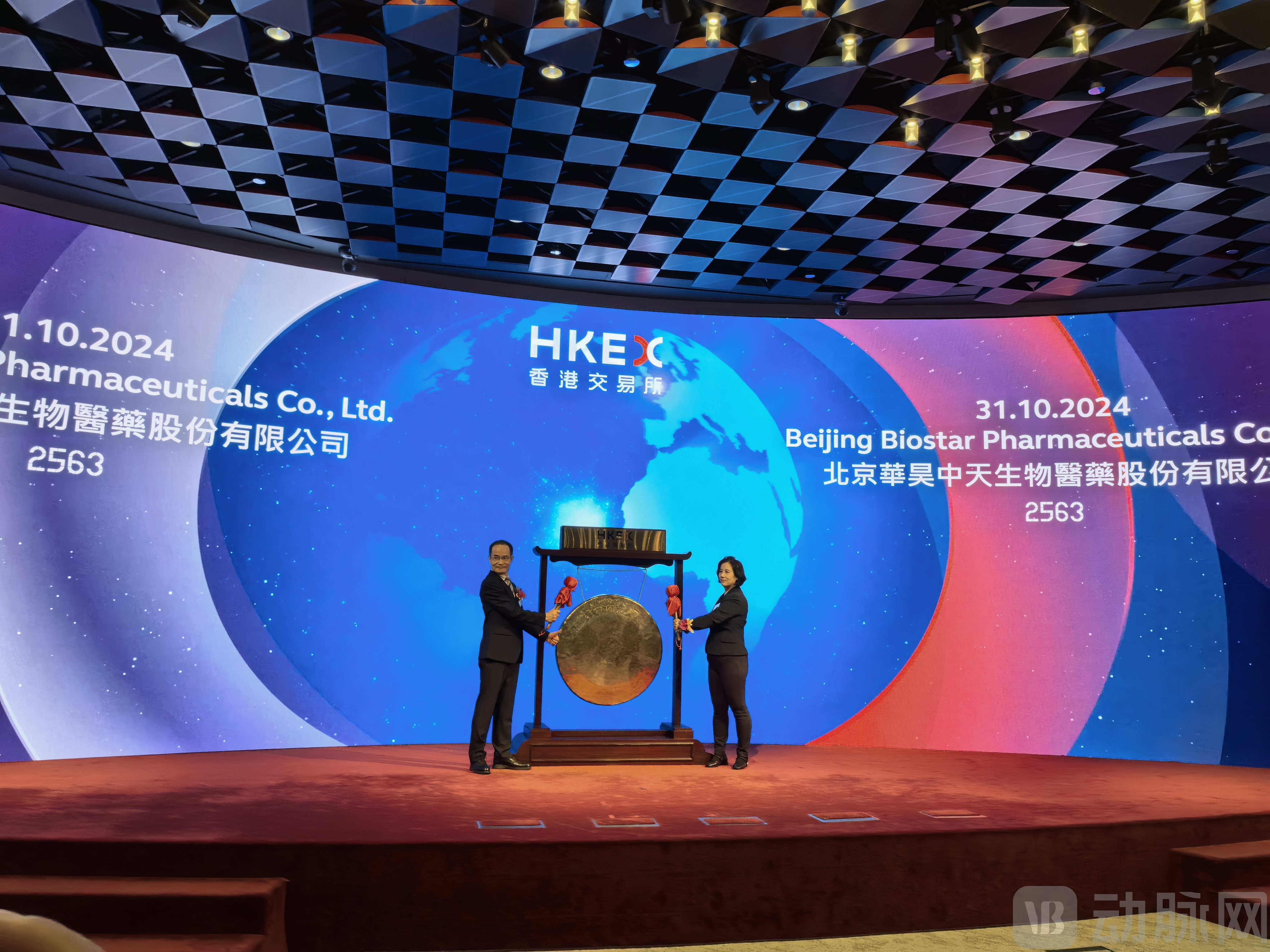
Biostar, founded in 2002, is dedicated to developing innovative anti-tumor drugs using synthetic biology technologies. Since its establishment, Biostar has successfully developed three core technology platforms focused on the R&D of new drugs derived from microbial metabolites, and boasts one core commercial product, Utidelone Injection, along with 19 projects in the pipeline.
Utidelone Injection was approved for marketing by the National Medical Products Administration (NMPA) in 2021 for the treatment of recurrent or metastatic advanced breast cancer, and it was included in the National Reimbursement Drug List in March 2023. As an innovative microtubule inhibitor, Utidelone has a mechanism of action similar to that of taxanes and is currently the only innovative chemotherapy drug developed using synthetic biology technology that has been approved for marketing.
In 2024, following the listings of Hong Kong-listed companies dubbed the “first domestic autoimmune stock,” the “first AI drug discovery stock,” and the “first antibody-cytokine stock,” Biostar went public as the “first pharmaceutical synthetic biology stock,” directly targeting the currently hot synthetic biology sector and leveraging it as a cornerstone for innovative anticancer drug development. This marks a significant step forward in the commercialization of synthetic biology in the pharmaceutical industry, representing not only a milestone for the company’s development but also a pivotal moment for synthetic biology in the medical field.
Currently, synthetic biology is driving a transformation in the pharmaceutical sector. In addition to paving the way for novel therapies, synthetic biology technologies are accelerating drug discovery and development, enhancing cost-efficiency in manufacturing processes, and promoting greener, more sustainable production practices.
Since its inception, Biostar has been committed to drug research and development through synthetic biology technology. Judging from the background of its founding team, Biostar possesses dual expertise in both synthetic biology and innovative drug R&D.
Dr. Tang Li, the Company’s Founder, Chairman, Chief Scientist, and Chief Marketing Officer, has long been engaged in the development of natural microbial small-molecule drugs. She has achieved breakthroughs in key technologies such as the biosynthesis of natural small-molecule drugs and the fermentative production of specialized resource microorganisms, established an advanced combinatorial biosynthesis technology platform, and participated in and led the successful development of multiple innovative anti-tumor drugs.
Dr. Qiu Rongguo, Co-founder, Vice Chairman, and General Manager of Biostar, has long been engaged in research on the mechanisms of cellular carcinogenesis, the discovery of novel targets for anti-tumor drugs, and the development of new pharmaceuticals. He has participated in and led the successful development of multiple innovative anti-tumor drugs and has previously served as a scientist and executive at various biotechnology and pharmaceutical companies in China and the United States.
Meanwhile, Biostar’s R&D team comprises 55 members. Most of its key R&D personnel possess strong educational backgrounds, along with over 10 years of experience in the pharmaceutical industry and extensive expertise in managing innovative drug development projects.
Over its 22 years of development, Biostar has attracted investment from numerous prominent firms, including Matrix Partners China and CCB International. Since its inception, the company has completed five rounds of financing: RMB 60 million in Series A (2013), RMB 95 million in Series B (2015), RMB 100 million in Series C (2017), RMB 200 million in Series D (2019), and RMB 700 million in Series E (2020). Following the Series E round, Biostar’s valuation reached RMB 4.5 billion.
To advance the goal of new drug development through synthetic biology, Biostar has established and continues to refine three key technology platforms based on synthetic biology:
Combinatorial Biosynthesis Technology Platform: By directionally engineering biosynthetic gene clusters or modifying microbial metabolic pathways, this platform enables the design and manufacture of “unnatural natural products.” It facilitates the discovery of superior drug candidates with enhanced bioactivity and reduced toxicity, thereby supporting the company’s continuous invention of innovative compounds with improved druggability and industrialization potential, as well as the development of novel therapies. This lays a solid foundation for the sustained development of microbial small-molecule drugs.
Microbial Fermentation Production Technology Platform: Effectively facilitates the company's transition from process development and small-scale production to pilot-scale and industrial manufacturing, providing reliable assurance for the smooth scale-up of pipeline products from pilot stage to commercial production. It offers both cost-effectiveness and environmental benefits.
Microbial Pharmaceutical Formulation Development Platform: Leveraging differentiated formulation design, preparation methods, manufacturing processes, and Critical Quality Attribute (CQA) control to develop proprietary formulations of microbial small molecules; enhancing drug convenience, safety, and efficacy through advanced formulation technologies, improving the druggability of microbial small-molecule compounds, and enabling product iteration and upgrades.
It can be seen that,The three major platforms play distinct roles in the development of products or product candidates. Upon integration, they form a powerful tripartite model encompassing “design, manufacturing, and development,” granting Biostar competitive advantages in sustainable new drug discovery, rapid industrialization, and continuous extension of the lifecycle of new drugs.
With its support,Biostar successfully developed its first commercialized product—Utidelone Injection.
Synthetic biology faces significant challenges in scaled-up and industrialized production, with many projects remaining at the experimental or pilot-scale stages. However, Biostar has broken through the bottlenecks spanning from laboratory research to pilot-scale production and ultimately to industrialization. It is reported that as early as 2007, the company successfully developed the active pharmaceutical ingredient (API) of epothilone B (Utidelone) using its synthetic biology technology platform. By leveraging green manufacturing and microbial cell factories, Biostar achieved innovations in chemical drug production that are difficult to realize through traditional chemical synthesis methods. This accomplishment underscores the successful development of Utidelone and reflects the core competitiveness of the company’s technology platform.
In March 2021, Utidelone Injection, the first core product of Biostar, received marketing approval from the National Medical Products Administration (NMPA) for the treatment of patients with recurrent or metastatic breast cancer who have received at least one prior chemotherapy regimen containing an anthracycline or a taxane, in combination with capecitabine. The drug was also included in the National Reimbursement Drug List (2022 Edition) in 2023 for the treatment of recurrent or metastatic breast cancer in patients who have received at least one prior chemotherapy regimen, without restriction to specific subtypes of advanced breast cancer.
Utidelone Injection is a next-generation microtubule inhibitor produced via microbial fermentation.Microtubule-inhibiting chemotherapeutic agents exert antitumor effects by inhibiting mitosis. Their primary mechanism involves either suppressing tubulin polymerization (microtubule-destabilizing agents) or maintaining tubulin in a persistently polymerized and stable state (microtubule-stabilizing agents), thereby effectively inhibiting mitosis, arresting the cell cycle, and ultimately inducing apoptosis.
Based on preclinical and clinical studies, utidelone has demonstrated multiple advantages. In terms of efficacy, a Phase III clinical trial in patients with advanced breast cancer showed that utidelone injection combined with capecitabine achieved significantly better therapeutic outcomes compared to capecitabine monotherapy, particularly by translating improvements in other efficacy endpoints into benefits and prolongation of overall survival (OS). Regarding safety, clinical studies have indicated that adverse drug reactions associated with utidelone are manageable, whether administered as monotherapy or in combination regimens, with no significant hematologic toxicity. Furthermore, utidelone can penetrate the blood-brain barrier. While most drug molecules struggle to cross this barrier, thereby limiting the treatment of brain metastases, utidelone demonstrates favorable efficacy and holds potential for preventing brain metastases. Additionally, the drug exhibits broad-spectrum antitumor activity, which helps address clinical drug resistance, and possesses good bioavailability, making it suitable for the development of various dosage forms.
In today’s fiercely competitive domestic landscape for innovative drugs, Biostar is focusing on the broad chemotherapy market and has embarked on its commercialization journey with the launch of its first innovative chemotherapeutic agent, which is expected to provide the company with a certain degree of self-sustaining revenue generation capability.
According to a report by Zhiyan Qianzhan Industry Research Institute, the market size of China’s chemotherapy drug industry was RMB 161.457 billion in 2019 and reached RMB 269.884 billion in 2023. As the number of cancer patients continues to rise and cancer is increasingly regarded as a chronic disease requiring long-term treatment, the role of chemotherapy as a cornerstone of cancer therapy has been further consolidated. With the emergence of innovative chemotherapy drugs and formulations (particularly oral dosage forms), along with the use of chemotherapy in combination with other pharmaceutical agents, the chemotherapy drug market continues to expand.
However, in practice, the innovation of chemotherapy drugs is highly challenging. Due to the lack of specific targets, ensuring effective killing of cancer cells while minimizing damage to normal cells makes the molecular structure design of chemotherapy drugs particularly complex and difficult. This results in long development cycles, with few new molecular structures of chemotherapy drugs approved for market launch. Taking microtubule inhibitors as an example, from 2010 until the approval of Ubtebron in 2021, no new molecular microtubule inhibitors were approved globally for over a decade.
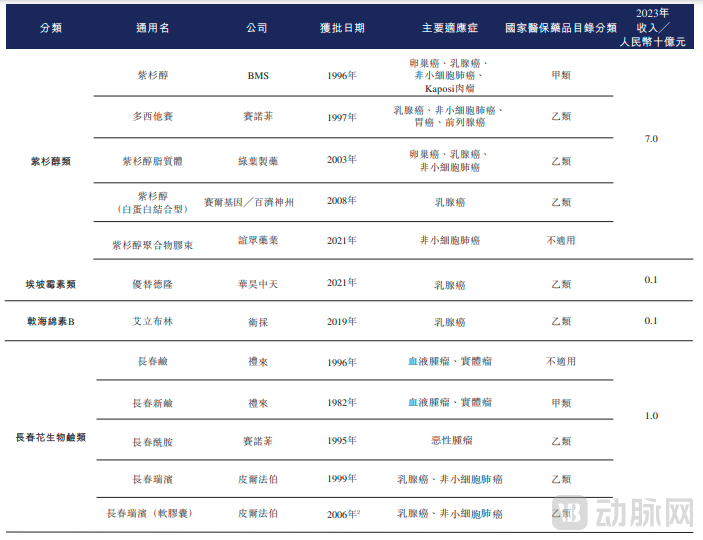
Microtubule Inhibitor Drugs Approved for Marketing in China, Source: Biostar Prospectus
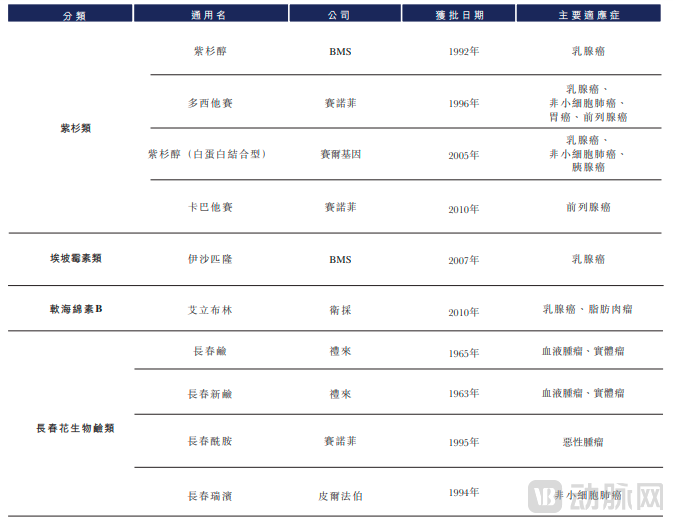
Microtubule Inhibitor Drugs Approved for Marketing in the United States, Source: Biostar Prospectus
The approval and market launch of utidelone injection represent multiple innovative breakthroughs. This drug is not only the world’s first and only novel chemotherapeutic agent developed and commercialized using synthetic biology technology, but also the only new molecular tubulin inhibitor approved for marketing in over a decade.Amid the current dominance of taxanes in the chemotherapy market, Utidelone, a novel microtubule inhibitor independently developed by a Chinese enterprise, has ended the nearly two-decade-long absence of domestically developed, Class I innovative chemotherapy drugs in China.
Utidelone, as the company’s core product, has been on the market for three years but has not yet helped the company escape losses. The primary reason is closely tied to national medical insurance price negotiations. It is reported that when Utidelone Injection, the company’s flagship product, was approved for launch in 2021, its average selling price was RMB 2,388.71 per vial. After being included in the National Reimbursement Drug List in 2022, the negotiated price officially took effect on March 1, 2023, resulting in a price reduction of more than 60% for this product.
Benefiting from the volume expansion under medical insurance coverage, the sales of this product have correspondingly increased. According to the prospectus, the sales volumes of Utidelone Injection were 29,750 vials, 18,483 vials, 90,021 vials, and 38,577 vials in 2021, 2022, 2023, and January–May 2024, respectively. Although the peak sales of Utidelone Injection have not yet been reached, it has already demonstrated its development potential.
Nevertheless, Biostar has chosen to take the initiative by developing new formulations, expanding indications, and establishing new pipelines. With 19 pipelines currently under development, the company is seeking its next growth driver.
With the market launch and inclusion in the National Reimbursement Drug List (NRDL) of utidelone, its sales performance and application prospects have drawn significant attention. To expand the market for utidelone, Biostar has established an industrialized production center for the drug in the Chengdu High-Tech Zone, with an annual production capacity of 500,000 vials. Since being included in the NRDL, the drug has achieved sales in more than 500 hospitals and gained access to the “dual-channel” reimbursement mechanism in 31 provinces and municipalities, generating substantial sales revenue.
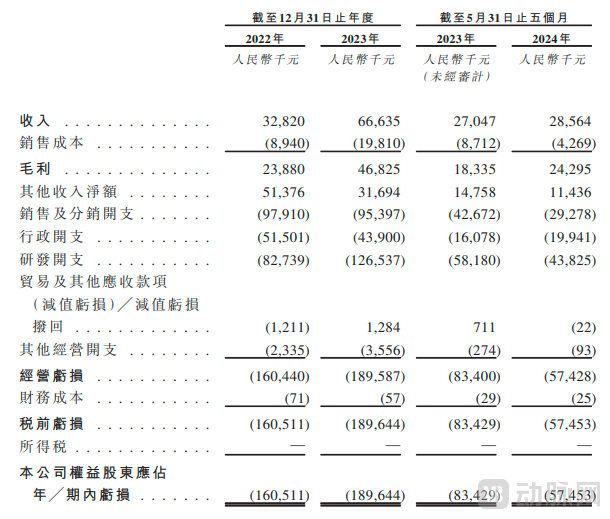
However, according to the prospectus, although Biostar has one commercialized product, it has not yet achieved profitability as a biopharmaceutical company. The prospectus shows that Biostar’s revenues in 2022 and 2023 were RMB 32.82 million and RMB 66.64 million, respectively, with net losses of RMB 161 million and RMB 190 million during the same periods. In the first five months of 2024, the company’s revenue reached RMB 28.56 million, representing a year-on-year increase of 5.58%, while its operating loss amounted to RMB 57.43 million, narrowing by 31.14% compared to the same period last year.
As mentioned above, utidelone exhibits favorable bioavailability. Based on this,Biostar is also committed to developing a series of new formulations, particularly utidelone capsules., to enhance efficacy, safety, adherence, and accessibility, as well as to enable broader combination use with other oncology drugs, thereby facilitating long-term treatment and delivering sustained benefits to patients.
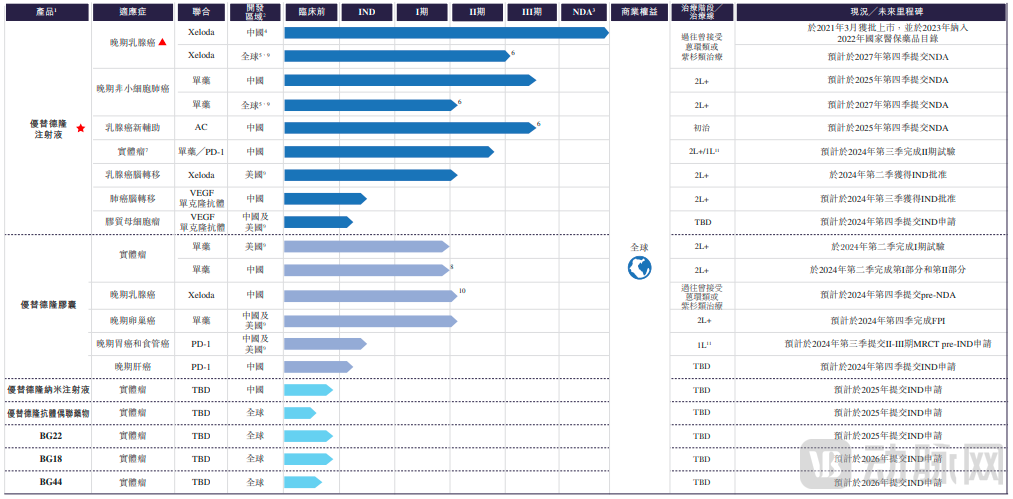
Huahao Zhongtian’s Pipeline in Development, Source: Huahao Zhongtian Prospectus
Currently, utidelone capsules are undergoing pivotal clinical trials in China. It is reported that, unlike taxanes which are difficult to develop into oral formulations, utidelone is less susceptible to efflux mediated by P-glycoprotein, thereby achieving higher bioavailability. Biostar plans to submit a pre-NDA application to the National Medical Products Administration (NMPA) in the fourth quarter of 2024 for utidelone capsules in combination with capecitabine for the treatment of advanced breast cancer. The company also plans to submit a pre-IND application in the second half of 2024 to both the NMPA and the U.S. Food and Drug Administration (FDA) for a Phase II–III multi-regional clinical trial (MRCT) of utidelone capsules in combination with PD-1 inhibitors for the treatment of advanced gastric cancer. In the United States, Biostar has obtained Orphan Drug Designation (ODD) approval from the FDA for utidelone capsules in the treatment of advanced gastric cancer. Additionally, the company plans to submit an IND application in China for utidelone capsules in the treatment of liver cancer, further expanding its therapeutic indications.
In addition to the capsule formulation, Biostar is actively developing a nano-formulation of utidelone and aims to enter the antibody-drug conjugate (ADC) sector. An utidelone-based ADC is already in the R&D pipeline, with an Investigational New Drug (IND) application expected to be submitted in 2025.
In terms of indication expansion, the ongoing clinical trials and projects for Biostar’s core products and product candidates cover a variety of cancers, including indications for advanced breast cancer, advanced non-small cell lung cancer (NSCLC), neoadjuvant therapy for breast cancer, gastric cancer, esophageal cancer, breast cancer brain metastases, lung cancer brain metastases, glioblastoma, and other solid tumors.
In addition to driving market expansion for utidelone through formulation innovations, Biostar has also balanced its focus with the R&D of innovative pipeline assets.Leveraging its synthetic biology technology platform, Biostar has independently developed three candidate products with distinct targets and mechanisms of action, as well as the active pharmaceutical ingredients BG22, BG18, and BG44.
Among them, BG22 is a non-ribosomal peptide compound with potent antitumor activity, which exerts its effects by inhibiting DNA replication and transcription, suppressing hypoxia-inducible factor 1α (HIF-1α) signaling, and targeting cancer stem cells. BG18 is a novel derivative of natural compounds and acts as a protein phosphatase inhibitor with highly specific inhibitory activity. BG44 is a derivative of ubrotespin produced using genetically engineered bacteria.
As Biostar continues to deepen its expertise and drive innovation in the field of synthetic biology, the company has achieved significant success in the market for innovative chemotherapy drugs. Moving forward, it will continue to leverage its robust technology platform and R&D capabilities to bring more innovative therapies to market, offering new treatment options for cancer patients worldwide.
References:
1 Biostar Prospectus
2. One Chart to Understand Biostar’s IPO
3. Lukewarm IPO: Why Is Biostar Pharma-B (02563) Out of Favor with the Market?