

Xeno Intelligence Medical: Pioneering AI-Powered Spectral Solutions for Tumor Pathology Diagnosis
In the process of tumor diagnosis, pathological diagnosis is a crucial step. It not only determines the timing of intervention but also directly influences the selection of treatment strategies and patient prognosis. Continuous advancements in the medical field are driving the development of pathological diagnostic technologies. From traditional histopathological sections to modern molecular biology testing, each technological breakthrough brings new hope to patients.
However, the more accurate and earlier identification of tumors has long been a goal pursued by researchers. Today, with the deep integration of medicine and engineering, the field of pathological diagnosis is witnessing new breakthroughs.XiNuo Intelligent Medicine(hereinafter referred to as: Xinuo Intelligence) has been committed to integrating since its establishmentSpectral Analysis TechnologyandAI Algorithmscombining them to propose an innovative “smart solution” for tumor diagnosis.
Decades of Dedicated Research: Proposing Spectral Quantitative Characteristics of Tumor Lesions
Since the advent of medical imaging technology in the early 20th century, the era of tumor diagnosis has been ushered in. To date, commonly used clinical diagnostic methods include imaging, tumor marker testing, and cytological diagnosis.
Medical imaging is typically the first step in tumor diagnosis. Currently, medical imaging technologies are evolving toward greater precision and clarity, giving rise to a variety of imaging modalities, including X-ray imaging, CT scans, MRI, and PET scans. While these advanced imaging tools can visualize internal anatomical structures and abnormal masses, they cannot definitively determine whether these masses are tumors, nor can they fully ascertain the exact nature and severity of the tumors.
Therefore, when imaging results suggest a possible tumor, patients undergo tumor marker testing or tissue biopsy to further determine whether they have cancer. Tumor marker testing primarily predicts the presence of tumors by analyzing specific proteins or other biomarkers in bodily fluids such as blood and urine. However, this method is not foolproof; it may yield false-negative and false-positive results and has limited predictive accuracy for tumors.
Although tissue biopsy is currently widely regarded as the gold standard for tumor diagnosis, this process typically requires obtaining samples through needle aspiration or surgery. This invasive approach wouldCausing discomfort to patients, which may even provoke resistance from patients. Meanwhile, interventional procedures are cumbersome, and the testing process takes approximately one week.
Furthermore, interventional therapy can only confirm the presence of a single abnormal mass; this approachChallenges in Conducting Large-Scale ScreeningFor patients who may have multiple concurrent cancers, this approach undoubtedly adds extra discomfort and burden. Overall, although existing diagnostic methods are highly effective in certain scenarios, they still face several challenges, including high rates of false negatives and false positives, difficulties in conducting large-scale screening, and prolonged processing times.
Former Director of the Hubei Provincial Center for Spectral Imaging TechnologyProfessor Zeng LiboHe is one of the earliest experts in China to develop an online image processing upgrade system for scanning electron microscopy. He has organized multiple national-level scientific and technological projects, including “Development of Spectral Imaging Analysis Systems” and “Development of Fourier Transform Infrared Spectrometers and Laser Raman Spectrometers.”
Professor Zeng Libo discovered during the course of his research thatCharacteristic Relationship Between Tumors and Spectra. To address the current clinical pain points in cancer diagnosis, he co-founded Xinuo Intelligence together with interdisciplinary talents from AI algorithm research teams and Fudan University’s Industrial Technology Research Institute, committing to advance cancer diagnosis through “AI + spectroscopy” technology.
II. “Spectroscopy + AI” Working in Tandem to Enhance Tumor Diagnosis Efficiency
In fact, combining spectroscopy with cancer screening is not a new concept. As early as the early 1990s, researchers attempted to leverage the Raman scattering effect to detect molecular vibrational information in biological tissues, thereby enabling the identification and classification of tumors.
However, there are still many challenges in the development of this technology. First,Raman scattering signals are typically weak., particularly in biological samples, where this issue is more pronounced. The intrinsic fluorescence of biological samples may interfere with Raman signals, making signal extraction and analysis challenging. Furthermore, biological samples are typically highly complex and heterogeneous, containing a variety of molecules and compounds. This characteristic inevitably increases the likelihood that Raman spectral features from different cells and tissues will be similar, thereby complicating the extraction of useful information during analysis. In clinical practice, this significantly compromises the accuracy and comprehensiveness of tumor diagnosis.
Secondly, due to differences in sample preparation protocols, spectral instrument settings, and data processing and analysis methods,Raman scattering signals may be subject to bias., thereby yielding significantly different spectral results. This will also affect physicians’ discrimination of tumor types and even their developmental status.
Therefore, although Raman spectroscopy has shown broad application prospects in the field of tumor diagnosis, there are few teams that have truly applied and successfully translated this technology.
Leveraging extensive research experience, Xinuo Intelligence’s R&D team identified the spectral quantitative characteristics of tumor lesions and developed a complete suite of hardware facilities for spectral testing technology, thereby achievingA Closed Loop from Preparation Process Design to Hardware Specifications, significantly improving the accuracy of tumor diagnosis through spectroscopic techniques.
At the same time, new problems have emerged. The heterogeneity of tumor tissues and potential cancer infiltration increase the complexity of spectral data collected from these tissues. Therefore, it is necessary to collect a large amount of spectral data from each tissue sample. However, if traditional statistical methods are used, it is difficult to ensure that no errors occur during the analysis process. In addition, there are many types of tumors, and comparing them one by one is not onlyHigh Workload and High Cost, and may also delay patients from receiving optimal treatment at the right time.
To address this issue, Xinuo's R&D team has alreadyAI Large Model TechnologyIntegrated into the field of pathological diagnosis, we have developed products that significantly enhance diagnostic quality and efficiency, with a focus on general-purpose multi-disease models for pathology. Currently, the team is leveraging spectral analysis and AI algorithms,A system has been established that can perform pathological section analysis on all body partsModel for Screening Malignant Tumor Cells, forming a technological moat unique to Xino Intelligence.
“To facilitate understanding, Fang Run, CEO of Xinuo Intelligent Medicine, used the concept of autonomous driving to draw an analogy between these two technologies: ‘Spectral technology is akin to LiDAR solutions, while AI corresponds to camera-based vision systems. These two technologies complement each other, thereby significantly improving diagnostic accuracy.’”
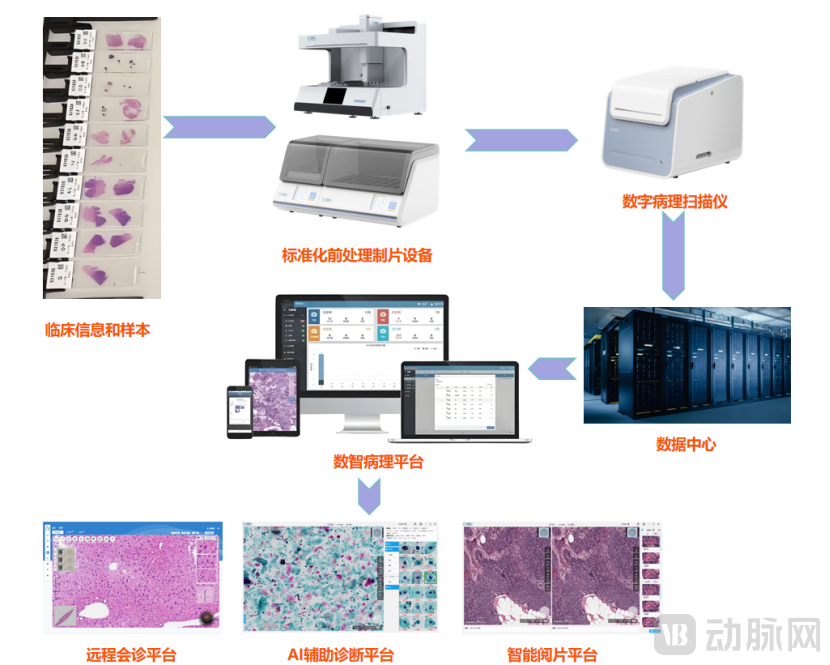 Xinuo Intelligent Complete Cell Pathology Solution
Xinuo Cervical Cancer Diagnostic Product Approved
Currently, the Xinuo Intelligence teamAlreadyMastered the universal model technology for multi-cancer tumors, and in the course of commercialization, Sinocell was the first to prioritize cervical cancer as its strategic focus.
Taking cervical cancer as an example, traditional diagnosis primarily relies on colposcopy and cervical cytology. Colposcopy plays a crucial role in cervical cancer screening; however, its results are heavily dependent on the physician’s experience and subjective judgment, which may lead to overdiagnosis or misdiagnosis. Furthermore, colposcopy cannot assess the status of the tumor, necessitating further testing.
Cervical cytology is another critical component of cervical cancer screening; however, its accuracy is significantly influenced by human factors, leading to inconsistent specimen adequacy rates and suboptimal sensitivity. Furthermore, this testing method involves a prolonged turnaround time, with the entire diagnostic process typically requiring 1–2 days. This delay not only risks wasting medical resources but may also hinder timely diagnosis and treatment for patients. Therefore, enhancing the accuracy and efficiency of cervical cytology while minimizing human interference is crucial for optimizing the cervical cancer screening workflow.
The comprehensive cell pathology solutions provided by Xino Smart Medicine can significantly streamline experimental workflows and reduce diagnostic turnaround time, keeping the entire pre-analytical process withinWithin 1 hour. Furthermore, by incorporating AI-assisted diagnostic technology, this solution eliminates the influence of subjective factors in diagnosis, significantly enhancing the accuracy of test results. Experimental data demonstrate that Sinotech Intelligent Medical’s products areOverall diagnostic sensitivity has exceeded 98%.。
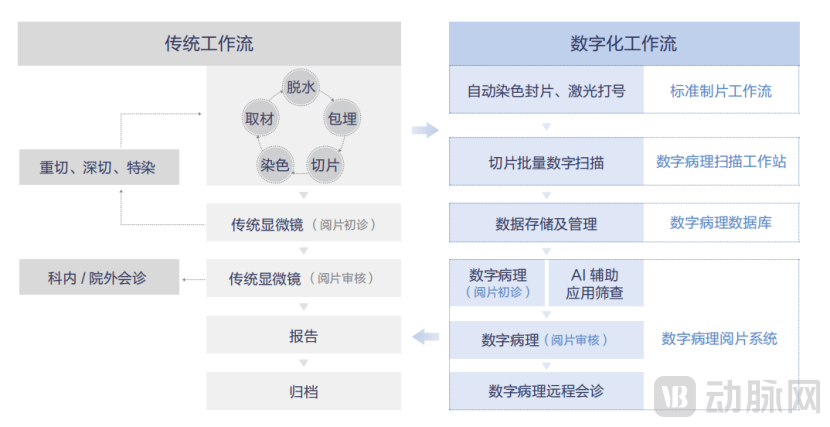 Compared with traditional diagnostic methods
Currently, Xino Intelligence is targetingBreast Cancer, Prostate Cancer, Gastric CancerResearch and development and validation are being conducted for additional cancer types, aiming to expand the indications of cytopathology solutions, apply Xino’s advanced technologies to a broader range of disease areas, and enable more patients to benefit from rapid and accurate tumor diagnostic services.
Establish Dual Bases to Promote the Integration of R&D and Manufacturing
Currently, Xinuo Intelligence has already inWuhan Optics Valley South Great Health ZoneandHangzhou West Science and Technology Innovation CorridorEstablished an R&D and production base, achieving independent research, development, and manufacturing across the entire product line.
Moving forward, the team plans to attract more interdisciplinary talents and collaborate with research institutions such as Wuhan University and Fudan University, leveraging innovative capabilities to advance the development of “Spectroscopy + AI” medical technologies. In the future, Xinuo Intelligence will continue to utilize “AI + Spectroscopy” technology to fill gaps in cancer diagnosis, ensuring that AI is genuinely integrated into healthcare and implemented in clinical practice, thereby allowing more patients to benefit from technological advancements.
Xinuo Intelligence is currently undergoing a new round of financing. If you are interested in Xinuo Intelligence, please contact us.