

The Secret Behind the Blockbuster Medical Products at China International Import Expo: Accelerated Approval, Commercialization, and Innovation Spillover
Since its inaugural edition in 2018, the China International Import Expo (CIIE) is approaching its seventh session. The event serves as a premier platform for the global debut, first-time exhibition, and premiere of products, with a continuous influx of cutting-edge innovations from various sectors, including innovative pharmaceuticals and medical devices.
Meanwhile, benefiting from strong spillover effects, the China International Import Expo (CIIE) continues to drive innovation and investment by multinational healthcare companies in China, having become a “driver” and “incubator” for accelerating the introduction and localization of new products.
VCBeat’s analysis reveals that the number of exhibits brought by multinational medical enterprises has hit record highs in each of the first six editions. Notably, the number of products making their global or China debuts has shown an overall upward trend year by year.
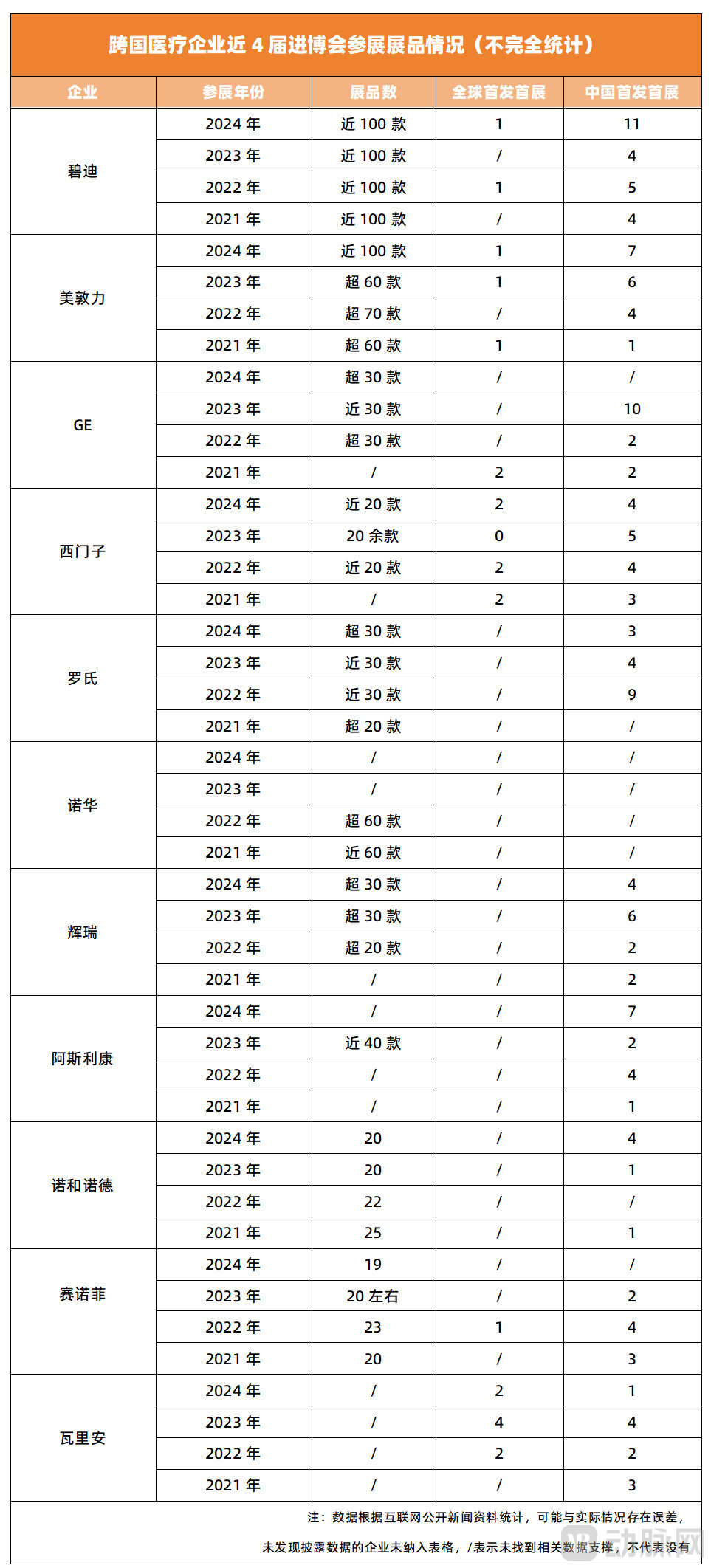
Taking BD (Becton, Dickinson and Company) as an example, the company will unveil 15 innovative products at the upcoming 7th China International Import Expo (CIIE), marking their global debuts, China debuts, or limited-edition launches. These include one global premiere, 11 China debuts, one limited-edition launch, and two pre-launch new products, covering multiple fields such as peripheral interventions, specialized surgery, oncology diagnostics, urology, and critical care.
Behind the active participation of multinational healthcare companies with their cutting-edge products lies the aim to leverage the China International Import Expo (CIIE) to gain attention from multiple stakeholders, including drug regulatory authorities, medical insurance agencies, and business partners. This strategy is designed to accelerate the approval, market launch, and sales of innovative drugs and medical devices, thereby better serving healthcare institutions and patients.
An Illumina market representative stated, “The unique spillover effects of the China International Import Expo (CIIE) help transform exhibits into commercial products, accelerating the clinical approval of Illumina’s innovative products, facilitating their faster and broader deployment in China, and enabling earlier benefits for the industry and patients at large.” Taking one of the company’s products as an example, the Illumina NextSeq™ 550Dx Sequencing System received regulatory approval on the eve of the third CIIE in 2020. Within less than three months of its debut at the expo, the first NextSeq™ 550Dx was successfully installed and operational at Huashan Hospital Affiliated to Fudan University in Shanghai.
Accelerated approvals and rapid commercialization have enabled numerous products to quickly establish a foothold in the Chinese market and achieve impressive commercial results. What common factors underlie the significant success of products showcased at the China International Import Expo (CIIE)?
At each CIIE, exhibitors are particularly eager to showcase their products that have become “CIIE Babies”(Exhibitors affectionately refer to the innovative drugs and medical devices that have transitioned from exhibits to commercial products and been launched for use in China through the CIIE as “CIIE Babies”)products. This is because the emergence of “CIIE Babies” serves as strong proof that all exhibitors found their trip truly worthwhile.
According to incomplete statistics, at least 150 cutting-edge global pharmaceutical and medical device products have become “CIIE Babies.”For instance, since participating in the expo, Boston Scientific has leveraged the "CIIE effect" to accelerate the review and approval of 21 products, successfully transforming "exhibits into commodities." Through six editions of the CIIE, AstraZeneca has introduced 11 "CIIE babies," including Fluimucil and Broncho-Vaxom in respiratory care, Evrenzo in nephrology, Linzess in gastroenterology, Orpathys, Enhertu, and Konqi in oncology, as well as Shulirui and Keseyou for rare diseases. From 2020 to 2024, Takeda successfully obtained approval and launched more than 15 innovative products in China, covering oncology, gastroenterology, and rare diseases...
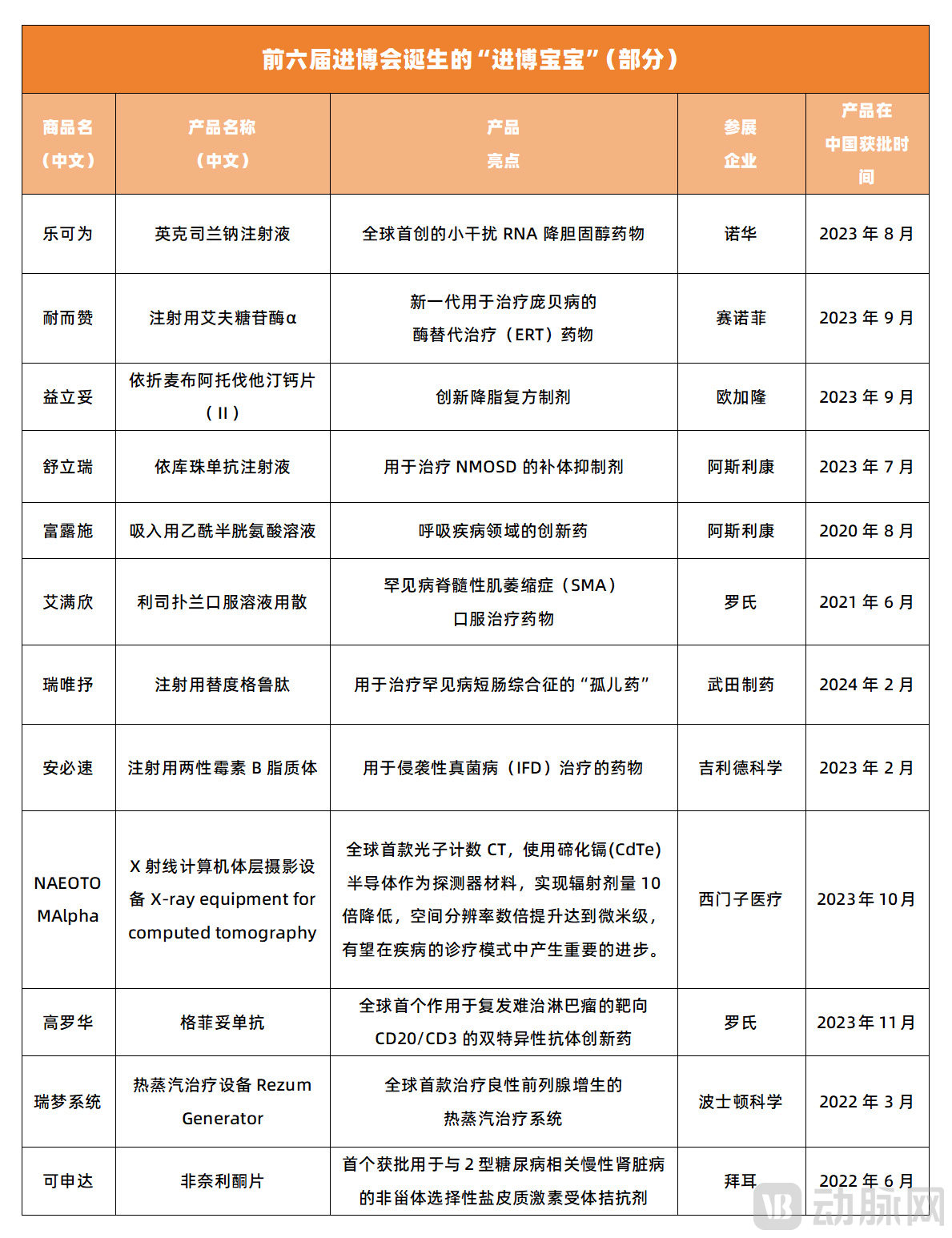
VCBeat’s analysis reveals that pharmaceutical and medical device products capable of accelerating approval after exhibition often possess uniqueness in a specific disease treatment area or demonstrate superior efficacy compared to existing therapies.
For example, in the field of cardiovascular disease, elevated levels of low-density lipoprotein cholesterol (LDL-C) are one of the major risk factors for inducing atherosclerotic cardiovascular disease. In the past, therapies targeting LDL-C reduction were extremely scarce. In 2021,Novartis’s inclisiran sodium injection made its debut at the 4th China International Import Expo (CIIE). It is the world’s first and currently only small interfering RNA (siRNA) drug indicated for lowering LDL-C.Furthermore, the twice-yearly dosing regimen of inclisiran sodium injection has garnered widespread attention across the industry.
Benefiting from the spillover effects of the China International Import Expo (CIIE), inclisiran sodium injection made its debut in China and was subsequently introduced in the Boao Lecheng Pilot Zone and the Guangdong-Hong Kong-Macao Greater Bay Area. This enabled over 3,000 Chinese patients with dyslipidemia to gain early access to treatment, provided robust real-world clinical data, and led to its approval by the National Medical Products Administration (NMPA) of China in August 2023, followed by rapid deployment in hospitals across more than 20 cities nationwide.
In addition to major diseases such as cardiovascular conditions and cancer, the field of rare diseases suffers from an even greater scarcity of treatment options. Taking short bowel syndrome, a rare disease with an extremely low prevalence, as an example, there are no nationwide statistics on its incidence in China, resulting in limited clinical attention.
It is precisely for this reason that there are typically only two treatment options for short bowel syndrome in China: one is intravenous infusion. Since patients cannot eat normally, life-sustaining nutritional solutions must be administered via catheters, leaving patients dependent on IV bags for life; the other is surgical transplantation, which carries significant risks and entails high costs.
At the 5th China International Import Expo, Takeda showcased its gastrointestinal portfolio forTeduglutide, a product for the treatment of short bowel syndrome, is the world’s first and currently only approved human glucagon-like peptide-2 (GLP-2) analog for short bowel syndrome., approved as an “orphan drug” in Europe and the United States, primarily for the treatment of patients aged 1 year and older with short bowel syndrome.
Clinical studies have shown that in adult patients with short bowel syndrome, 24 weeks of teduglutide treatment can help nearly 70% of patients achieve a reduction of 20% or more in their total weekly parenteral nutrition intake; after 30 months of treatment, 33% of patients can completely wean off parenteral nutrition dependence, and over 90% of patients achieve a reduction of 20% or more in their total weekly parenteral nutrition intake.
Leveraging its significant clinical efficacy and the spillover effects of the China International Import Expo (CIIE), teduglutide was introduced into medical institutions in Boao within just six months after its exhibition, thereby raising greater awareness of the clinical needs associated with short bowel syndrome. On February 20, 2024, less than two years after its debut at the CIIE, teduglutide received approval from the National Medical Products Administration of China, becoming the first GLP-2 analog approved for the treatment of short bowel syndrome in the country.
Products with superior therapeutic efficacy were also a focal point at the China International Import Expo.For example, at the 6th China International Import Expo (CIIE), Siemens Healthineers showcased the MAGNETOM Cima.X, the world’s first ultra-high-performance whole-body 3T MRI system. This product introduces the “TwinStar” gradient system, elevating whole-body clinical imaging performance to a maximum gradient strength of 200 mT/m and a maximum slew rate of 200 T/m/s.
It is understood that, compared with conventional clinical 3T MRI systems, the MAGNETOM Cima.X offers four to five times greater gradient performance. This enhancement enables users to achieve pathology-level measurements of cellular morphology and density in oncology, significantly improving the accuracy of qualitative characterization and grading of early-stage tumors. In neuroscience, the MAGNETOM Cima.X facilitates research into brain microstructures such as neuronal axons, thereby further elucidating the pathogenesis of neurodegenerative diseases like Alzheimer’s disease and Parkinson’s disease, and advancing brain science into the mesoscopic microscale. On October 24, 2024, the MAGNETOM Cima.X received approval from the National Medical Products Administration.
Also at the 6th China International Import Expo, Roche showcased Phesgo®, the world’s first subcutaneous fixed-dose combination for dual HER2-targeted therapy in breast cancer. This product is the first to combine the two monoclonal antibodies trastuzumab and pertuzumab into a single dose, enabling completion of both treatments via a single, less invasive subcutaneous injection with a shorter administration time (only 5–8 minutes), thereby improving the treatment experience for breast cancer patients.
It is important to note that previously, the treatment of breast cancer patients mainly relied on intravenous infusion, with medications dosed according to body weight. Two bags of medication not only involved large volumes but also required separate infusions, with an observation period in between, resulting in a total administration time exceeding four hours. With the advent of Phesgo®, only "a single dose" is needed, allowing the transition from "intravenous drip" to "injection." This significantly reduces administration time while minimizing damage to patients' venous blood vessels.
On January 2, 2024, the National Medical Products Administration approved Phesgo® for the treatment of patients with human epidermal growth factor receptor 2 (HER2)-positive early and metastatic breast cancer, owing to its superior therapeutic experience and efficacy.
It is not difficult to see that, by virtue of being the sole treatment for a specific disease or demonstrating superior efficacy compared with other therapies, blockbuster products from multinational medical enterprises have managed to attract significant attention during the China International Import Expo (CIIE), draw the attention of regulators, and shorten approval timelines.
Meanwhile, the approval of more blockbuster products has further incentivized multinational healthcare companies to introduce their most cutting-edge offerings to China, truly achieving mutual benefit and win-win outcomes.
For multinational medical enterprises, product approval is merely the beginning; subsequent commercial scale-up is the top priority.
How to Accelerate Sales After Market Launch?Based on the experience of products exhibited at previous China International Import Expos (CIIE), the three major pathways are inclusion in the National Reimbursement Drug List, approval for multiple indications, and localization of production.
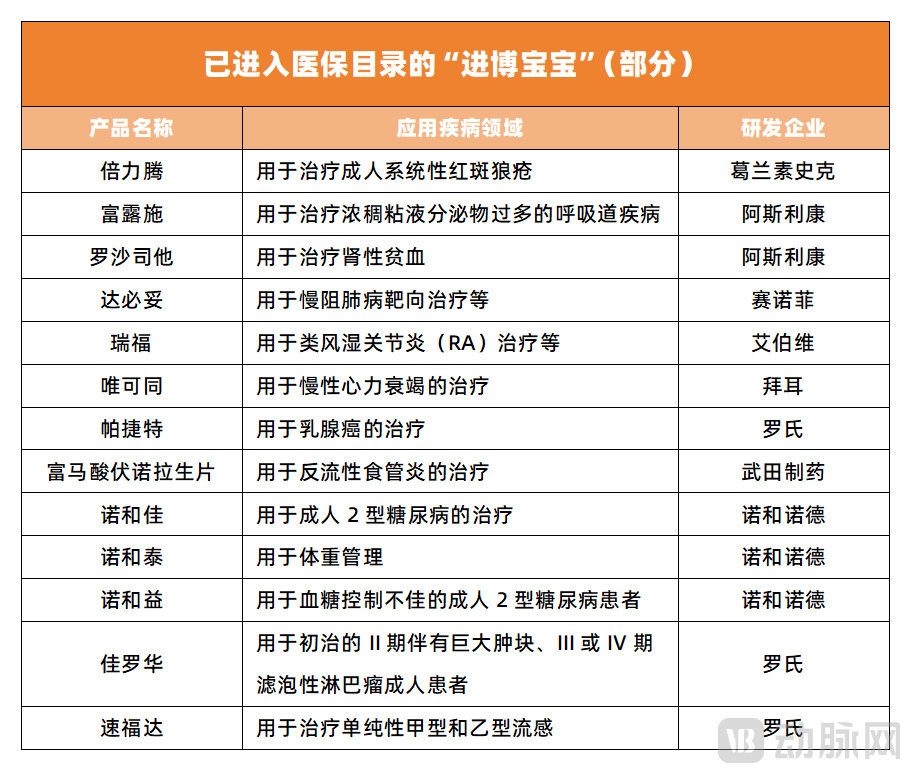
Generally, once a medical product is included in the National Reimbursement Drug List (NRDL), it signifies that the product will receive payment support from the national medical insurance fund, thereby directly stimulating its market sales. Judging by the subsequent actions of products exhibited at the China International Import Expo (CIIE), many “CIIE babies” were quickly included in the NRDL shortly after receiving regulatory approval.
Take Benlysta, a “CIIE Baby” product under GlaxoSmithKline (GSK), as an example. This product has been exhibited at the China International Import Expo (CIIE) multiple times, and its indications for systemic lupus erythematosus in both adults and children have been successively included in the National Reimbursement Drug List. Similarly, Vonoprazan Fumarate Tablets, another “CIIE Baby” product from Takeda Pharmaceutical, had its indication for reflux esophagitis included in the National Reimbursement Drug List in 2020.
Furthermore,Approval for multiple indications can also provide a significant boost to product sales growth.Taking Keytruda (pembrolizumab injection) as an example, its approval for more than 40 indications has driven annual sales exceeding $25 billion, cementing its status as the global “blockbuster drug king.”
Among the “CIIE Babies,” Dupixent, a star product from Sanofi that has participated in the China International Import Expo (CIIE) six times, serves as a typical example of multi-indication approvals. Exhibited continuously from the first to the sixth CIIE, the product secured approval and market launch for multiple indications in China over these six years. Leveraging its unique mechanism targeting type 2 inflammation, it has currently been approved for five major indications across two dermatological disease areas. It is currently the only targeted biologic agent for the treatment of atopic dermatitis in China that covers the entire population spectrum, from infants to adults.During the 6th China International Import Expo, Dupixent launched two new respiratory indications, marking its global debut for chronic obstructive pulmonary disease (COPD) and its China debut for asthma.
How fast was it? According to official announcements, Dupixent was first approved in China in June 2020 for the treatment of moderate-to-severe atopic dermatitis in adults, a full two years ahead of schedule. Moreover, it took only 25 days from approval to drug supply, and within five months of its market launch, it was included in the National Reimbursement Drug List, bringing significant benefits to commercial volume growth.
From a financial perspective, the approval of multiple indications has further expanded Dupixent’s market share: in 2020, Dupixent’s sales in China just exceeded RMB 100 million, reaching approximately RMB 7 billion by 2023.
The localization of products is also building momentum for multinational medical enterprises to expand their market “gains.”What needs to be understood here is that so-called "localization" means that a single product of a multinational medical enterprise, or even its entire product line (from low-end, mid-range to high-end), or the entire industry chain (from supply, R&D, manufacturing, sales, after-sales service, to talent) is entirely produced in China.
In the push for domestic production, the da Vinci Surgical System, which made its debut at the China International Import Expo (CIIE) in 2018, stands out as a prominent example. Renowned for its precise and rapid surgical performance, the system became one of the most popular exhibits that year. Following its inaugural appearance at the CIIE, it was successfully launched on the Chinese market, marking a transition from an “imported exhibit” to an “imported product.”
To capitalize on opportunities in the Chinese market, Intuitive Surgical and Fosun Pharma established a joint venture, Intuitive Fosun, marking an acceleration of the localization efforts for the da Vinci surgical system. Data provides insight into the pace of this expansion: after 2018, the number of da Vinci surgical robots installed in China rose significantly. In 2019, 2020, and 2021, annual installations increased by more than 40 units year-over-year for three consecutive years, with net growth exceeding 90 units in 2021 alone. To date, the total number of da Vinci systems installed in China has surpassed 380.
From inclusion in the National Reimbursement Drug List to approval for multiple indications, and achieving local production in China, a growing number of “CIIE Babies” have become commercial blockbusters. This trend has encouraged more multinational healthcare companies to showcase and introduce their best “treasures” to the Chinese market.
After all, China still has a large amount of unmet health needs, and it will continue to be an important strategic and growth market for multinational healthcare companies globally.
Looking at the history of global industries, innovation is often a competitive race characterized by mutual pursuit and collaborative development. Only through mutual learning and reciprocal promotion can the global industrial and value chains achieve deep integration, ultimately leading to win-win outcomes for the entire industry.
Just as in the automotive sector, without Tesla building its Gigafactory in Shanghai, there would be no recent story of Chinese-made new energy vehicle enterprises striving to catch up.
Leveraging the platform of the China International Import Expo (CIIE), the debut and rapid market entry of a series of global and China-first products are spurring domestic enterprises to increase R&D investment, enhance product quality and competitiveness, and deepen collaboration between Chinese brands and multinational medical companies, thereby achieving mutual growth.
In their ongoing efforts to catch up, domestic innovative companies are targeting the most advanced global fields and products, continuously intensifying their efforts. For instance, following the launch of Dupixent, accumulating research data have consistently demonstrated the advantages of interleukin-4 receptor (IL-4R) as a therapeutic target for atopic dermatitis. Consequently, multiple Chinese pharmaceutical companies have launched drug development programs targeting IL-4R and achieved continuous breakthroughs.
According to data from Huayuan Securities, dozens of domestic innovative pharmaceutical companies, including Hengrui Medicine, Huadong Medicine, Keymed Biosciences, ZhiXiang JinTai, CSPC Pharmaceutical Group, Akeso, 3SBio, ConnoCell, Mabspace, Simcere Pharmaceutical, and Quanxin Biotech, have already established a presence in the IL-4R field.
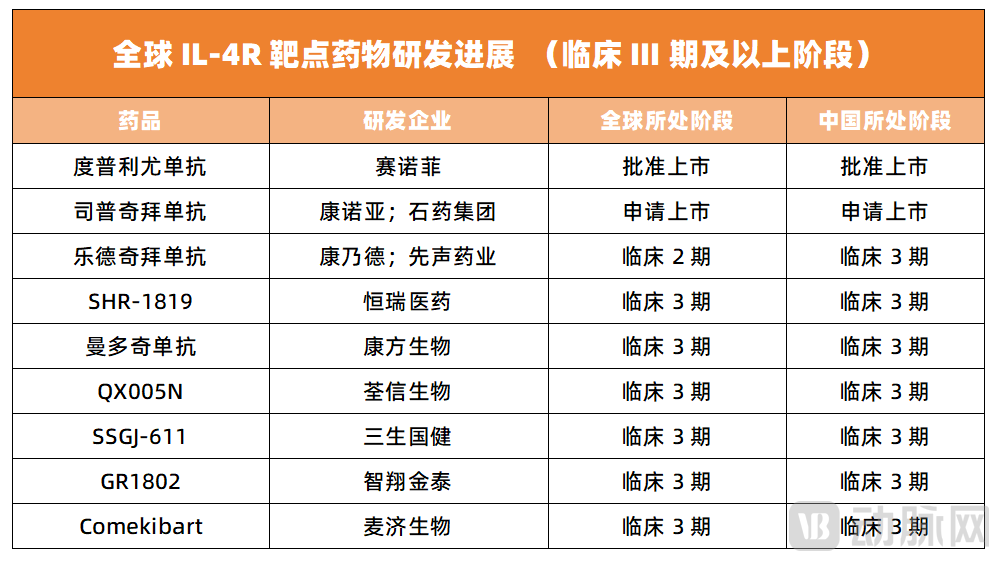
Among these companies, the fastest progress has been made by Keymed Biosciences with its drug, spikizumab. On September 12, Keymed Biosciences announced that Kangyueda (spikizumab injection), a Class 1 innovative drug independently developed by the company, had officially received marketing approval from the National Medical Products Administration (NMPA) for the treatment of moderate-to-severe atopic dermatitis in adults. This marks the first IL-4Rα antibody drug to be filed and approved for marketing in China, and the second globally, filling the gap in the field of domestically produced biologics for atopic dermatitis.
In addition to the approval of Keymed Biosciences’ spucibart for marketing, several other domestically produced IL-4R monoclonal antibodies have entered Phase III clinical trials, including Kinomed’s ledeqibart, Quanxin Biologics’ QX005N, Genor Biopharma’s GR1802, 3SBio’s SSGJ-611, Akeso’s mandoqibart, and Hengrui Medicine’s SHR-1819.
In the field of medical devices, following the debut of the da Vinci Surgical System—one of the most successful products in the history of the China International Import Expo (CIIE)—domestic brands embarked on a path of catch-up. Currently, Chinese-made brands such as MicroPort’s Toumai laparoscopic surgical robot, Edge Medical’s MP1000, and Sizherui Medical’s Kangduo Robot are leading the domestic market in terms of bid awards for laparoscopic surgical robots.
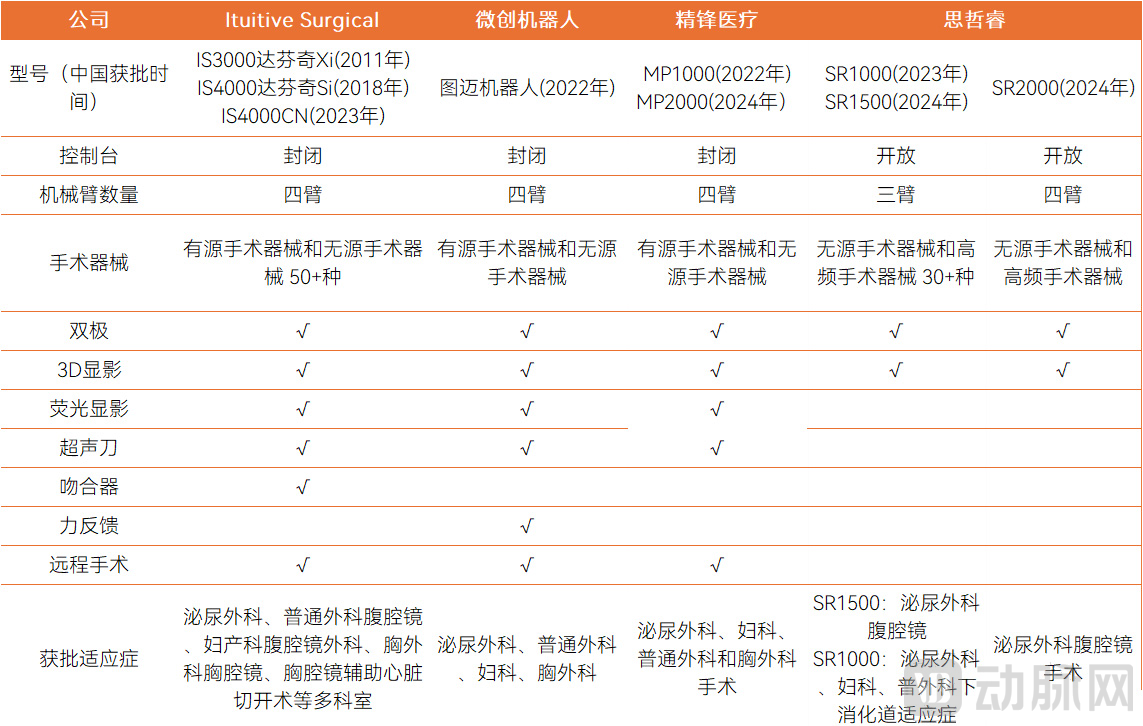
▲ Comparison of Major Chinese-Made Laparoscopic Surgical Robots with the da Vinci System in Terms of Functionality
In terms of utilization rates, domestic brands of laparoscopic surgical robots have demonstrated strong performance: according to publicly available statistics, as of March 2024, the Toumai surgical robot had completed 2,000 procedures, with H1 revenue from domestic consumables reaching RMB 3 million, and the number of surgeries growing rapidly; in August 2024, Edge Medical announced that the clinical procedure volume of its multi-port surgical robot had officially surpassed 4,000 cases.
These data indicate that domestically produced endoscopic surgical robots have been validated by the market in terms of product stability and reliability.
Of course, amid the intense competition, domestic innovative enterprises have continuously strengthened their R&D capabilities, and multinational healthcare companies have begun to engage in deeper collaborations with them, jointly advancing strategic layouts in the field of cutting-edge products.
For instance, AstraZeneca has actively engaged with Chinese innovative enterprises, securing global licensing collaborations with 10 domestic innovative pharmaceutical companies, with a cumulative total value exceeding $8.5 billion. Additionally, it has facilitated exchanges for over 130 companies to destinations including Brazil, the Middle East, and Europe, resulting in cooperation intentions being reached by more than 10 domestic enterprises in various international markets.
A series of collaborative achievements are emerging.For instance, at the 6th China International Import Expo (CIIE), Varian showcased its fourth-generation Halcyon ring-gantry robotic system. This device enables ultra-fast image acquisition within the short duration of a patient’s breath-hold, thereby reducing the impact of tumor motion artifacts. Underpinning this product is AI technology developed through localized R&D collaborations in China, which enhances treatment precision.
It is evident that, on the global stage of innovation, Chinese innovative enterprises have carved out a path characterized by independent innovation, deepened collaboration, and globalization, thereby establishing themselves as key participants in the cutting-edge ecosystem of pharmaceuticals and medical devices. In this process, multinational healthcare companies have also become integral allies of China’s innovative forces, advancing hand in hand with local innovators.
There is no doubt that the spillover effects of the seventh China International Import Expo (CIIE) will continue to be unleashed,An increasing number of “global-plus-China” innovations are emerging, strengthening China’s healthcare industry chain while feeding back into the global innovation, industrial, and supply chains. At the same time, these developments resonate in sync with the Chinese pharmaceutical market’s entry into a fast track of globalization.
We believe that during the current period of growth opportunities, more global innovations will serve China, while Chinese innovations will expand globally, giving rise to a greater number of highly successful cutting-edge pharmaceutical and medical device products, thereby benefiting every patient.