

Aerwin Life Tech Achieves -196°C Fully Electric Ultra-Low Temperature Automated Storage, Cutting Operational Costs by 90%
The Three Core Platform Technologies in Life Sciences: Optics, Microfluidics, and Precision Temperature Control. Unlike optics and microfluidics, precision temperature control has not truly stepped into the spotlight. However, this does not mean that its value to the life sciences field is insignificant; on the contrary, it is crucial for advancing the development of life sciences, and improper application can even lead to significant losses.
A real-world case provides a more intuitive understanding of the critical importance of temperature control in the life sciences. In 2023, the Karolinska Institute in Sweden experienced a severe liquid nitrogen supply disruption. This directly caused the failure of its cryogenic storage equipment, resulting in the total loss of rare biological samples meticulously collected over nearly three decades.
According to relevant reports, the accident directly caused economic losses of approximately RMB 330 million to the medical school. Compared to the financial losses, which are potentially recoverable, the irreversible damage inflicted on rare specimens is even more regrettable. This incident has exposed the risks associated with cryogenic storage in liquid nitrogen.
However, even without this accident, cryogenic storage relying on liquid nitrogen still faces certain challenges. According to Han Yuqing, founder of Shanghai iKelvin Life Science Technology Co., Ltd. (hereinafter referred to as “iKelvin”), there are two core temperature zones in the life sciences field: -80°C and -196°C. Among these, using liquid nitrogen as a cold source is currently the most widely adopted method for achieving -196°C.
However, liquid nitrogen storage faces two major challenges: first, the high cost; second, the need to construct liquid nitrogen towers, which not only further increases costs but also consumes more manpower and effort, while posing safety risks such as frostbite and suffocation for maintenance personnel.
In the -80°C temperature range, temperature control also faces challenges. Currently, the most commonly used equipment in this range is the freezer. However, due to limitations in temperature control technology, when freezers are used for -80°C storage, their stability and uniformity are significantly compromised, often leading to unstable and non-uniform temperature control.
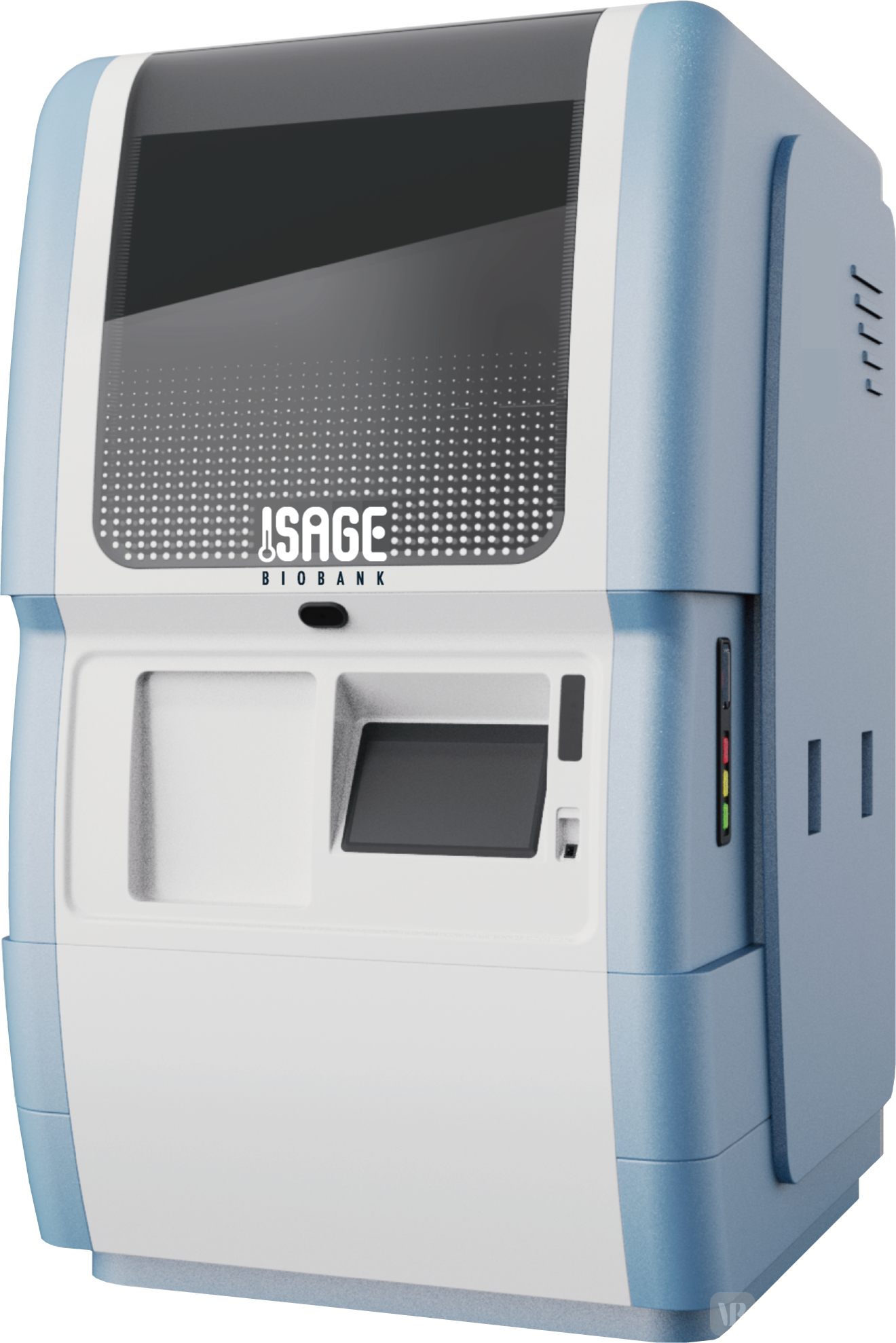
iKelvin -80°C Temperature Control Equipment
In other words, both core temperature ranges in the life sciences require better solutions. iKelvin is exploring superior solutions for precise temperature control in the life sciences and has already achieved breakthroughs.
Domestic and International Universities Collaborate Closely to Finally Break Through -196°C Temperature Control Technology
iKelvin is a high-tech enterprise centered on cutting-edge temperature control technology, engaged in the R&D, manufacturing, sales, and service of laboratory and biobank equipment.
iKelvin's cutting-edge temperature control technology primarily encompasses four core technologies: Stirling refrigeration technology, variable-density multi-layer vacuum insulation technology, centralized cooling release technology, and long-distance flexible thermal conduction technology, comprehensively covering the three aspects of temperature control: refrigeration, insulation, and thermal conduction.
In terms of refrigeration, iKelvin has achieved breakthrough progress. Its applied Stirling refrigeration technology features rapid cooling, minimal temperature fluctuation, low mechanical loss, and low noise. In terms of thermal insulation, the variable-density multi-layer vacuum insulation technology is characterized by low thermal conductivity, stable performance, environmental safety, high feasibility for commercial implementation, and broad product applicability.
As for the two cold conduction-related technologies, they feature rapid cooling rates, high efficiency in cooling capacity utilization, and near-zero entropy increase in cooling capacity. Furthermore, the flexible structural design of the long-distance flexible cold conduction technology enhances adaptability to various scenarios, facilitating expansion into diverse application settings.
It is worth noting that, in addition to achieving breakthroughs in cooling speed, thermal conductivity efficiency, and cooling uniformity, iKelvin’s most significant technological breakthrough is the ability to achieve temperature control at -196°C using electricity, which can substantially reduce corporate operational costs.
“To be frank, precision temperature control—particularly at -196°C—is a highly cutting-edge technological field that has previously been dominated by aerospace and defense industry enterprises,” Han Yuqing told VCBeat. “Judging from the profiles of companies that have entered this space, it is evident how challenging the research and application of advanced temperature control technologies are.”
So, how did iKelvin achieve its breakthrough? In the interview, Han Yuqing attributed the success to two main factors. First, iKelvin boasts a strong team background. According to Han Yuqing, most members of iKelvin’s R&D team are graduates of Shanghai Jiao Tong University and possess extensive industry experience. Furthermore, building on this foundation, iKelvin has established collaborative partnerships with numerous research institutes both in China and abroad to jointly explore innovations in cutting-edge temperature control technologies and facilitate the translation of scientific achievements into practical applications.
On the other hand, iKelvin has prioritized solving practical application challenges in its pursuit of technological breakthroughs. In Han Yuqing’s view, “People may applaud a breakthrough in a technically difficult area with limited application value, but they are far more likely to pay for technologies that offer genuine practical utility.” This perspective is also reflected in iKelvin’s business strategy.
Delivering Complete Temperature-Control Solutions with Products and Services, Aggressively Expanding into the Middle East Market
Leveraging cutting-edge temperature control technology, iKelvin aims to become a company that provides comprehensive temperature control solutions for life science research institutions and enterprises.
Accordingly, iKelvin has not only launched a series of temperature-controlled products but also introduced laboratory planning services and laboratory management services. We will temporarily set aside the reasons behind iKelvin’s dual strategy of products and services and instead focus on its product portfolio.
It is reported that, leveraging the series of cutting-edge temperature control technologies mentioned above, iKelvin’s product portfolio encompasses three key areas: sample storage, sample freeze-thaw, and sample transportation.
In terms of sample storage, iKelvin has launched a -196°C fully automated cryogenic storage system and a -80°C fully automated ultra-low temperature storage system. Notably, the -196°C fully automated cryogenic storage system successfully achieves all-electric refrigeration. Compared with traditional consumable liquid nitrogen cooling, this equipment offers significant cost advantages. According to Han Yuqing, the operating costs of this device are reduced by more than 50% compared with existing technologies, while sample access efficiency is more than doubled. Furthermore, the entire sample access process remains in a low-temperature environment, eliminating the risk of sample damage due to rewarming associated with traditional methods.
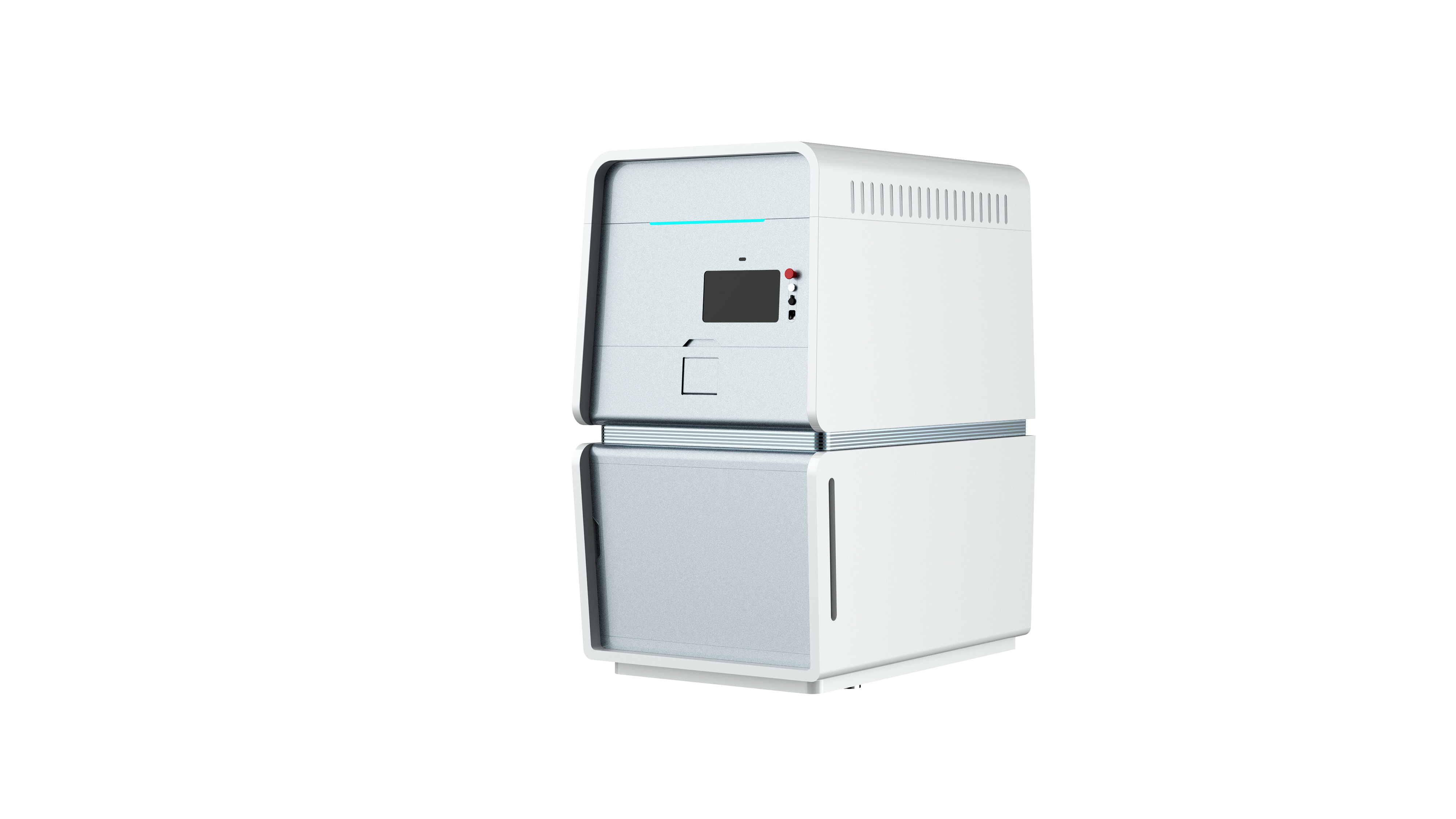
iKelvin -196℃ Fully Automatic Ultra-Low Temperature Storage System
Furthermore, the device achieves high temperature uniformity, maintaining the sample ambient temperature below -180°C throughout the process. During this year’s China International Import Expo (CIIE), iKelvin will showcase its -196°C fully automated ultra-low temperature storage system. Interested parties are welcome to visit the booth for an on-site experience.
Regarding sample transportation, Han Yuqing stated in a previous interview that through independent research and development, iKelvin’s products can meet the safety requirements for samples in various scenarios, “ensuring ultra-long low-temperature insulation for up to 30 days, even when transported to Africa.”
Having reviewed iKelvin’s product portfolio, we now turn to its service ecosystem. iKelvin has strategically expanded into laboratory planning and laboratory management primarily for two reasons: first, to enhance customer stickiness. In a capital-intensive sector, the more effectively a company can address diverse customer needs, cover various stages of the service value chain, and forge strong brand associations, the more it will bolster its brand influence.
Second, it aims to lay the foundation for intelligent laboratories. VCBeat has learned that iKelvin has already achieved intelligence in its individual products. Meanwhile, iKelvin is also undertaking R&D related to intelligent laboratories, and its in-depth collaborations with more clients are intended to establish the data and experiential foundations necessary for realizing intelligent laboratories.
Research institutions, universities, and enterprises are the primary clients of iKelvin, with balanced importance across these segments. For its two business divisions—products and services—iKelvin has adopted distinct market strategies. For sales of temperature-control-related products, iKelvin collaborates with distributors and agents, whereas for laboratory planning and laboratory management, it provides services directly to enterprises.
Meanwhile, iKelvin has also embarked on its global expansion, exporting temperature-control-related products to the Middle East. “The development of temperature control technology holds crucial strategic significance for China’s leadership in life science R&D and applications. It was this realization that prompted me to embark on my entrepreneurial journey. Looking ahead, iKelvin will continue to innovate in temperature control technologies to accelerate the rapid development of China’s life sciences sector,” summarized Han Yuqing.