

Research and Application of Artificial Ligaments in China: Innovations from Professor Chen Shiyi and Huashan Hospital
In recent years, with the rise of the national fitness trend, sports injuries such as ligament tears have become increasingly common. If knee ligament tears are not treated properly and in a timely manner, they may lead to meniscal injury, cartilage damage, or even functional impairment.
Currently, grafts used in clinical anterior cruciate ligament reconstruction (ACLR) can be categorized into three types: autografts, allografts, and artificial ligaments. For patients with multi-ligament injuries or those with high athletic demands requiring a rapid return to sports, artificial ligaments represent an ideal option.
The advantages of artificial ligaments lie in reduced surgical trauma and infection risk; patients can ambulate immediately after surgery, facilitating early rehabilitation and return to sports. Furthermore, the mechanical strength of artificial ligaments is approximately three times that of autologous ligaments, thereby lowering the risks of surgical failure and re-rupture.
October 26,The Opening Ceremony of the APKASS 2024 and the 20th IFOSMA Joint Congress Was Held at the Boao Forum for Asia International Conference CenterAt the meeting,Professor Chen Shiyi from Huashan Hospital Affiliated to Fudan University, Chairman of the APKASS & IFOSMA Conference, presented on “Research and Application of Artificial Ligaments in China”Centered on this theme, the lecture provided a detailed exposition of the research and application of artificial ligaments in China. By synthesizing extensive clinical literature with domestic experiential summaries, it was demonstrated that reconstruction using artificial ligaments makes early rehabilitation and return to sports possible.
The following is a transcript of the speech (edited by VCBeat for readability without altering the original meaning):
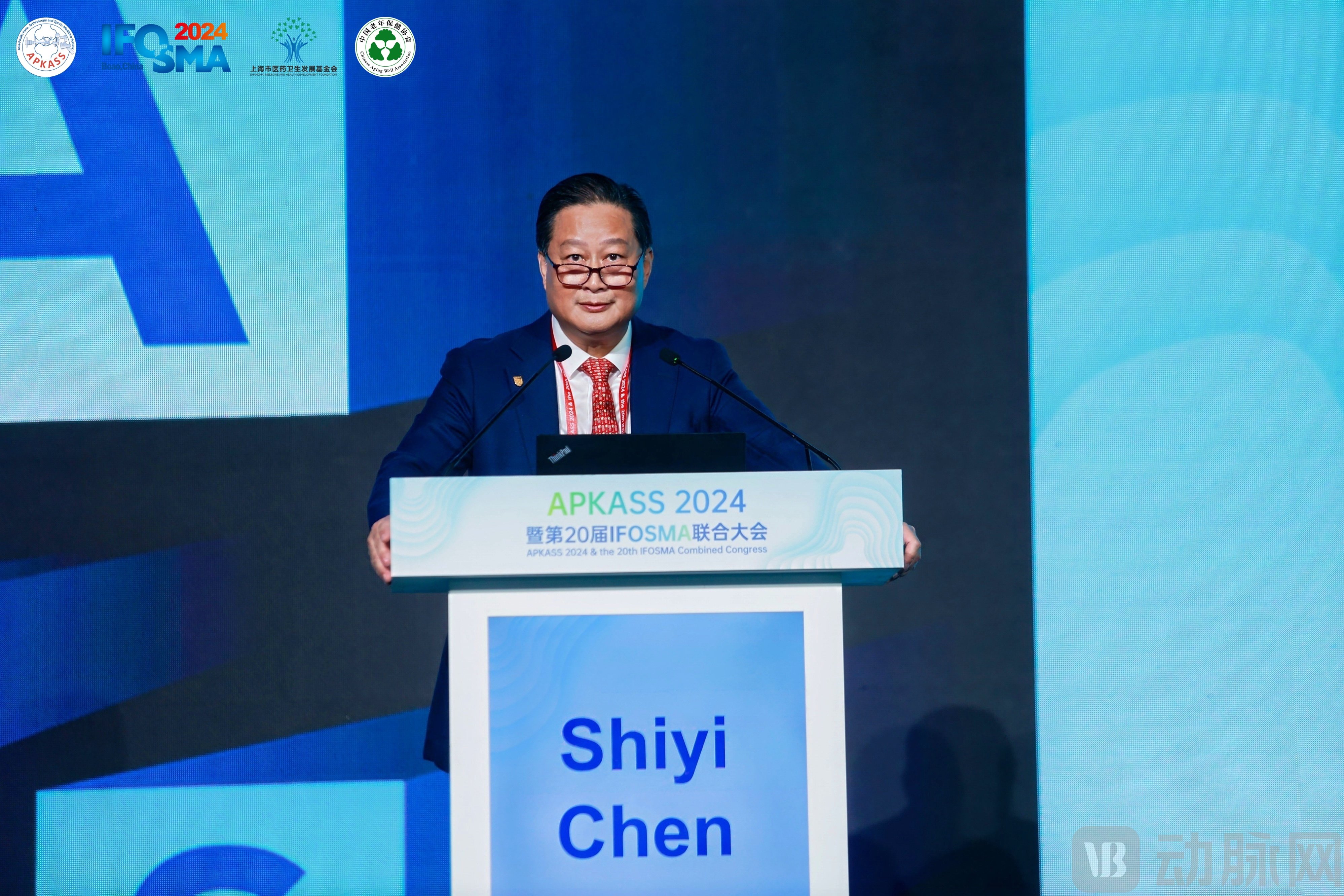 Professor Chen Shiyi, Chair of the APKASS & IFOSMA Congress, Huashan Hospital Affiliated to Fudan University
Artificial Ligaments Have a History of Over a Century, Yet Misconceptions Persist
The anterior cruciate ligament (ACL) is a critically important ligament in the knee joint. ACL injuries not only impair athletic performance but may also affect daily activities, making effective repair a significant challenge.
Traditional repair methods often fail to achieve adequate healing; joint laxity and recurrent sprains cause patients to avoid physical activity, which may lead to osteoarthritis in the long term. Therefore, anterior cruciate ligament (ACL) reconstruction has become a key focus in the field of sports medicine.
Currently, there are three reconstruction options in clinical practice: autografts, allografts, and artificial ligaments. However, both autografts and allografts have limitations regarding tissue availability. Allografts, in particular, are constrained by a limited number of donors, difficulties in ensuring product quality, and an average healing time of approximately 10 months.
The advantages of artificial ligaments lie in their capacity for rapid recovery and mass production. Similar to prostheses, they yield favorable surgical outcomes; however, they impose stringent requirements on surgical technique. Consequently, the global adoption of artificial ligaments remains limited. Notably, the United States has not embraced their use, which has subsequently influenced their adoption in other countries.
Since the first ACL reconstruction using an artificial ligament was performed in China on July 18, 2004, extensive experience has been accumulated. Remarkably, a patient was able to climb Mount Huangshan just six weeks after the initial surgery, demonstrating surprising recovery time and outcomes. This has further stimulated my in-depth research and interest in artificial ligaments.
The history of artificial ligaments dates back 140 years. At that time, the United Kingdom and Germany had already begun experimenting with artificial ligaments; however, due to limitations in materials, scientific understanding, and surgical techniques, early artificial ligaments did not gain widespread adoption.
In the 1980s, at least eight types of artificial ligaments emerged in the U.S. market, but they were quickly withdrawn due to high failure rates and complications. This has led some scholars to hold biases against artificial ligament reconstruction of the anterior cruciate ligament (ACL), creating a “historical misconception” surrounding this procedure.
However, little known is that the rapid withdrawal of artificial ligaments from the U.S. market was primarily due to competitive commercial interests, surgical design, materials, and immature joint technology, rather than issues with the artificial ligaments themselves.
Artificial Ligaments Offer Significant Advantages, with China Leading in Research Output
Unlike in Europe and the United States, orthopedic sports medicine in China started relatively late and did not experience the early wave of failures associated with artificial ligament reconstruction of the anterior cruciate ligament (ACL) seen abroad; therefore, there is no prejudice against artificial ligaments.
Since Huashan Hospital Affiliated to Fudan University successfully performed China’s first LARS™ artificial ligament reconstruction of the cruciate ligament in 2004, this novel technique for anterior cruciate ligament reconstruction (ACLR) has been widely promoted and applied across China.
In 2004, the French artificial ligament company LARS entered the Chinese market. Over the past 20 years, clinical practice has demonstrated its favorable efficacy. The LARS artificial ligament, developed and marketed by the company, is a segmented polyester ligament that induces the integration of autologous fibrous tissue with the graft by traversing the residual ACL tissue, and is fixed at both ends with interference screws. LARS is regarded as a new generation of artificial ligaments.
According to LARS’s official website, the company has an annual production capacity of 10,000 units of artificial ligaments, with 60%–70% sold to China.
If catastrophic failures of artificial ligaments were truly prevalent, they would have long since exited the Chinese market. In reality, there are over 200 Chinese-language publications and 45 SCI-indexed papers in China, most of which are clinical research reports. Key data indicate that clinical outcomes following anterior cruciate ligament (ACL) reconstruction with novel artificial ligaments are satisfactory, demonstrating their safety and feasibility. Notably, in terms of early functional recovery and return to sports, clinical results with novel artificial ligaments are superior to those achieved with autografts and allografts.
Our research has identified several significant advantages of artificial ligaments. First, they are mass-produced with controllable quality. Second, they avoid the prolonged remodeling process, thereby maintaining high mechanical strength—three times that of autologous ligaments—which facilitates early return to sports. Third, the procedure is simple and safe. Fourth, patient satisfaction is high. Fifth, recovery time is short, enabling a rapid return to athletic activities. These factors underpin our recommendation for the use of artificial ligaments.
The "Huashan Exploration" of Anterior Cruciate Ligament Reconstruction with Artificial Ligaments
Currently, multiple artificial ligaments have been marketed worldwide. China has also developed its own artificial ligaments, and the number of related publications has increased significantly in recent years, with a greater increase observed internationally than in China.
Currently, research articles from China account for approximately 30% of the global total, with the Huashan Hospital team contributing one-third of the domestic output. Our team also leads the world in the number of studies on artificial ligaments.
Literature searches have shown that the vast majority of studies report satisfactory clinical outcomes, with low rates of surgical failure and complications, as well as good functional recovery. Only a few case reports suggest markedly opposite clinical results, characterized by high failure rates and severe infection rates during long-term follow-up, raising doubts about the authenticity of these reports. Furthermore, these reports involve very small case numbers and have never analyzed the reasons for failure.
Based on this, the Huashan Sports Medicine Center conducted two studies. One of them, completed in 2016, was a single-center prospective cohort study with a ten-year follow-up of 110 patients. The results showed that six months postoperatively, 89% of patients in the artificial ligament group returned to sports, compared with only 3% in the autograft ligament group. At one year postoperatively, 92% of patients in the artificial ligament group had returned to sports, versus 80% in the autograft group. Ten years postoperatively, 82% of patients in the artificial ligament group remained physically active, whereas only 70% did so in the autograft group.
The study concluded that artificial ligaments yield superior clinical outcomes compared to autografts and allografts, particularly in terms of early functional recovery and return to sports.
Another study was a nationwide, multicenter, retrospective survey conducted by the Huashan Sports Medicine Center in 2016, which followed up on cases of anterior cruciate ligament (ACL) reconstruction using “novel” artificial ligaments between July 2004 and December 2010. The aim of the study was to investigate the long-term incidence of adverse events after ACL reconstruction with novel artificial grafts and to analyze the causes of failure.
Of the 1,705 cases, 1,393 met the inclusion criteria, among which 1,146 completed follow-up, yielding a follow-up rate of 82% and a mean follow-up duration of 87 months. The results showed a cumulative failure rate of 4.5% (51/1,146) and a postoperative complication rate of 4.1% (47/1,146).
The causes of failure are summarized as follows: first, surgical technical errors attributable to the physician; second, incorrect indication for surgery; third, poor compliance with rehabilitation; and fourth, existing limitations or defects, such as those related to materials.
To date, we have filed 27 patent applications and secured funding from numerous sources, including government and social funds. We have completed multicenter clinical trials, published scholarly articles, and established clinical standards. This year alone, we have published more than 70 research papers.
Although we are still continuing our exploration, I believe we can look forward to the future of artificial ligaments.