

China's First National Standard for Organ-on-a-Chip Officially Released: Driving Transformative Industrial Development with New Quality Productive Forces
Recently, China’s first national standard in the field of organ-on-a-chip technology, GB/T 44831-2024 “General Technical Requirements for Skin-on-a-Chip,” was officially released. The primary drafting organizations include the Suzhou Medical Device Research Institute of Southeast University, Southeast University, Jiangsu Aiweide Biotechnology Co., Ltd., Southern Medical University, Nanjing Institute of Measurement and Testing Technology, and the National Engineering Research Center for Beijing Biochip Technology, among others. This milestone marks a significant step forward for China in the standardization of organ-on-a-chip technology, holding substantial importance for promoting standardized and regulated development in both scientific research and industrial applications within this field.
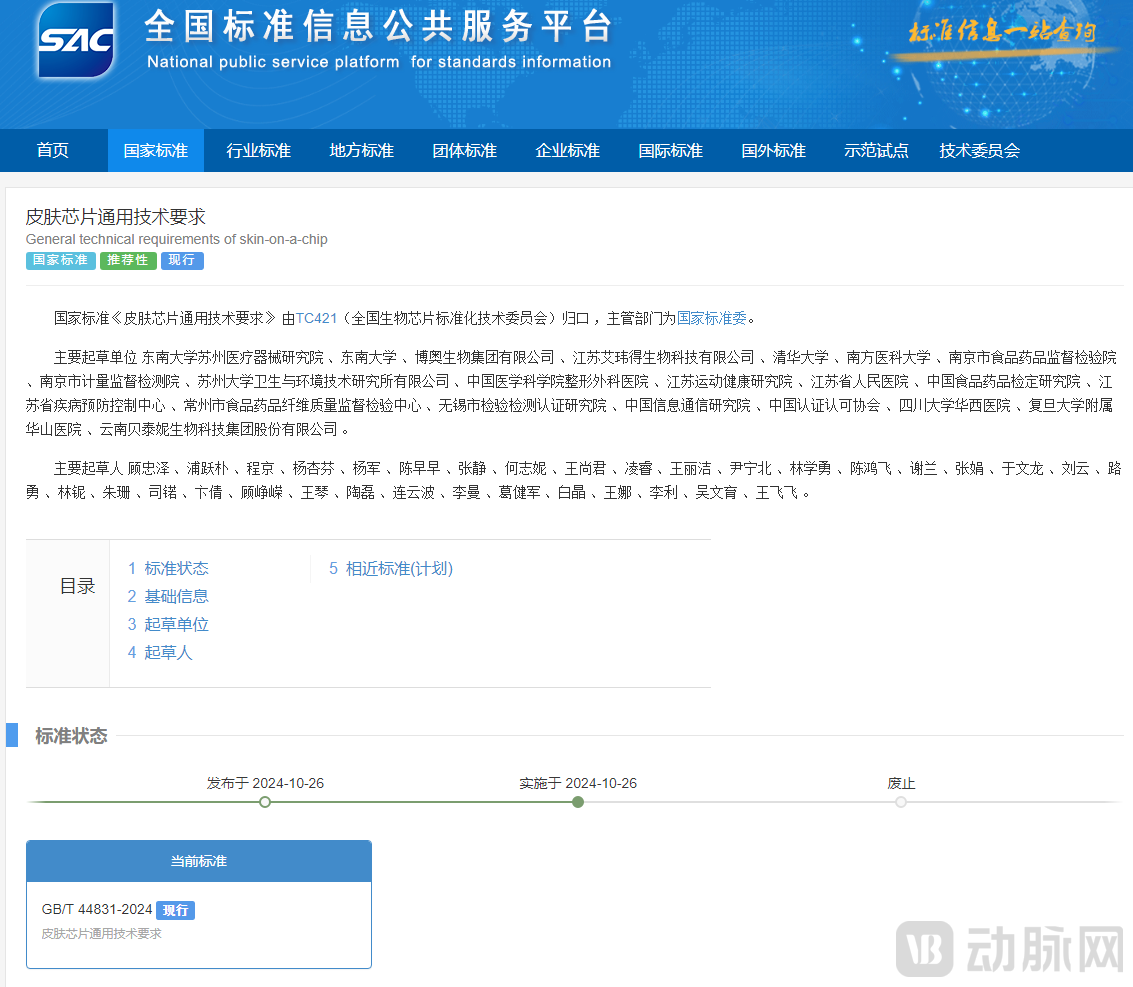
Skin-on-a-chip is a microfluidic cell and tissue culture device that simulates the physiological structure of skin and possesses functions such as barrier protection, buffering, and secretion. With structures and functions similar to those of normal human skin, skin-on-a-chip enables high-throughput, automated culture and detection. It can be applied to in vitro skin testing and holds promise as an effective tool for toxicological testing, drug screening, and cosmetic evaluation. It has the potential to supplement or even partially replace existing two-dimensional cell culture assays, animal experiments, and engineered skin models, thereby becoming the most advanced and robust evaluation standard and experimental tool for skin-related in vitro assessments.
China’s First National Standard for Organ-on-a-Chip Technology ReleasedThe first national standard for organ-on-a-chip technology in China was drafted under the leadership of Professor Gu Zhongze and his team from the Suzhou Medical Device Research Institute of Southeast University. It was jointly developed by 21 institutions, including Southeast University, CapitalBio Corporation, Jiangsu Aiweide Biotechnology Co., Ltd., Tsinghua University, Southern Medical University, Nanjing Institute for Food and Drug Control, and Nanjing Institute of Measurement and Testing Technology. This standard primarily specifies technical requirements for skin-on-a-chip devices, covering terminology definitions, appearance, cell sources, component performance, and biological performance. It is applicable to the design, manufacturing, and testing of skin-on-a-chip products based on microfluidic chip platforms.
The release of this standard will effectively promote industry standardization, empower high-quality industrial development, foster new quality productive forces with international competitiveness, and lay the foundation for China to secure a leading position in the establishment of international standards for organ-on-a-chip technology. More importantly, the establishment of national standards for skin-on-a-chip in China will help break down existing international trade barriers, provide robust scientific and technical support for cosmetic exports to countries in Europe and America that have bans on animal testing, and ultimately enable China to achieve leapfrog development in application areas such as cosmetic testing, chemical evaluation, and drug development.
New Quality Productive Forces in the Biopharmaceutical Sector
Organ-on-a-chip is an in vitro microphysiological system constructed through the cross-disciplinary integration of cutting-edge technologies such as stem cells, biomaterials, and nanofabrication. It can simulate the key structural and functional characteristics of various human tissues and organs, as well as complex inter-organ interactions, thereby predicting human responses to drugs or diverse external stimuli. As a new form of productive force leading the future paradigm of novel drug discovery and precision diagnosis and treatment in the biomedical field, organ-on-a-chip technology can significantly shorten the development timeline and reduce the costs of new drugs, while enhancing R&D efficiency.
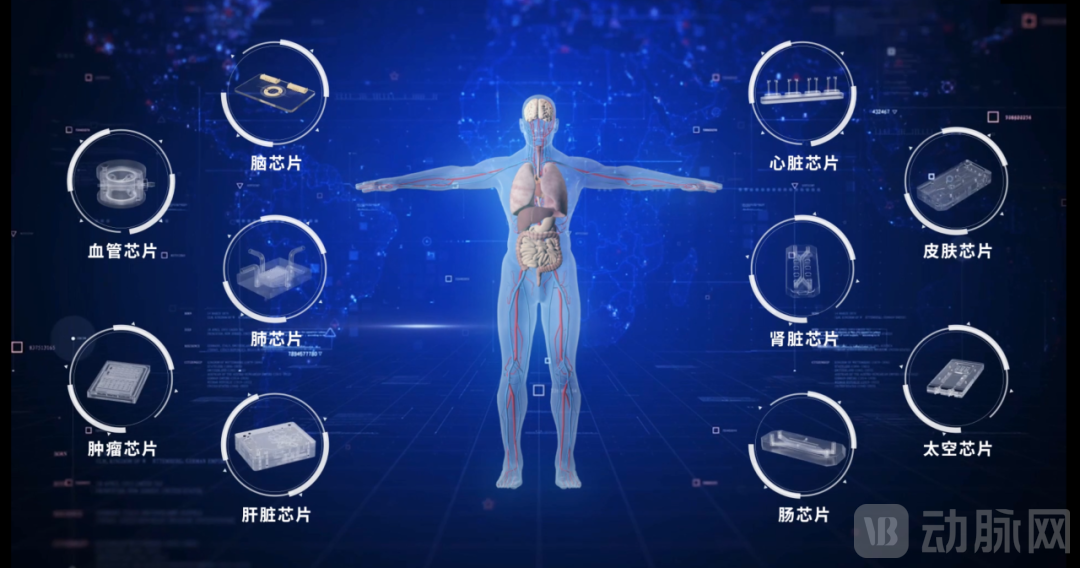
Organ-on-a-chip technology has become a focal point of international competition in the biomedical sector, particularly regarding technologies, patents, and standards. In 2022, the United States enacted the FDA Modernization Act, which for the first time incorporated organ-on-a-chip and microphysiological systems as independent non-clinical drug evaluation frameworks into legislation. Leveraging its unique advantages, organ-on-a-chip technology offers systemic solutions for life science and medical research, representing a potential technological bottleneck area for China in the future.
Professor Gu Zhongze’s team at Southeast University is the earliest domestic research group engaged in human organ-on-a-chip technology. Since 2011, the team has successively led national-level key and major projects, including the National Science Fund for Distinguished Young Scholars, the National Natural Science Foundation of China, and the National Key R&D Program. Their research achievements have been honored with awards such as the Huang Jiasi Biomedical Engineering Award, the Grand Prize at the inaugural National Disruptive Innovation Technology Competition, the China Patent Excellence Award issued by the China National Intellectual Property Administration, and the First Prize of Jiangsu Provincial Science and Technology Awards. Additionally, their work was selected as one of the “Top Ten Advances in Life Sciences in China” in 2023.
Based on the first Ministry of Education Innovation Team approved in 2012 for “Construction and Application of Organ Chips Based on Intelligent Biomaterials,” the first University Discipline Innovation and Intelligence Introduction Base (111 Program) for “Organ Chips,” and the Jiangsu Province Qinglan Project Innovation Team, Southeast University established the Southeast University Institute of Organ Chips in May 2024, with Professor Gu Zhongze serving as its Director. The Institute is a new type of research entity under the direct administration of Southeast University, characterized by being a substantive research body with a non-substantive administrative structure. It aims to break down traditional disciplinary and departmental barriers, leverage multi-party resources to attract talent, transcend the identity boundaries between faculty and researchers, integrate multiple research directions including biomedicine, materials science, and nanotechnology, and build a high-level interdisciplinary research team. The Institute is committed to creating a high-level academic special zone distinguished by high investment, high output, and high standards (“Three Highs”). Currently, the Institute serves as the Chinese Council Member of the International Microphysiological Systems Society and is the affiliated organization for the Organoids and Organ Chips Branch of the Chinese Society of Biomedical Engineering, the Organoids and Organ Chip Toxicology Professional Committee of the Chinese Society of Toxicology, and the Organoids and Organ Chips Branch of the Jiangsu Province Research-Oriented Hospital Association.
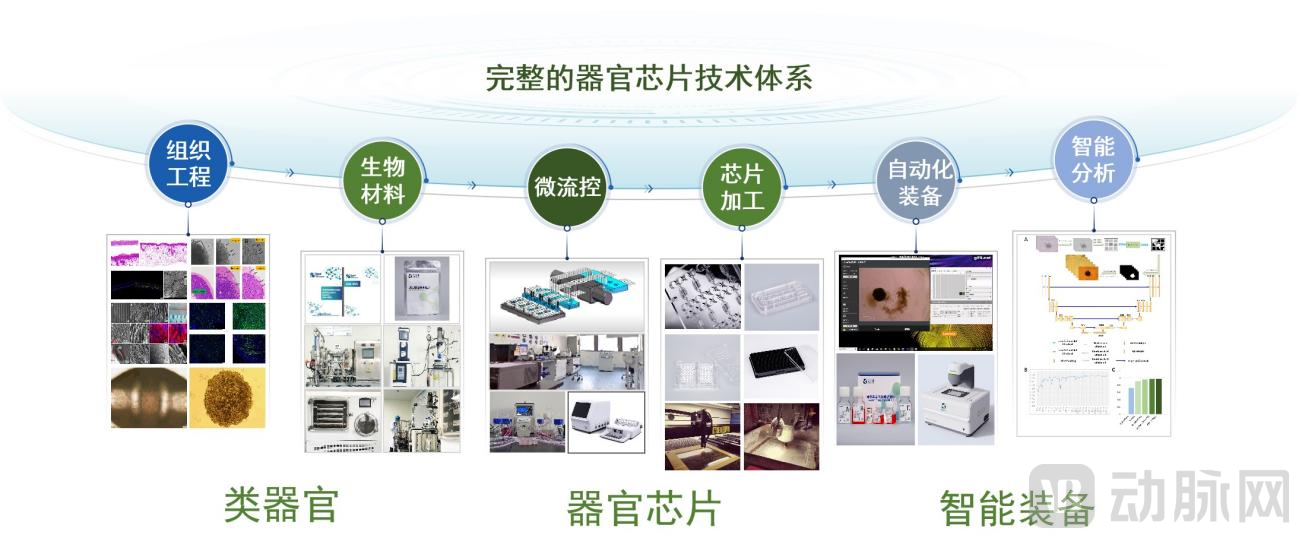
Currently, Professor Gu Zhongze’s team has achieved a series of major innovative breakthroughs in the research on human organ-on-a-chip technology, a new form of productive force. They have overcome key scientific and technological bottlenecks, including microstructure-induced tissue/organ growth, controllable manufacturing of cross-scale structures for organ chips and biosensors, and multimodal in situ/online measurement of organ chips, thereby establishing a comprehensive technical system for organ-on-a-chip technology.
The team successfully developed China’s first organ-on-a-chip model deployed in a space station for scientific experiments, as well as the first organ-on-a-chip model used for pre-Investigational New Drug (pre-IND) applications. It spearheaded the initiation of China’s first technical standard for organ-on-a-chip technology, pioneered the drug screening paradigm integrating organ-on-a-chip with artificial intelligence on the global stage, and jointly released the world’s first large pharmaceutical model for human organ-on-a-chip with Huawei.
Industrial Transformation Driven by New Quality Productive Forces
In 2021, with strong support from Southeast University, the Jiangsu Industrial Technology Research Institute (JITRI), and Suzhou New District, the human organ-on-a-chip project entered the industrialization phase. Core patented achievements were directly transferred for RMB 30.1602 million, successfully completing the transformation of scientific and technological achievements. The industrialization company “Jiangsu Aiweide Biotechnology Co., Ltd.” was established. This project became the first original advanced initiative within the National Innovation Center system to be incubated from scratch by an institute within the system and achieve domestic leadership. It also stands as a typical enterprise established by JITRI and Suzhou New District through a combined model of grants, transfers, and investments, serving as a demonstration for universities and research institutions in exploring pathways for the commercialization of scientific and technological achievements.
Aiweide Biotechnology focuses on the research, development, and application of human organ-on-a-chip systems and supporting equipment. The company possesses a series of core key technologies, including organ-chip design and fabrication, preparation of extracellular scaffold materials, automated organoid culture, multimodal imaging, and AI-driven data analysis. It has comprehensive capabilities in the design, development, and manufacturing of organ chips; the design and production of automated equipment and software; as well as the production of organoid culture reagents and provision of technical services. Currently, it is the only company capable of providing end-to-end solutions for organoids and organ-on-a-chip technologies.
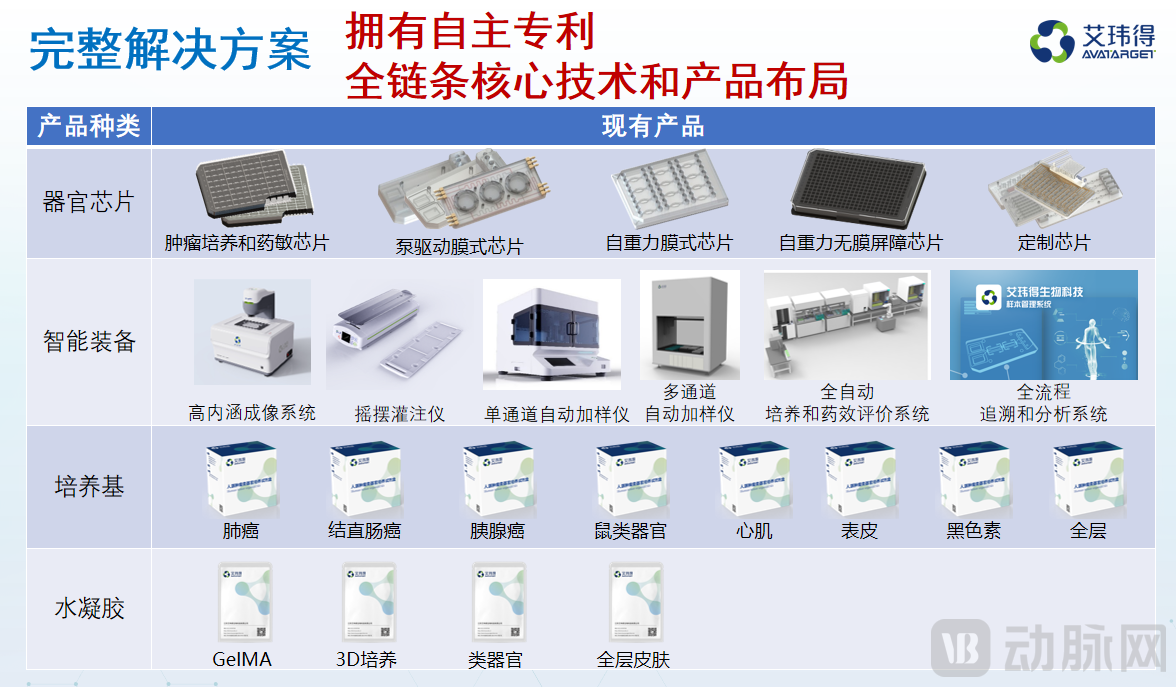
Aivide Biotechnology’s independently developed products—including organ-on-a-chip platforms for oncology, cardiology, and dermatology, along with配套 culture and assay kits, automated culture systems, high-content screening and analysis instruments, AI software systems, and biomaterials—have been commercially adopted by renowned pharmaceutical companies, hospitals, and research institutions both in China and abroad, such as Hengrui Medicine, Simcere Pharmaceutical, Qilu Pharmaceutical, Columbia University in the United States, and Jiangsu Province People’s Hospital.
The successful application of organ-on-a-chip technology, as a new form of productive force, has enabled the rapid screening and evaluation of large numbers of candidate drugs. It provides a disruptive and transformative biomedical experimental paradigm for new drug development, along with more efficient, accurate, and reliable technical tools. This significantly enhances R&D efficiency, reduces costs, drives technological innovation and industrial structural upgrading among upstream and downstream enterprises in the related supply chain, and promotes leapfrog development in the new drug R&D industry. Furthermore, the first national standard for organ-on-a-chip technology in China, led by Professor Gu Zhongze’s team, lays the foundation for China to secure a commanding position in the formulation of international standards for this technology. It is believed that in the near future, organ-on-a-chip technology will become a globally competitive new form of productive force, injecting strong new momentum into the development of the biopharmaceutical industry.