

Prime AI Navigates Clinical Innovation: How E2E Cuts R&D Costs by 50% and Shortens Trial Duration by 30%
In recent years, the global biopharmaceutical industry has witnessed intense competition,Increasingly complex study protocols and clinical endpoints, along with a growing number of research centers and participants, leading to a series of chain reactions, including rising drug R&D costs, prolonged development cycles, and increasingly stringent requirements for clinical studies.
Traditional clinical research faces multiple challenges, including trial design, patient recruitment, data management, and trial monitoring. Incorporating real-world data into clinical studies further increases the complexity of study design and data application.
With the rapid development and continuous penetration of AI technology in the field of clinical research,An End-to-End Digital Intelligent Clinical Research Model—The E2E (eSource-to-EDC) Model—is Emerging。
The E2E model helps reduce the high labor and time costs inevitably incurred when clinical research coordinators (CRCs) search for source data across multi-source, heterogeneous, and multimodal data systems (such as HIS, EMR, LIS, PACS, and paper records) and perform repetitive manual data entry. It delivers significant value in key aspects of clinical trials, including patient screening and recruitment efficiency, data quality, and study operational effectiveness, thereby effectively lowering research costs while enhancing research efficiency and the quality of study data (accuracy, completeness, and consistency).
This article aims to center on the E2E model, analyzing its development both domestically and internationally, exploring its current status, industry value, and commercialization progress, with the goal of promoting the digital and intelligent transformation of clinical research in China and further enhancing research quality and efficiency.
AI Reshaping New Drug Clinical Trials: E2E Becomes a Key Approach to the Digital and Intelligent Transformation of Clinical Research
In recent years, China has become the country with the highest total number of clinical trials and the fastest growth rate globally. According to data released by the Center for Drug Evaluation (CDE) of the National Medical Products Administration, the total number of clinical trials registered on the Chinese Clinical Trial Registry and Information Publicity Platform for Drug Clinical Trials exceeded 4,000 for the first time in 2023, reaching 4,300, representing a 26.1% increase compared to 2022. Among these, the number of new drug clinical trials was 2,323, marking a 14.3% increase from 2022.
Despite significant progress in new drug development in China, challenges such as difficulties in subject recruitment and high costs of data collection and monitoring persist. Studies show that in 2020, only 45.4% of new drug clinical trials in China began subject recruitment within one year after approval. The standardized collection of clinical trial data, including entry and verification, is not only time-consuming and labor-intensive but also makes it difficult to ensure high data accuracy.
With the advent of the era of large models, AI is reshaping the operational model of new drug clinical trials with unprecedented momentum, leveraging its powerful learning and analytical capabilities.
The value of AI technology lies in assisting researchers in conducting clinical studies more quickly and efficiently. It not only enhances the efficiency of data processing and analysis but also leverages techniques such as machine learning and deep learning to predict clinical trial outcomes, optimize trial design, and improve the success rate of clinical trials.
AI can provide robust support across all stages of clinical trial protocol design and execution. For instance, AI can enhance the efficiency and accuracy of selecting inclusion and exclusion criteria, improve the precision of patient recruitment and screening, and assist pharmaceutical companies in identifying and analyzing risk factors. It also plays a significant role in areas such as synthetic control arms (SCAs), virtual clinical trials, and data management and analysis, holding promise for further advancing the automation and intelligence of clinical trials.
Empowered by high-quality medical data and artificial intelligence technologies, AI will fundamentally drive a paradigm shift in clinical research in the future.
In recent years, enterprises and research institutions both in China and abroad have successively adopted technologies such as medical digitalization and AI to enhance the efficiency of clinical research. As a typical representative, the E2E model is gradually evolving into a key means of promoting automated and intelligent management of clinical research data.
The E2E model focuses on establishing end-to-end direct data connectivity between electronic source data (eSource) and electronic data capture (EDC) systems, enabling automated data collection and management, thereby enhancing data accuracy, completeness, and real-time availability.Meanwhile, this model enables all parties involved in clinical trials to leverage artificial intelligence models and big data technologies in remote settings, thereby ensuring the efficiency and overall quality of clinical trial data collection, while also offering advantages in process control, security assurance, and system compliance.
Compared with traditional models, the End-to-End (E2E) model effectively integrates systems such as intelligent generation, analysis, and quality control platforms for electronic source data; automated data capture and transcription; risk-based remote monitoring; and other data-driven approaches. This integration minimizes manual intervention, systematically enhancing the efficiency of clinical research and the quality of data. While ensuring data security and personal privacy, it enables effective oversight of data and operations.
E2E models have established success stories abroad, while China is rapidly emerging as a key player.
Currently, the application of the E2E model in overseas markets such as Europe and the United States has become relatively mature. In particular, based on the characteristics of the U.S. market, E2E implementation primarily follows two approaches. The first involves unified integration with Health Information Exchange (HIE) platforms, where standardized data formats are established prior to data acquisition. This approach leverages the years of development accumulated by the U.S. HIE platform network, which integrates medical records, laboratory results, imaging data, and other information from diverse healthcare institutions and regions, thereby enabling interoperability of health information across institutions and geographic areas.
Another approach involves collaborating with hospitals on a one-by-one basis, a model that is more easily replicated and scaled. Taking IQVIA as an example, as a global leader in CRO services, IQVIA actively promotes the application of end-to-end (E2E) technologies worldwide to enhance the efficiency of clinical trials and improve patient experience, while also playing a significant role in data collection and analysis.
IQVIA provides customized end-to-end (E2E) services through its various business units and partners to meet the specific needs of clinical trials in different regions. Currently, IQVIA’s global E2E footprint covers North America, Europe, and the Asia-Pacific region, with plans to expand into Canada, Japan, and other European Union countries.
In the United States, IQVIA provides end-to-end (E2E) solutions through Inteliquet. With 12 research centers across the U.S., Inteliquet specializes in oncology research and leverages E2E technology for data collection and management in clinical trials.
Compared with other countries, China started its application of E2E later but has developed rapidly. As an important contributor to IQVIA’s Global Clinical Trial Innovation Network, PuRuiResponsible for the development and application promotion of the E2E model in China, Puhui has established a network of over 50 research centers in China, occupying a leading position globally.
Purui is the first company in China to realize the automated application of E2E technology in clinical research data operations. It is understood that Purui has builtChina's First End-to-End (E2E) Technology-Based Integrated Digital Platform for Clinical Research, integrating clinical diagnosis and treatment workflows with clinical research workflows to achieve automated data entry, thereby comprehensively enhancing the quality and efficiency of clinical research and enabling leapfrog development in research standardization and efficiency.
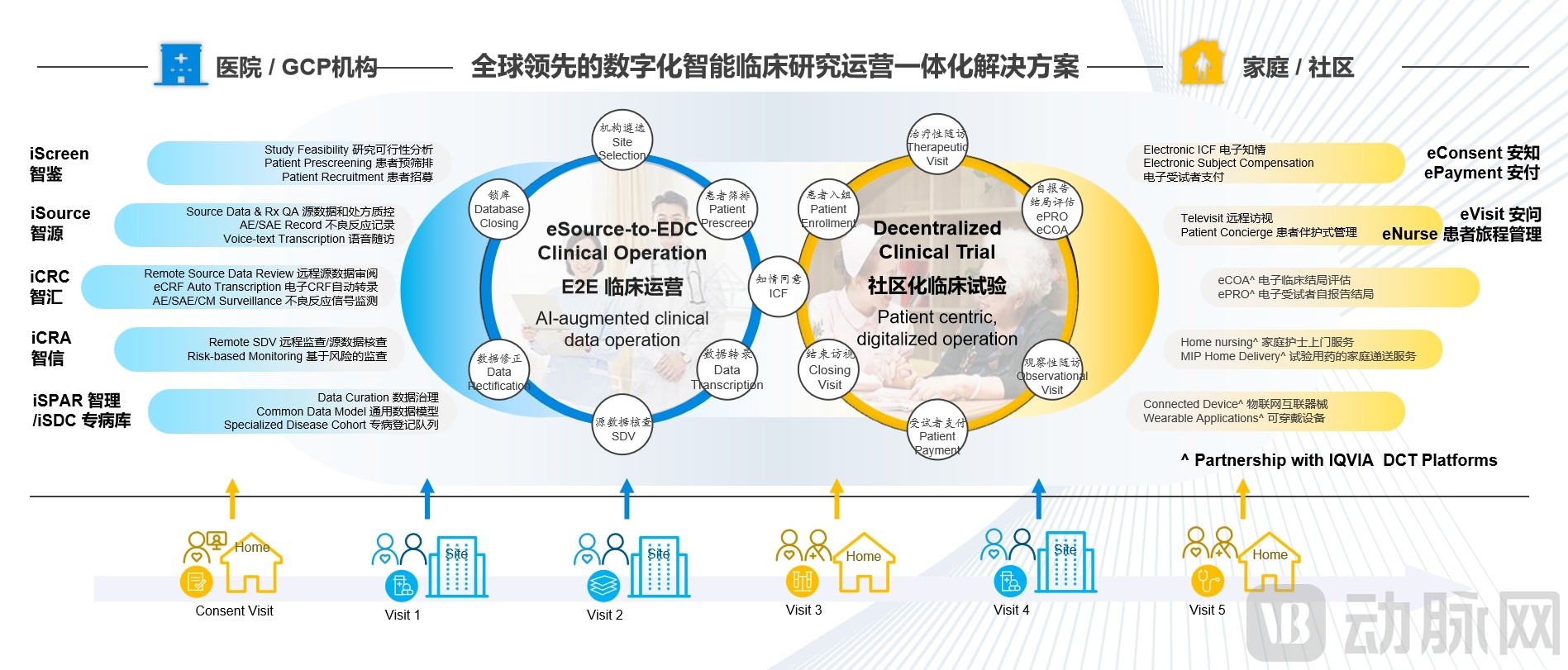
Purui’s Integrated Digital and Intelligent Solution for Clinical Research
Currently, the market size of China’s clinical CRO industry is approximately RMB 150–180 billion. Around 60%–70% of R&D costs are incurred in patient recruitment, clinical study data entry, and data monitoring phases, among which about two-thirds of on-site data entry and monitoring tasks can be automated through digital and intelligent technologies.
Purui's solution is preciselyTargeting the 60%–70% cost optimization market opportunity in the clinical research operations phase, including stages such as patient recruitment and screening matching, clinical study data entry, and data monitoring, with a potential market size approaching RMB 100 billion.
Specifically, during the patient recruitment phase, PuRui’s iScreen (ZhiJian) intelligent subject recruitment system can mine association rules related to subject information by identifying and matching subject data from diverse sources against the inclusion/exclusion criteria of clinical trial protocols. This approach not only enhances recruitment efficiency but also optimizes operational costs for research studies.
Currently, this technology has been successfully implemented and validated. It is reported that in a Phase III clinical study on cardiovascular diseases initiated by an innovative biopharmaceutical company, a Grade A tertiary hospital in Zhejiang Province collaborating with RealWorld Data (RWD) failed to enroll any subjects nearly one year after the study launch. Through communication with the research team, RWD identified that one of the inclusion criteria required patients to have experienced a recent acute episode. However, since acute episodes of this condition are often transient, they could not be captured in a timely manner through routine hospital visits. By adopting RWD’s iScreen intelligent patient recruitment model, the company achieved a breakthrough from zero to one in patient enrollment while ensuring data remained within the hospital to protect patient privacy. Furthermore, once the inclusion and exclusion criteria were configured, the system could automatically screen for eligible patients based on updated data and notify the research team.
During the clinical study data entry phase, the end-to-end direct connectivity of the E2E model eliminates errors associated with data duplication and transcription, enabling investigators to review EMR source data from clinical origins in a more timely manner. Furthermore, through the iCRC (Zhihui) and iCRA (Zhixin) systems, Clinical Research Coordinators (CRCs) and Clinical Research Associates (CRAs) can perform remote operations and provide assistance, effectively reducing trial costs and enhancing trial efficiency.
During the data monitoring phase, the E2E platform has also transformed the traditional oversight model by shifting from a single, retrospective approach heavily reliant on CRCs and CRAs to a comprehensive, end-to-end process management framework encompassing pre-event, in-process, and post-event oversight.
Through this solution, Purui aims to reduce labor costs for CRCs and CRAs by 70%, lower total clinical research expenditures by 45%, and accelerate processes by 30%, thereby achieving genuine quality improvement and efficiency gains in key stages of clinical research.
Reduce R&D costs by 50%, shorten trial duration by 30%, and build an E2E Chinese model
Since its inception, Purui has driven the establishment and continuous improvement of digital and intelligent clinical research solutions within just three years. It has also achieved commercialization across multiple business lines, making significant progress in both revenue and contract acquisition. To date,PuRui has partnered with more than 50 leading domestic Grade A tertiary hospital GCP institutions, with deployments completed at nearly 30 hospitals.; plans to cover more than 300 top-tier Grade A tertiary hospitals conducting Good Clinical Practice (GCP) trials across China within the next three years.
Endorsements from multiple top-tier hospitals and international pharmaceutical companies not only demonstrate Purui’s leading position in the market but also highlight its rapid market expansion capabilities. According to statistics, Purui has successfully ranked among the top three players nationwide in the end-to-end (E2E) segment of clinical research for innovative drugs in China.
Moreover, the company is continuously strengthening in-depth collaborations with domestic and international clinical research institutions and research-oriented hospitals, thereby persistently optimizing the E2E platform to enhance the overall efficiency of clinical research.
Multiple clinical study cases have demonstrated that E2E can significantly accelerate recruitment, improve data quality, reduce timelines, and save costs.For example, the Purui E2E system conducted two pilot projects at a Grade A tertiary hospital in Zhejiang. One was a multicenter, Phase IV, single-arm, non-interventional study aimed at evaluating the safety and tolerability of a drug during heart failure treatment; the other was a multicenter, Phase III study focused on assessing patient safety following mechanical thromboembolism removal.
In two pilot projects, Prime iScreen (Zhijian) required approximately 5 days for screening setup and about 2 hours for on-site screening, reducing subject recruitment time by 50%; Prime iCRC (Zhihui) reduced daily working hours by one-third and lowered costs by 30%–34%; Prime iCRA (Zhixin) cut routine working hours by more than half and reduced costs by 49%–58%; the average cost savings across the two projects reached 50%.
In terms of corporate collaboration, PuRui has also launched comprehensive pilot projects across various domains, continuously advancing its commercialization process. Currently, PuRui is at the forefront in China in the application and collaboration of its E2E platform, and will continue to lead the upgrade of clinical research in China toward a new digital, automated, and intelligent model.
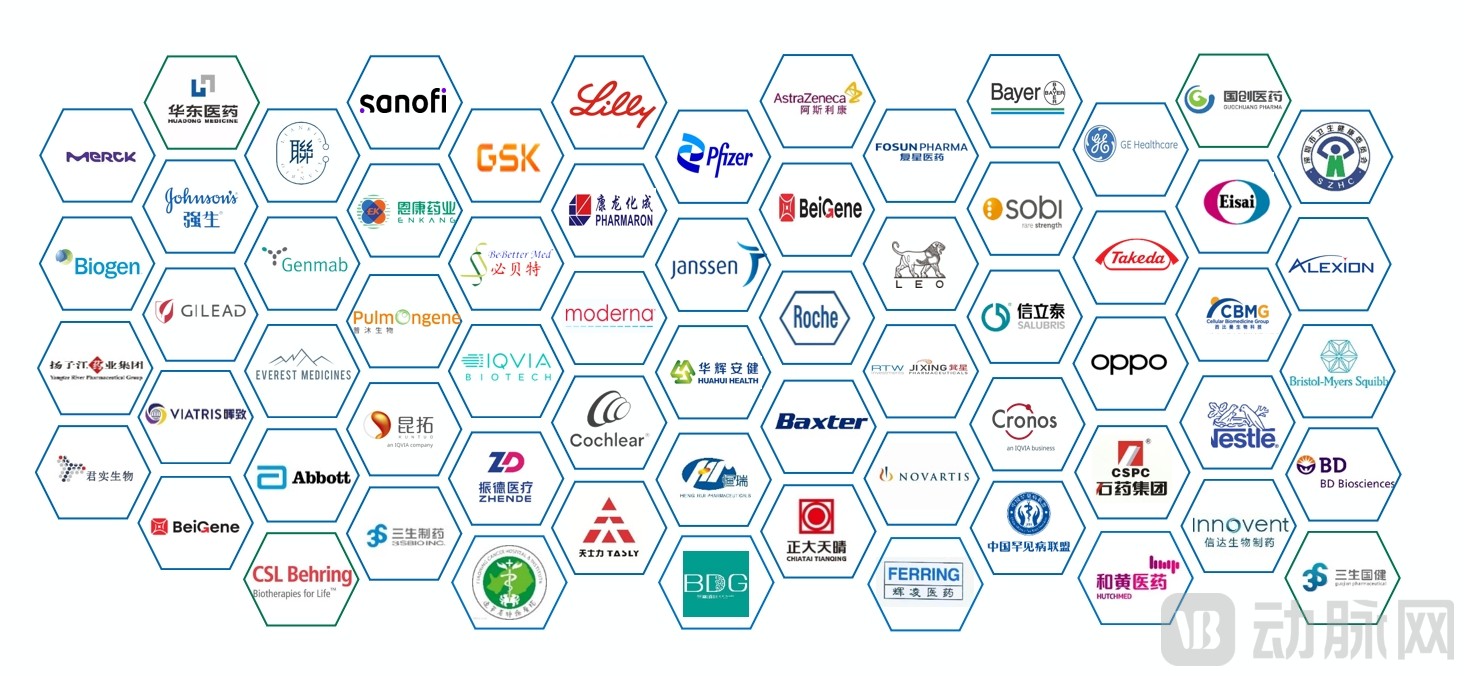 Map of Key Clients and Business Partners
China has become a major force in new drug research and is one of the most promising biopharmaceutical markets globally. In the future, as AI technology penetrates deeper and faster into various segments of the new drug development value chain, decentralized clinical trials will emerge as a key trend. The application of End-to-End (E2E) technologies will become increasingly widespread, unlocking limitless possibilities for new drug discovery and development.
As a pioneer in promoting and applying the E2E model in China, PreciseDx possesses unique advantages.As an increasing number of Chinese pharmaceutical companies transition towards the research and development of innovative drugs and expand their overseas market presence, enhancing the international competitiveness of Chinese pharmaceutical enterprises has become a core priority. On one hand, the deep strategic partnership between PuRui and IQVIA has laid a solid foundation of industrial resources and technological advantages for promoting the E2E (End-to-End) model in China. More importantly, PuRui’s E2E system provides strong endorsement for the data integrity and regulatory compliance of clinical trials in China. This not only enables faster clinical trial execution and improved cost-effectiveness but also facilitates better integration into the global clinical research collaboration network and innovation ecosystem.
In this process, the digital and intelligent transformation of clinical research must also keep pace with policy and technological developments. This includes further clarifying regulatory policies, establishing standards for end-to-end application, and continuously optimizing artificial intelligence (AI) and large language model (LLM) algorithms, to ensure that the digital and intelligent transformation of clinical trials not only complies with regulatory requirements but also fully leverages technological advantages to drive innovation and enhance efficiency in new drug development.
Looking ahead, we anticipate more companies like Precise Medicine will continue to break down the barriers between new technologies such as AI and clinical research, leading a highly efficient, scientific, and reliable end-to-end (E2E) China model that brings infinite possibilities to new drug development.