

Therapeutic Breakthroughs and Big Pharma Entry Signal Imminent Takeoff for Tumor Treating Fields
Tumor Treating Fields Therapy Is Attracting Increasing Attention from Major Pharmaceutical Companies.
Since 2024, AstraZeneca and BeiGene have successively entered the field of tumor treating fields (TTF) therapy. In March, BeiGene reached a supply agreement with Hailai Xinchuang to evaluate the efficacy and safety of combining Hailai’s TTF device with tislelizumab and temozolomide-based adjuvant chemotherapy in clinical trials for newly diagnosed glioblastoma. In early September, AstraZeneca partnered with Hailai Xinchuang on a clinical research collaboration to jointly conduct studies on the combination of AstraZeneca’s immune checkpoint inhibitors and Hailai’s TTF therapy for solid tumors, including gastrointestinal malignancies such as biliary tract cancers.
Tumor Treating Fields (TTFields), a therapeutic arena once occupied by only a few players, is now becoming increasingly crowded. This shift underscores the growing recognition of the clinical value of TTFields. Data show that in 2023, annual sales of TTFields exceeded RMB 338 million, driven solely by its domestically approved indication for glioblastoma.
As more high-incidence oncology indications gain approval, tumor treating fields (TTFields), an innovative technology that has faced repeated skepticism, is on the verge of a breakthrough. Recently, Novocure secured approval for a key new indication for its TTFields therapy, authorizing its use in combination with PD-1/PD-L1 inhibitors or docetaxel for the treatment of metastatic non-small cell lung cancer (NSCLC). Studies have shown that, compared to patients receiving PD-1/PD-L1 inhibitors or docetaxel alone, those treated with the TTFields combination therapy experienced a 3.3-month improvement in median overall survival (OS) (P=0.04). This marks the first significant improvement in median OS for this patient population in over eight years.
The Fourth Modality of Cancer Therapy
Tumor Treating Fields (TTFields) are recognized as the fourth modality of cancer therapy. Theoretically, as a non-invasive anticancer treatment, TTFields offer patients a better tolerability profile compared to traditional chemotherapy and radiotherapy.
Tumor Treating Fields (TTFields), as the name suggests, is a therapeutic device comprising an electric field generator, transducer arrays, power adapter, battery, battery charger, connecting cables, junction box, and optional accessories. This device delivers alternating electric fields, switching 100,000 to 300,000 times per second, locally to the tumor site via skin-mounted sensor arrays. It targets cancer cells and utilizes the electric fields to disrupt their division.
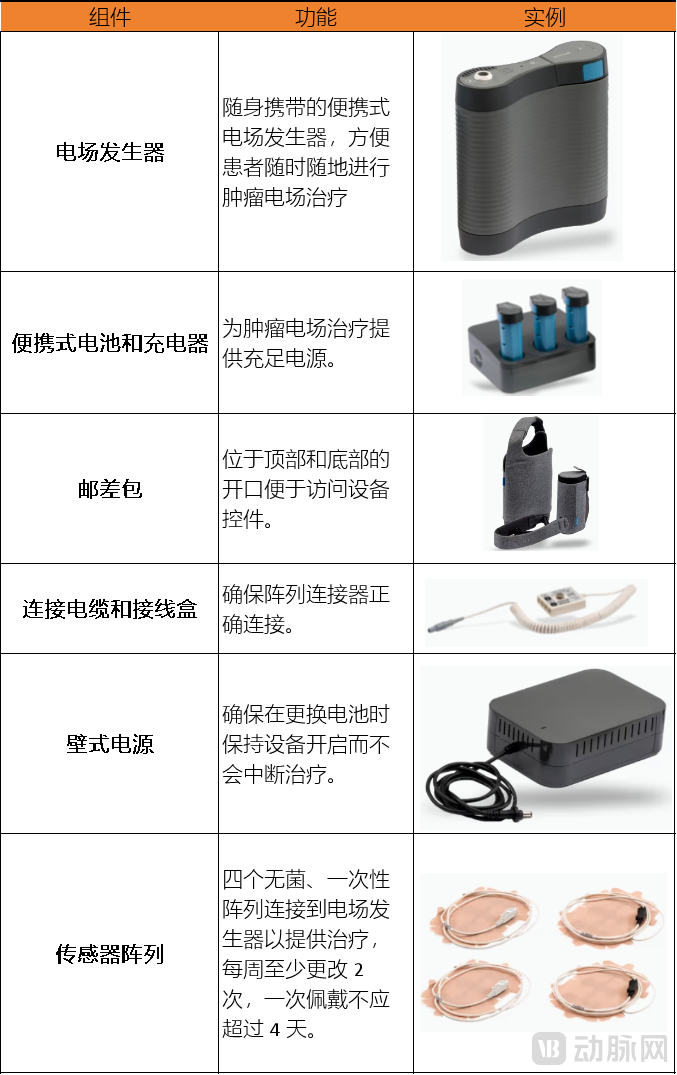
Tumor Treating Fields Therapy Product Structure (Using Optune Gio as an Example)
At present, the mechanism of action of tumor treating fields in clinical practice has not yet been fully elucidated.It is generally believed that specific electric fields interfere with tumor cell division, thereby inhibiting tumor growth. Specifically, during cell division, proteins such as tubulin must move to their correct locations in a specific manner. Cellular proteins including α- and β-tubulin and heterotrimeric proteins exhibit significant polarity; under the strong influence of an electric field, they are unable to perform their normal functions. During tumor treating fields (TTF) therapy, once the electric field penetrates cancer cells, it attracts and repels charged proteins during division, preventing them from reaching their proper positions and disrupting cancer cell division, thereby achieving the goal of inhibiting cancer cell proliferation.

# The Primary Mechanism of Action of Tumor Treating Fields
Furthermore, research indicates that the mechanisms of action of Tumor Treating Fields (TTFields) extend beyond these effects. For instance, TTFields can increase cell membrane permeability, thereby facilitating the enhanced uptake of other therapeutic agents into cancer cells. Additionally, TTFields can induce immunogenic cell death, thus augmenting anti-tumor immune responses. Consequently, compared with monotherapy, the clinical value of TTFields is more prominently realized in combination therapies, where they may be used concurrently with chemotherapy, targeted therapy, immunotherapy, or even radiotherapy to produce synergistic effects.
When it comes to tumor treating fields, an Israeli company is unavoidable.Novocure。Despite considerable challenges during early validation and development, Novocure has enjoyed unprecedented success since the approval of its first indication for tumor treating fields, monopolizing the global market for this therapy for over a decade.
In 2000, Professor Yoram Palti, a professor of physiology and biophysics at the Technion – Israel Institute of Technology, founded Novocure to commercialize Tumor Treating Fields (TTFields) therapy. Initially inspired by a doctoral dissertation on electric field distribution in nerve fibers, he used pencil and paper to calculate how electric fields could be employed to destroy cancer cells. In his basement laboratory, he demonstrated that alternating electric fields at tumor-cell-specific frequencies could disrupt cell division, leading to cell death without affecting normal cells. Nevertheless, for a considerable period, the efficacy of TTFields therapy remained highly questionable.
The turning point occurred in2003。In December of that year, Novocure initiated its first clinical trial in Switzerland for various solid tumors. The participant, a cancer patient who had undergone tumor resection surgery, experienced lesion shrinkage upon commencement of Tumor Treating Fields (TTFields) therapy. Subsequently, in 2004, the first clinical research paper on TTFields was published in Cancer Research, demonstrating the effects of low-intensity (1–3 V/cm), intermediate-frequency (100–300 kHz) alternating electric fields on multiple tumor cell lines and malignant animal models, and revealing that such fields could inhibit cancer cell division. This marked the emergence of TTFields as a novel cancer treatment modality and laid the foundation for subsequent clinical trials. In 2007, Novocure’s clinical research findings were published for the first time in the Proceedings of the National Academy of Sciences (PNAS), a top-tier peer-reviewed scientific journal.
In the subsequent years, multiple Phase III clinical trials of tumor treating fields were initiated successively, accumulating substantial data on efficacy and safety. In 2011, Optune, the world’s first tumor treating fields product, was approved for marketing in the United States for the treatment of malignant glioma.
Clinical data show that tumor treating fields combined with conventional chemotherapy can significantly improve the prognosis of patients with glioblastoma.In a large-scale Phase III randomized controlled clinical trial published in 2017, nearly 700 patients with newly diagnosed glioblastoma were enrolled. One group received standard chemotherapy (temozolomide), while the other received combination therapy of “chemotherapy plus Tumor Treating Fields (TTFields).” With the addition of TTFields, the median progression-free survival increased from 4 months to 6.7 months, and the median overall survival improved from 15.6 months to 20.5 months. The five-year survival rate also rose from 5% to 13%. Furthermore, studies indicated that if patients wore the TTFields device for an average of more than 22 hours per day, the median overall survival was further extended to 24.9 months, with the five-year survival rate approaching 30%.
As the fourth modality of cancer treatment, tumor treating fields have altered the life trajectories of patients with tumors previously deemed untreatable in clinical practice, and are now garnering widespread attention from the clinical and medical communities.
Key Indications Poised for Takeoff
Today, tumor treating fields have been approved for multiple oncology indications, and patients in hospitals across major countries worldwide can access this innovative cancer therapy.
For a long period following commercialization, the indications for tumor treating fields were primarily focused onMalignant Glioblastoma、Malignant Pleural Mesotheliomaand other relatively niche fields.This is because, in early studies, these two types of cancer cells demonstrated high sensitivity to specific electric fields. In 2019, Novocure’s Tumor Treating Fields therapy received approval for its second indication: the treatment of malignant pleural mesothelioma. Data show that Novocure has treated nearly 20,000 patients worldwide.
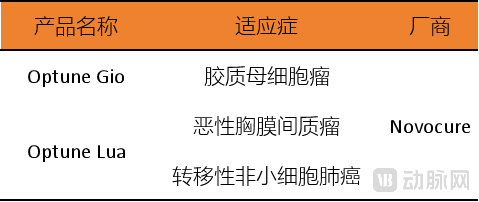
Approved Tumor Treating Fields (TTFields) Products and Indications
As researchers deepen their understanding of tumor-treating fields (TTF) and tumor cells, specific electric fields suitable for treating more prevalent cancers, such as non-small cell lung cancer, pancreatic cancer, and ovarian cancer, have been identified. Currently, more than 20 clinical trials on TTF therapy are underway worldwide. Notably, in recent years, an increasing number of domestic medical innovation enterprises have joined the wave of developing TTF therapy products. For instance, Hailai Xinchuang, mentioned earlier, has developed its proprietary TTF device, the EFE-G100, which has been recognized as an innovative medical device by the National Medical Products Administration (NMPA). Clinical trials evaluating the combination of TTF with standard therapies for newly diagnosed glioblastoma, pancreatic cancer, and non-small cell lung cancer are also in progress.
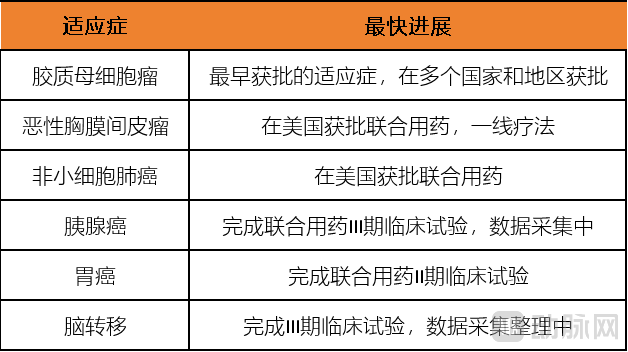
Fast-Advancing Investigational Indications for Tumor Treating Fields
The recent approval of the indication for advanced non-small cell lung cancer (NSCLC) has significantly expanded the clinical application scope of Tumor Treating Fields (TTFields) therapy. Globally, the number of patients with advanced NSCLC is increasing year by year. It is reported that HiRay Innovation’s Phase II/III clinical study evaluating its TTFields device in combination with docetaxel for the treatment of stage IV NSCLC following failure of platinum-based chemotherapy and anti-PD-(L)1 antibody therapy is currently underway. Statistics show that the number of new NSCLC cases worldwide increased from 1.731 million in 2017 to 1.926 million in 2021. This figure is projected to reach 2.141 million by 2025 and 2.421 million by 2030. Among newly diagnosed NSCLC cases, more than half of the patients are already at an advanced stage at the time of diagnosis.
According to reports, the Phase III clinical trial of tumor treating fields (150 kHz) combined with nab-paclitaxel and gemcitabine for patients with unresectable locally advanced pancreatic cancer, which was launched in February 2018, has enrolled more than 500 patients and was initially completed in early 2024. In June 2022 and March 2024, a Phase II clinical trial of tumor treating fields combined with chemotherapy as first-line treatment for gastric adenocarcinoma, and a Phase III clinical trial of tumor treating fields combined with radiotherapy for patients with brain metastases from non-small cell lung cancer, successively reached their primary endpoints. Following non-small cell lung cancer, key indications for tumor treating fields, such as pancreatic cancer and gastric cancer, are also on the verge of taking off.
While expanding its indications, tumor treating fields (TTF) therapy successively entered multiple markets across Asia and Europe. In 2018, Novocure’s first commercialized TTF device, Optune, was launched in Hong Kong, China. In September of the same year, Novocure introduced Optune to the Chinese mainland market through its partner, Zai Lab. Almost simultaneously, TTF therapy was recommended by the “Guidelines for the Diagnosis and Treatment of Gliomas (2018 Edition)” for the treatment of both newly diagnosed and recurrent glioblastoma. By the end of 2019, Novocure announced its entry into the European market, establishing a presence in France. In 2020, Optune received approval in China for use in combination with temozolomide for the treatment of patients with newly diagnosed glioblastoma multiforme (GBM), and as a monotherapy for patients with recurrent GBM.
According to incomplete statistics from VCBeat, by the end of 2023, Optune had been included in nearly 50 regional customized commercial health insurance or supplementary insurance plans guided by provincial or municipal governments in China. Data monitoring by PharmCube shows that in 2023, Optune’s sales revenue in the Chinese market reached RMB 338 million.
An Industry Once Stalled by Patents
Despite consistently demonstrating superior efficacy in the treatment of various solid tumors, both in clinical applications and in terms of sustained commercial growth, tumor treating fields (TTF), which have been on the market for over a decade, remain critically acclaimed but commercially underperforming.
In fact, the global market for tumor treating fields therapy was once prosperous.With the launch and strong sales of Optune, entrepreneurial and investment enthusiasm in the field of tumor treating fields has been ignited. In the face of the stringent patent barriers established by Novocure, a large number of domestic and international companies are attempting to innovate and break through. For instance, the UK-based startup QV Bioelectronics is challenging the technology of using implanted electrodes to disrupt cancer cell division, having secured approximately RMB 7.89 million in funding from Innovate UK.
In China, tumor treating fields (TTF) therapy has sparked an investment boom in the primary market, giving rise to star companies such as Hailai Xinchuang and Antai Kangcheng. Founded in 2016, Hailai Xinchuang has secured four rounds of funding from top-tier investors including Hillhouse Capital Partners, Legend Capital, Qiming Venture Partners, and Lilly Asia Ventures, raising a total of over RMB 700 million. Established in 2017, Antai Kangcheng has also obtained more than RMB 100 million in financing from renowned institutions such as Panlin Capital and Yuansheng Venture Capital.
However, the fervor in China’s tumor treating fields sector has subsided without yielding a single commercialized product or giving rise to a mature company specializing in this therapy.The aforementioned investment and financing boom primarily occurred around 2021, after which this niche sector remained relatively quiet for several years. A key reason behind this trend is that robust competition in the tumor treating fields (TTF) market has been constrained by patent barriers. It is understood that Novocure has secured more than 140 patents related to TTF therapy and continues to strengthen its patent protection wall. By safeguarding critical parameters such as low field intensity (1–3 V/cm) and medium frequency (100–300 kHz), Novocure makes it difficult for competitors to circumvent these core patents to achieve therapeutic effects using specific electric fields for tumor treatment.
Rigorous patent blockades have safeguarded the commercial value that Novocure can generate through Tumor Treating Fields therapy, yet they have constrained the optimization of the industry ecosystem.Some industry practitioners have stated that, in essence, low-intensity intermediate-frequency electric fields and electrode patches are not particularly expensive technologies. Overseas, the monthly cost of tumor treating fields (TTFields) therapy can reach as high as $21,000, primarily due to the purchase of disposable electrode arrays. In China, even with coverage from city-specific supplemental health insurance programs, patients still bear a substantial financial burden. According to media reports, a single electrode array for the Optune TTFields device costs 3,324.95 yuan, with six arrays required per treatment course. Clinicians have pointed out that, based on global multicenter Phase III clinical trials, it typically takes at least six months of use before therapeutic effects gradually emerge, while the optimal duration for continued treatment remains undetermined. The persistently high treatment costs undoubtedly hinder the widespread adoption of tumor treating fields therapy.
VCBeat discovered through Tianyancha that Novocure had previously initiated patent litigation against Hailai Xinchuang and Antai Kangcheng. Although the tumor-treating fields (TTF)-related products of these two companies are still in the clinical trial phase, the smoke of the patent war has already been ignited. This highlights the significant challenges faced by new entrants seeking to break into the TTF therapy sector.
However, as indications continue to expand and core patents have expired sequentially since 2021, tumor treating fields (TTFields) therapy—now under the radar of pharmaceutical giants—will no longer be a market dominated by a single company. More startups are poised to break through.