

Is It Viable for MNCs to Help Chinese Biotechs Go Global?
The answer to the question lies in MNCs’ strategies in China.
Multinational corporations have evolved from the 1.0 stage of exporting products to China, through the 2.0 stage of leveraging local resources for domestic production and sales in both Chinese and global markets, and the 3.0 stage of dedicated R&D and manufacturing tailored specifically for the Chinese market, to the current 4.0 stage of taking Chinese innovations “global.”
At the recently concluded 7th China International Import Expo (hereinafter referred to as the “CIIE”), it was evident that multinational corporations (MNCs) have shifted their positioning in the Chinese market from past market expansion to deepening local operations. The rise of domestically developed innovative drugs has also prompted MNCs to broaden their strategic thinking, adopting business models characterized by diversified operations, integration of industry and finance, and incubation collaboration, thereby working alongside domestic enterprises to meet the demands and development trends of the global market.
Rather than being mere competitors, let us be friends who cooperate for mutual benefit and win-win outcomes.
Expanding localized production capacity, deeply penetrating lower-tier markets, and solidifying the foundation for upgrading China strategies have become a consensus among MNCs.
Taking the highly sought-after GLP-1 innovative weight-loss drugs in recent years as an example, the Chinese market is becoming a critical battleground for these therapies. Eli Lilly, which has participated in the exhibition for six consecutive years, announced an investment of approximately RMB 1.5 billion to upgrade production capacity at its Suzhou plant, bringing its cumulative planned investment in Suzhou to nearly RMB 15 billion. Novo Nordisk, another leader in this field, also invested around RMB 4 billion this year to further expand its production capacity in Tianjin.
It is not only the new GLP-1 players that are investing and establishing a presence in China; multinational corporations (MNCs) that entered the market earlier have already begun to penetrate lower-tier markets.
AstraZeneca, regarded as “the company that understands the Chinese market best,” has invested more than $1.2 billion over the past two years to establish a global production and supply network in China, delivering high-quality “Made in China” products to over 70 markets worldwide. Meanwhile, AstraZeneca has continued to ramp up its presence in county-level markets, with its team size in these areas expanding from around 100 employees at inception to more than 4,000.
Pfizer has also been deeply engaged in the county-level market. During this China International Import Expo (CIIE), Pfizer hosted two health-themed events under the “Brightening a Thousand Counties” initiative. Currently, Pfizer’s innovative medicines have reached more than 1,800 counties across China. In particular, the launch of the County-Level Oncology Prevention and Treatment Center Construction Project has enabled patients in these areas to access Pfizer’s innovative therapies close to home.
Furthermore, Novartis, which has gained prominence for its radiopharmaceuticals, not only showcased radioligand therapy at the China International Import Expo (CIIE) using Apple Vision Pro and Microsoft HoloLens augmented reality headsets, but also established a dedicated zone to highlight its efforts in expanding into county-level markets. Currently, Novartis has reached approximately 1,000 county-level markets, with products covering major therapeutic areas including dermatology, rheumatology, cardiovascular diseases, and ophthalmology, thereby continuously improving the accessibility of innovative medicines. Meanwhile, through initiatives such as “Thousand Counties Set Sail,” “Thousand Counties Silver-Free,” and “Thousand Counties Standard Compliance,” Novartis is promoting standardized diagnosis and treatment, facilitating the decentralization of high-quality medical resources to county-level regions.
The China International Import Expo serves as a mirror, reflecting MNCs’ efforts in building industrial ecosystems and their strategic shifts in the Chinese market.
While Chinese companies were once at the periphery of this ecosystem, the deepening of medical innovation in China and the emergence of various innovative achievements are beginning to reshape the business models of multinational corporations (MNCs) in the country. In addition to acquiring Chinese innovative drug pipelines or merging with local pharmaceutical companies, MNCs are increasingly prioritizing collaborations with domestic partners to explore new business models.
Among these initiatives, a key effort involves leveraging its global resources to facilitate the international expansion of Chinese innovations, linking domestic enterprises with global market opportunities, and ultimately achieving win-win cooperation. At the China International Import Expo (CIIE), Siemens stated, “Siemens will leverage its strong technological advantages and global resources to comprehensively support Chinese companies in going global across multiple dimensions—including product capabilities, overseas deployment, brand building, and financial support—thereby building world-class competitiveness in the global market.”
To integrate into the international ecosystems of multinational corporations (MNCs), Chinese pharmaceutical companies are increasingly prioritizing the conduct of overseas clinical trials.
Taking China’s innovative drugs as an example, despite the vast domestic market, successful overseas expansion can yield substantial profit margins. For instance, last October, Junshi Biosciences’ toripalimab was approved for marketing in the United States at a price of $8,892.03 per vial, whereas the same specification sells for less than RMB 2,000 in China—indicating a price differential of more than 30-fold. Should the U.S. market be penetrated and subsequently expanded globally, the market potential would be immense. Such promising prospects are highly attractive; consequently, many leading Chinese innovative pharmaceutical companies, including Hengrui Medicine, have established their own R&D centers in the United States.
According to data from Nature, between 2007 and 2023, a total of approximately 177 Chinese innovative drug companies conducted clinical research on 350 innovative drugs in the United States, carrying out 691 clinical trials covering 499 indications. These included 399 Phase I trials (49%), 269 Phase II trials (39%), and 83 Phase III trials (12%).
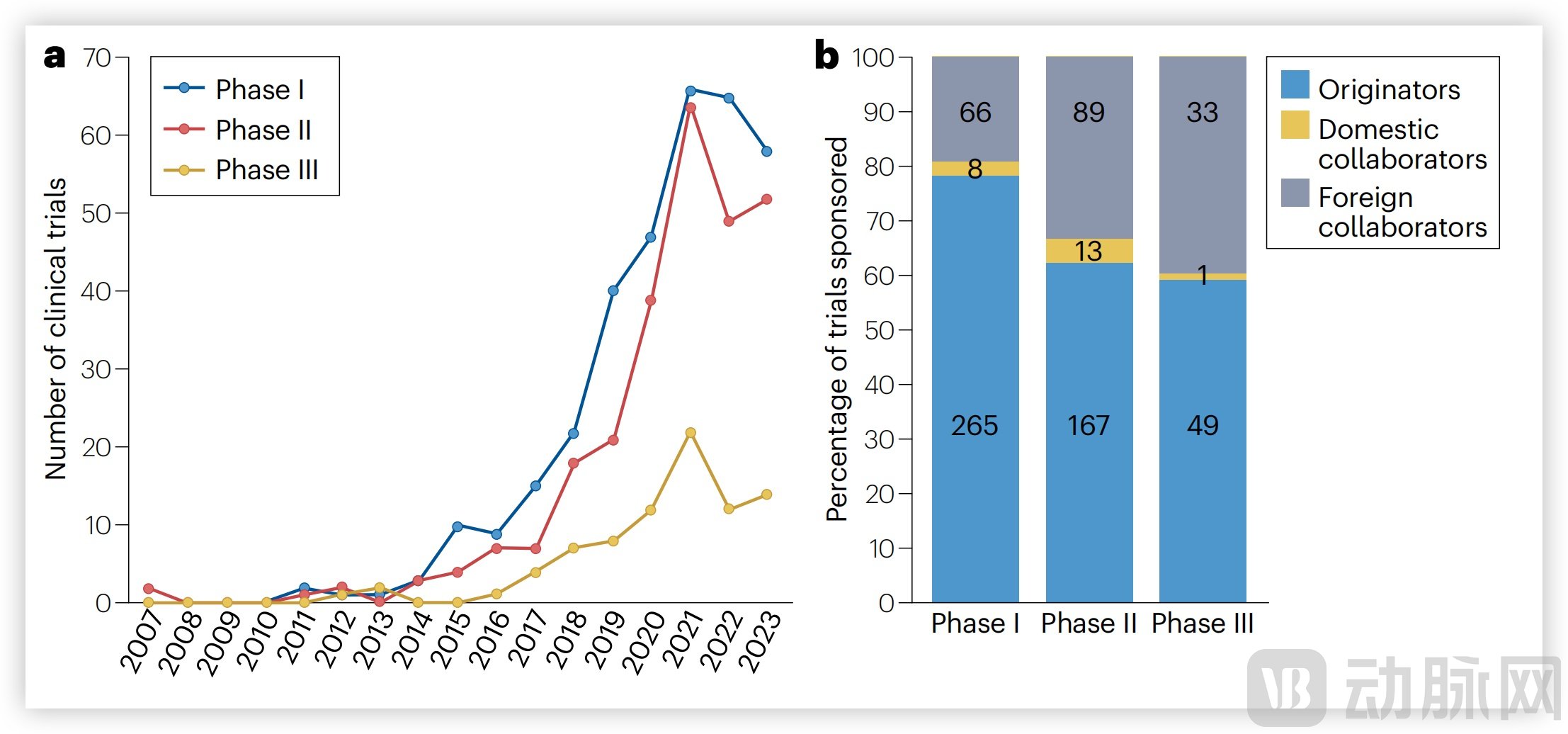
Number of Clinical Trials of Chinese Innovative Drugs Conducted in the United States and Sponsor Classification, Source: Nature
Notably, the number of clinical trials for innovative Chinese drugs conducted in the United States increased substantially between 2019 and 2023, with approximately 82% of these trials initiated during this period.
Among these, Phase I and II clinical trials have experienced relatively rapid growth, while the growth rate of Phase III clinical trials has been comparatively slower, reflecting the attrition rate inherent in innovative drug development. Although the number of clinical trials declined after 2021 due to the impact of the pandemic, it began to rebound in 2023.
In terms of R&D success rates, a total of 75 new drug development projects from approximately 34 Chinese innovative pharmaceutical companies underwent changes in clinical trial phases over a seven-year period. Among these, 45 projects were for oncology indications, accounting for 60%. The Phase II clinical trial stage had the lowest success rate at only 17%, significantly lower than that of Phase I and Phase III clinical trials. The highest success rate was observed at the stage of submitting marketing applications (67%). Overall, the cumulative success rate for Chinese innovative drugs progressing from Phase I clinical trials to FDA approval in the United States was 1.7%.
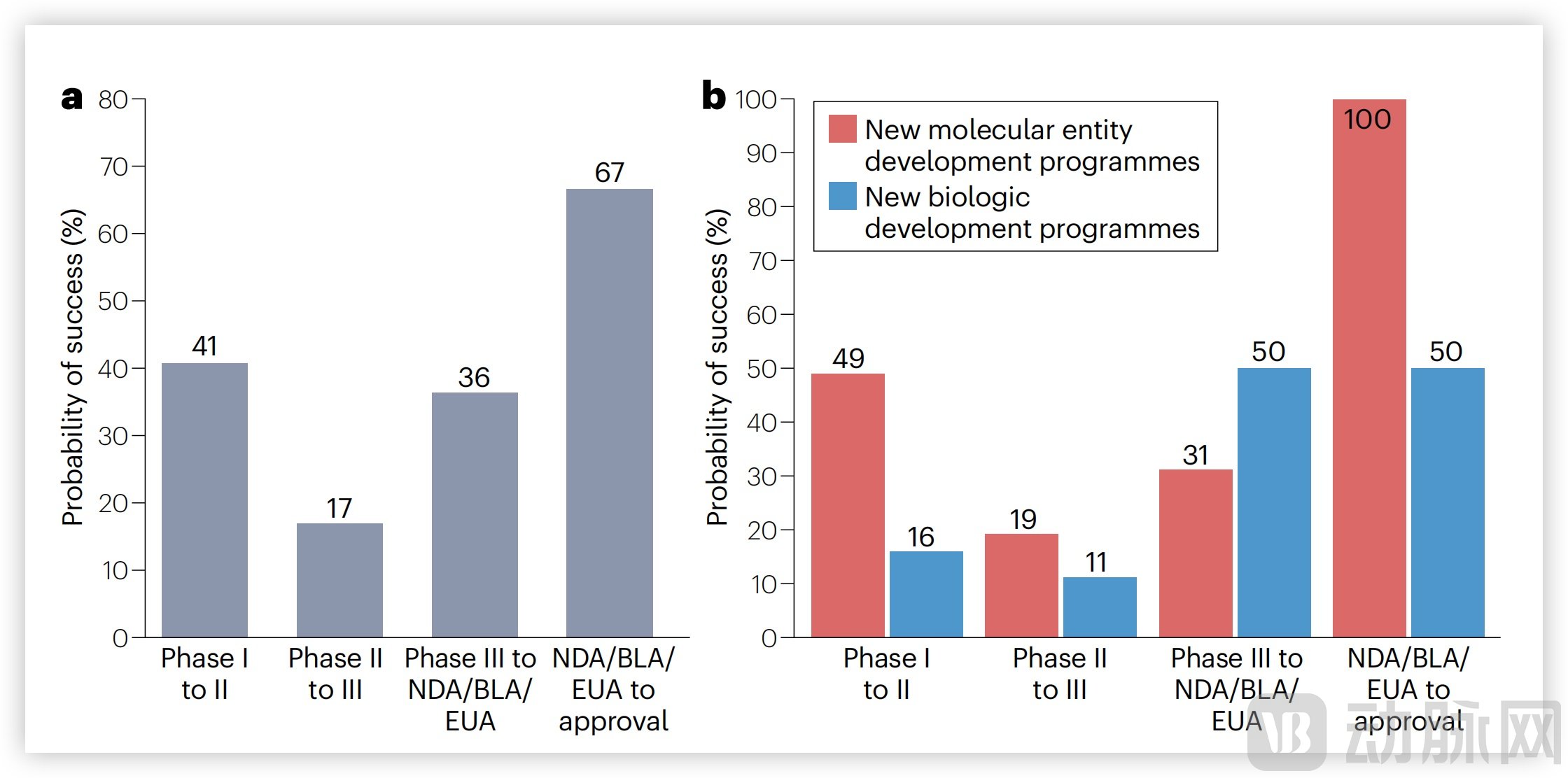
Clinical Trial Success Rates of Chinese Innovative Drugs in the U.S. by Phase, Source: Nature
Furthermore, among the 691 clinical trials conducted in the United States, approximately 70% (481 trials) were sponsored by Chinese companies, about 27% (188 trials) by foreign collaborators, and roughly 3% (22 trials) by domestic partners. It is evident that as clinical trials progress through later phases, the proportion sponsored by overseas collaborators increases, rising from 19% in Phase I to 40% in Phase III. Meanwhile, the Phase III clinical success rate for new biological products is higher than that for new molecular entities (50% vs. 31%).
These data reveal the following: First, domestic companies have a clear understanding of where their future “vast frontiers” lie. Second, despite significant challenges, these companies have achieved numerous phased accomplishments. Finally, they are not resistant to collaborating with foreign enterprises and even look forward to establishing such partnerships.
As domestic medical innovation continues to advance, the supply side faces looming concerns of “oversupply,” while the payment side remains significantly inadequate in its capacity to absorb these innovations.
Although the number of domestically developed Class 1 innovative drugs approved for marketing in the United States remains in the single digits, going global has become an inevitable path for the survival and development of Chinese pharmaceutical companies, as only the vast overseas market can absorb the large volume of such drugs. Following pioneers such as zanubrutinib, toripalimab, and ciltacabtagene autoleucel, a large cohort of domestically developed innovative drugs is still waiting in line at the U.S. FDA’s door.
According to incomplete statistics, approximately eight domestically developed Class 1 innovative drugs from China have submitted marketing applications in the United States, while around 40 new drug candidates from more than 30 Chinese pharmaceutical companies are in late-stage clinical trials. These projects have invested substantial resources in international clinical trials, clearly indicating that their targets extend beyond the domestic market alone.
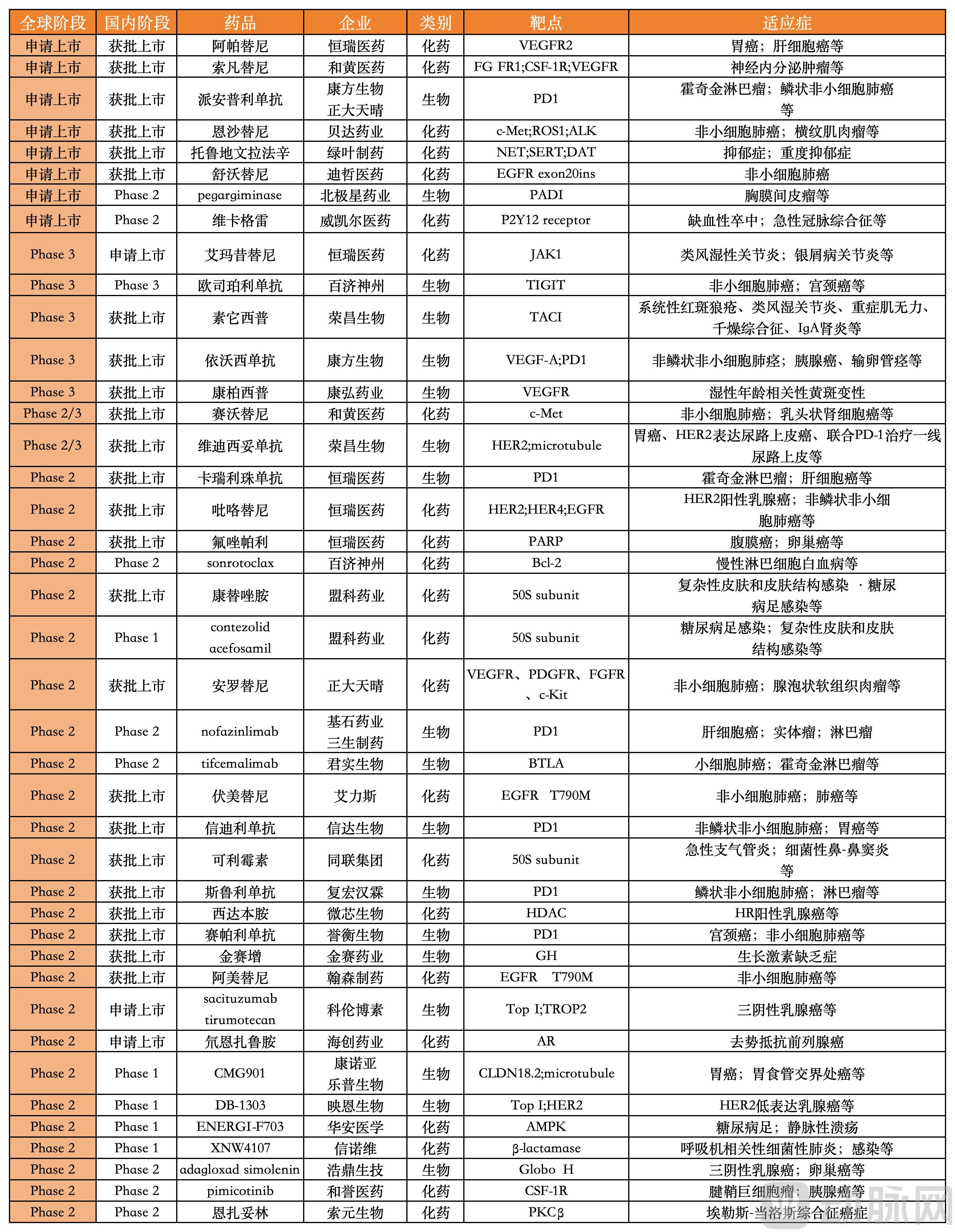
Some domestically developed innovative drugs with advanced international clinical progress, compiled from public information
On the other hand, the research and development of innovative drugs in China has entered a phase of high-quality innovation, beginning to yield a significant number of blockbuster new products.
According to data from the “2024 Annual Review of Pharmaceutical R&D Trends” published by the consulting firm Informa, China’s innovative drug pipeline currently ranks second worldwide, trailing only the United States. The U.S. accounts for approximately 50% of the global innovative drug pipeline under development, while China’s share has risen to around 30%.
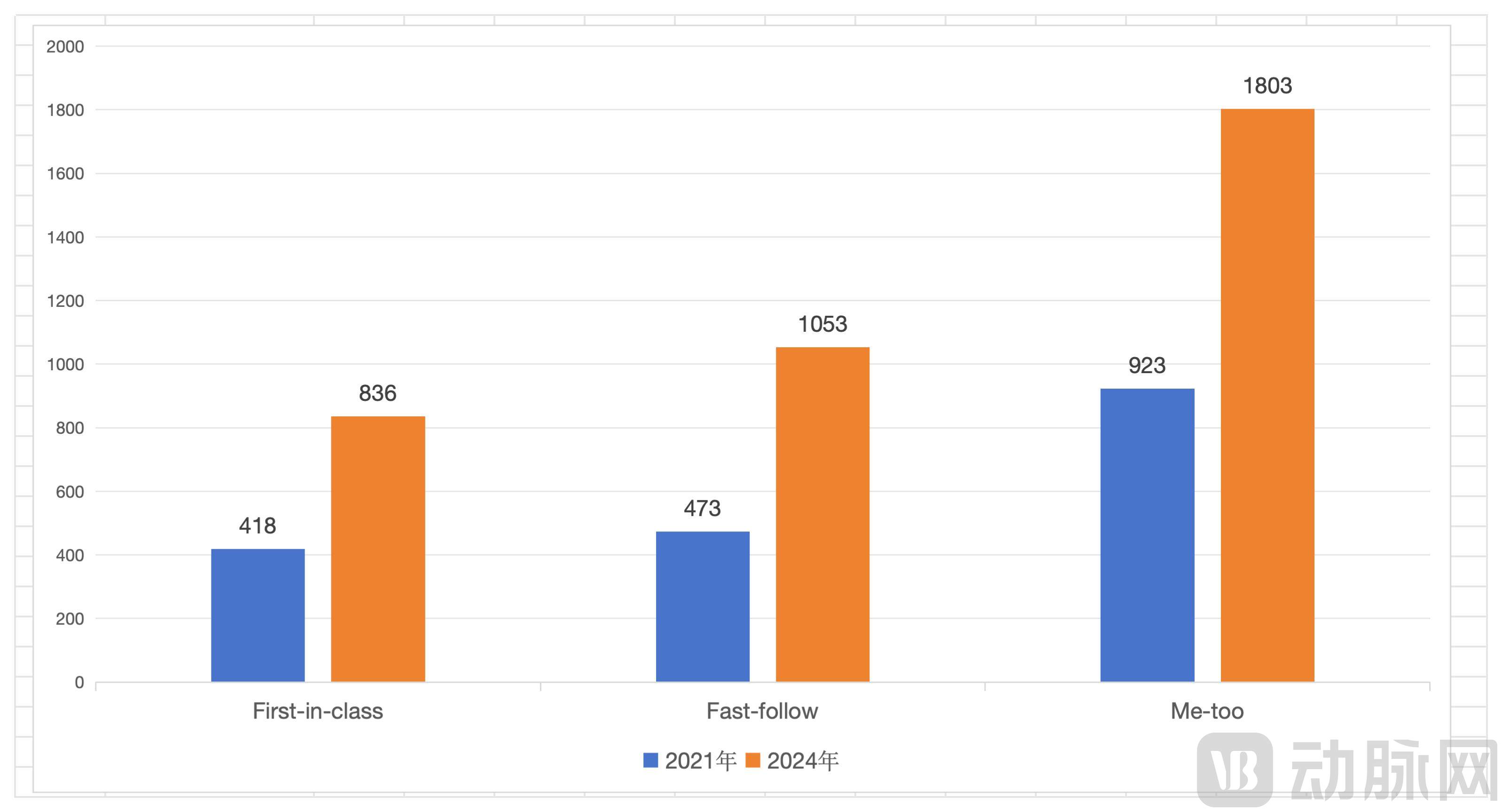
Growth of China’s Innovative Drug Pipeline, Data Sourced from *Nature Reviews Drug Discovery*
Data published in *Nature Reviews Drug Discovery* also show that the number of “First-in-class” drug candidates in China increased from 418 in 2021 to 836 in 2024, representing a 100% growth; “Fast-follow” candidates rose from 473 in 2021 to 1,053 in 2024, an increase of approximately 123%. Both growth rates exceed the 95% growth rate observed for “Me-too” drug candidates.
Overall, China’s innovative drug sector has achieved leapfrog development. In the coming years, a large number of new products will emerge, and the only market capable of absorbing these innovations is the larger global market. Leveraging the upgraded China strategies of multinational corporations (MNCs) to go global may well be the optimal choice at present.
The role of MNCs has shifted from being mere importers to becoming exporters that help Chinese innovative drugs “go global.”
In the past two years, license-out transactions in China have repeatedly hit new highs. According to incomplete statistics, there were 75 license-out deals for domestically developed innovative drugs in 2023, with a total transaction value of approximately $39 billion—representing a 15-fold increase in deal volume and a 56-fold surge in total value compared to 2019. The momentum continued into 2024, highlighted by a landmark collaboration agreement between AstraZeneca and CSPC Pharmaceutical Group valued at over $2 billion.
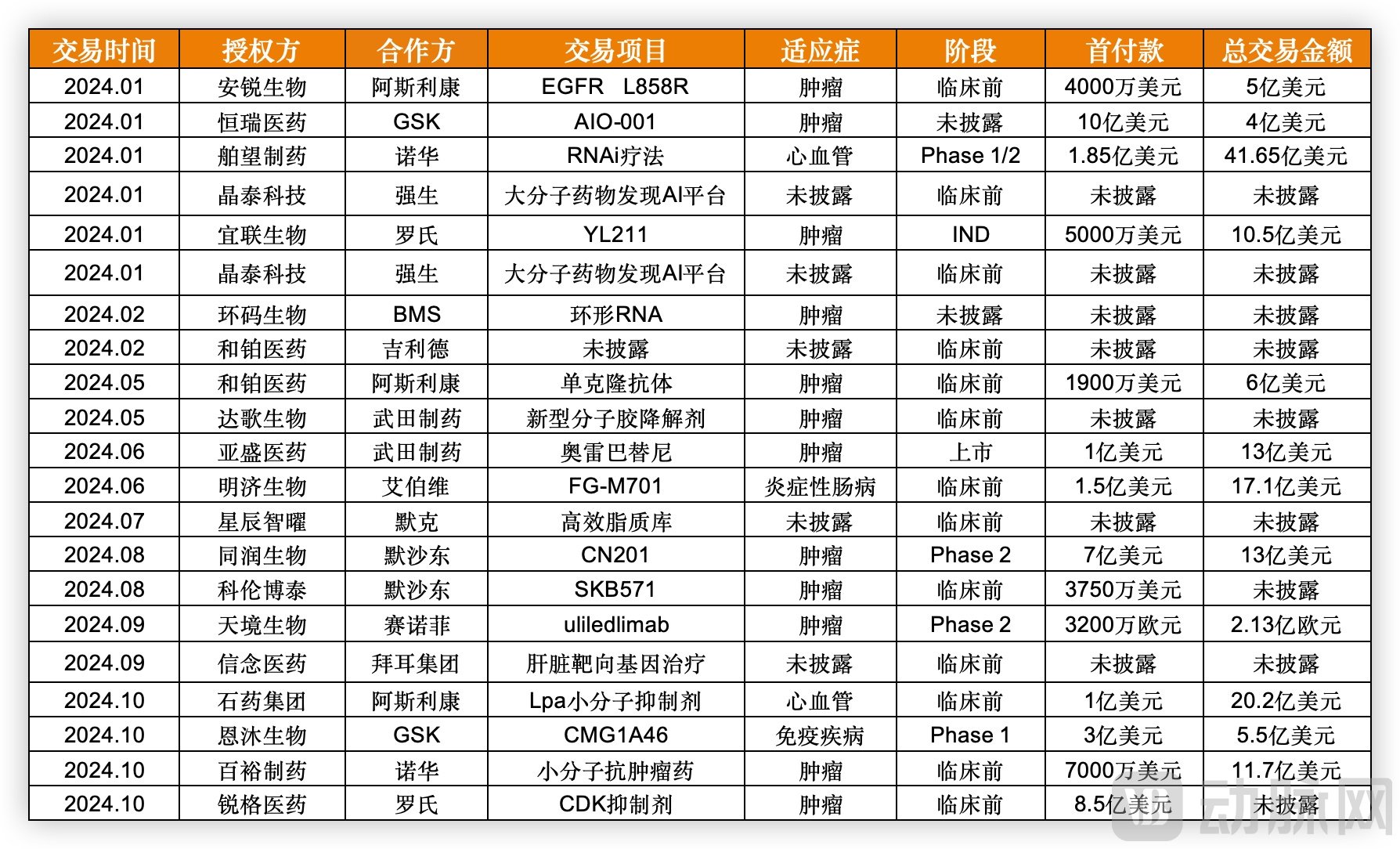
MNCs’ BD Transactions Involving Chinese Assets This Year: Compiled from Public Information
As mutual understanding deepens, collaboration between multinational corporations (MNCs) and domestic enterprises has extended beyond business development (BD).
Take AstraZeneca, which has cultivated the Chinese market for 30 years, as an example. Over the past three decades, it has invested nearly $3 billion in total, bringing more than 40 innovative medicines to Chinese patients, including 11 “CIIE Babies” introduced through the China International Import Expo (CIIE) platform. Leveraging the CIIE platform, AstraZeneca continues to increase its investment in China.
More importantly, leveraging the China International Import Expo (CIIE) as a catalyst, AstraZeneca has been continuously promoting the global expansion of Chinese innovations. For instance, during last year’s CIIE, AstraZeneca and Chengyi Biopharma reached a global licensing agreement with a total value exceeding RMB 10 billion. Since 2023, AstraZeneca has entered into global licensing collaborations with 10 innovative Chinese pharmaceutical companies, with the cumulative total value surpassing USD 8.5 billion.
Leveraging AstraZeneca’s global network, Chinese innovative enterprises are beginning to connect with the world to seek new market opportunities. In 2023, AstraZeneca facilitated exchanges for more than 130 companies in regions including Brazil, the Middle East, and Europe. Over ten Chinese companies have already established a presence or reached cooperation intentions in multiple global markets. Meanwhile, active strategic deployments are underway in key bridgehead markets such as Brazil in South America, Saudi Arabia in the Middle East, Egypt in Africa, Spain in Europe, and Turkey in Eurasia.
During the visit of a Chinese healthcare enterprise delegation to the Middle East in September last year, jointly supported by AstraZeneca and Legend Capital, AstraZeneca’s international business management team actively engaged with the delegation on strengthening collaboration between the Middle East market and Chinese enterprises in the field of medical innovation, in addition to facilitating meetings and exchanges between the delegation and government departments in the United Arab Emirates and Saudi Arabia. Furthermore, AstraZeneca proactively facilitated discussions between the delegated companies and SPIMACO Group, Saudi Arabia’s largest private pharmaceutical company and AstraZeneca’s local manufacturing partner, to explore potential areas of cooperation.
This trend extends beyond innovative drugs to medical devices as well. As numerous multinational corporations take “Intelligent Manufacturing in China” global, the global medical device industry chain is undergoing a significant restructuring.
In 2023, Acotec and global medical device giant Boston Scientific signed a collaboration agreement, under which the two parties will cooperate in areas such as global product commercialization, manufacturing services, and product development. The most notable aspect of this partnership is the overseas sales agreement reached between Acotec and Boston Scientific, granting Boston Scientific exclusive distribution rights for selected Acotec products in “specified overseas markets.” Through Boston Scientific’s sales channels in overseas markets, Acotec is expected to generate revenue exceeding RMB 1.2 billion within three years.
The global expansion of medical devices, particularly high-value consumables, has long faced significant challenges, such as product competitiveness and market access barriers. Chinese companies have also attempted to expand their overseas businesses through acquisitions; although this approach can facilitate rapid market entry, it entails relatively higher costs.
Boston Scientific was attracted by the product advantages of Acandis, indicating that Chinese enterprises can begin to break through by relying on differentiated innovative products. The collaboration between the two parties set a precedent for Chinese high-value consumables companies to leverage partnerships for global expansion. Building on last year’s initial effort, Boston Scientific and Suzhou New Optivision Medical have further deepened their strategic cooperation this year, with both parties committing to ongoing collaboration in strategic investment, joint development, and global promotion.
Boston Scientific stated that it will share its global innovation and management expertise in areas such as commercialization licensing, collaborative R&D, and empowerment through systematic compliance management, thereby helping “Intelligent Manufacturing in China” integrate into the global ecosystem. At this year’s China International Import Expo (CIIE), Boston Scientific also collaborated with government, industry, academia, research institutions, and healthcare providers to host an industry roundtable forum, focusing on local supply chain cooperation and exploring pathways for innovative, win-win partnerships.
In addition to directly assisting Chinese companies in expanding overseas, multinational corporations can also indirectly support their global expansion.
Taking Varian as an example, its Beijing base has become the company’s most important global production and R&D hub, with 82% of its products exported to 90 countries and regions worldwide. The establishment of the Beijing factory was made possible through collaboration with local suppliers, empowering outstanding domestic suppliers to upgrade their technologies during the partnership. For instance, a tungsten carbide sheet supplier in Beijing, under Varian’s guidance, evolved from a basic raw material provider into a high-end medical device supplier. It has now become a world-leading manufacturer of double-layer multileaf collimators (MLCs), possessing global competitiveness.
Leveraging the support of multinational corporations (MNCs) to expand overseas not only broadens market reach but also enhances a company’s R&D and innovation capabilities through international cooperation and competition, ultimately achieving the goal of localized manufacturing abroad. This, in turn, drives value upgrading across the entire supply chain.
In the process of partnering with MNCs to expand overseas, it is not only the enterprises themselves that benefit, but also the entire supply chain.
As Chinese enterprises deepen their global expansion, some pioneers have embarked on overseas localization initiatives. For instance, Fosun Pharma has made significant inroads into Africa by independently developing and launching the second-generation injectable artesunate through process optimization, addressing the needs of clinical healthcare professionals. It became the world’s first “single-step reconstitution artesunate for injection” to receive WHO prequalification. Meanwhile, Fosun Pharma aims to achieve localized production and supply by investing in manufacturing facilities in Africa.
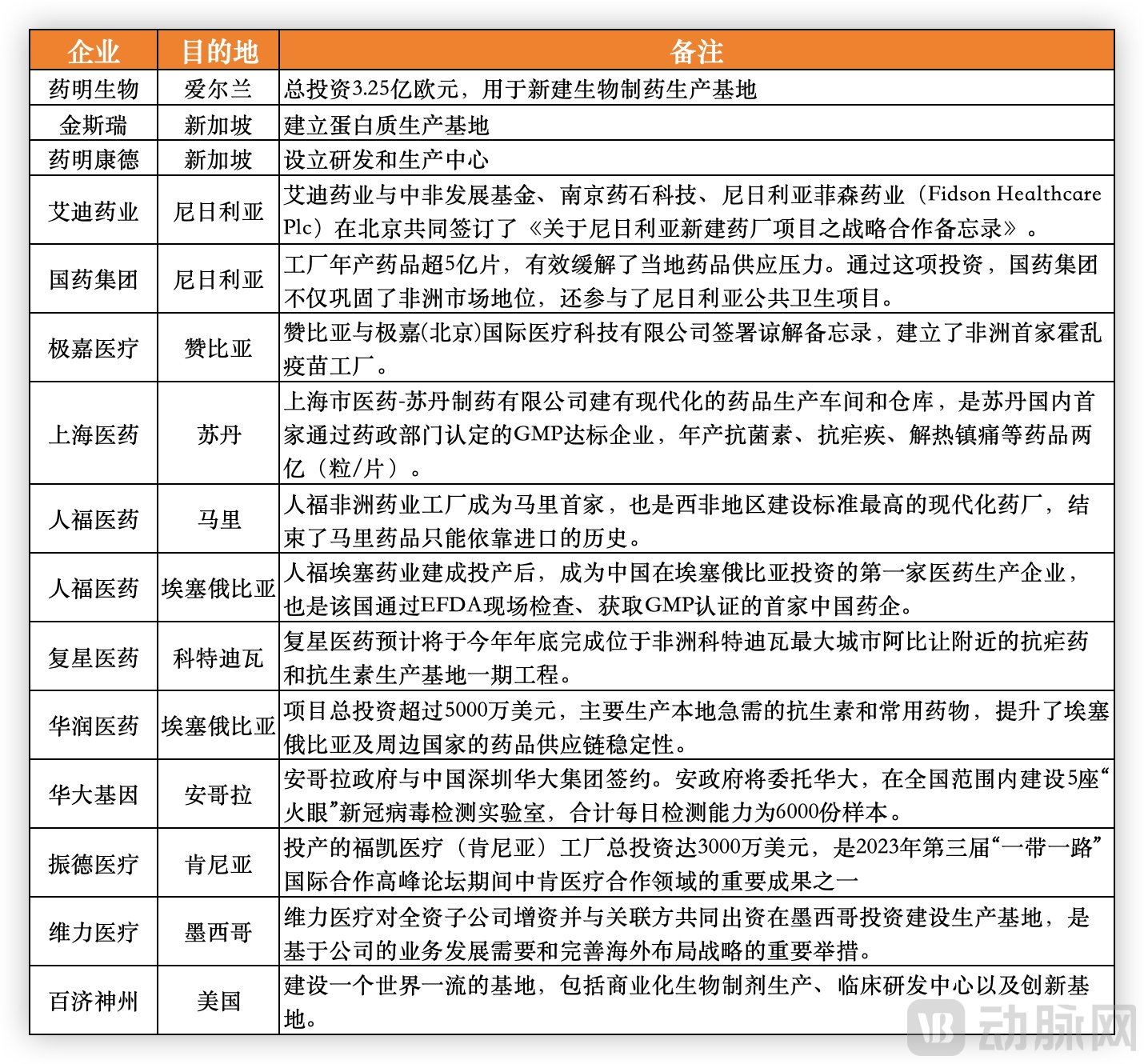
Overview of Overseas Factory Establishments by Select Chinese Enterprises, Compiled from Public Information
By the end of this year, Fosun Pharma is expected to complete Phase I construction of its pharmaceutical manufacturing plant near Abidjan, Côte d’Ivoire. In the future, the Fosun Pharma Côte d’Ivoire industrial park project will follow a three-step strategic plan: developing infrastructure, optimizing production lines, and expanding project capacity. Throughout this process, support from relevant domestic supply chains in China is indispensable. As companies expand overseas by establishing factories, their supply chains will also demonstrate their value in the global market, thereby reshaping the market landscape.
Currently, Chinese enterprises establishing overseas manufacturing facilities are primarily focused on Southeast Asia and Africa, with a relatively small proportion in Europe and the United States. The stability and controllability of supply chains, coupled with systematic improvements in manufacturing capabilities, serve as critical support for the global expansion of Chinese pharmaceuticals. China’s pharmaceutical supply chain is becoming increasingly mature, providing stable support for the growth and development of pharmaceutical companies. While previous domestic substitution efforts were largely driven by price advantages, future domestic substitution will undoubtedly be value-driven. Chinese enterprises that can demonstrate their value will play an increasingly important role in the global pharmaceutical market.