

GenLeap Bio Launches Automated and Intelligent One-Stop Gene Technology Platform, Cutting Production Cycle by Over 20%

GENTLEGEN
Provider of Life Science Laboratory Automation Solutions
In recent years, driven by the wave of synthetic biology, gene technology applications, as key foundational technologies and tools in synthetic biology, have once again ushered in unprecedented development opportunities.
According to Markets and Markets data, the global genomics market size was $46.2 billion in 2023. It is projected to reach $83.1 billion by 2028, with a compound annual growth rate (CAGR) of 12.4%.
In response to the sustained growth in demand for gene technology applications across the industry, Suzhou GENTLEGEN Biotechnology Co., Ltd. (hereinafter referred to as “GENTLEGEN”) is committed to building an industry-leading automated and intelligent biotechnology application platform, aiming to accelerate advancements in life sciences R&D and empower the upgrading of the synthetic biology industry.
Currently,GENTLEGEN has established a one-stop gene technology application platform based on automation technologies, encompassing gene synthesis, oligonucleotide synthesis, Sanger sequencing, high-throughput sequencing, gene editing, and protein expression. It provides life science customers with comprehensive solutions ranging from single-scenario applications to full-scale production lines.
Recently, GENTLEGEN's self-developed Sanger sequencing production line officially commenced operations. According to reports,This production line is the first fully automated Sanger sequencing production line in China, capable of providing customers with one-stop Sanger sequencing and related supporting services, while reducing the gene sequencing cycle to 80% of that of manual production lines. By leveraging its self-developed automated and intelligent production line, GENTLEGEN will help customers significantly shorten gene synthesis time, thereby accelerating the acquisition of recombinant antibodies and speeding up the early discovery of antibody drugs.
GENTLEGEN was established in 2022, attracting industry experts from multiple fields including life sciences, automation, and artificial intelligence. It has now built a comprehensive team comprising mature talent in life science automation design and development, as well as scenario design professionals with over a decade of deep industry experience. Core team members have previously engaged in R&D and operational management in the fields of gene synthesis and nucleic acid synthesis, possessing more than ten years of industry experience in gene technology applications.
On the one hand, with the continuous development of the biopharmaceutical and synthetic biology industries, the market size for conventional gene technology applications has shown a consistent growth trend. On the other hand, traditional gene technology applications, which are labor-intensive, still face a series of challenges, such as high and rising labor costs, variability in manual operations affecting delivery quality, human efficiency and error rates impacting delivery timelines, and increasing difficulty in manual experimental procedures driving up ancillary costs. Yang Peng, Vice President of GENTLEGEN, mentioned in an interview with VCBeat:"Full-process automation and standardization have become one of the pain points in the development of the gene technology application industry."
Specifically, artificial intelligence technologies can be applied throughout the entire process of gene synthesis and gene sequencing, covering all key technical stages from difficulty analysis and primer fragment design to PCR amplification, assembly, production, and gene sequence sequencing.For example, in routine laboratory operations, order allocation can shift from the traditional model—where lab supervisors spend considerable time scheduling experimental production—to an automated process powered by deep learning techniques enhanced with genetic algorithms or dual genetic algorithms, which directly match user-requested orders with experimental resources.
In the primer fragment design segment of gene synthesis, traditional manual processes have been characterized by low accuracy and efficiency, substantial workloads for large-scale designs, and high costs. Leveraging AI-driven decision tree algorithms, the production line can automate complex, high-barrier tasks such as recombination arm selection, optimal fragment length determination, and sequence deduplication.By optimizing the entire production line, manual labor resources can be redirected to downstream processing stages that feature higher technical barriers and greater application efficiency, thereby substantially accelerating gene synthesis speeds and driving the rapid development of the mid- and downstream industry chains.
In less than three years since its establishment, GENTLEGEN has completed two rounds of financing, totaling tens of millions of yuan, and has gained recognition and support from industrial partners in the fields of industrial automation and downstream healthcare, as well as from renowned investment institutions.
Currently, GENTLEGEN is actively exploring the application of deep learning and machine vision technologies in equipment scheduling, gene fragment design, experimental protocol design and selection, and production resource allocation. By achieving breakthroughs at individual application points, the company is investigating the translation of artificial intelligence into gene sequencing, gene synthesis, and automated laboratory platforms.GENTLEGEN has gradually deployed a range of self-developed standalone and modular instruments, including oligonucleotide synthesizers, liquid handling workstations, automated purification workstations, PCR robots, colony-picking robots, and plasmid extraction robots.The equipment features high precision, high efficiency, flexibility, and scalability, and can be customized in various configurations to meet the requirements of different projects.
On this basis,GENTLEGEN has established multiple fully automated platforms for gene technology applications.The platform integrates foundational automation technologies—including precision motion control, material handling, computer vision, temperature control, liquid handling, machine learning, and software control—with core biotechnological processes such as chemical synthesis, biological assembly, development of key molecular enzymes, and bioinformatics software development. Currently, GENTLEGENThe application platform has achieved automation and intelligence in one-stop gene technology applications, including gene synthesis, oligonucleotide synthesis, Sanger sequencing, high-throughput sequencing, gene editing, and protein expression, providing comprehensive application solutions for customers in the global life sciences sector.
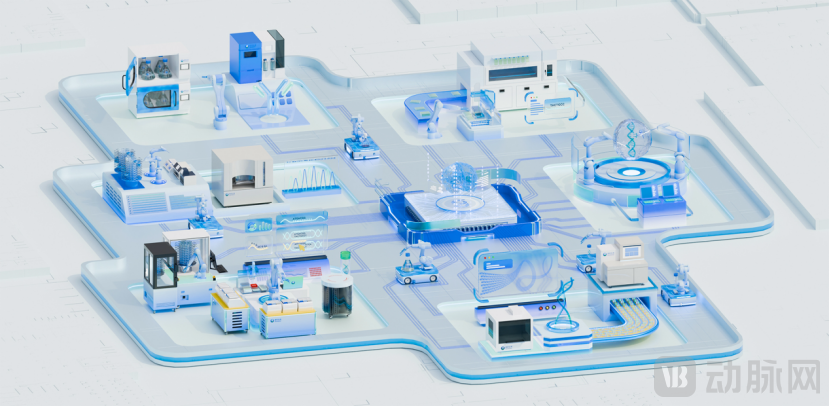
Leveraging a fully automated end-to-end gene technology application platform,GENTLEGEN provides comprehensive, integrated applications of automated gene innovation technologies for clients at various stages, covering the three major domains of gene writing (synthesis), reading (sequencing), and editing.
Yang Peng, Vice President of GENTLEGEN, noted that as cell and gene therapy (CGT) continues to expand in clinical applications, the demands and standards for product quality control are increasingly stringent. Regulatory agencies worldwide are gradually raising their requirements for quality testing of CGT products and advocating the use of advanced technologies such as Next-Generation Sequencing (NGS). Regulatory bodies including the U.S. FDA, the European EMA, and China’s NMPA are actively encouraging the adoption of NGS as an analytical and testing tool to enhance the quality control of therapeutic products and ensure patient safety.
Due to its high throughput, accuracy, and sensitivity, next-generation sequencing (NGS) enables in-depth analysis of nucleic acid sequences, thereby identifying structural variants, insertions or deletions, point mutations, gene fusions, and other genomic alterations. This facilitates a comprehensive assessment of the safety, stability, and efficacy of cell and gene therapy products. For instance, NGS technology can be employed to verify the insertion sites of therapeutic genes, detect potential off-target effects, evaluate the efficiency of gene editing, and monitor genomic integrity throughout the treatment process. “In the analytical testing of biopharmaceuticals, NGS technology not only drives product development and production optimization but also provides data support for regulatory review and clinical application.”
Therefore, GENTLEGENTo address the quality analysis and testing requirements for CGT products, we have launched the innovative NGSafety™ technology platform, which includes mRNA-NGSafety™, CRISPR-NGSafety™, AAV-NGSafety™, and Lenti-NGSafety™. This platform meets regulatory requirements through a rigorous quality control system, precise sample preparation processes, and advanced bioinformatics analysis capabilities.
Over the past year, GENTLEGEN has achieved numerous phased milestones, established partnerships with multiple leading pharmaceutical companies both domestically and internationally, and realized revenue at scale. Building on this foundation, GENTLEGEN is prioritizing the construction and commissioning of fully automated production lines for standardized gene sequencing and synthesis, specifically includingChina's First Fully Automated Sanger Sequencing Production Line, Oligonucleotide Synthesis Automated Production Line, and Gene Synthesis Automated Production Line, ultimately establishing a one-stop automated production line for gene technology applications encompassing gene synthesis, sequencing, editing, and expression.
GENTLEGEN boasts an advanced automated and intelligent platform. In practice, after gene sequences undergo codon optimization, the platform automatically designs primers and cloning strategies. The designed primers are then automatically synthesized by GENTLEGEN’s proprietary synthesizers. Subsequently, through the coordinated operation of GENTLEGEN’s automated PCR robots, colony-picking robots, and automated sequencing lines, plasmid construction and sequencing verification are completed. This achieves full-process automation from sequence design to plasmid construction, eliminating the need for manual intervention throughout the entire laboratory workflow.
Trial data from the fully automated Sanger sequencing production line demonstrate that, throughout the workflow from plasmid preparation to delivery of sequencing results, the system effectively mitigates issues such as human error, insufficient throughput, low production efficiency, inconsistent quality, and poor reproducibility in laboratory settings.Compared with traditional manual production lines, this production line can increase the product success rate to 96% and shorten the production cycle to 80% of that of manual production lines, significantly reducing sequencing costs.
With the completion of its one-stop automated production line for gene technology applications, GENTLEGEN can further reduce labor costs, optimize production processes, and thereby enhance production efficiency, ensure consistent quality, and minimize error rates, ultimately shortening product delivery cycles and lowering production costs.
Yang Peng, Vice President of GENTLEGEN, stated: "GENTLEGEN’s one-stop automated production line for gene technology applications features “high replicability” and currently enables the construction of fully customized, automated production lines, the deployment of satellite laboratories, and the flexible expansion of production capacity alongside global layout.One-stop automated production lines for gene technology applications can be seamlessly integrated and replicated in laboratories worldwide, allowing customers to customize the automation lines according to their specific needs.
In less than two years, GENTLEGEN has achieved a series of milestone developments:GENTLEGEN has established a 3,000-square-meter intelligent laboratory and GMP-like production workshop, and has independently designed and developed equipment and production lines for multiple scenarios. In the future, GENTLEGEN aims to create an AI-powered smart laboratory that operates 24/7 without human supervision and is不受 constrained by working environmental conditions.
Meanwhile,GENTLEGEN has established an international sales network and brand foundation in China and other Asia-Pacific countries, forming a development pattern of “domestic production bases + global overseas layout.”Among these, the company has established satellite laboratories in Suzhou and Tianjin, which are now fully operational, with business coverage spanning 80% of China’s major regions. In addition, its gene technology applications and automated production lines have been exported to multiple countries and regions, including Singapore, Australia, South Korea, and India, with overseas revenue accounting for over 10% of total income.
Furthermore, GENTLEGEN is continuously strengthening its core technology platform for automated gene technology applications, achieving iterative upgrades of its core technologies through intelligent and automated approaches, and gradually entering the incremental application market of synthetic biology via differentiated technologies.
Synthetic biology is regarded as the “key to understanding life” and a “disruptive technology that will change the future,” driving industrial transformation in next-generation biomanufacturing and the emerging bioeconomy through its disruptive innovative power. As a key foundational technology of synthetic biology, the application of gene technology has become a critical factor propelling advances in both basic research and applied fields.
Yang Peng, Vice President of GENTLEGEN, stated: “In the future, building upon the commercial deployment of gene technology applications and automated production lines, the company will integrate innovative technologies such as artificial intelligence and automation to create a highly intelligent and fully automated “unmanned factory” for comprehensive gene technology applications. Meanwhile, the company is heavily investing in the research and development of next-generation disruptive gene technologies. For instance, GENTLEGEN has achieved multiple technological breakthroughs in the development of next-generation cell-free gene synthesis technology, overcoming a series of technical bottlenecks including the coding system for cell-free gene synthesis platforms, rapid sequence verification, and single-molecule signal retrieval. It is the first company in China to complete the full-process development of next-generation cell-free gene synthesis technology. In the future, cell-free gene synthesis technology, combined with high-throughput, automated gene synthesis platforms, will be perfectly suited to meet the massive data demands required for training large-scale AI models.”
GENTLEGEN has recently launched a new round of financing to accelerate the automation of its entire product line for disruptive innovative gene technologies and further promote the global expansion of automated gene technology applications.