

MNCs Pour Over $10 Billion into Molecular Glues as the Hot Therapeutic Platform Draws Global Pharma Giants
Since the beginning of this year, major transactions in the molecular glue field have continued, with the cumulative transaction value exceeding$10.08 billion. In October alone, Biogen, Novartis, and Pfizer each entered into major collaborations with companies in the molecular glue field, with a total combined value of $5.249 billion.
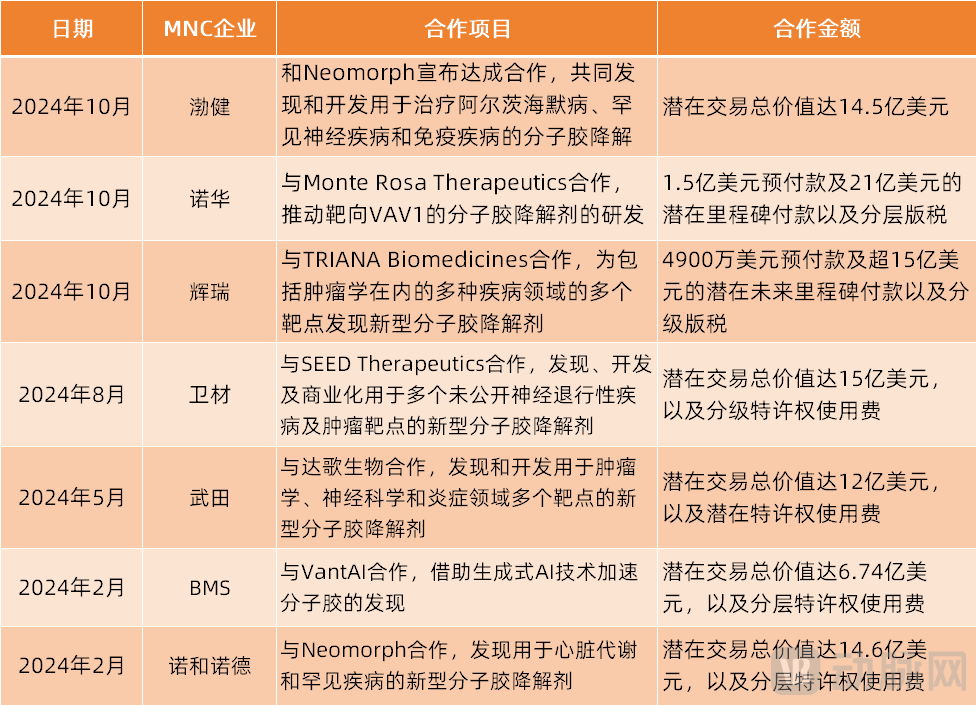
Previously, multinational pharmaceutical companies such as BMS, Roche, Merck & Co., Eli Lilly, Sanofi, and Bayer have also entered the molecular glue field.
What Kind of Race Is the Molecular Glue Field, and Why Does It Attract So Many Multinational Pharmaceutical Companies? What Has Happened in the Molecular Glue Field, and Why Are MNCs Flocking In?
It is hard to imagine that molecular glues, which now stand at the forefront of biotechnology, saw their first drug—thalidomide—emerge as early as the 1950s. However, the advent of thalidomide was largely a matter of luck, marked by a high degree of serendipity.
Initially, thalidomide was marketed as a non-barbiturate sedative and antiemetic, but it was withdrawn from the market in 1961 due to its association with birth defects. It was not until 1991 thatThalidomideFound to possess immunomodulatory and anticancer properties, which can inhibit the production of tumor necrosis factor-alpha (TNF-α). TNF-α is a key mediator in immune and inflammatory responses.
Based on this finding, the pharmaceutical company Celgene intensified its research and development of thalidomide. In 1996, researchers developed thalidomide analogs, lenalidomide and pomalidomide, both of which enhanced the inhibition of TNF-α. Thalidomide, lenalidomide, and pomalidomide received FDA approval for market launch in 1998, 2005, and 2013, respectively.
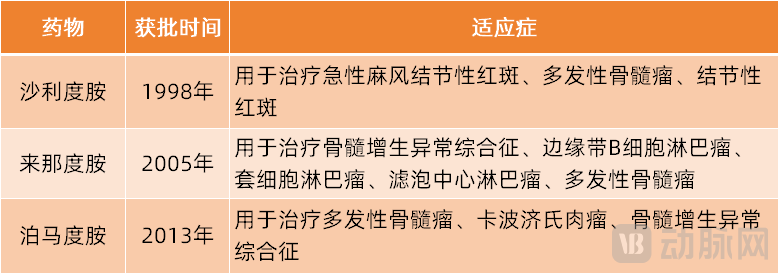
Although thalidomide, lenalidomide, and pomalidomide have been successively approved for marketing and their indications continue to expand,The mechanisms of action of these three drugs were fully elucidated only in 2014: their mechanism is related to molecular glues., with related research articles published in Nature and Science.
Molecular glues are a class of small-molecule compounds that modulate the surface properties of target proteins to facilitate or induce protein–protein interactions (PPIs) with other proteins, thereby achieving specific biological functions—such as protein degradation, pathway inhibition, or activation—and delivering therapeutic effects.
Taking lenalidomide as an example, the transcription factors IKZF1/IKZF3 play a crucial role in the pathogenesis of multiple myeloma. As a molecular glue drug, lenalidomide interacts with E3 ubiquitin ligases to promote the selective ubiquitination and degradation of its target proteins, the Ikaros transcription factors IKZF1/IKZF3, thereby exerting therapeutic effects in multiple myeloma and lymphoma.
It is worth mentioning that,The mechanism of action of molecular glues provides a new avenue for targeting “undruggable” proteins, greatly expanding the application prospects of small-molecule drugs.。
In the past, the key to developing small-molecule drugs was identifying protein targets. However, of the approximately 19,000 proteins in the human body, the vast majority are considered undruggable targets. According to the Human Protein Atlas, there are currently 5,068 proteins known to be associated with diseases; among these, around 700 serve as targets for approved small-molecule drugs, approximately 1,200 are potentially druggable, and more than 3,000 are regarded as “undruggable” targets.
The emergence of molecular glues has completely rewritten the paradigm of "undruggable" targets, enabling the therapeutic targeting of numerous proteins previously considered undruggable.
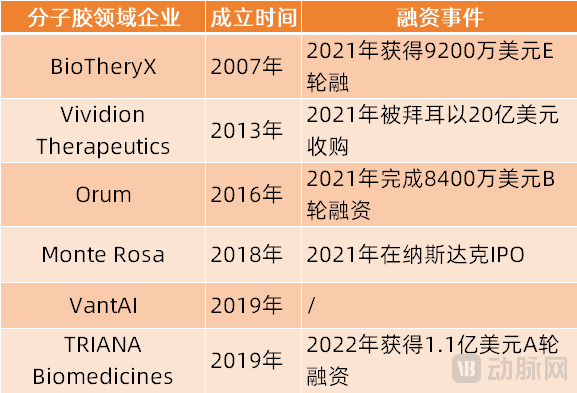
Against the backdrop of clearly defined mechanisms of action and promising prospects, molecular glues finally began to gain momentum in 2014, prompting a surge of pharmaceutical R&D teams to enter the field and develop related pipelines.For example, companies such as BioTheryX, Vividion Therapeutics, Orum, Monte Rosa, VantAI, TRIANA Biomedicines, Proxygen, and Neomorph have been established successively to develop molecular glue drugs.
Notably, in 2015, scientists achieved the targeted degradation of specific proteins using PROTAC technology via a molecular glue mechanism for the first time. This technological breakthrough marked the entry of molecular glues into the practical stage of drug development.
Perhaps in recognition of the prospects of molecular glues,Bristol Myers Squibb(BMS)Acquired Celgene, the developer of molecular glue drugs such as thalidomide and lenalidomide, for $74 billion in 2019, and in 2021, made itLenalidomide sales reached$12.821 billion, pomalidomide sales reached $3.332 billion.
Additionally, in November 2023, BMS acquired Orum’s drug candidate ORM-6151, with an upfront payment of $100 million and milestone payments totaling approximately $180 million. ORM-6151 is an anti-CD33 antibody–degrader conjugate (with a molecular glue as the payload) and is currently undergoing Phase I clinical trials under FDA approval for patients with acute myeloid leukemia and high-risk myelodysplastic syndromes.
In February 2024, BMS entered into a collaboration with VantAI to leverage its generative AI technology for accelerating the discovery of molecular glues. Under the agreement, VantAI is eligible to receive up to $674 million in milestone payments from BMS across discovery, development, clinical, regulatory, and commercial stages, as well as tiered royalties, with an option to expand the partnership to additional therapeutic programs.
BMS’s Move Draws Numerous Global Top 100 Pharmaceutical Companies into the ArenaFor example, in April 2023, Merck & Co. entered into a collaboration agreement with Proxygen to jointly develop molecular glue degraders targeting multiple therapeutic targets; in 2023, Roche sequentially established strategic collaborations with Orionis Biosciences and Monte Rosa Therapeutics to develop novel molecular glue drugs; and in October 2024, Pfizer entered into a strategic collaboration and licensing agreement with TRIANA Biomedicines to discover novel molecular glue degraders for multiple targets across various disease areas, including oncology.
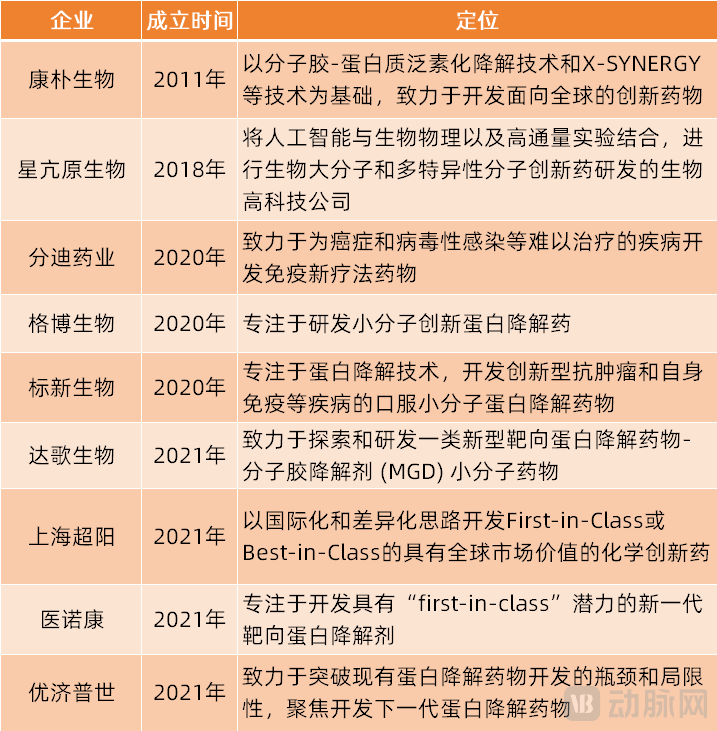
Not only overseas giants, but also domestic innovative companies are laying out their strategies in the field of molecular glues. For example, Chinese enterprises such as Jiayue Medicine, Biaoxin Biology, Kangpu Biotech, Xingkangyuan, Fendi Pharmaceutical, Gebio Therapeutics, Dage Biotechnology, Shanghai Chaoyang, Yinuo Kang, Youji Pushi, Vanchura Pharma, Shengruizehua, Aorui Pharmaceutical, InnoCare Pharma, and Chia Tai Tianqing have all established molecular glue drug pipelines or built molecular glue drug discovery platforms.
Take Vanchure Therapeutics as an example. Its subsidiary, Seed, is dedicated to tackling “undruggable” targets through protein degradation technology. The R&D team is led by Dr. Avram Hershko, the discoverer of the ubiquitin-targeted protein degradation system and the 2004 Nobel Laureate in Chemistry, and Dr. Lan Huang, CEO of Vanchure Therapeutics.
Backed by a robust R&D team and strong research capabilities, Seed has also attracted attention from multiple multinational corporations (MNCs). In 2020, it partnered with Eli Lilly to jointly develop novel drugs based on ubiquitination-targeted protein degradation, with a potential deal value of up to $800 million. In August 2024, Seed entered into a strategic collaboration with Eisai and secured the first tranche of its Series A-3 financing, led by Eisai.
Currently, Seed is accelerating the development of its oral RBM39 degrader program and plans to initiate Phase I safety and efficacy trials in 2025 for the treatment of cancer indications.
A major highlight of molecular glues is their ability to address undruggable targets, turning the impossible into the possible.
As the mechanism of molecular glues has been clearly elucidated, continued research by scientists has revealed that protein-targeting degradation (TPD) can render previously undruggable targets druggable, thereby facilitating drug development.
It is understood that targeted protein degradation (TPD) primarily achieves control over proteins by degrading target proteins via the ubiquitin-proteasome system and lysosomal pathways. Based on current findings, more technological approaches are emerging in the market to “turn the impossible into possible,” including novel technologies such as PROTAC, LYTAC, ATTEC, ATAC, and AUTOTAC.
For example, LYTAC technology targets the degradation of specific proteins via the lysosomal degradation pathway; ATTEC technology is a target protein degradation strategy based on macroautophagy/autophagy pathways, which links the target protein to autophagosomes by interacting with both the target protein and the autophagosomal protein LC3, thereby facilitating subsequent autophagic degradation... Among these,The most rapidly advancing areas are currently molecular glues and PROTAC technology.。
Molecular glue technology has been introduced above. PROTAC (Proteolysis-Targeting Chimera) is a bifunctional small molecule that, on one hand, targets specific proteins and, on the other, recruits E3 ubiquitin ligases.
In terms of mechanism of action, PROTACs utilize two ligands: one that binds to the target protein and another that binds to an E3 ubiquitin ligase. When both ends of the PROTAC simultaneously engage the target protein and the E3 ligase, the target protein is tagged with ubiquitin and subsequently degraded via the ubiquitin-proteasome system. The ubiquitin-proteasome system is the primary pathway for intracellular protein degradation, responsible for degrading more than 80% of cellular proteins. The released PROTAC molecule can then be recycled for further rounds of activity.
It should be noted that, unlike the “one-to-one” interaction between traditional small-molecule drugs and their target proteins, PROTACs engage target proteins in a “one-to-many” manner. Moreover, PROTAC molecules do not require prolonged binding to the target protein to induce its degradation and functional ablation, which holds promise for overcoming the drug resistance commonly associated with small-molecule inhibitors.
PROTACCompared with molecular glues, each has its own advantages and characteristicsSpecifically, PROTACs offer advantages such as the ability to completely eliminate pathological proteins and facilitate rational design; whereas molecular glues feature low molecular weight, simple chemical structures, minimal steric hindrance, high cell permeability, rapid oral absorption, and superior druggability. These attributes confer significant clinical potential on molecular glue therapeutics.
For molecular glues, the lack of rational screening and design strategies has limited the efficiency and applicability of their discovery. It is understood that molecular glues achieve the recruitment and degradation of target proteins by inducing or stabilizing protein-protein interactions between E3 ubiquitin ligases and target proteins; however, thisThe complex structure of ternary complexes prevents the direct chemical design of molecular glues.。
Meanwhile, molecular glues require specific chemical structures to achieve selective recruitment of target proteins. However, the lack of compound libraries designed for directed screening hinders the precise identification of molecular glue candidates. Furthermore, the interactions between molecular glues and their target proteins require both in vitro and in vivo biological validation. As pharmacodynamic and pharmacological studies of molecular glues are still in their early stages with limited data accumulation, clinical development of these drugs will face significant challenges.
To address these challenges, innovative companies are currently enhancing their capabilities in discovering molecular glue drugs by building molecular glue drug discovery platforms and leveraging AI for the identification and development of such therapeutics.
It is worth noting that,PROTACNo drugs have been approved for market launch,Three molecular glue drugs have already been approved for marketing.
To date, dozens of pharmaceutical companies worldwide have entered the molecular glue arena, with varying degrees of progress. Among them, several firms have gained significant recognition from multinational corporations (MNCs), repeatedly forging partnerships to co-develop molecular glue therapeutics.
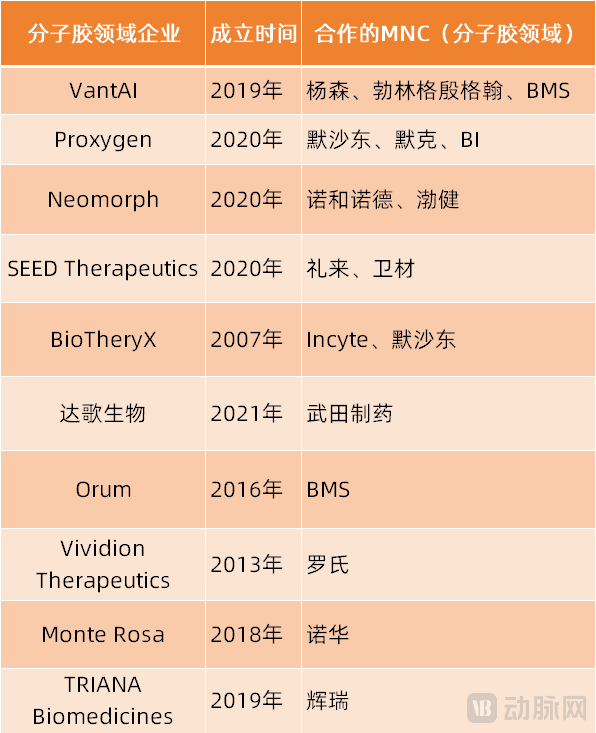
For example, Proxygen, founded in 2020, is an innovative company focused on molecular glue therapeutics. To date, it has entered into collaboration agreements with major multinational corporations (MNCs) such as Boehringer Ingelheim (BI), Merck KGaA, and MSD to jointly develop molecular glue drugs, with the total potential value of these collaborations exceeding $3 billion.
In December 2020, Proxygen entered into a collaboration and license agreement with Boehringer Ingelheim (BI) to identify molecular glue degraders targeting various oncogenic targets; in June 2022, Proxygen partnered with Merck KGaA to jointly identify and develop molecular glue degraders up to the clinical candidate stage, with a total deal value of €495 million (approximately $554 million); in April 2023, Proxygen reached a collaboration agreement with Merck & Co. (known as MSD outside the U.S. and Canada) to jointly identify and develop molecular glue degraders against multiple therapeutic targets, under which Proxygen is eligible to receive up to $2.55 billion in milestone payments plus royalties on net product sales, in addition to an upfront payment.
Proxygen has garnered continuous recognition from major pharmaceutical companies due to the differentiated advantages of its molecular glue technology platform. It is understood that Proxygen has developed a highly versatile discovery engine for molecular glue degraders, leveraging technologies such as genomics and proteomics. This engine focuses on the large-scale identification of molecular glue degraders targeting refractory targets or those traditionally considered undruggable. This approach is poised to transform the discovery process of molecular glue therapeutics, accelerating their identification and development. Furthermore, collaborations and project progress with multinational corporations (MNCs) such as Merck & Co. and Merck KGaA in the field of molecular glues have validated the advantages and capabilities of this technology platform.
Like Proxygen,VantAI has also partnered with three multinational corporations (MNCs)However, VantAI is not a company focused on molecular glue drugs; rather, it is a provider of an AI-powered computational drug design platform. It offers services such as de novo drug design, drug target prediction, and computational design and optimization of protein degraders to pharmaceutical companies, helping to improve the efficiency and success rate of new drug development.
VantAI CEO Zachary Carpenter previously stated, “Molecular glue drugs hold great promise but are difficult to discover. AI technology may be the best tool to overcome this challenge.”
It is reported that VantAI’s technology leverages geometric deep learning to generate insights from millions of years of naturally occurring, evolved interfaces, enabling the mimicry of such interfaces during the design process. This “protein-contact-first” approach simplifies the complex chemical design challenges involved in bringing proteins together within cells, yielding non-obvious, glue-like solutions with optimized parameters, including potency, selectivity, and molecular size.
To date, VantAI has established collaborations with Boehringer Ingelheim (BI), Janssen Pharmaceuticals (a subsidiary of Johnson & Johnson), and Bristol Myers Squibb (BMS). Taking the partnership with BMS as an example, the collaboration focuses on leveraging VantAI’s generative artificial intelligence platform to design molecular glue therapeutics. Under this agreement, VantAI is eligible to receive up to $674 million from BMS in the form of discovery, development, clinical, regulatory, and commercial milestones, with the option to expand the collaboration to additional therapeutic programs.
Overall, companies in the molecular glue field that multinational corporations (MNCs) are eager to collaborate with typically possess strong R&D capabilities and robust molecular glue discovery platforms.
It is not only overseas innovative enterprises that have gained recognition from multinational corporations (MNCs); domestic companies in China have also earned such acknowledgment.
For example, Jiayue Pharma previously licensed its Pan-RAS molecular glue (indicated for the treatment of RAS-mutant tumors, among others) to the U.S. company Erasca. Erasca obtained exclusive global rights, excluding mainland China and the Hong Kong and Macao Special Administrative Regions of China, to research, develop, and commercialize JYP0015. Jiayue Pharma is eligible to receive an upfront payment and potential near-term payments totaling $20 million, milestone payments and global option exercise payments amounting to a total of $345 million, as well as tiered royalties on net sales.
Furthermore, Dage Biology has entered into a collaboration with Takeda Pharmaceutical Company to discover, validate, and optimize molecular glue degraders targeting specific disease targets selected by Takeda, leveraging Dage’s GlueXplorer platform. This partnership focuses on developing novel molecular glue degraders for multiple targets in the fields of oncology, neuroscience, and inflammation. Under this agreement, Dage Biology will receive an upfront payment and potential milestone payments totaling up to $1.2 billion, and Takeda will make an equity investment in Dage Biology.
In addition to companies such as Wanchun Seed, Jiayue Pharma, and Dage Biotech, other enterprises in China’s molecular glue sector are also advancing at a remarkably rapid pace.
For example, in September 2024, Kangpu Biopharmaceuticals announced the successful completion of a China bridging clinical trial for KPG-818 capsules, a Class 1 innovative drug based on its independently developed molecular glue. The results demonstrated that oral administration of KPG-818 capsules was well tolerated by participants. Adverse reactions were predominantly Grade 1 or Grade 2 pruritus or rash, with no serious adverse events reported. Pharmacokinetic data revealed that KPG-818 exposure exhibited a favorable dose-dependent relationship, and food intake had no significant impact.
It is reported that the Phase Ib/IIa clinical study of KPG-818 in patients with systemic lupus erythematosus (SLE) has been successfully completed in the United States, demonstrating favorable safety, tolerability, and pharmacokinetic profiles, as well as promising preliminary efficacy.
In addition, in March 2024, Biaoxin Bio announced a significant milestone: its molecular glue candidate GT929, developed on the GlueTacs platform, successfully enrolled the first patient with relapsed/refractory non-Hodgkin lymphoma in China, initiating the dose-escalation phase of the study. This trial aims to evaluate the safety, tolerability, pharmacokinetic profile, and preliminary efficacy of GT929 in patients.
In the same month, Biaoxin Biologics also announced that its molecular glue candidate GT919 had received tacit approval from the Center for Drug Evaluation (CDE) to enter the phase of systematic combination therapy for multiple myeloma, aiming to conduct a preliminary assessment of safety and efficacy.
In February 2024, Gebo Bio announced that its self-developed oral molecular glue degrader, GLB-001, had received the “Notice of Approval for Drug Clinical Trials” issued by the National Medical Products Administration (NMPA), approving the initiation of clinical studies in myeloid malignancies. Meanwhile, GLB-001 has also commenced enrollment of patients in a Phase I clinical trial in the United States for the treatment of hematologic tumors.
It can be said that multiple molecular glue drug pipelines in China have been approved to enter clinical trials. This signifies that Chinese innovative enterprises are not absent from the molecular glue arena, where multinational pharmaceutical companies are vying for position; instead, they have secured a place among the global first tier.