

Dizal's Sunvozertinib: A Contender for the Next $1B Blockbuster in EGFR Exon20ins NSCLC

Dizal
Innovative Biopharmaceutical R&D Developer
Creating “billion-dollar molecules” is the inevitable path for biotech companies to transition into biopharma enterprises.
In recent years, the ecosystem for domestically developed innovative drugs in China has undergone a significant leap, transitioning from competing on quantity (Me-too), speed (Me-quicker), and quality (Me-better) to an advanced stage focused on pioneering innovation (First-in-class). Although the industry has entered a period of adjustment over the past few years, with market capitalizations of many listed companies declining substantially, those who can stand out with globally competitive products amidst these challenges will emerge as the brightest stars at this critical turning point in the journey of innovation.
And a billion-dollar valuation is precisely the ticket to enter this selection.
As Zanubrutinib joins the billion-dollar club, a growing number of domestically developed innovative drugs are increasingly confident that they will be the next to follow suit.
Dizal Announces Submission of New Drug Application to U.S. FDA for Sunvozertinib, a Novel Self-Developed Targeted Therapy for Lung CancerRecently, Dizal announced that it has submitted a New Drug Application (NDA) to the U.S. Food and Drug Administration (FDA) for sunvozertinib, a novel targeted therapy for lung cancer independently developed by the company. The application seeks approval for adult patients with locally advanced or metastatic non-small cell lung cancer (NSCLC) harboring EGFR exon 20 insertion mutations, as confirmed by an FDA-approved test kit, who have experienced disease progression during or after prior platinum-based chemotherapy.
Sunvozertinib Becomes the First Chinese-Originated Targeted Lung Cancer Drug to Submit a New Drug Application to the U.S. FDA. As a global best-in-class (BIC) drug, its potential for approval and successful commercialization in the U.S. market is undoubtedly promising.
Excellent clinical performance and a broad market are the foundation for the emergence of a blockbuster drug.
Sunvozertinib, the first original innovative product in Dizal’s pipeline, has attracted significant attention even prior to this marketing application submission. It is currently the only approved and accessible small-molecule TKI targeting EGFR exon 20 insertion–mutated NSCLC worldwide, and the only drug in this field to have received “Breakthrough Therapy Designation” in both China and the United States across all indications.
This recognition is attributed to sunvozertinib’s innovative design from the ground up, which overcomes refractory targets and thereby highlights its unique clinical value.
EGFR exon 20 insertion mutations are globally recognized as refractory targets, with traditional targeted therapies, chemotherapy, and immunotherapy demonstrating suboptimal efficacy. Approved third-generation EGFR-TKIs primarily target EGFR 19del, L858R, and T790M resistance mutations; however, they show limited therapeutic benefit in patients with exon 20 insertions. Consequently, patients with EGFR exon 20 insertion–positive NSCLC often experience shorter survival times and poorer prognoses, having long lacked a standard of care.
The development of therapies for EGFR exon 20 insertion (exon20ins) non-small cell lung cancer (NSCLC) is highly challenging. To date, only three targeted drugs for EGFR exon20ins NSCLC have been approved globally: Johnson & Johnson’s amivantamab, Takeda’s mobocertinib, and Dizal Pharmaceutical’s sunvozertinib. Among these, mobocertinib faced a difficult development path and was withdrawn from the market in 2023.
Sunvozertinib was not the first drug to be launched in this field, but it was the one that truly broke through the bottleneck.
At the 2023 ASCO Annual Meeting, data from WU-KONG6, the first pivotal clinical study of sunvozertinib, were presented, demonstrating a confirmed objective response rate (cORR) of 61%, with over 90% of patients experiencing a reduction in target lesions after monotherapy with sunvozertinib. Published in The Lancet Respiratory Medicine at the end of 2023, this study further underscores the international academic community’s attention to and recognition of these findings.
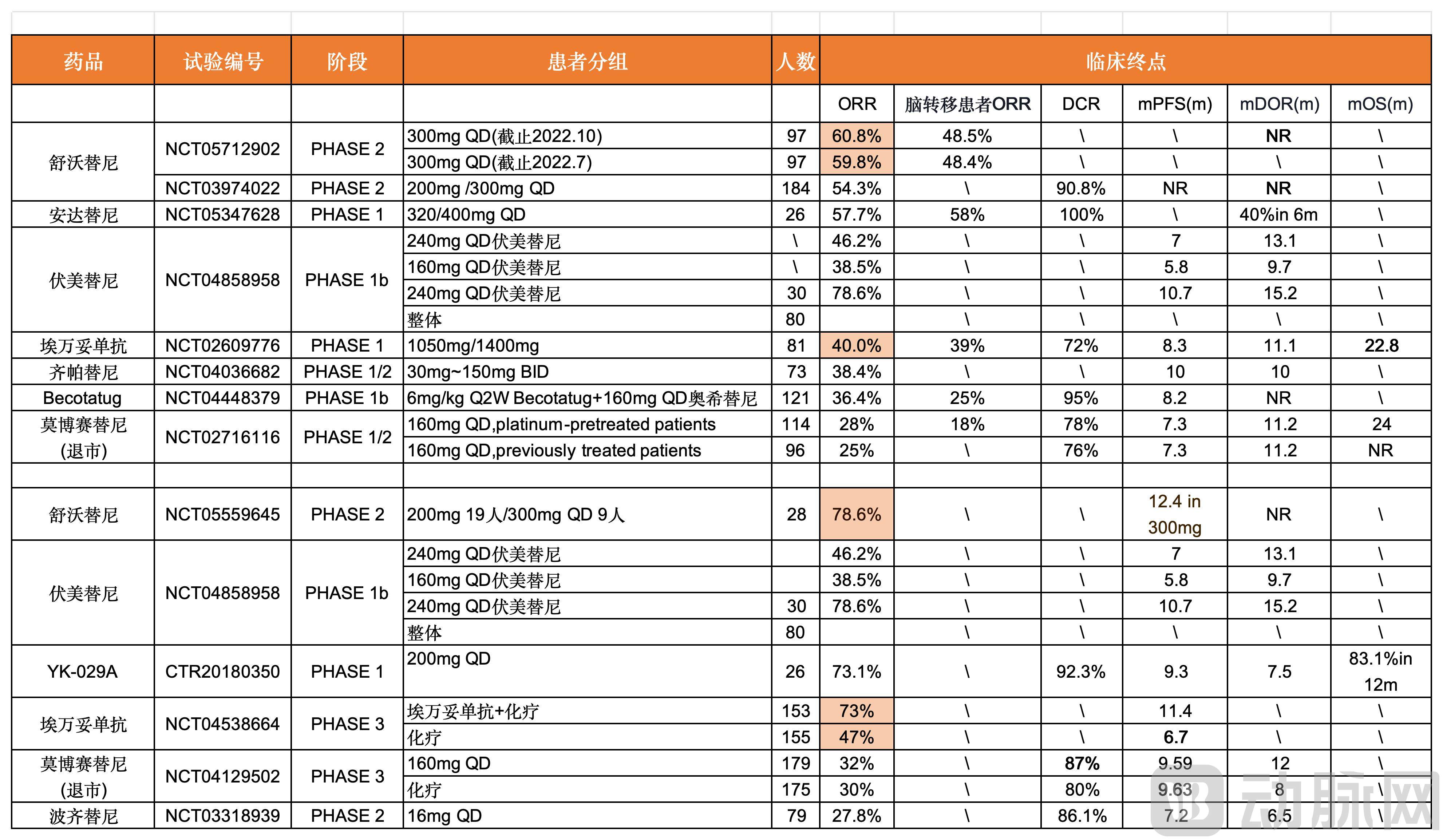
Selected Clinical Study Results of EGFR Ex20ins: Data Sourced from ClinicalTrials.gov
At the 2024 ASCO Annual Meeting, sunvozertinib was featured for the second consecutive year, with data from the WU-KONG1B study presented. This study was conducted across 10 countries in Europe, the United States, Australia, and Asia. The efficacy and safety results were highly consistent with those of the WU-KONG6 study. Notably, non-Asian patients accounted for over 40% of the study population, making the findings globally representative.
Furthermore, at the 2023 ESMO Congress, sunvozertinib as first-line therapy for the overall population of EGFR exon 20 insertion-positive NSCLC demonstrated a confirmed objective response rate (ORR) of 78.6%, with tumor shrinkage observed in 100% of patients. The median progression-free survival (mPFS) reached 12.4 months, compared to an mPFS of 11.4 months achieved by amivantamab plus chemotherapy as first-line treatment. Sunvozertinib monotherapy challenges the combination of amivantamab and chemotherapy, marking a significant step toward first-line therapy with substantial potential.
On the other hand, as an EGFR-MET bispecific antibody, amivantamab is associated with adverse events related to both EGFR and MET. In contrast, the majority of common adverse events associated with sunvozertinib are Grade 1–2, underscoring its potential as a best-in-class (BIC) agent with high efficacy and low toxicity. Furthermore, the oral administration of sunvozertinib, a small-molecule drug, offers greater convenience and better patient compliance compared to the intravenous infusion required for amivantamab.
It is foreseeable that sunvozertinib has a high likelihood of obtaining FDA approval, and once launched, it is poised to become the optimal treatment regimen for this patient population globally.
It remains to be seen how high Sunvozertinib can reach in overseas markets, but judging from its sales performance in the Chinese market, its potential has begun to unfold gradually.
In the first three quarters of 2024, Dizal Pharmaceutical achieved revenue exceeding RMB 338 million, representing a year-on-year increase of 744%. As golixitinib, another marketed product from Dizal Pharmaceutical, was only launched in late June, sunvozertinib was the primary contributor to revenue during this period. This strong commercial performance is attributable not only to Dizal Pharmaceutical’s own commercialization capabilities but also to its strategic selection of therapeutic areas.
According to Frost & Sullivan estimates, patients with EGFR exon 20 insertion mutations account for approximately 10% of non-small cell lung cancer (NSCLC) cases. By 2030, the global market size for EGFR-TKIs is projected to reach $23.2 billion; based on a 10% share, the market size for this segment is expected to exceed $2 billion.
More importantly, only two drugs for NSCLC with EGFR exon 20 insertion mutations have been approved globally to date: Johnson & Johnson’s amivantamab and Dizal Pharmaceutical’s sunvozertinib. Among other products in the pipeline, those with more advanced development stages have not demonstrated clinical data superior to that of sunvozertinib, while those lagging behind leave ample time for the commercialization of sunvozertinib.
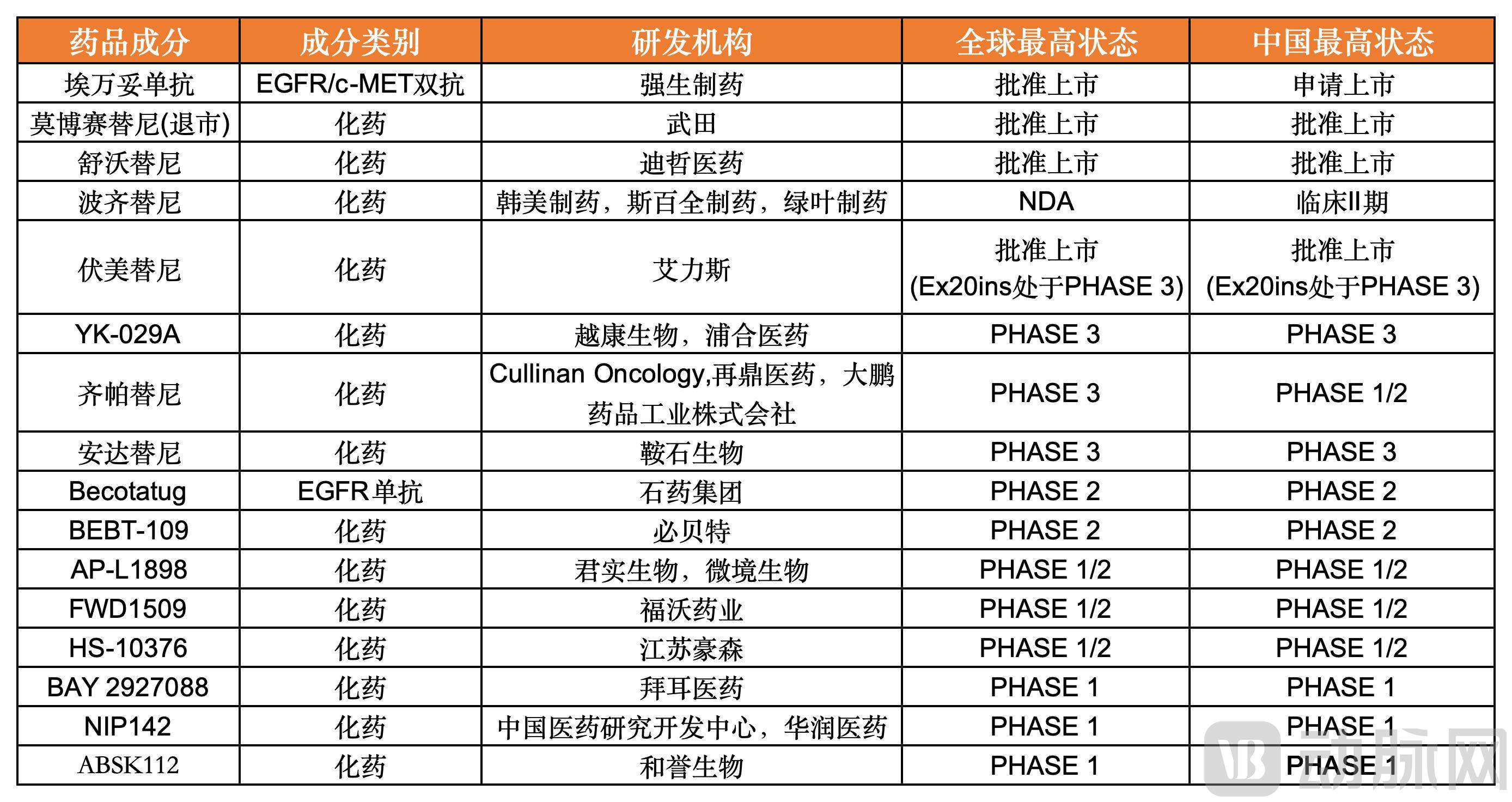
Development Progress of Select EGFR Ex20ins Products: Compiled from Publicly Available Information
Although sunvozertinib demonstrated superiority over amivantamab in previous clinical data, Dizal is clearly not content with this outcome and continues to conduct clinical trials.
Currently, Dizal has initiated multiple clinical studies on sunvozertinib, primarily focusing on three directions: first, establishing studies for EGFR exon 20 insertion mutations in the first- and second-line settings; second, exploring first- and second-line treatments for classic EGFR mutations, including monotherapy or combination therapy; and third, expanding investigations beyond lung cancer. Notably, this year, Dizal has launched numerous early-stage clinical trials, with results expected to be released sequentially over the next three years.
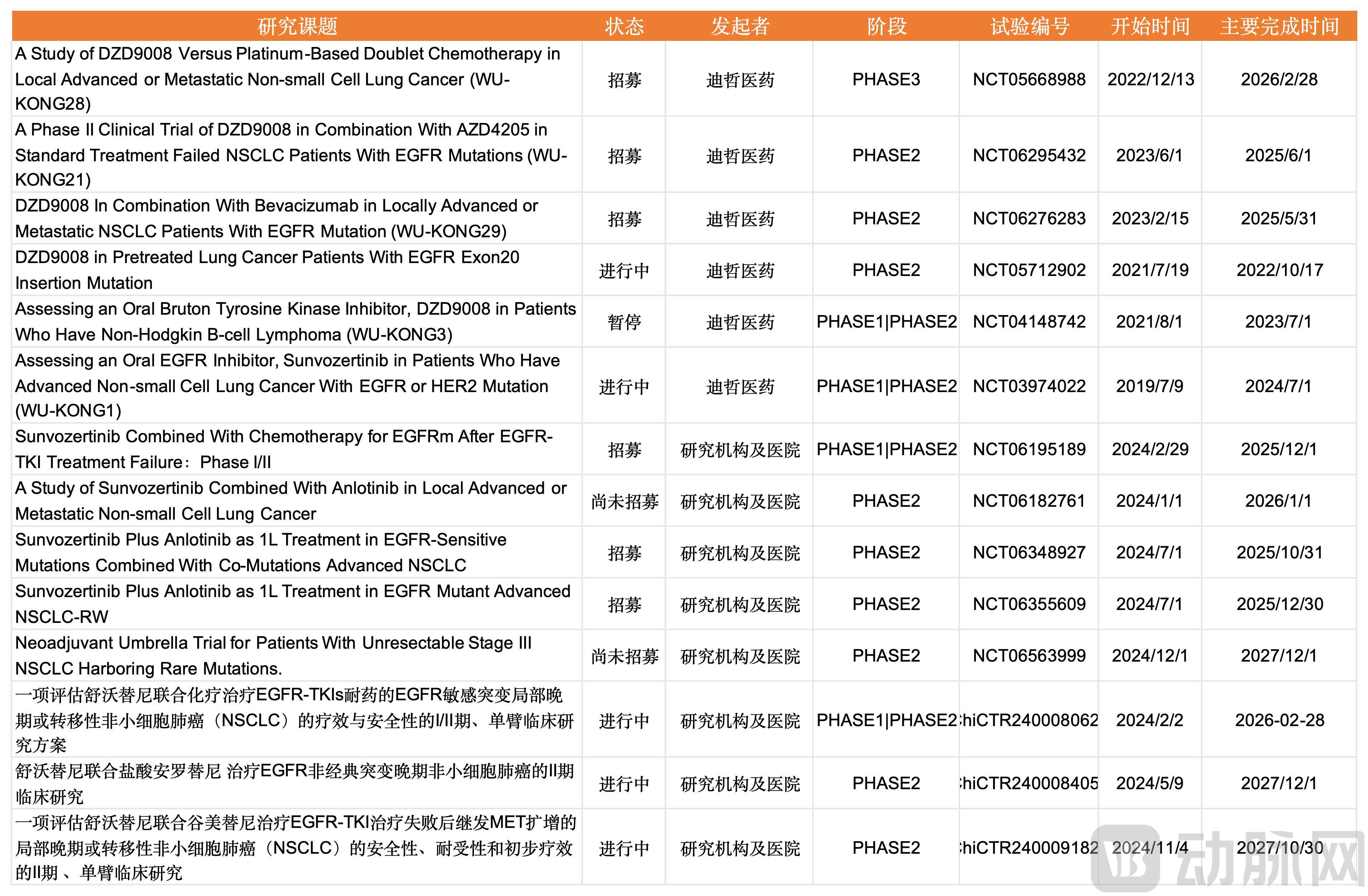
Clinical studies on sunvozertinib, with data sourced from ClinicalTrials.gov and ChiCTR
Sunvozertinib has received Breakthrough Therapy Designation from both Chinese authorities and the U.S. FDA for first- and second-line indications in patients with EGFR exon 20 insertion mutations. In the Chinese registrational Phase II trial for second-line treatment of EGFR exon 20 insertion mutations, the objective response rate (ORR) was 60.7%, while in the global registrational Phase II trial, the ORR was 53.3%. These figures are comparatively higher than the 30%–40% ORR reported for amivantamab. However, data on median duration of response, median progression-free survival (mPFS), and median overall survival (mOS) have not yet been disclosed. An international Phase III clinical trial evaluating sunvozertinib as first-line monotherapy is currently underway, with primary results expected to be completed by early 2026.
Sunvozertinib is also being developed for classic EGFR mutations. Currently, for patients who develop resistance to first- or second-generation TKIs, local radiotherapy or surgery is recommended; if T790M-positive, they should switch to a third-generation TKI, whereas if T790M-negative, consideration should be given to switching to other first- or second-generation agents or systemic chemotherapy. For those who develop resistance to third-generation TKIs, local radiotherapy or surgery is recommended; in cases of widespread progression, amivantamab or systemic chemotherapy is recommended. In other words, there are currently no suitable therapeutic options for EGFR-mutant patients who have developed resistance to third-generation TKIs.
According to Dizal’s prospectus, sunvozertinib demonstrates robust efficacy against all known EGFR and HER2 mutations, including all approved EGFR target mutations (del19, L858R, T790M) as well as the uncommon mutations G719S and L861Q. A pooled analysis of clinical trial data showed that in patients previously treated with third-generation EGFR-TKIs, the median progression-free survival (mPFS) was 5.8 months, and the median duration of response (mDoR) was 6.5 months, with a safety profile consistent with previous reports.
Currently, sunvozertinib is poised for approval and market leadership, leveraging its best-in-class (BIC) advantages. A breakthrough in treating classic EGFR mutations would unlock substantial market potential. Coupled with the strong reimbursement capacity for innovative drugs in European and American markets, sunvozertinib’s global peak sales are expected to reach “blockbuster” status, surpassing $1 billion.
Prior to sunvozertinib, other domestically developed innovative drugs may have already joined the “$1 Billion Club.”
Recently, HUTCHMED’s interim results revealed total revenue of $305.7 million. Fruquintinib demonstrated outstanding performance, with domestic sales in China reaching $61 million in the first half of this year, while U.S. sales amounted to $131 million. Given that fruquintinib was only launched in the U.S. market in November 2023, its combined sales in the Chinese and U.S. markets have already reached $192 million within just six months. The drug is poised to become the next domestically developed innovative medicine from China to achieve annual sales of $1 billion.
Fruquintinib has demonstrated strong competitiveness in its global expansion.
Within 48 hours of fruquintinib’s launch in the United States, physicians wrote the first prescription. Within a week, the U.S. National Comprehensive Cancer Network (NCCN) Guidelines were updated to include fruquintinib as a clinical treatment option for third-line colorectal cancer, underscoring its market potential and clinical value. Meanwhile, in April 2024, fruquintinib received a positive opinion from the Committee for Medicinal Products for Human Use (CHMP) of the European Medicines Agency (EMA) for the treatment of previously treated metastatic colorectal cancer, followed by its approval in the European Union in June 2024.
Such high efficiency was inseparable from the promotion by partner Takeda Pharmaceutical. As early as early 2023, Hutchmed granted Takeda Pharmaceutical the development and commercialization rights for fruquintinib in overseas markets. Takeda submitted the New Drug Application (NDA) for fruquintinib to the U.S. FDA in March 2023, received validation for Priority Review in May, and successfully launched the drug in the United States in November. At that time, it was the first and only highly selective inhibitor targeting all three VEGF receptor kinases approved in the U.S. for the treatment of previously treated metastatic colorectal cancer, with the entire approval process taking less than one year. Following its approval in Europe, Takeda Pharmaceutical is currently preparing for the commercial launch of the drug in the European Union.
Supported by the FRESCO-2 clinical study, fruquintinib has currently been submitted for marketing authorization in more than ten countries and regions. Therefore, Takeda Pharmaceutical has made significant efforts to commercialize fruquintinib in overseas markets. This is also related to Takeda’s current business development.
According to Takeda’s 2023 annual report, the company halted the development of more than 20 product pipelines in that year, creating an urgent need for new products to alleviate revenue pressure. As indicated in its 2024 financial report, although the absolute sales volume of fruquintinib within Takeda Pharmaceutical’s oncology segment was not substantial, it emerged as the fastest-growing product, demonstrating significant potential to challenge the revenue dominance of vedolizumab, Takeda’s top-selling anticancer drug.
In other words, whether fruquintinib can achieve rapid sales growth in the global market is of particular importance to Takeda. Furthermore, Takeda will continue to advance various clinical studies of fruquintinib in collaboration with Hutchmed, aiming to further raise the drug’s market “ceiling.”
For fruquintinib, the biggest competitor in the later-line treatment of colorectal cancer is Bayer's regorafenib, which is currently the mainstream drug on the market. Therefore, the global sales volume of regorafenib provides some reference for predicting the market prospects of fruquintinib. Currently, regorafenib has been approved for two major indications: third-line colorectal cancer and second-line liver cancer, and it achieved revenue of $700 million in 2022.
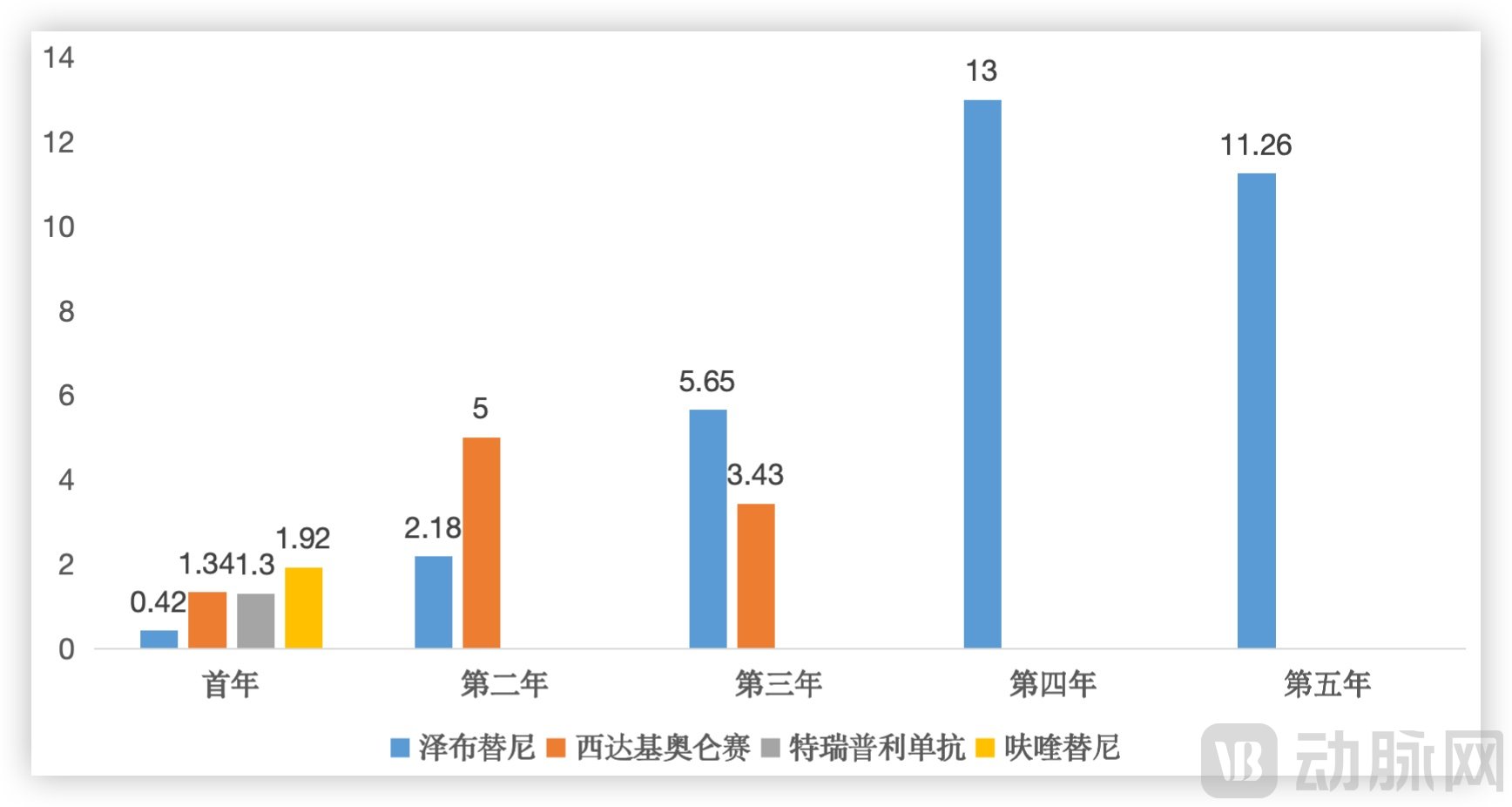
Revenue Performance of Selected Globally Launched Drugs in Previous Years (Fruquintinib: Year 1; Cilta-cel: Year 3; Zanubrutinib: Year 5; the three data points represent H1 2024 sales; unit: USD 100 million)
In comparison, fruquintinib generated nearly $200 million in revenue within just six months of its launch, with full-year revenue projected between $300 million and $400 million. It is only a matter of time before its revenue surpasses that of regorafenib. Focusing solely on the U.S. market, fruquintinib’s initial performance of $131 million has outpaced earlier Chinese exports such as zanubrutinib and ciltacabtagene autoleucel, with its six-month sales even exceeding their annual figures.
Zanubrutinib surpassed the $1 billion threshold in 2023, doubling its annual revenue. Following its market launch in late 2022, cilta-cel achieved nearly $500 million in sales in 2023, representing a year-on-year growth of approximately 300%. With H1 2024 revenue reaching $343 million, it is poised to become the second domestically developed innovative drug to break the $1 billion mark in 2025, barring any unforeseen circumstances. It is not implausible for fruquintinib to replicate such a growth trajectory.
Who Will Be the Next Domestic $1 Billion Molecule? As domestically developed innovative drugs gradually come to fruition, the list of potential candidates continues to grow.
On November 12, Akeso Pharma announced the top-line data from the pivotal Phase 3 MANEUVER trial of pimicotinib, a small-molecule CSF-1R inhibitor. Pimicotinib significantly improved the objective response rate (ORR) in patients with tenosynovial giant cell tumor (TGCT). At Week 25, the ORR was 54.0% in the pimicotinib group versus only 3.2% in the placebo group (p < 0.0001). This represents a substantial improvement over the currently approved drug pexidartinib and vimseltinib, a similar agent under FDA review, which have ORRs of 39% and 40%, respectively. Furthermore, pimicotinib demonstrates a markedly improved safety profile; unlike pexidartinib, which carries a black box warning due to hepatotoxicity, pimicotinib shows no such liability, positioning it as a potential best-in-class (BIC) therapy for TGCT.
Although tenosynovial giant cell tumor (TGCT) is a rare disease, it has a large prevalent patient population as a non-fatal tumor, with approximately 100,000 new cases diagnosed annually. According to forecasts by Deciphera, the originator of vimseltinib, the global market size for TGCT is estimated to exceed $1.5 billion. As a best-in-class (BIC) drug, pimicotinib is poised to dominate this promising market, with peak annual sales projected to surpass $1 billion.
Whether it is pimicotinib, sunvozertinib, or fruquintinib, these are all fruits borne from the tree of domestically developed innovative drugs. Global expansion has become an inevitable path for Chinese innovative pharmaceuticals; however, to establish a solid foothold and achieve long-term success, much depends on the clinical efficacy of the drugs themselves and their commercialization strategies. It is hoped that there will be an increasing number of Chinese-developed blockbuster drugs with annual sales exceeding $1 billion.