

BeiRay Secures FDA Approval as Guangdong's First NDA-Submitted Drug, Marking a Major Step in BeiHai Bio's Global Strategy
Recently,Zhuhai Beihai Biotechnology Co., Ltd. (hereinafter referred to as “Beihai Biotech”) announced that its independently developed novel drug BH009 (brand name: BEIZRAY®) has officially received marketing approval from the U.S. Food and Drug Administration (FDA). The drug is primarily indicated for the treatment of breast cancer, non-small cell lung cancer, head and neck squamous cell carcinoma, prostate cancer, and gastric cancer. BH009 is the first new drug from Guangdong Province to have its New Drug Application (NDA) submitted directly to the U.S. FDA and approved in the United States. Beihai Biotech holds full independent intellectual property rights to BH009 on a global scale.
BH009 is a novel modified docetaxel drug independently developed by Beihai Biotech. It is the first modified new drug for docetaxel to demonstrate clear clinical advantages and undergo successful clinical validation in the nearly 30 years since docetaxel’s market launch. Notably, from its initiation in 2019, BH009 secured U.S. FDA marketing approval in just five years, showcasing Beihai Biotech’s exceptional R&D capabilities and efficient execution as an innovative pharmaceutical company. This achievement not only represents a significant milestone in Beihai Biotech’s accumulated expertise in anti-tumor drug development and its global strategic roadmap, but also highlights the rising prominence of Chinese biopharmaceutical enterprises on the global stage.
Significant Clinical Advantages, Targeting the Global Billion-Dollar Oncology Market
Docetaxel, as a widely used antineoplastic agent, is clinically employed in the treatment of various solid tumors, including breast cancer, non-small cell lung cancer, gastric cancer, prostate cancer, and squamous cell carcinoma of the head and neck. Although novel oncology therapies such as bispecific antibodies, antibody-drug conjugates (ADCs), and cell therapies are gaining momentum, they still face challenges regarding clinical adoption, cost-effectiveness, patient acceptance, and efficacy in certain specific tumor types. The preeminent status of traditional chemotherapeutic agents like docetaxel in cancer treatment remains unshakable.
However, despite the significant efficacy of docetaxel in cancer treatment, its adverse reactions in clinical practice cannot be overlooked, particularly the allergic and even hypersensitivity reactions it induces. Apart from individual patient differences, the primary cause of these allergic or hypersensitivity reactions is the low water solubility of docetaxel, which necessitates the addition of polysorbate 80 (Tween 80) and anhydrous ethanol as solubilizers to its injection formulation. Tween 80, a polyol-based non-ionic surfactant, can trigger allergic reactions and also induce hemolytic reactions.
A study published in the Journal of the European Academy of Dermatology and Venereology1 presented findings from related sensitization studies conducted across multiple human skin prick tests. The results showed that 77% of patients experienced allergic reactions after injection of a solution containing polysorbate 80, and the incidence and severity of these allergic reactions were positively correlated with the concentration of polysorbate 80 in the formulation. Consequently, the FDA has issued a black box warning for all currently marketed docetaxel products containing polysorbate 80 to alert healthcare providers and patients to the associated medication risks.
Clinical medication safety is crucial for oncology drugs.Therefore, since docetaxel was launched in 1996, numerous pharmaceutical companies worldwide have continuously attempted to improve its drug formulation and delivery methods to reduce toxic side effects, enhance efficacy, and significantly improve clinical safety, but a fundamental solution has yet to be achieved.
To meet this clinical need,As a representative of China’s pioneering innovative pharmaceutical companies, Beihai Biotech has effectively addressed this fundamental issue through its indigenous innovation capabilities and is now making inroads into the global docetaxel market.. According to the introduction,Beihai Biotech’s BH009, recently approved by the U.S. FDA, employs commercially available intravenous human albumin as a solubilizer and does not incorporate any new excipients, thereby avoiding additional safety risks.BH009 not only effectively eliminates the severe toxic side effects caused by the addition of polysorbate 80, but also significantly reduces the incidence and severity of hematologic toxicity (such as neutropenia and leukopenia) through the breakthrough application of this solubilization technology. Its overall safety profile is superior to that of currently marketed docetaxel products.
At the American Society of Clinical Oncology (ASCO) Annual Meetings in 2023 and 2024, Beihai Biotech presented the clinical study results of BH009 on two occasions. The clinical trial data demonstrated that BH009 significantly reduced docetaxel-specific hematologic toxicity, thereby improving the overall benefit-risk profile of the therapy and offering a new treatment option for patients with solid tumors.
It is predicted that the market launch of BH009 will significantly reshape the industrial landscape of docetaxel. Currently, most regions worldwide, including China, are transitioning from an era dominated by generic drugs to one characterized by improved new drugs and innovative therapies with higher levels of technological innovation. Under the positive guidance of supportive policies, such as reforms in drug review and approval systems and medical insurance reimbursement policies, market demand for improved drugs continues to rise. Provided that clinical needs are met, improved new drugs offer substantial economic benefits due to lower competitive pressure.
According to Straits Research data, the global docetaxel market size reached $11.478 billion in 2023 and is projected to reach $25.246 billion by 2032, with a compound annual growth rate (CAGR) of 9.70%. Driven by global population aging and rising cancer incidence, docetaxel is poised for broader market expansion.
It is foreseeable that, following its market launch with clear clinical advantages, BH009 will significantly reduce the incidence of adverse reactions in patients, enhance treatment tolerability and safety, thereby substantially improving its clinical utilization rate and patient compliance, and delivering a strong impact on the global docetaxel market, which is valued at tens of billions.
Breaking Through FDA Review with Innovation: A Long-Standing Blueprint for Globalization Strategy
Currently, global expansion has become the “second trump card” for China’s innovative pharmaceutical companies. To venture into overseas markets, market access issues have become an unavoidable consideration. Obtaining marketing approval from the U.S. FDA is regarded as a significant milestone for Chinese pharmaceutical companies entering the international market.
However, the FDA’s New Drug Application (NDA) review system is extremely rigorous. Its high standards, complex review processes, lengthy review cycles, and authoritative outcomes collectively represent the highest standards and utmost rigor in pharmaceutical regulation.For Chinese innovative enterprises, it is essential to comprehensively benchmark against and align with international standards in multiple key areas, including R&D innovation value, clinical trial design, and clinical data quality management.
According to statistics from VCBeat, only eight domestically developed innovative drugs have successfully gained FDA approval for market launch since 2019. A study published in Nature Reviews Drug Discovery pointed out that among 350 innovative drugs undergoing clinical development in the United States by 177 Chinese pharmaceutical companies from January 1, 2007, to December 31, 2023, the success rate of progressing from Phase I clinical trials to FDA approval was merely 1.7%.
Based on recent trends in FDA-approved new drugs, those that do not address unmet clinical needs must demonstrate differentiated advantages in safety and efficacy to gain favor. Furthermore, improved new drugs with clear clinical advantages are more likely to secure FDA approval.
Therefore, at the inception of a project, enterprises must not only leverage their technical capabilities to address challenging technical hurdles and demonstrate tangible clinical advantages to secure a leading position in innovation, but also conduct thorough market size research and assessment to ensure successful commercialization upon smooth regulatory and development progress.
Taking Beihai Biotech’s BH009 as an example, adverse reactions induced by polysorbate 80 have remained a major, intractable challenge for docetaxel since its market launch over 30 years ago, and continue to be the primary concern affecting clinical medication safety. Leveraging its proprietary technological capabilities, Beihai Biotech has employed its globally first-in-class molecular targeted delivery platform to significantly enhance clinical safety while maintaining pharmacokinetic consistency with the originator drug.
In assessing market size, Beihai Biotech has also comprehensively considered potential commercial challenges and changes in the policy environment, thereby formulating targeted market strategies. The "Global and China Docetaxel Market Research Report and Industry Trend Analysis" points out that North America and Europe hold a significant share of the global docetaxel market due to high healthcare expenditures, advanced medical infrastructure, and high cancer incidence rates. In light of this, as BH009 gains FDA approval and enters the U.S. market, Beihai Biotech will also begin preparing for regulatory review-related matters in multiple countries worldwide, including those in North America, striving to rapidly expand its achievements into broader international markets.
Following project initiation, companies must conduct in-depth research into FDA regulations and the eligibility criteria and requirements for various regulatory submission pathways, while maintaining close communication with regulatory authorities to ensure compliance throughout the R&D process. Chinese enterprises, in particular, face multiple challenges, including cultural differences, communication barriers, and resource coordination issues.
Beihai Biotech’s independently developed BH009 completed key stages—from application acceptance and technical review to labeling discussions—in just 10 months during its journey toward FDA marketing approval in the United States. Throughout this process, Beihai Biotech not only navigated challenges such as cross-cultural communication barriers and language differences, but also mastered strategies for efficient communication and collaboration while meeting the FDA’s stringent review standards to secure more comprehensive regulatory support.
It is worth emphasizing that the regulatory submission challenges for modified new drugs are by no means less than those for innovative drugs. This not only involves core elements such as drug safety, efficacy, and stringent quality control, but also requires an in-depth assessment of the drug’s innovativeness and clinical value. Although modified new drugs represent optimized upgrades based on existing drugs,It must be substantiated that the product offers significant therapeutic advantages over the originator drug or effectively addresses unmet clinical needs.。
Overall, the research and development and regulatory submission of modified new drugs is a comprehensive issue involving technology, market, regulations, and clinical aspects. It is evidently a long-term, systematic engineering process that spans from project feasibility analysis and feasibility studies, through Pre-IND meetings, non-clinical studies, and clinical trials, to NDA submission and approval.
From Beihai Biotech’s development strategy for BH009, it is easy to discern the company’s ambitious global strategy. By launching its first approved new drug in the U.S. market first, the company can quickly gain international recognition, paving a solid path for subsequent entry into other international markets. This approach also better showcases its technological prowess on the global stage, highlighting its leading position in the field of innovative drug research and development.
The successful approval in the U.S. market further signifies that Beihai Biotech’s drug R&D capabilities and product quality have reached the highest international standards. Through its practice in the U.S. market, Beihai Biotech has been able to accumulate valuable internationalization experience, including communication and collaboration with regulatory agencies such as the FDA, international operations of clinical trials, and global strategies for market promotion, thereby laying a solid foundation for its role as a pioneer among Chinese innovative drugs going global.
Technological innovation is the source, enabling a self-sustaining “blood-making” virtuous cycle.
In addition to improved new drugs, Beihai Biotech has independently developed and is advancing multiple innovative pipelines based on cutting-edge technologies.
Since its inception, Beihai Biotech has remained steadfast in its commitment to source innovation, establishing two globally pioneering new drug technology platforms with proprietary intellectual property rights—Molecular Targeted Delivery Technology Platform and PDC Technology Platform. The former breaks away from the traditional encapsulation methods of targeted delivery technologies, focusing on major disease areas such as solid tumors, chemotherapy-induced nausea and vomiting (CINV), and pain management.We have established a portfolio of more than 10 exclusive product pipelines with significant clinical and market value. To date, we have obtained 10 Investigational New Drug (IND) approvals in China and the United States, with several new drug pipelines advancing into pivotal clinical trials and New Drug Application (NDA) submission stages.
The latter PDC technology platform can rapidly and efficiently address thorny issues in PDC development, such as stability, sensitivity, recovery rate, and non-specific adsorption, holding promise to lead the expansion of PDCs into new fields with significant clinical value and market potential. Based on this platform, Beihai Biotech has successfully developed multiple drug candidates, with its first product demonstrating excellent potential in preclinical trials and having entered the stage of clinical trial application.
As a class of peptide-drug conjugates (PDCs), PDCs leverage their core advantages of enhanced cellular permeability and improved drug selectivity to address the limitations of traditional small-molecule chemotherapeutics. By enabling precise drug delivery at lower doses, they achieve superior antitumor efficacy, and are thus regarded as the most promising conjugate therapeutics to deliver therapeutic breakthroughs following antibody-drug conjugates (ADCs). Currently, only two PDCs—Melflufen and 177Lu-DOTATATE—have been approved worldwide for cancer treatment, with post-launch sales of the latter exceeding $1 billion.
Compared with relying solely on self-developed innovative drug businesses, the strategy of innovative pharmaceutical companies to lay out improved new drug pipelines has its unique advantages—not only reflected in the shortened R&D cycle period,This is even more evident in the commercialization phase following market approval., including thorough market education, reduced production costs, rapid commercialization, and the ability to capture market share through clinical and pricing advantages.By developing and successfully commercializing improved new drugs, Beihai Biotech is poised to achieve rapid growth in sales revenue within a short period, thereby supporting the subsequent R&D of its innovative drug pipeline.This is precisely an effective strategy to achieve commercial viability and establish a self-sustaining “blood-making” virtuous cycle during the capital winter.
Following the approval of BH009, Beihai Biotech also publicly stated that,Actively expand into international markets, with a strategic presence in the United States, Canada, the European Union, and numerous emerging markets., accelerating the provision of high-quality innovative oncology drugs to patients worldwide. It is evident that Beihai Biotech, adhering to the development strategy of “global vision and focus on clinical value,” has long laid a solid foundation for bringing new drugs to the global market. Bolstered by its innovative R&D capabilities,Beihai Biotech has secured over 40 granted invention patents, covering 13 countries and regions including China, the United States, and the European Union, providing robust support for its globalization strategy.。
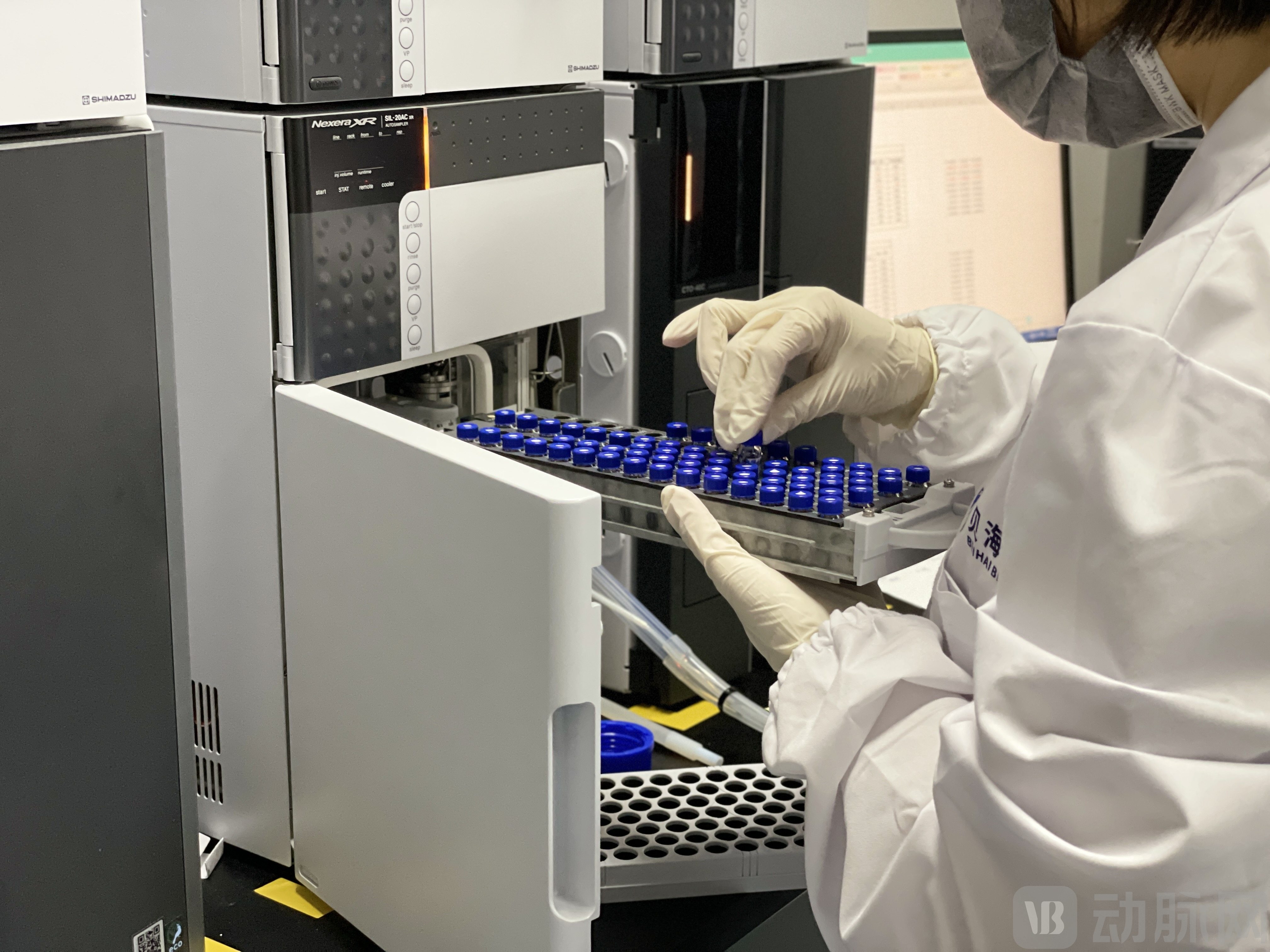
Image courtesy of Beihai Biotech
With the approval of Beihai Biotech’s first pipeline, its subsequent drug candidates are expected to benefit patients worldwide at an accelerated pace. In particular, innovative drug projects that have entered pivotal clinical trials—covering multiple indications such as bladder cancer and advanced prostate cancer—have demonstrated significant potential and promise. These assets will serve as the primary source of the company’s “self-sustaining revenue generation” following BH009.
The global strategy established since its inception has laid the foundation for Beihai Biotech’s rapid commercialization in overseas markets, serving as a new starting point for its growth into a world-class biopharmaceutical enterprise in the oncology field. In the future, as BH009 continues to unlock commercial value globally, Beihai Biotech, as a pioneer of Chinese novel drugs going global, will drive more innovative enterprises and research institutions in China to engage in new drug R&D, jointly promoting innovation and development in the biopharmaceutical industry.
References:
1. Wagner N, Podda M. High volume of polysorbate-containing (Tween® 80) solutions induces false-positive results in intradermal test. J Eur Acad Dermatol Venereol. 2018 Nov;32(11):1972-1976. doi: 10.1111/jdv.14999. Epub 2018 Jun 13. PMID: 29633392.
2. “Standing on the Shoulders of Giants to Advance the R&D of Improved New Drugs.” Pharmaceutical Economic News