

Hisense Healthcare Unveils 'Digital Minimally Invasive Interventional Department Construction Solution' at National Ultrasound Academic Conference, Driving High-Quality Discipline Development

Hisense Medical
Developer of Medical Dedicated Equipment
Amid the trends of medicalization in internal medicine and minimally invasive techniques in surgery, interventional medicine has emerged. Originating in the mid-20th century, interventional medicine effectively bridges traditional internal medicine and surgical treatments with its minimally invasive characteristics, and has now become the third major discipline, standing alongside internal medicine and surgery.
Among these, interventional ultrasound refers to the use of puncture needles instead of scalpels to perform various procedures such as puncture biopsy, catheter placement, aspiration, drug injection, and ablation therapy under real-time ultrasound guidance or monitoring. It offers advantages including precision, minimal invasiveness, safety, reduced pain, and favorable therapeutic outcomes, and has become one of the key supporting technologies in the field of interventional medicine.
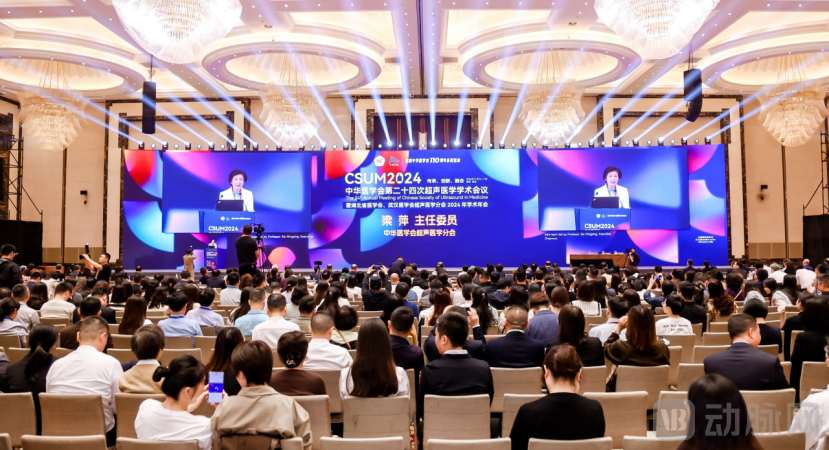
November 14–17, 2024,“The 24th National Conference on Ultrasound Medicine of the Chinese Medical Association”Successfully held in Wuhan. As the largest and most important annual academic conference organized by the Ultrasound Medical Branch of the Chinese Medical Association, it also served as a key academic event of the Chinese Medical Association in 2024. The conference brought together numerous renowned experts and scholars from China and abroad to jointly chart new directions for the development of ultrasound medicine.
As a representative of domestic medical device enterprises, Hisense Medical made a remarkable appearance during the conference with its innovative solutions and products, including the “Digital Minimally Invasive Interventional Department Construction Solution” and the HD80 intelligent ultrasound system. The Digital Minimally Invasive Interventional Department Construction Solution integrates technologies such as multimodal integrated interventional operating rooms, AI-based 3D imaging for preoperative planning, and remote ultrasound. It connects comprehensive patient life-cycle health information and is designed in accordance with standardized protocols and workflows for interventional diagnosis and treatment. This approach demonstrates a standardized pathway for department development characterized by integration and innovation, drawing significant attention from ultrasound experts and scholars.
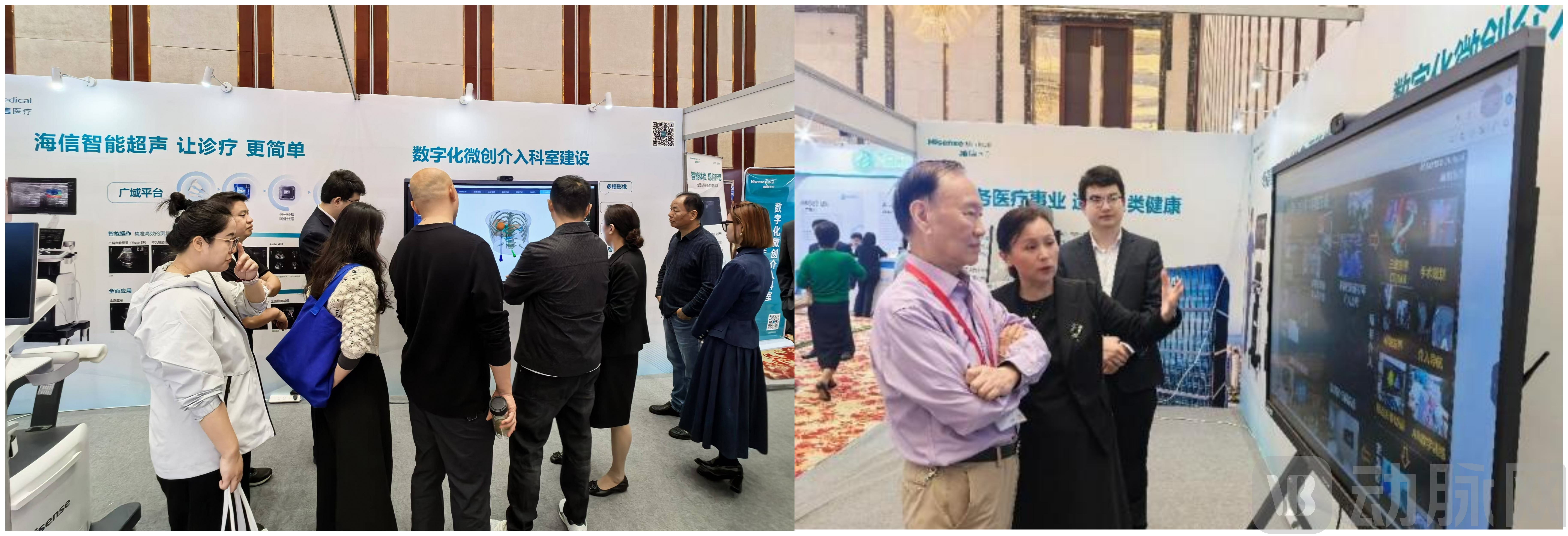
Key Projects Showcased by Hisense Medical at This Exhibition"Construction Plan for a Digital Minimally Invasive Interventional Department"By the Hisense team andThe team led by Professor Liang Ping, Chairman of the Ultrasound Medicine Branch of the Chinese Medical AssociationJointly developed, since this solution was launched in April 2023 atProfessor Liang Ping’s Department – The Birthplace of Interventional Ultrasound in ChinaFollowing implementation, it has not only enhanced the precision and safety of surgical procedures but also significantly improved operational efficiency, bringing considerable convenience to clinical diagnosis and treatment.
It is worth mentioning that this innovative solution isChina's First Digital Interventional Operating Room Integrating Digital Medical Technology, Internet of Things (IoT) Technology, Video Signal Processing Technology, and Automatic Control Technology
In recent years, the application of ultrasound imaging in the medical field has become increasingly widespread. It not only plays a pivotal role in clinical diagnosis but also further expands its applications in disease treatment based on diagnostic findings. With continuous technological innovations, interventional ultrasound—developed to better meet the needs of clinical diagnosis and therapy—has emerged as an important branch of modern ultrasound medicine, advancing toward deeper levels of clinical application.
Particularly as the complexity of interventional procedures increases, traditional single-modality image guidance can no longer meet the requirements for precise interventions such as ablation. Therefore, driven by clinical needs, the integration of multidisciplinary diagnosis and treatment and the fusion of multimodal imaging have become the main trends in the development of interventional ultrasound.
“Hisense Medical has also accumulated over a decade of experience in digital operating rooms and medical display technology. In the past two to three years, by addressing clinical pain points, it has refined a construction solution for digital minimally invasive intervention departments, achieving significant results. This innovative construction solution breaks down information silos, enables real-time scheduling of intraoperative imaging, and provides patients with more precise, safer, and more efficient standardized diagnosis and treatment protocols.”Hu Xiaohong, Chief Clinical Expert at Hisense MedicalSpeaking of.
Furthermore, Hisense Medical showcased its HD80 intelligent ultrasound system on-site, comprehensively demonstrating the company’s profound expertise and comprehensive competitiveness in the field of digital healthcare through both product offerings and systemic solutions.
Hu Xiaohong further elaborated, “On the one hand, the construction plan for digital minimally invasive interventional departments integrates a multidisciplinary treatment model, advancing interventional diagnosis and treatment toward intelligence, precision, and standardization, which significantly enhances patients’ healthcare experience and physicians’ work efficiency. On the other hand, through standardized and procedural departmental construction plans, the R&D team can gain a deeper understanding of the overall needs and development trends of interventional departments. This not only facilitates the upgrading of Hisense’s existing products and solutions but also enables more targeted research and development of innovative products and solutions aligned with future clinical development trends.”
First, multimodal imaging and multidisciplinary team-based diagnosis and treatment have become an inevitable trend in the development of interventional medicine.As the scope of interventional ultrasound therapy expands and technical complexity continues to increase, traditional single-modality image guidance is no longer sufficient to meet the demands of procedures such as precision ablation.
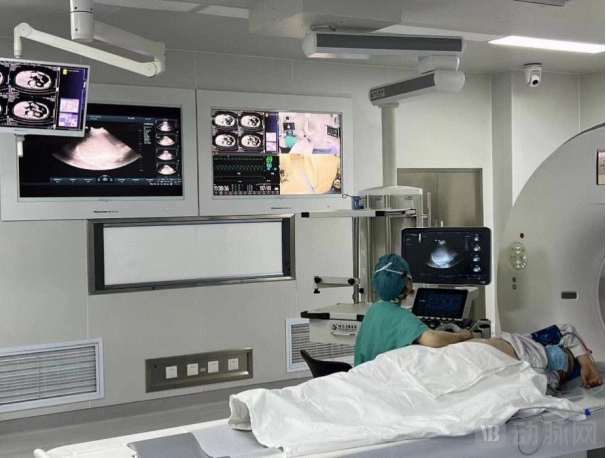
In this context, the first in China“Integrated Multimodal Interventional Ultrasound Operating Room”Integrating digital medical technology, Internet of Things (IoT) technology, video signal processing technology, and automatic control technology, the system achieves synchronized display of various imaging signals, including ultrasound, CT, and MRI. Surgeons can simultaneously view multi-terminal image signals on a quad-split screen, gaining timely and accurate insights into the spatial relationships of pathological tissues with industry-leading low-latency standards. By breaking down information silos, the system facilitates more complex and precise ablation surgeries under multi-modal imaging guidance, thereby improving the efficiency and outcomes of ablation procedures.
Secondly, AI-based3D Imaging Surgical Planning System, this solution can generate a semi-automatic needle placement plan preoperatively and, through features such as intraoperative intelligent obstacle avoidance alerts, reduce the number of repeated needle insertions and the consumption of ablation needles, thereby comprehensively enhancing the safety and therapeutic efficiency of interventional procedures.
Hu Xiaohong stated, “Leveraging AI-based intelligent algorithms, this system comprehensively accounts for multiple constraints involving the skin, bones, and internal organs to preoperatively plan and design the optimal needle placement trajectory for physicians. By precisely controlling the needle insertion range, it enhances surgical safety and efficacy while reducing surgical costs.”
Finally, the digital minimally invasive interventional department construction plan also throughRemote Ultrasound Platform, establishing a tightly integrated medical consortium to ensure that patients undergoing interventional therapy at hospitals of different tiers receive treatment outcomes comparable to those at Grade A tertiary hospitals, thereby achieving homogenization of medical services and driving the overall development of interventional medicine.
By leveraging 5G-based remote technologies to enable functions such as remote ultrasound consultation, tele-teaching, online quality control, and academic exchange, the digital construction plan for minimally invasive interventional departments also helps promote the development of multi-campus hospital models and the implementation of the tiered diagnosis and treatment system. This approach expands the scope of medical services, thereby enhancing the overall efficiency and quality of the healthcare system.
Furthermore, the construction plan for digital minimally invasive interventional departments also demonstrates the future design concept of multi-element integration in ultrasound-guided interventional operating rooms.“The Hisense team is committed to building an open platform that enables physicians to select products tailored to their individualized needs, fostering an open and collaborative industry ecosystem, and ultimately establishing a smart healthcare platform. The development and upgrade process has received support from numerous industry leaders and experts; Professor Xie Xiaoyan and her team from the First Affiliated Hospital of Sun Yat-sen University provided innovative suggestions and guidance to the R&D team,” said Hu Xiaohong.
As a professional with over ten years of experience as an ultrasound physician at a top-tier (Grade A tertiary) hospital and more than a decade in the medical device industry, Hu Xiaohong possesses deep expertise at the intersection of medicine and engineering. She has a profound understanding of how ultrasound technology is leading healthcare transformation. “I have personally witnessed the evolution of ultrasound technology in China—from M-mode and A-mode to interventional ultrasound—and observed its pivotal role in driving disciplinary advancement and medical technological innovation.”"In my view, technological innovation and disciplinary development exhibit a mutually reinforcing spiral ascent, with each cycle accompanied by the emergence of innovative technologies and their related industries."
Possessing a standardized interventional operating room is the dream of every ultrasound-guided interventional physician. Hu Xiaohong pointed out that many hospitals currently lack systematic interventional ultrasound operating rooms, which hinders the performance of interventional procedures. This is particularly true for primary care hospitals, where environmental and technical constraints often limit them to performing only the most basic interventional operations.
Furthermore, interventional ultrasound physicians require a post-procedure observation area to monitor patients’ recovery. Experienced specialists sometimes need to oversee multiple operating rooms simultaneously and provide brief guidance on complex cases to enhance workflow efficiency. For teaching hospitals, it is also essential to equip simulation classrooms for training and remote mentorship, thereby helping physicians at lower-tier hospitals and junior doctors build confidence and promoting the widespread and equitable adoption of innovative interventional techniques.
To address these challenges, Hisense Medical aims to leverage this platform to meet clinical needs and enhance work efficiency, while simultaneously promoting standardized departmental development and advancing the discipline. The solution offers broader applicability and significant value for widespread adoption. Currently, a dual-pronged strategy is being implemented. On one hand, through top-level design, demonstration sites are being established at leading hospitals to radiate influence downward and drive improvements at the grassroots level. On the other hand, assistance is being provided to primary healthcare institutions with urgent needs to facilitate their coordination with higher-level hospitals.
Hu Xiaohong stated, “Currently, this initiative is led by top-tier tertiary hospitals across China, radiating downward to primary care institutions and forming tightly integrated medical consortia. Meanwhile, we also observe that municipal-level secondary and tertiary hospitals are actively seeking breakthroughs,”For instance, the Xiangyang Hospital of Traditional Chinese Medicine in Hubei Province is currently under construction. In the future, this hospital will be able to connect directly with Professor Liang Ping’s team for guidance, likely becoming a local interventional ultrasound center and driving the development of interventional ultrasound medicine in subordinate hospitals.”
Hisense Medical has established close partnerships with numerous Grade A tertiary hospitals across multiple provinces and municipalities in China. By developing regional medical centers, the company is committed to enhancing the overall quality and efficiency of healthcare services within these regions, thereby driving the sustained high-quality development of interventional medicine and its associated industry.
“Inheritance, Innovation, and Integration” represent the vision for the development of the ultrasound industry, as highlighted at this year’s academic annual conference. Against this backdrop, Hisense Medical is actively exploring integration with interventional robotics to further enhance surgical precision and safety. In terms of national standard development, Hisense Medical has participated in the formulation of more than 20 national and group standards, including those for remote ultrasound and digital operating rooms. Notably, the key national standard for remote ultrasound is currently under approval.
In light of the broad development prospects of interventional medicine, the digital minimally invasive interventional department solution has expanded the scope of diagnosis and treatment across hospitals at various levels through technological innovation and integration. The standardization and streamlining of the overall solution have also promoted the high-quality development and decentralization of the interventional discipline, marking a significant step toward achieving homogenization and universal accessibility of medical services.