

Emergence of a Billion-Dollar Digital Oral Healthcare Cluster: The Rise of the Asia-Pacific Digital Oral Innovation Hub
In recent years, the oral healthcare industry has been in a critical phase of transformation and upgrading.
On one hand, with the upgrading of domestic health consumption, the implementation of national centralized procurement, and the rise of the appearance economy, the demand for dental implants, orthodontics, and oral care among a broader population has been activated, driving the dental market toward greater consumption diversity and a younger demographic.
On the other hand, thanks to the widespread adoption and application of technologies such as the Internet, AI, and 3D printing, the supply side has seen an increasing array of advanced instruments, including CBCT systems, intraoral 3D scanners, CAD/CAM dental restoration software, and CNC dental milling equipment. These innovations have not only enhanced treatment efficiency but also optimized the patient experience.
It is precisely on this basis thatAn increasing number of enterprises are seizing the opportunities presented by digitalization.A set of data underscores this fervor: According to the VCBeat database, from January 1, 2023, to October 31, 2024, there were a total of 44 financing rounds in China’s primary market related to the dental sector, involving 41 innovative dental companies. Notably, all of these enterprises have strategically positioned themselves in digitalization. This indicates that investment institutions place significant emphasis on digital innovation within dental companies.
There is no doubt that the wave of digitalization in the oral healthcare industry has arrived with full force. In this process, how are the industry players who are riding this tide thinking and strategizing?
Looking at historical industry experience, every market fluctuation serves as a prelude to the industry’s advancement to a higher level.
After more than a decade of rapid development, China’s dental industry is facing another price war, with “involution” and slim profit margins becoming the current buzzwords. However, the fiercer the competition, the greater the opportunities for transformation.
As a “powerful tool” for the transformation of the oral care industry, why is digitalization so favored by companies entering the market?
The underlying reason is that,With the integration of digitalization into the dental industry, it is theoretically possible to break down temporal and spatial barriers, seamlessly connect workflows, promote the standardization of processes and outcomes, and thereby achieve higher efficiency and quality.
For instance, in clinical diagnosis and treatment, dental models are indispensable for orthodontic examination and diagnosis. Traditionally, the industry has widely used plaster models; however, this method not only causes patient discomfort but also suffers from insufficient accuracy. The advent of intraoral direct scanning technology has effectively resolved these issues: by leveraging advanced equipment and algorithms, this technique precisely captures three-dimensional coordinate data and generates digital dental models through efficient data processing and surface reconstruction. This approach not only significantly enhances the speed and accuracy of model measurement but also greatly facilitates model storage and transmission, providing robust support for remote consultations and the design of personalized appliances.
Meanwhile, on the side of dental service providers, digitalization can effectively address longstanding issues such as high marketing costs, information asymmetry, and difficulties in standardizing medical quality. Through this transformation, institutions can focus more on enhancing diagnostic and treatment quality as well as operational efficiency, achieve standardized operations, thereby strengthening profitability and laying a solid foundation for scalable growth.
So, how exactly does digitalization take root in corporate practice?
Shandong Maier Medical Technology Co., Ltd., which has been deeply rooted in the industry for over a decade (hereinafter referred to as “Maier Medical”) as an example, the company has established a new business model for intelligent manufacturing in China’s dental industry and pioneered the construction of a digital denture intelligent manufacturing plant nationwide, thereby driving the upgrade of intelligent manufacturing within China’s dental sector.
Specifically, by leveraging its independently developed 3D industrial internet design platform and applying personalized precision medicine 3D printing technology, Mayer Medical has successfully streamlined the manufacturing process from 28 steps to just 7, significantly enhancing production efficiency. This improvement has reduced the design time for a single custom dental crown to 20 minutes, allowing patients to complete treatment within just 2 hours of crown placement. This not only greatly improves the patient experience but also effectively reduces medical costs.
It is evident that digital technology has virtually rewritten the traditional denture production industry: since the adoption of digitalization, the fabrication of a single denture no longer relies primarily on the craftsmanship and experience of dental technicians, but instead leverages digital technologies and 3D printing to achieve precision medicine.
Meanwhile, Meier Medical’s digital initiatives extend beyond the research and development and production of digital denture products to actively encompass collaborative R&D on horizontal projects. The company has engaged in in-depth cooperative R&D across upstream materials, equipment, and software, as well as downstream digital dental diagnosis and treatment, thereby establishing a clustered industrial chain in the intelligent oral manufacturing sector that fosters synergistic development among products, R&D, technology, materials, and digital processes.
Another example is Shandong Huguo Dental Medical Group Co., Ltd. (hereinafter referred to as “Huge Dental”), after years of development, the company has continuously achieved breakthroughs and innovations in the fields of dental laboratory technology, clinical practice, and digitalization. It has developed a series of dental restorative materials, pediatric preventive dental materials, and digital orthodontic products/technologies, forming corresponding solutions. Its products are exported to more than 100 countries and regions worldwide, with multiple subsidiaries established in Beijing, Qingdao, Shanghai, and Los Angeles.
Leveraging its material advantages, Hugedent has accelerated the digitalization of its products in recent years. For instance, it has enhanced the processing precision of composite resin teeth through high-precision CAD/CAM mold technology, employed digital technologies such as 3D printing to manufacture personalized clear aligners, and utilized digital solutions to facilitate seamless communication among its design team, clinicians, and dental laboratories.
In summary, digitalization not only profoundly impacts the entire clinical workflow in the dental industry but also serves as a key driver for industrial players to achieve intelligent manufacturing upgrades.
Therefore, for participants in the oral health industry, digitalization is no longer an optional choice but a mandatory imperative that must be addressed and answered.
From a global perspective, the development of any industry is inseparable from a region that possesses industrial cluster advantages and deep collaborative capabilities.
Therefore, the rapid digital transformation of the dental industry must inevitably intersect with robust regional development.
On one hand, as a rising industrial “pearl” at the southern tip of the Shandong Peninsula, Rizhao boasts natural locational advantages, distinct industrial characteristics, abundant innovative resource endowments, and a beautiful, livable ecological environment.
Natural locational advantages.Rizhao has long been acclaimed as “the South in the North, and the North in the South.” It is a place where Shandong’s Qilu culture and Jiangsu’s Wu-Yue culture converge and blend, and it serves as a “second habitat” for industrial relocation from the Beijing-Tianjin-Hebei region and industrial spillover from the Yangtze River Delta. Facing Korea and Japan across the sea, Rizhao is the preferred destination for Japanese and South Korean enterprises to establish their industrial presence in China.
Rizhao boasts a comprehensive infrastructure network, including an airport, high-speed rail, a seaport, heavy-haul railways, expressways, and long-distance oil and gas pipelines—a rarity across China. For instance, Rizhao Port is the world’s youngest port to handle 500 million tons of cargo annually, ranking sixth among coastal ports in China and seventh globally. Connected to the port, the Watang–Rizhao and Xinxiang–Heze–Yanzhou–Rizhao railways, each spanning over 1,000 kilometers, link more than 20 cities in the Yellow River Basin, making Rizhao one of the most convenient and cost-effective sea gateways for the region. From Rizhao, travelers can conveniently reach over 100 domestic cities by air or high-speed rail.
Distinctive Port-Based Industries.Rizhao was established as a city due to its port, with thriving port-based industries and a booming marine economy. It is a national key base for advanced steel manufacturing and a provincial key base for automotive parts production in Shandong Province. Rizhao is seizing the opportunities presented by the construction of Shandong’s Pilot Zone for Green, Low-Carbon, and High-Quality Development, focusing on optimizing and strengthening 12 key industrial chains, including life and health, new energy, steel, automobiles, modern marine industries, and next-generation information technology. The city is accelerating the cultivation and development of future industries to shape new advantages in regional competition.
Abundant Innovation Resources.Rizhao is among China’s top 100 cities for urban innovation capability, talent attractiveness, digital development, and foreign trade. More importantly, Rizhao is brimming with the vitality of young talent. Among eastern coastal cities, Rizhao enjoys relatively abundant factors of production, such as land and labor. Currently, Rizhao is home to nine higher education institutions with a total enrollment of 90,000 students, as well as 11 secondary vocational schools with 29,800 students. In terms of training professionals in life sciences, health, and dentistry, Rizhao Health and Wellness Vocational College has 191 students majoring in Smart Health and Elderly Care Services and Management, 98 in Nursing, 246 in Pharmacy, 276 in Rehabilitation Therapy Technology, 266 in Traditional Chinese Medicine (TCM) Rehabilitation Technology, 271 in Medical Laboratory Technology, 209 in Sports Healthcare and Rehabilitation, and 256 in Dental Technology. Rizhao Marine Engineering Vocational College has 67 students majoring in Rehabilitation Therapy Technology, 169 in Medical Laboratory Technology, 70 in TCM Health Preservation and Wellness, 637 in Health Management, and 121 in Dental Technology.
Beautiful Ecological Environment. Blue skies, azure seas, and golden sandy beaches are the hallmark of Rizhao.Bathed in sunshine and bordering the vast blue sea, Rizhao boasts a 168.5-kilometer coastline, over 50 kilometers of pristine golden sandy beaches, and a 12,000-mu coastal national forest park. Mr. Samuel C. C. Ting, the renowned contemporary physicist and Nobel Laureate in Physics whose ancestral home is Rizhao, has praised Rizhao’s beaches as “surpassing those of Hawaii.”
On the other hand,Centered on the digital dentistry industry, Rizhao is cultivating new industrial drivers and gradually building a comprehensive dental supply chain that spans from the production of high-value consumables to dental implant services.Among them, Hugedent’s synthetic resin teeth and elastomeric impression materials rank first in market share in China; Mair Medical serves as the formulator of digital dentistry standards in Shandong Province; and high-quality enterprises such as Innoway Medical, Kanglaier Denture Technology, Jusheng Medical, and Shenghong Medical have also emerged, jointly driving the upward development of Rizhao’s dental industry.
Based on the results achieved so far, local dental enterprises in Rizhao have obtained approval for nearly 20 Class III medical devices, nearly 30 Class II medical devices, and nearly 30 Class I medical devices. This success is attributable to Rizhao’s strong emphasis on providing support services throughout the medical device approval process. In the Rizhao High-Tech Industrial Development Zone, a dedicated approval center has been established to accelerate the development of the medical device industry. Professional and highly competent personnel have been assigned to long-term temporary positions at the Linyi Branch No. 5 of the Shandong Medical Products Administration, the Provincial Evaluation Center, and the National Medical Products Administration. A comprehensive green-channel approval mechanism has been implemented, enabling Class II medical devices to obtain certification in as little as three months.
Meanwhile, Rizhao has achieved remarkable progress in advancing the development of its digital industry. For instance, it has implemented an action plan to double the size of core digital economy industries and issued policy documents such as the Action Plan for Building a Digitally Strong City and the Annual Key Tasks for Digital Economy Development. In the first half of 2024, the value-added of Rizhao’s core digital economy industries grew by 80.5%, ranking second among all cities in Shandong Province. The city’s level of digital industry agglomeration ranked fifth in Shandong, and its Open Data Forest Index remained among the top three prefecture-level cities nationwide for three consecutive years.
It is worth noting that, leveraging emerging industries such as next-generation information technology, life and health, high-end equipment manufacturing, and modern services, Rizhao has consistently adhered to a dual-drive strategy of industrial digitalization and digital industrialization. This approach promotes the deep integration of digital technologies with the real economy, fostering new competitive advantages in the development of the digital economy, which also serves as a key support for the growth of the digital dentistry industry.
Furthermore, Rizhao has been continuously strengthening its supportive policies, resources, and services for companies in the oral care industry.On the policy front, to support the development of the dental healthcare industry, Rizhao High-Tech Zone has successively issued the “Several Policies of Rizhao High-Tech Zone on Promoting High-Quality Development of the Dental Healthcare Industry” and the “Several Policies of Rizhao High-Tech Zone on Encouraging Innovative R&D in the Medical Device Industry.” These policies provide customized services and support for enterprise development, with rewards of up to RMB 6 million for obtaining Class III medical device registration certificates.
Complementing these policies are the concrete implementation measures. To foster long-term enterprise development, the local government has established a “five-in-one” industrial support system encompassing talent, funding, physical infrastructure, innovation platforms, and policy backing.
It is worth noting that at the level of top-tier expert think tanks,Bringing together a team of medical experts represented by Academician Dai Kerong and Academician Ge Junbo.
Innovation also requires a constant influx of fresh resources. At the capital level, we have successively partnered with industry-renowned investment institutions such as Chuhui Capital, Jinyu Maowu, Jinpu Grand Health, Industrial Securities Capital, and Chuangjing Capital, as well as with numerous top-tier investment teams.
Taking the Rizhao High-Tech Zone as an example, targeted services are provided to dental companies establishing operations in the area. Based on local conditions, the zone continuously expands its incubation pool for small and medium-sized enterprises (SMEs). Through in-depth research and meticulous screening, tailored incubation plans are developed for each enterprise and the overall pool, taking into account corporate revenue, R&D capabilities, and industry development trends. Enterprises included in the pool are subject to classified and tiered management, enabling a comprehensive understanding of their development status, strengths, and weaknesses, thereby providing a basis for precise policy implementation.
To enhance the competitiveness of the oral health industry, enterprises in Rizhao High-Tech Zone have successively collaborated with leading institutions such as West China School of Stomatology, Peking University School of Stomatology, Shanghai Ninth People’s Hospital, and Zhongshan Hospital on joint research and development. In 2022, Hugel established Shandong Province’s only provincial-level key laboratory for dental materials, while Meer Medical established the province’s only provincial-level technological innovation center in the field of dentistry.
One detail worth noting is that, in order to provide comprehensive and customized digital transformation services to enterprises, the Rizhao High-Tech Industrial Development Zone has also established a Digital Transformation Service Platform for enterprises within the zone, thereby delivering tangible benefits for the practical implementation of digitalization in businesses.
Given these factors, it is easy to understand why Rizhao has frequently seen the emergence of high-quality innovative dental enterprises and developed a robust innovation ecosystem.
Moreover, to provide a platform for exchange and collaboration among government, industry, academia, research institutions, healthcare providers, and investors who are actively advancing the digital dentistry sector, Rizhao is also vigorously promoting major industrial events.
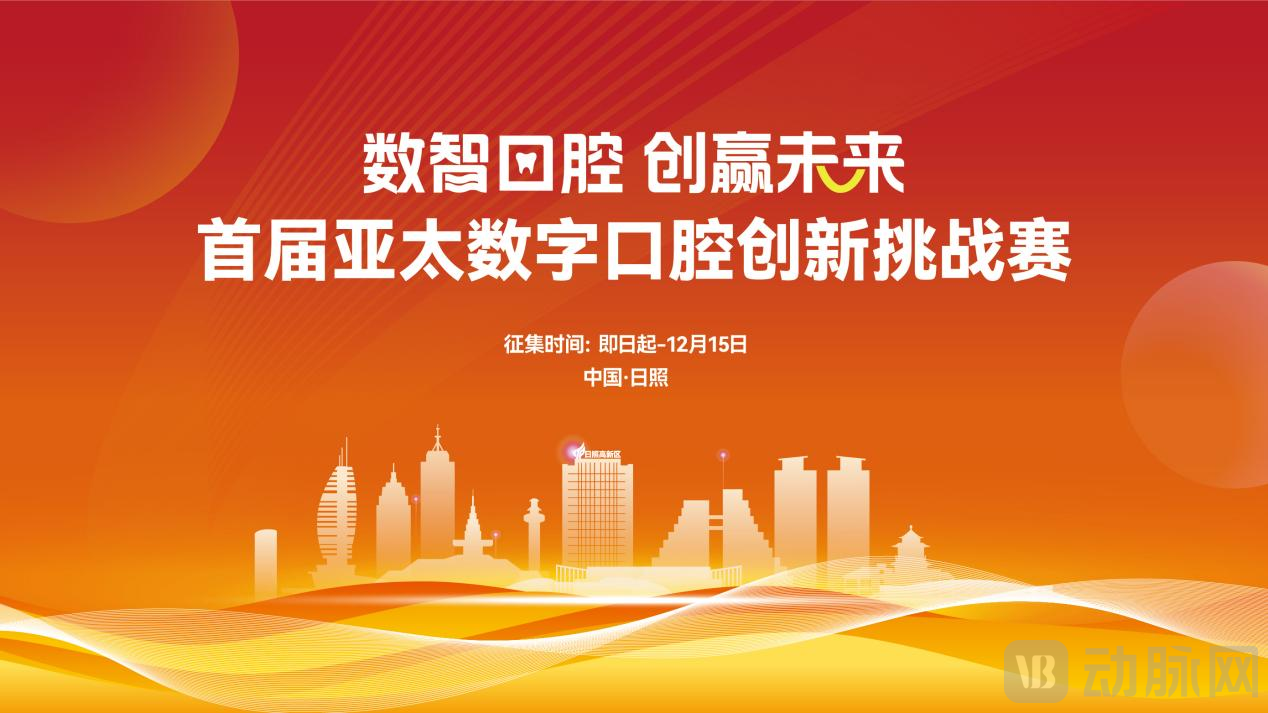
Recently, Rizhao will host the inaugural Asia-Pacific Digital Dentistry Innovation Challenge, and registration is now open.
These initiatives are propelling Rizhao to become a key player in the global digital dental ecosystem.
A robust industrial ecosystem must feature high-caliber, highly focused industry events.This serves not only as a platform for communication, collaboration, and advocacy among ecosystem stakeholders, but also as a special invitation to encourage broader participation in the ecosystem.The inaugural Asia-Pacific Digital Dentistry Innovation Challenge is undoubtedly such a landmark event.
Specifically, as the first innovation competition in the Asia-Pacific region to focus on the digital dentistry industry, this Innovation Challenge was organized by the Administrative Committee of Rizhao High-Tech Industrial Development Zone. The competition solicited entries from universities, clinical institutions, medical facilities, and enterprises across China, aiming to comprehensively identify, nurture, and select high-quality projects in stomatology, accelerate the development of a dental healthcare industrial cluster, and lead the trend in the digital dentistry sector.
In terms of scale, this challenge will offer opportunities for online and offline interactions with leading experts in the field of dentistry. The judging panel will comprise an esteemed group of experts, including academicians from the Chinese Academy of Sciences and the Chinese Academy of Engineering, representatives from top-tier universities, and delegates from leading Grade A tertiary hospitals. In addition, the 2024 Asia-Pacific Digital Dental Innovation Hub Conference on High-Quality Development of the Oral Industry will be held concurrently. This event will bring together industry leaders from government, industry, academia, research, healthcare, and investment sectors, including academicians from the two academies, clinical dental experts, upstream and downstream enterprises in the oral care industry, university innovation representatives, and senior investors, to fully promote cross-sector communication and interaction.
In addition to its high specifications, the inaugural Asia-Pacific Digital Dentistry Innovation Challenge also provided participating companies with extensive resource support.
First, there is financial support for innovation and entrepreneurship, which covers equity investment, start-up costs, financing support, and fund investment, as well as landing subsidies such as rental support for factory premises during the incubation period, subsidies for medical device certifications, interest subsidies on equipment loans, and talent allowances.
Furthermore, brand empowerment. High-quality projects selected for the competition will have their promotional information published on the official platforms of the event (including specific promotion channels and opportunities for coverage by relevant industry media).
Finally, we offer ecosystem empowerment, including but not limited to facilitating access to medical device certification and approval resources, assisting with applications for relevant technology and talent programs, inclusion as a supplier on “Yi Xiao Zhi,” China’s only digital dentistry platform, and providing opportunities for online and offline interactions with leading experts in the field of dentistry.
It is evident that, through diversified support, this competition has maximized the assurance that participating enterprises benefit from rich ecosystem resources.
The consumer-driven nature and low penetration rate of the oral care industry inevitably point to substantial room for future market growth.
Drawing on the development trajectory of the U.S. dental industry, per capita disposable income and population aging are the two major factors accelerating the growth of dental care services. China is currently at a stage comparable to that of the United States around 1975, with per capita GDP entering the new phase of exceeding USD 10,000, deepening population aging, and continuously rising public awareness of dental care.
In short, China's oral care industry is still far from reaching its growth ceiling, with immense potential for the future.
Amid this overarching trend, digitalization will undoubtedly serve as a powerful driver for industry growth. According to BizWits Consulting, the market size of the digital dentistry sector alone is projected to exceed RMB 20 billion from 2024 to 2029, with a compound annual growth rate (CAGR) of 6.26%, indicating substantial opportunities. Seizing this era’s opportunities requires collaborative efforts from stakeholders across government, academia, research institutions, industry, healthcare providers, and investment sectors.
Here, we warmly welcome everyone to participate in the inaugural Asia-Pacific Digital Dentistry Innovation Challenge and to visit Rizhao for inspections, jointly ushering in a new chapter for the industry.

(Scan the QR code to participate in the 1st Asia-Pacific Digital Dentistry Innovation Challenge)
We believe that as the oral care industry embarks on a new journey and enters the next phase of growth driven by digital technologies, enterprises that dare to continuously innovate and strengthen collaboration with various stakeholders in the ecosystem will surely seize the next wave of opportunities.