

Qinghan Medical Unveils Normothermic Machine Perfusion (NMP) System at 2024 Hepatobiliary Surgery Conference, Offering New Hope for Organ Transplantation
During the transplantation of organs from donors to recipients, inadequate organ preservation techniques often lead to ischemia-reperfusion injury caused by ischemia and hypoxia, resulting in the marginalization of donor organs and reduced transplant success rates.
The good news is that the industry is attempting to overcome this challenge.
In November, at the 2024 Academic Conference on Hepatobiliary Surgery, hosted by the Chinese Medical Doctor Association, organized by the Editorial Board of the Chinese Journal of Digestive Surgery and the Institute for Organ Transplantation and Bionic Medicine at Tsinghua University, and co-organized by the Clinical Medical College of Tsinghua University and Beijing Tsinghua Changgung Hospital Affiliated to Tsinghua University,Leading clinical medical experts, scientists, and scholars in the fields of hepatobiliary and pancreatic surgery and organ transplantation convened to discuss cutting-edge topics, including hepatobiliary surgery, pancreatic surgery, organ transplantation, bionic medicine and artificial organs, liver diseases and hepatobiliary tumors, digital-intelligent healthcare, and specialized nursing care.
One of the hotly debated topics is transplant organ preservation.
The cutting-edge Normothermic Machine Perfusion (NMP) system for organs, showcased at the conference, has garnered widespread attention from academia, clinical practice, and industry.
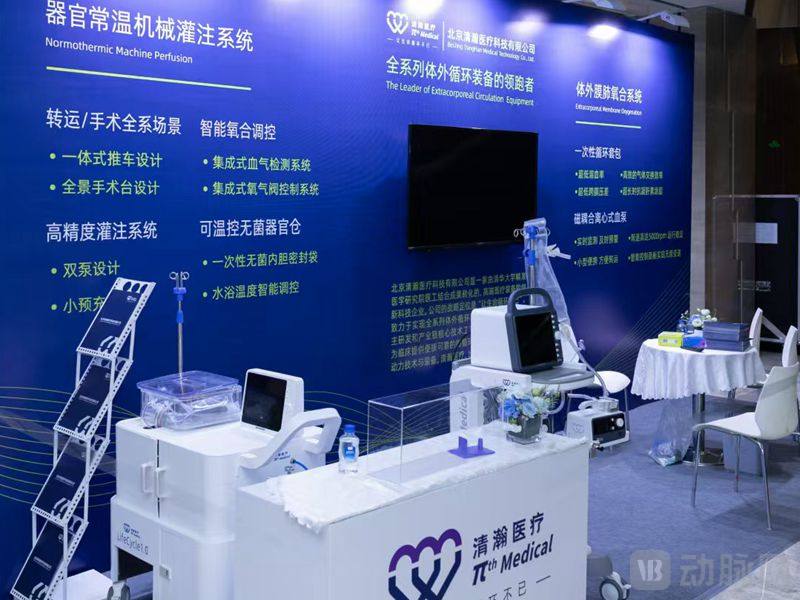 Qinghan Medical's NMP Perfusion System Presented at the 2024 Academic Conference on Hepatobiliary Surgery
What are the technical features of this system? Why has it garnered such significant attention from the academic, clinical, and industrial communities?
At the 2024 Academic Conference on Hepatobiliary Surgery, the organizers released a set of authoritative data—
From 2010 to November 8, 2024, China recorded a cumulative total of 55,729 deceased organ donations and 172,075 donated organs. The number of human organ transplant surgeries in China currently ranks second globally, reaching 23,891 cases in 2023. This represents an 18% year-on-year increase compared to the 20,225 transplant surgeries performed in 2022.
The growth in the number of organ transplant procedures in China is driven by three factors. First, with improvements in residents’ healthy living standards and population aging, both the number of organ donations and the demand for organ transplants continue to rise. Second, advances in clinical technology have made more organ transplant surgeries feasible; for instance, marginal organs (aged, damaged, or locally diseased organs) that were previously unusable are now being fully utilized thanks to preservation and repair techniques. Third, spurred by the promising prospects of xenotransplantation and gene-editing technologies, more clinicians and research funding are being directed toward organ transplantation.
However,A significant gap persists between the current substantial demand for organ transplants and the existing number of surgical procedures performed, with one of the key technical barriers stemming from the effective preservation and repair of transplantable organs.
“After procuring the transplant organ, static cold preservation is basically adopted in China, where the organ is immersed in preservation solution and the temperature is lowered to 0–4°C to inhibit its metabolism and oxygen consumption. Rewarming and transplantation are performed only when the organ reaches the recipient,” industry experts pointed out. “Under static cold preservation technology, two points require particular attention: first, during hypothermic storage, organ blood vessels may constrict or collapse, leading to organ injury; second, the rewarming process may cause ischemia-reperfusion injury to the organ.”
Building upon static cold storage technology (0–4°C), dynamic perfusion techniques such as hypothermic mechanical perfusion (0–10°C) and subnormothermic mechanical perfusion (20–30°C) have emerged, enhancing organ metabolic capacity and the quality of transplanted organs to a certain extent. However,The aforementioned technologies have still failed to achieve normal blood circulation in transplanted organs, and the issue of tissue injury caused by hypoxia remains severe.
The Normothermic Machine Perfusion (NMP) technology showcased at the conference aims to address this issue.In short, normothermic mechanical perfusion systems (37°C) establish a circulatory and metabolic environment closer to physiological conditions, enabling transplanted organs to receive adequate oxygen supply and maintain vascular blood flow in circulation, thereby delivering superior organ preservation quality, opportunities for repair, and transplant success rates. Experts at the conference pointed out thatCompared with static cold storage, normothermic machine perfusion technology reduces the clinical organ discard rate by 50%, decreases the degree of organ injury by 50%, and extends the average ex vivo organ preservation time by 54%.
However, Normothermic Machine Perfusion (NMP) technology still faces certain technical barriers. The efficacy of perfusion is closely related to oxygenator technology, perfusate formulation, and the selection of organ perfusion strategies. During the perfusion process, the organ microcirculation is a key factor influencing vascular perfusion, tissue penetration, oxygen supply, metabolism, and organ repair.
Precisely because of the technical barriers associated with Normothermic Machine Perfusion (NMP), only three overseas companies have currently obtained FDA/CE certification, and no products have yet received registration from China’s National Medical Products Administration (NMPA). VCBeat has noted that domestic companies are actively laying out strategies for normothermic machine perfusion technologies and equipment. Among them, Beijing Qinghan Medical, which presented academic findings and unveiled its NMP system for the first time at the 2024 Academic Conference on Hepatobiliary Surgery, stands out as a high-tech enterprise actively positioning itself and taking the lead. Qinghan Medical’s design philosophy and product features for its NMP devices may offer valuable references for peers competing in this sector.
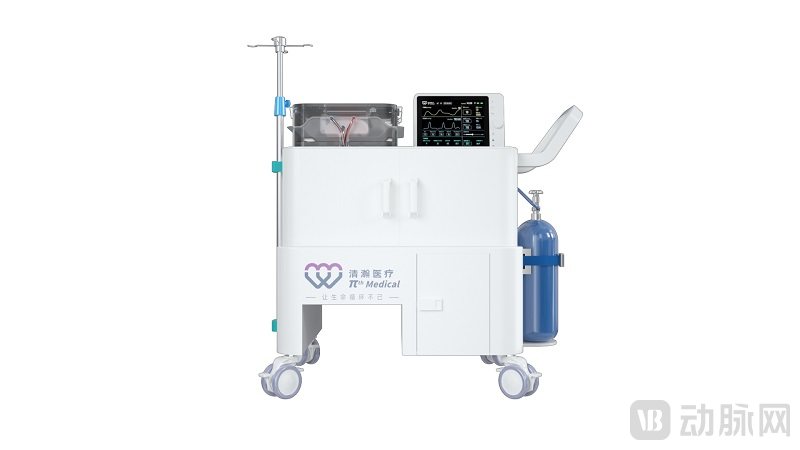
Qinghan Medical Normothermic Mechanical Perfusion System
Qinghan Medical initially focused on developing an NMP system targeting the liver. It is evident that this decision was driven by a precise understanding of clinical needs and a strong sense of responsibility.China has the world’s largest population of individuals with hepatitis infection, and liver transplantation is a common treatment option for many patients with advanced-stage liver cancer. Patients undergoing liver transplantation require comprehensive support from normothermic machine perfusion (NMP) technology.
Secondly, Qinghan Medical has implemented innovative designs with distinct clinical characteristics in its understanding of the underlying NMP technology—
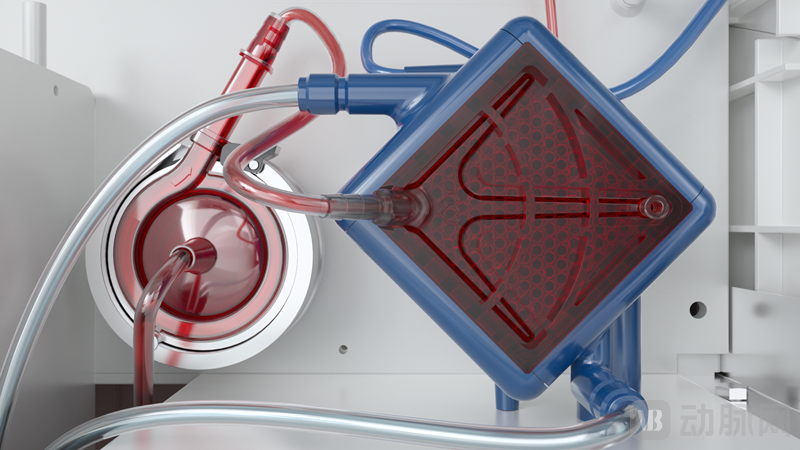
Qinghan Medical NMP System-Specific Liver Perfusion Oxygenator
On the one hand, the Qinghan Medical technology team adopted an integrated cart design to meet the needs of different scenarios such as clinical transport and surgery, and employed a panoramic operating table design to facilitate surgeons in performing procedures on transplanted livers;On the other hand,, the team integrated its own microcirculation model concepts, adopted a dual-pump high-precision perfusion system, developed a pulsatile centrifugal pump to enhance microvascular perfusion, and simultaneously employed a constant-flow centrifugal pump to stabilize blood pressure;Furthermore,To better provide oxygenation support for the liver, Qinghan Medical has independently developed a full series of oxygenators (even achieving innovative in-house development of hollow fiber membranes) and has specifically engineered a low-priming-volume oxygenator dedicated to liver NMP perfusion;Moreover,To facilitate clinical and research observation and assessment of perfusion efficacy, this NMP system not only displays hemodynamic parameters in real time but also continuously monitors blood gas indices and metabolic markers of the donor liver, such as bile secretion. Furthermore, it incorporates intelligent algorithms for the temperature control and oxygen supply systems, enabling ex vivo liver organs to survive and repair under optimal biomimetic conditions.
According to VCBeat,Qinghan Medical’s ability to rapidly develop specialized NMP systems is closely tied to its possession of a technical team that integrates medical and engineering expertise.
On the one hand, the company actively participates in the research project on the “Ex Vivo Normothermic Mechanical Perfusion System for Livers” originating from Tsinghua University, and engages in close scientific collaboration and technology transfer with Tsinghua University’s Institute of Organ Transplantation and Regenerative Medicine.Professor Zhang Xiangjun, the team’s lead scientist in engineering, is affiliated with the Department of Mechanical Engineering at Tsinghua University and the State Key Laboratory of Tribology in Advanced Equipment. She also serves as Deputy Director of the Tianjin Institute of High-End Equipment at Tsinghua University. Her research group has achieved first-class research standards and academic accumulation in the fields of surface and interface mechanics, microscale rheology, and blood microcirculation, maintaining close exchanges with academic peers from universities in the United States and Germany. As the leading medical partner, Beijing Tsinghua Changgung Hospital provides high-quality clinical experts and medical resources for the project.
On the other hand, Qinghan Medical’s professional expertise in the R&D and manufacturing of ECMO devices and oxygenators has provided an engineering platform and foundation for the development of the NMP system.They were the first in China to achieve full integration from the independent development of oxygenation fiber membrane materials to the R&D and mass production of a complete series of oxygenator kits and ECMO systems, which has significantly advanced the development of the NMP system and clinical collaboration.
It was also revealed that, to rapidly expand its market presence, Qinghan Medical is actively recruiting talent with multinational corporation experience and a global perspective. This initiative aims to comprehensively enhance the company’s capabilities and address pain points in key subsequent areas such as operations, sales, and after-sales service.
For patients in China, the good news is that high-quality domestically produced NMP perfusion systems will be available in the near future.
At the recent 10th-anniversary celebration of Beijing Tsinghua Changgung Hospital, affiliated with Tsinghua University, Qinghan Medical’s NMP system was prominently featured as a paradigmatic achievement of hospital-engineering collaboration. Both parties also affirmed their commitment to further developing a model exemplifying the integration of engineering and clinical medicine across “industry, academia, research, clinical practice, and application,” along with innovative products, while accelerating the clinical adoption of the NMP normothermic mechanical perfusion system.
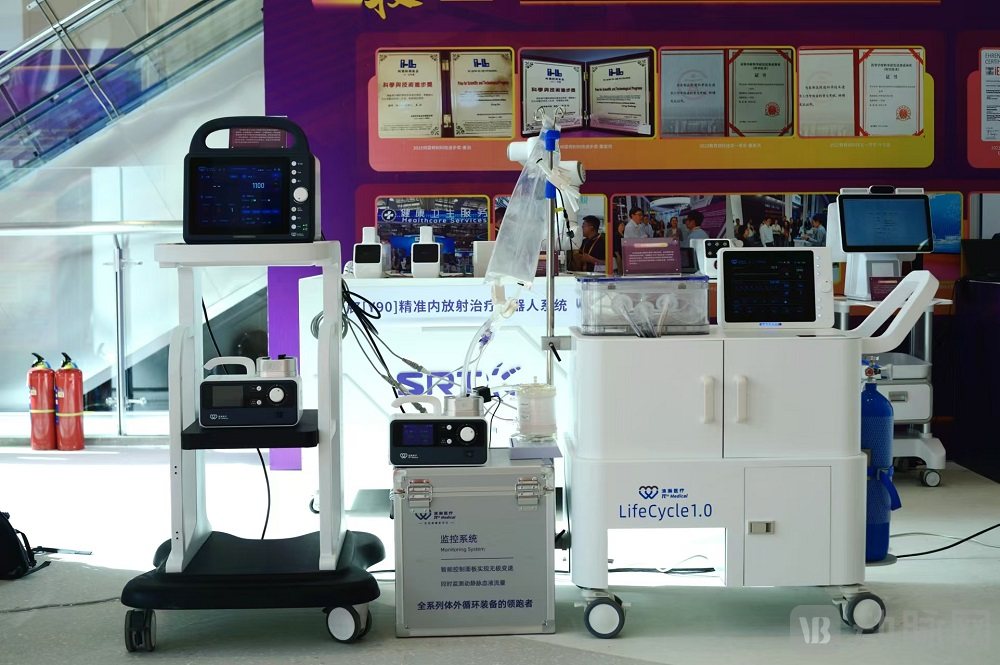 Qinghan Medical's NMP System and ECMO System Displayed at the Hospital Anniversary Celebration
To support the clinical promotion of the NMP system, Qinghan Medical has achieved original innovation and overcome core technical challenges in normothermic mechanical perfusion (NMP) devices for the liver and small-sized oxygenators. The company has completed its patent portfolio layout, and its products have entered research and experimental application scenarios. According to Dr. Zuo Panli, COO of Qinghan Medical, with rising clinical demand, the company does not rule out extending normothermic mechanical perfusion support to transplantation of other organs.
Furthermore, “organ transplant protection” does not encompass all application scenarios of NMP; there are broader clinical settings that can be explored. As Professor Zhang Xiangjun mentioned in his academic presentation at the conference, “normothermic mechanical perfusionnot limited to the field of organ transplantation,It can also be applied to protect organs during surgical procedures,Reference can be made to measures such as the protection of brain tissue during surgery for patients with cardiac arrest. Many speakers at the conference also mentioned NRP, i.e., normothermic regional perfusion used to maintain organ viability, which signifies broader application scenarios. Furthermore,Clinical practice is also applying NMP systems to in vivo organ therapy. More importantly, China currently lacks a drug screening and development platform at the organ level; the advancement of normothermic mechanical perfusion technology will make such a platform a reality.”
Currently, the industry benchmark, Transmedics in the United States, has gone public, while there are no similar products or listed companies in China. For domestic enterprises in this sector, this undoubtedly represents a market with immense potential.
But it is not just a "market."
“Starting with microcirculation research, we have progressively expanded into the comprehensive R&D and innovation of pulmonary circulation, systemic circulation, and hemodynamic technologies and equipment. In the future, we will continue to focus on the field of blood circulation, aiming to become a ‘leader’ in the specialized niche of extracorporeal circulation.” Beyond market deployment, Professor Zhang Xiangjun, Chief Scientist at Qinghan Medical, summarized, “Our goal is to integrate decades of basic research with genuine clinical needs within the “industry-academia-research-medicine-application” translational framework, transforming scientific advancements into products that benefit human life. The vision and mission of our team and enterprise are to “secure the well-being of patients, contribute merit to society, and uphold virtue for the world,” thereby sustaining the endless cycle of life.”