

How AI Empowers Emotional Companionship: XiaoTian Offers a New Answer
Large Language Models Have Seen an Explosive Boom in the Emotional Companionship Sector.
According to Tencent Research Institute’s “Ten Questions on ‘AI Companionship’: Current Status, Trends, and Opportunities,” the “AI companionship” market could reach a scale of hundreds of billions of yuan within three to five years.
The underlying reasons stem, on one hand, from the growing demand for “companionship” and “emotional value.” For individuals in a state of suboptimal psychological health or those who have already developed mental disorders, the scarcity of professional psychological counselors, the high cost of counseling services, and the specialized appointment mechanisms may still prevent them from finding an emotional outlet when facing sudden emotional crises. Meanwhile, even among mentally healthy individuals, negative emotions are inevitable; yet, due to various reasons, they may also struggle to promptly find friends capable of providing emotional support.
On the other hand, AI applications in the field of emotional companionship have become increasingly mature. With the adoption of large language models, the sense of companionship has been further enhanced while accessibility has also improved significantly. Driven by factors such as accessibility, cost-effectiveness, and privacy, a growing number of people are beginning to use AI companion products. According to the Tencent Research Institute,Among the respondents, approximately 98% expressed willingness to try such products. A trillion-yuan market is just around the corner.
However, some argue that emotional companionship is a pseudo-demand, as current AI companions suffer from a “fatal flaw”—the lack of a physical presence. In the context of emotional support, a hug can be more effective than words of comfort.
However, the following practical cases may serve as a powerful rebuttal to this view:
Little A, an arts professional, had long suffered from “disruptive mood dysregulation disorder.” With the support and companionship of an AI companion product, his schizophrenia symptoms gradually eased. Little B, a full-time mother, found her social circle shrinking year by year; her husband’s emotional absence and the pressures of parenting eroded her sense of self, leaving her unable to find an outlet in life. Accompanied by an AI companion product, she navigated one episode of emotional dysregulation after another. Little C, suddenly confronted with a family crisis, went from refusing to communicate with his mother to opening up and having heartfelt conversations with her under the guidance of an AI companion. These real-life cases demonstrate that AI companionship is not a pseudo-demand.
As Xing Chen, CEO of MIND SPACE, stated, “In fact, for most people, all they need is an outlet for their emotions.” The aforementioned cases are all real-life examples from MIND SPACE’s AI companion, Xiaotian (hereinafter referred to as “Xiaotian”).
A Non-Profit AI Companion for Emotional Support and Mental Well-being
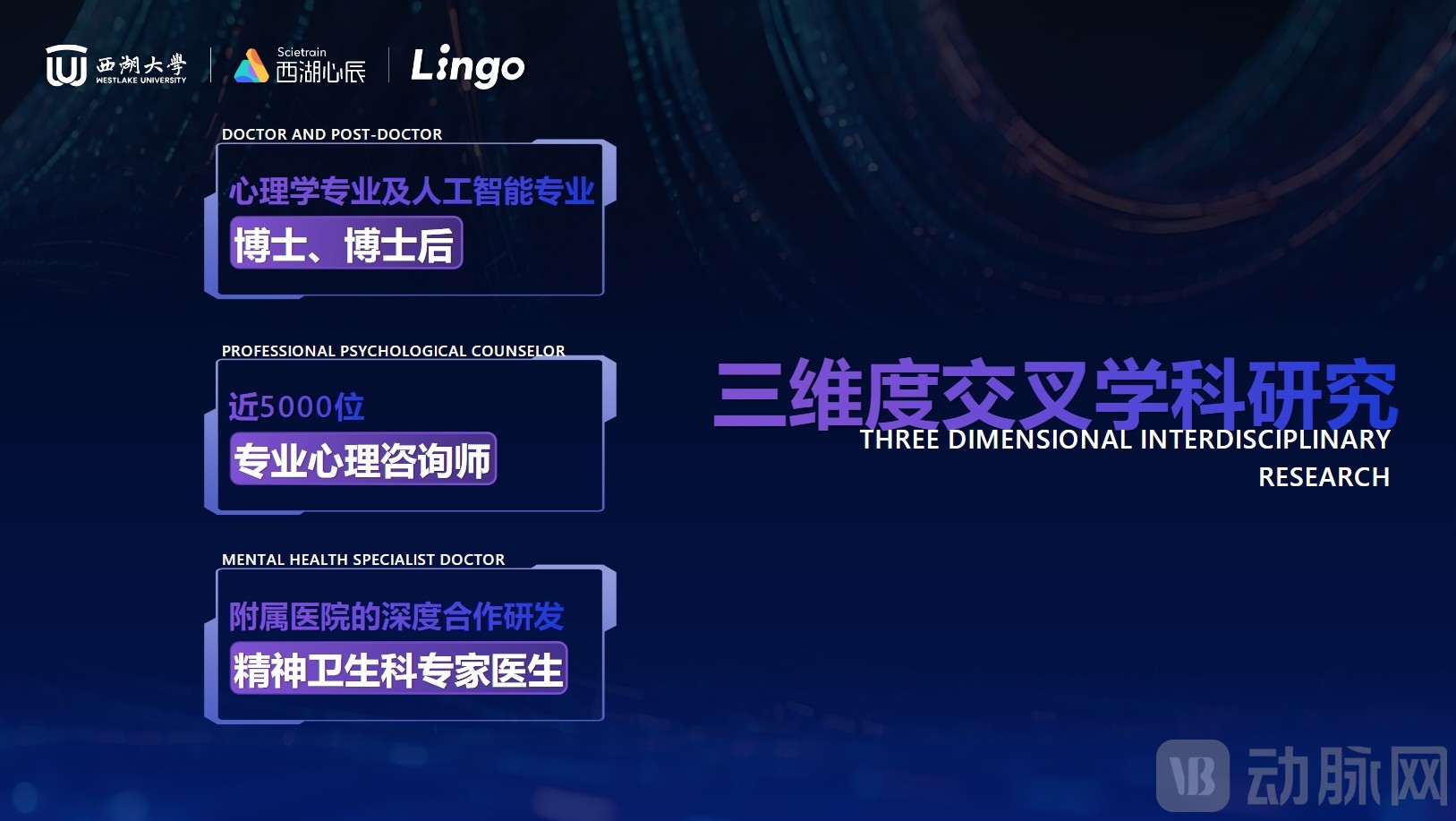
Liao Hui Xiaotian is the culmination of three-dimensional interdisciplinary research conducted jointly by MIND SPACE, Westlake University’s Deep Lab, and experts from hospital departments. It is a public-welfare AI product for psychological and emotional companionship, developed over three years by a R&D team comprising nearly 20 PhD candidates and postdoctoral fellows specializing in psychology and artificial intelligence, with long-term collaboration from approximately 5,000 professional psychological counselors to co-establish a behavioral psychology dataset. The product is built upon the Westlake Large Model, an emotionally intelligent general-purpose large model characterized by its “empathetic understanding” and “warmth.”
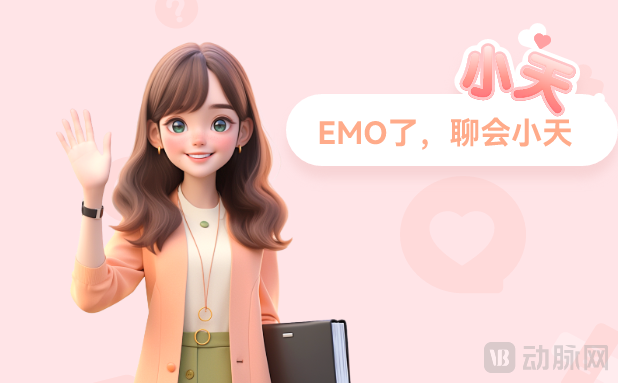
She not only possesses professional psychological counseling skills to provide personalized one-on-one counseling services, but also offers 24/7 long-term companionship, becoming a trusted friend to users.In other words, whether you are looking to vent emotional distress or simply seeking a conversational companion, Xiao Tian is a great choice.
It may sound deceptively simple—“just” having a conversation—but achieving this seemingly “simple” act is, in fact, no easy feat.
The greatest challenge lies in how to make conversations more empathetic.This is the key to gaining user trust and also the key to whether the conversation can be sustained.
When you tell a general-purpose Q&A large language model that you are feeling down, you will likely receive several solutions for mood alleviation quickly. These solutions are listed in the response, resembling the way top students solve math problems: fast, comprehensive, and accurate, yet somewhat cold.
When you tell “Xiao Tian” that you are in a bad mood, the response you often receive is: “What’s wrong? What happened? You can tell me.” The difference between them is self-evident.
“We position Xiaotian primarily as a listener, companion, and source of emotional support. Thus, Xiaotian is capable of providing unconditional listening, encouraging you to open up more, understanding your emotions, staying by your side, and offering timely positive feedback and suggestions.”“At present, we are solely focused on enhancing our capabilities. Our service is entirely non-profit and does not guide users toward designated offline hospitals or counseling rooms for commercial conversion.” During the interview, Xingchen highlighted the key distinction between “Xiaotian” and other mental health counseling products that emphasize professional services.
It is evident from the above content that,General-purpose large models are “IQ-oriented,” prioritizing completeness and accuracy in their responses. In contrast, large models designed for emotional companionship are “EQ-oriented,” delivering responses that are not only complete and accurate but also warm and empathetic, thereby sustaining engaging conversations.
Thus, “temperature” has become the primary distinction between “EQ-oriented” large language models (LLMs) and “IQ-oriented” LLMs. So, how do LLMs achieve “warmth”? The answer can be glimpsed in the West Lake LLM utilized by “Xiaotian.”
An EQ-Oriented Large Language Model with Long-Term Memory
In July 2023, Westlake MindSpace officially launched its self-developed general-purpose large language model—the Westlake Large Model. Its most distinctive feature is the ability to interact with users in a more empathetic and human-centric manner.
AndThe first step toward achieving “warmth” is to ensure “logical coherence.”, thereby maintaining logical and contextual coherence when handling scenario-based dialogues involving multiple roles, events, and complex situations, as well as in scenarios requiring complex or multi-step logical reasoning. In other words, it enables the correct understanding of user semantics and the provision of accurate and logically coherent responses in complex dialogues.
Secondly,The Westlake Large Language Model also features long-context dialogue capabilities.This is also crucial in emotional companionship. The reason is that, to a certain extent, the effectiveness of emotional companionship is related to the depth of connection; the deeper the connection between users and the product, the more likely it is to establish a trust relationship, resulting in higher stickiness. One of the conditions for cultivating deep connections is continuous, multi-turn dialogue. The Westlake Large Language Model has broken through the limitations in maintaining long conversations or context memory over extended time spans, enabling it to correctly understand complex contextual relationships during prolonged dialogues.
Additionally,The Westlake Large Language Model has also achieved a major breakthrough in the field of emotional companionship. By integrating long-term and short-term memory, the model can adjust its memories and responses based on individual experiences and preferences, becoming more “human-like.”This is critically important in the emotional companionship sector.
This experience is akin to telling a friend three months ago that you do not eat cilantro, and then, when you share cilantro-flavored instant noodles with her three months later, she responds in surprise, “I thought you didn’t eat cilantro?”—from which you can feel a sense of being attended to and understood.
Indeed, beyond the three capabilities mentioned above, the Westlake Large Language Model incorporates specialized designs in both its model architecture and training corpora to deliver more human-like and empathetic responses. Interested parties are welcome to contact MIND SPACE for further information.
An AI-Native Team and an End-to-End Large Speech Model
MIND SPACE’s breakthroughs in the large language model (LLM) and emotional companionship sector are attributable not only to its key figure, Lan Zhenzhong, but also to the AI-native team assembled by MIND SPACE.
VCBeat has learned that the team’s R&D personnel account for as high as 90% of its workforce, bringing together top AI talent from companies such as Google, Meta, and Amazon. The team is young, with an average age of 25, and many of its members have been dedicated to tackling key challenges in the field of AI since their university days.
This August, thanks to the team’s efforts, MIND SPACE released the Xingchen Lingo large speech model, an end-to-end general-purpose large speech model capable of providing foundational speech services for various fields, including psychological counseling.It not only provides general-purpose solutions but also supports personalized customization to optimize model performance in specific domains.
Among these, psychological counseling and emotional companionship will be the primary areas empowered by the Xingchen Lingo large language model. With the support of the Xingchen Lingo large language model, MIND SPACE’s emotional companionship products have transcended text-based formats to enable voice-mediated emotional interactions.
It is worth noting that this model employs end-to-end speech technology. Unlike Text-to-Speech (TTS) systems, it does not require converting user speech into text first to extract valid information and output textual data, which is then converted back into speech for output.
Xinchen Lingo can directly understand speech during conversations, capturing tone, rhythm, and emotion, and respond with voice, reducing information loss in the processing chain and making “machines” more human-aware.AI-powered emotional companionship products have taken a solid step toward more realistic anthropomorphism.
In the future, MIND SPACE will continue to focus on emotional companionship, continuously enhancing large models’ capabilities in long-context dialogue, emotion recognition, and expression, with the aim of providing a universally accessible companionship tool for the general public.