

From a Swiss Village Wine Cellar to a Global Lab Automation Leader: Tecan Reports CHF 1.074 Billion Revenue

Tecan
Provider of Automated Laboratory Instruments and Solutions
Laboratory Automation refers to the use of modern technologies and equipment to automate various laboratory operations and processes, thereby reducing manual labor, simplifying experimental workflows, enabling intelligent experimental design, minimizing human error, and enhancing experimental throughput, speed, accuracy, and reproducibility. It encompasses aspects such as sample processing, instrument operation, and data acquisition and analysis. The implementation of laboratory automation relies on a variety of automated devices and software, including autosamplers, liquid handling systems, robotic systems, temperature control systems, automated analytical instruments, and data processing software. These devices and software work in concert to perform diverse tasks within the laboratory, thereby achieving laboratory automation.
Its core technology originates from industrial automation, which had already developed the prototype of modern integrated automated factories by the 1960s, leading to the emergence of numerous automated production lines in the manufacturing industry. Laboratory automation has been developing abroad for over 40 years, with robotic arms and workstations appearing first, while different laboratory scenarios remain at varying stages of automation. The rise of laboratory automation in China stems from the demand for domestic substitution in the upstream life sciences industry, combined with China’s capacity to supply talent in industrial automation. Its core value lies in enabling laboratory personnel to focus on scientific research itself rather than repetitive experimental operations.
In recent years, with the rapid development of automated laboratory platforms, more biomanufacturing enterprises have adopted automated laboratory solutions to alleviate the cost pressures associated with manual experimentation. Taking pharmaceutical companies as an example, McKinsey data indicates that once R&D laboratories achieve a digital laboratory standard, drug chemistry R&D costs decrease by 25% to 45%, and potential R&D costs in automated microbial drug laboratories are reduced by 15% to 35%. Furthermore, a large global pharmaceutical company implemented a modular and scalable digital twin platform to facilitate its laboratory automation transformation, resulting in a 30% increase in drug productivity, an 80% reduction in experimental deviations, and even the complete elimination of recurring deviations. Additionally, digitization and automation can shorten drug delivery cycles by 60% to 70% and boost productivity by at least 50%.
As a pioneer in laboratory automation and a leading player in its niche, Tecan launched the world’s first process-controlled automated liquid handling system—the Tecan Sampler 500 series liquid handling workstation—as early as 1985, marking a significant milestone in the development of automated laboratories. Over the subsequent nearly 40 years, Tecan has continuously optimized and iterated its products. Today, Tecan operates manufacturing and R&D facilities in both Europe and North America, with sales and service networks spanning more than 70 countries and regions. In China alone, Tecan ranks second in market share for microplate readers (at 18.92%) and boasts the largest installed base as well as the greatest number of forensic users within the public security system.
Tecan was originally founded in a rural village in Switzerland.
In 1980, four engineers founded Tecan (listed in 1987 on the SIX Swiss Exchange: TECN) in the rural village of Hombrechtikon, Switzerland, with the initial goal of developing equipment for measurement, analysis, and laboratory automation. At its inception, the company’s offices were located in the rural wine cellar of CEO and co-founder Heinz Abplanalp, while its production facilities were dispersed across renovated barns, houses, and warehouses scattered throughout the village.
Dr. Achim von Leoprechting is the CEO of Tecan. Holding a Ph.D. in Biology from the University of Freiburg in Germany, Dr. von Leoprechting brings extensive management experience in the life sciences industry. Prior to joining Tecan, he worked at Packard Bioscience, where he held various leadership roles in technology, sales, and marketing. Following PerkinElmer’s acquisition of Packard Bioscience in 2002, he joined PerkinElmer and subsequently served as European Sales Director for Molecular Medicine; Vice President and General Manager of Cellular Imaging and Solutions; Vice President and General Manager of Imaging and Detection; Vice President and General Manager of In Vitro Solutions; and Vice President and General Manager for the Europe, Middle East, Africa, and India (EMEA&I) region of the Life Sciences and Technology business.
Unlike most CEOs in the life sciences sector, who tend to maintain a rather formal public persona, Achim von Leoprechting stands out as somewhat unique. He is not only an enthusiast of sports such as running, tennis, mountain biking, hiking, and Nordic skiing, but also has a deep passion for music, having played in rock, Britpop, and R&B bands since the age of 20. In 2015, Achim von Leoprechting even formed an employee band called Dilutorz at Tecan. Comprising talented musicians from various functional departments and different countries within the company, the band performs at corporate events as well as at major industry conferences across Europe and the United States.
The vitality and passion of the leadership team are also reflected in the company’s development. Over the past four decades, Tecan has continuously optimized and iterated its technologies and products, launching one groundbreaking new product after another that sets trends in the field of laboratory automation.Taking Tecan's automated workstations as an example, its products have now been updated to the fifth generation:
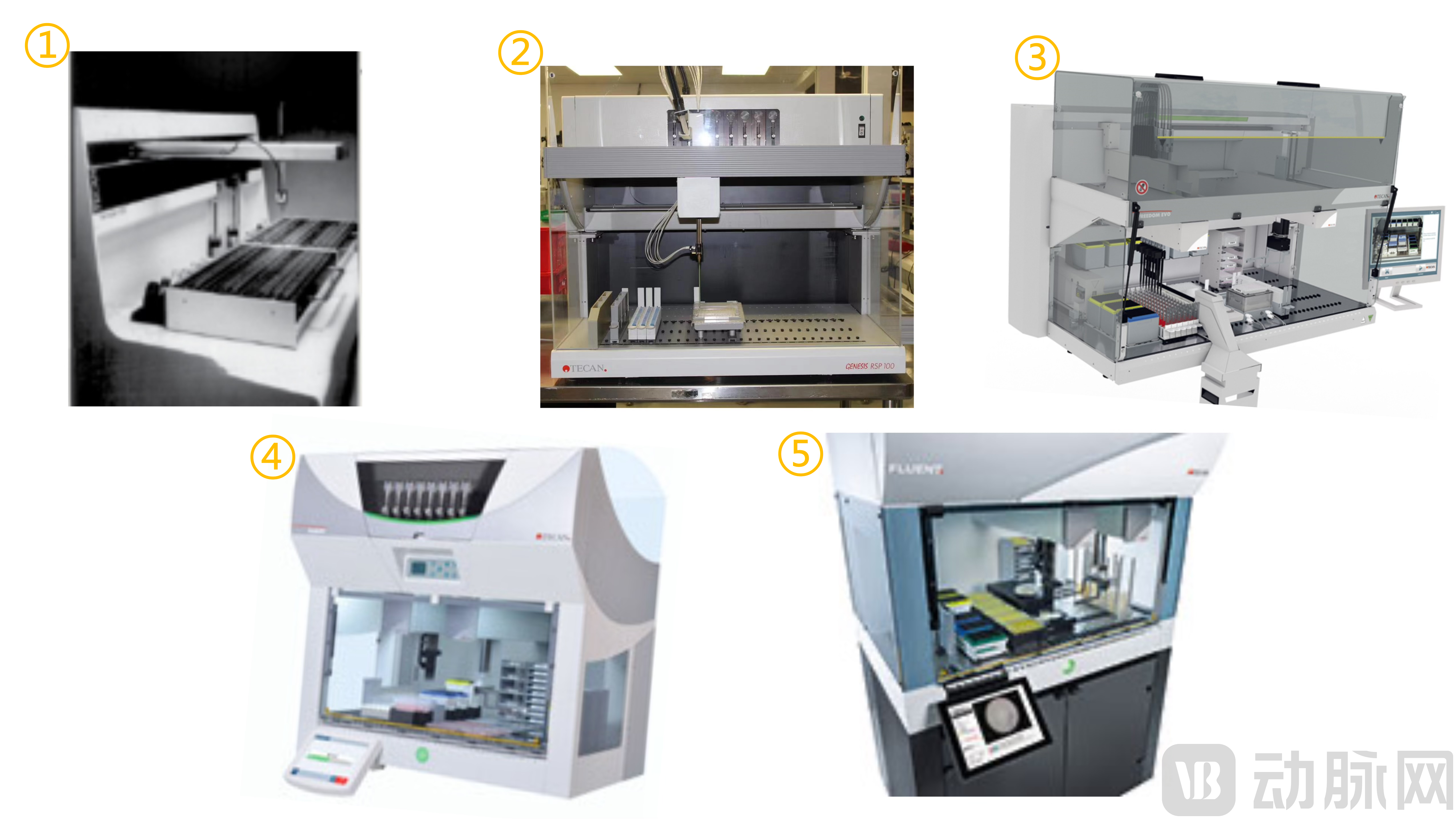
Fifth-Generation Automated Workstation, Image Source: Tecan Official Website
As early as 1985, Tecan launched the world’s first fully automated liquid handling workstation with integrated process control, the Samplers 500, which served as the prototype for subsequent generations of automated workstations.
Building on this foundation, Tecan launched the modern automated workstation Genesis in 1995. Controlled by the Gemini automation software, the workstation features a modular design that enhances flexibility in front-end processing. It enables sample storage, sample pretreatment, and nucleic acid extraction, while also integrating liquid handling, microplate transfer, and compatibility with other equipment.
Subsequently, in 2003, Tecan launched the classic automated workstation Freedom EVO. This workstation features three arms that can be controlled independently or operate in parallel, and is equipped with the user-friendly EVOWare/plus graphical automation software system. It supports applications in genomics, proteomics, drug development, biobanking, and medical diagnostics, offering characteristics such as speed, flexibility, high throughput, scalability, and ease of integration.
In 2014, Tecan launched the next-generation automated workstation, Fluent. Featuring four independently operating robotic arms, a dual-layer deck, compliant automation control software, and a touchscreen interactive interface, this system offers higher throughput, flexible integration, space-saving design, and streamlined protocols. It provides mature solutions for drug development and evaluation, synthetic biology, genomics, and cell research.
Tecan's Latest Generation Automated Workstation: Fluent®Launched in 2018, Gx is an optimized and iterative upgrade of the previous-generation Fluent workstation. This workstation offers enhanced process safety and is powered by FluentControl Gx compliance software, which meets stringent regulatory compliance requirements in accordance with regulations such as FDA 21 CFR Part 11 and the Requirements for Drug Record and Data Management (Trial).
It is evident that Tecan’s pace of iteration in the field of automated workstations has not been particularly rapid. In its early years, the company typically rolled out new generations once every decade. However, each iteration represented a significant breakthrough over its predecessor, with the functionalities of its latest products specifically addressing the current pain points in the life sciences sector.
Notably, Tecan has participated in the China International Import Expo (CIIE) twice with its new products, introducing a series of innovations for laboratory automation. At the 2022 CIIE, Tecan’s new MagicPrep NGS system was featured in the exhibition hall. Designed specifically for low-throughput NGS library preparation laboratories, the MagicPrep NGS system meets automated library preparation needs ranging from low to high throughput, with a reliability rate exceeding 97%. At the 2023 CIIE, Tecan’s new Uno single-cell dispenser was showcased. The Uno single-cell dispenser is designed to enhance the ease of use, efficiency, and precision of single-cell workflows, supporting a wide range of single-cell applications in the “omics” field, including MS-based single-cell analysis, iPSC banking, 3D cell research, and cell line development.
Good products naturally gain market recognition.According to data from Huite Company, in recent years, the R&D centers of many world-renowned pharmaceutical companies (such as Roche, Pfizer, Novartis, Eli Lilly, Amgen, and Boehringer Ingelheim) have chosen Tecan’s fully automated workstations. More than 80% of large-scale fully automated workstations worldwide are manufactured by Tecan. Many prestigious universities, research centers, forensic systems, hospitals, and blood stations in China have also adopted Tecan’s automation platforms. There are approximately 2,000 Tecan workstations in China, with Tecan’s automation platforms holding over 85% market share in the blood station system and over 60% market share in the forensic system (for fully automated nucleic acid extraction and PCR pipetting).
To date, Tecan offers mature solutions and services for the life sciences and in vitro diagnostics industries, as well as OEM partnership opportunities, extensively serving a wide range of sectors including scientific research, pharmaceuticals, public security and criminal investigation, hospitals, blood banks, centers for disease control and prevention, and entry-exit inspection and quarantine agencies.
Overall, the life sciences, in vitro diagnostics (IVD), and OEM businesses are mutually reinforcing. Tecan is able to provide a comprehensive product portfolio for diverse customer segments, ranging from benchtop instruments for basic research and sample-to-result solutions for IVD companies, to modules and systems for surgical robots and individual testing devices for medical technology firms. Furthermore, Tecan can tailor and integrate solutions for basic research and routine clinical applications according to specific customer needs.
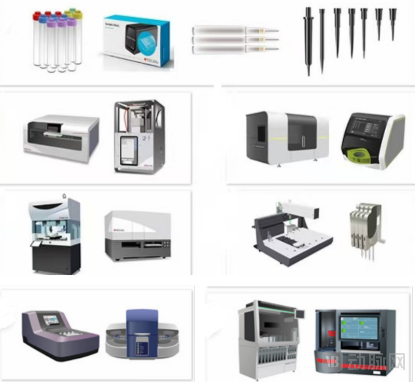
According to incomplete statistics, Tecan's product portfolio. Image source: official website and annual reports.
Specifically, in the life sciences and in vitro diagnostics (IVD) segments, Tecan offers a portfolio of products including automated workstations, multi-functional liquid handling platforms, ultra-micro pipetting instruments, microplate readers, plate washers, and various associated consumables. According to its 2023 financial report, the total addressable market for Tecan in the life sciences research sector is valued at USD 4–5 billion, growing at an annual rate of 3% to 5%. In the IVD segment, Tecan’s total addressable market is approximately USD 4 billion, with a compound annual growth rate comparable to that of the life sciences research market.
In terms of OEM partnerships, Tecan’s products and services include OEM system development, development and manufacturing of liquid handling components and modules, development and manufacturing of consumables and spare parts, as well as precision machining and assembly services. Tecan provides customers with scalable contract design, development, and manufacturing services, and offers customized solutions for OEM clients, managing entire projects from design to production.
Tecan’s diverse product portfolio and comprehensive services have generated substantial revenue.According to the financial report, Tecan’s operating revenue in 2023 was CHF 1.0744 billion (approximately RMB 8.837 billion). Of this, sales in the Life Sciences and In Vitro Diagnostics segment reached CHF 451.8 million, while sales in the OEM Partnership segment amounted to CHF 622.6 million.
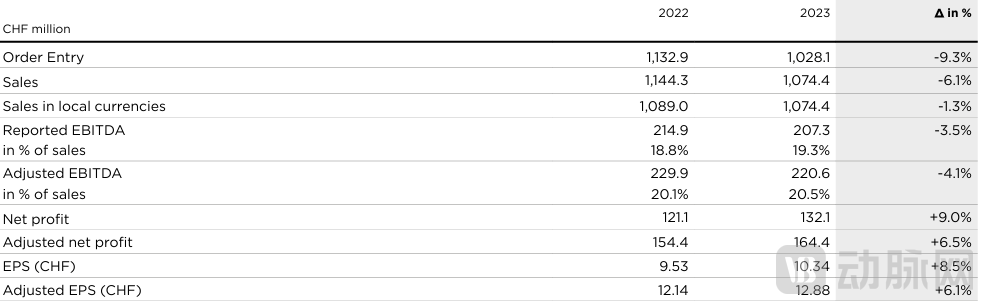
2023 Tecan Revenue Data, Source: Tecan Financial Report
Although Tecan’s revenue last year declined slightly compared to 2022, this fluctuation was relatively modest given the dual effects of the post-pandemic landscape and dynamic macroeconomic conditions. On another front, Tecan revealed in its 2023 financial report that it will place special emphasis on four niche segments: genomics, protein analysis, cell and tissue analysis, and medical mechatronics. With the rise of these emerging downstream sectors, demand for upstream products and services across the industry chain is expected to increase, positioning Tecan for new growth opportunities.
Mergers and acquisitions are a common strategy for companies to gradually grow into industry giants.According to incomplete statistics based on publicly available information, Tecan has completed eight acquisitions since its establishment.
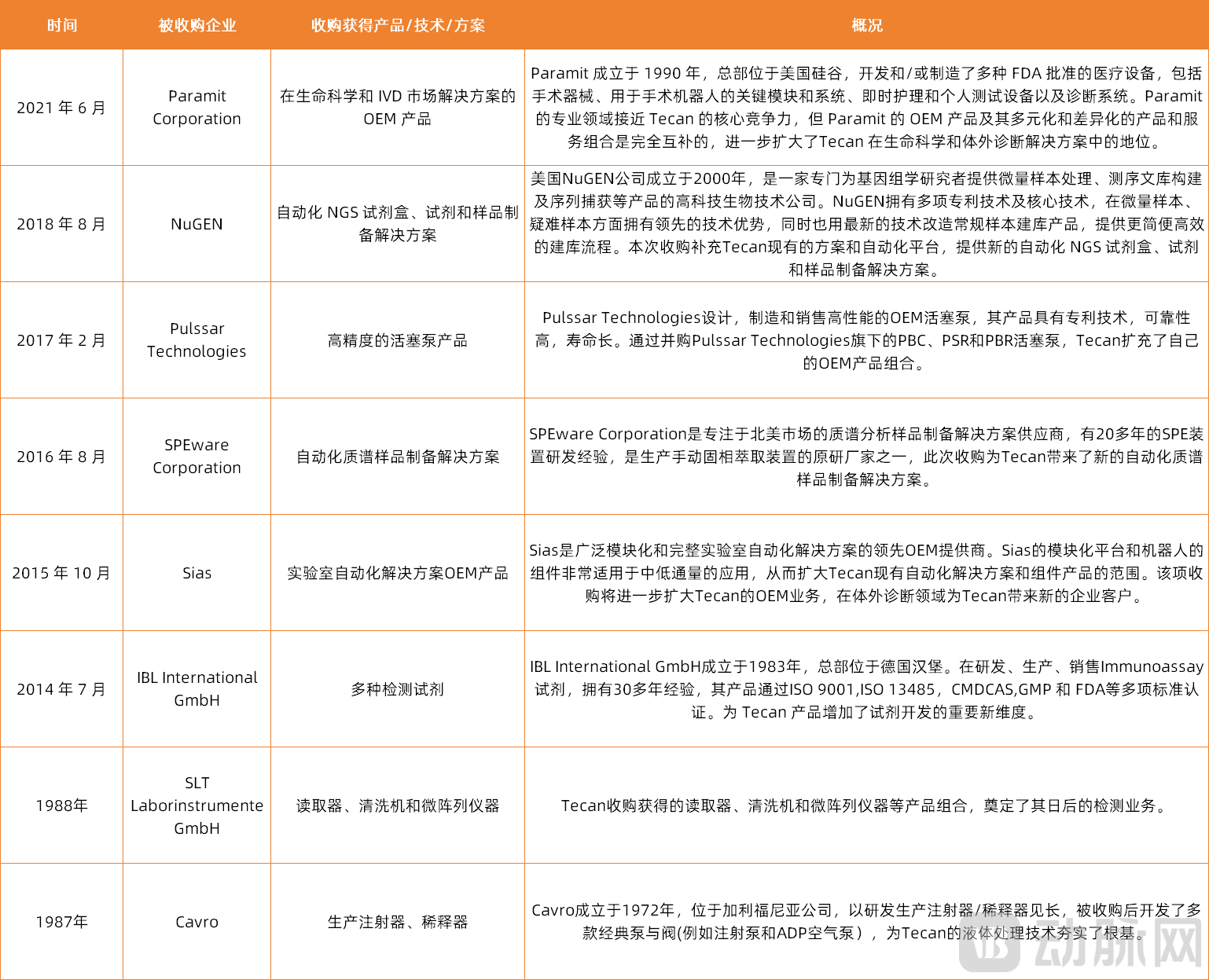
Incomplete Statistics: Companies Acquired by Tecan Since Its Establishment (Data Source: Publicly Available Information)
Tecan’s most recent acquisition took place in June 2021, when it acquired Paramit Corporation and its affiliates, an OEM developer and manufacturer of medical devices and life sciences instruments, for a total consideration of $1 billion (CHF 920 million). Founded in 1990 and headquartered in Silicon Valley, USA, Paramit specializes in the development and manufacture of a wide range of FDA-cleared medical devices, including surgical instruments, key modules and systems for surgical robots, point-of-care and personal testing devices, and diagnostic systems.
Paramit operates manufacturing facilities in Morgan Hill, California, and Penang, Malaysia, partnering with life sciences companies to develop and manufacture high-precision instruments. In its OEM collaborations, Paramit primarily serves U.S. companies in the fields of genomics, proteomics, and cell analysis. Its products and services include the collaborative development and production of flow cytometers, microfluidic instruments, and systems for electrophoresis, imaging, high-sensitivity biomarker detection, microarrays, and sample preparation.
It is evident that Paramit’s areas of focus include the R&D and manufacturing of various instruments in the life sciences sector, as well as providing OEM services to customers, which bears some resemblance to Tecan’s strategic layout. However, Paramit’s OEM offerings, along with its diversified and differentiated portfolio of products and services, are fully complementary to Tecan’s, further strengthening Tecan’s position in life sciences and in vitro diagnostic solutions.
Since its inception and growth to the present day, Tecan currently operates manufacturing and R&D facilities in Europe, North America, and Asia, with a sales and service network spanning more than 70 countries and regions.
For the Chinese market, Tecan began its presence as early as 1999 through distributors, providing comprehensive solutions to a wide range of users across various industries—from high-throughput screening and automated liquid handling to customized solutions and OEM services.In 2004, Tecan established a representative office in Beijing, and in 2008, it formally incorporated a wholly foreign-owned enterprise in Shanghai. Currently, Tecan’s China headquarters is located in Shanghai, with three branch offices or representative offices in Beijing, Guangzhou, and Chongqing. Its development in China has undergone three stages:
1999–2004 (From Scratch to Establishment), Tecan primarily relies on distributors for product promotion, sales, and service. Leveraging its leading technology and robust quality, Tecan’s products rapidly gained traction in the Chinese market upon their initial entry into laboratory automation, achieving remarkable growth from scratch.
2005–2009 (Rapid Development Phase), Tecan’s sales in China have achieved a compound annual growth rate (CAGR) of over 50%, significantly outpacing the growth rates of other global markets. The establishment of Tecan’s Chinese subsidiary also underscores headquarters’ emphasis on the Chinese market. However, alongside this growth, challenges such as intensifying competition, declining profit margins, and increasing distributor inventory have gradually accumulated.
2010 to Present (Phase of Joint Competition), Tecan China’s sales growth began to slow, partly due to market saturation and the emergence of alternative technologies, but more significantly because domestic and international competitors entered the market with improved quality and distinct price advantages. Tecan China sustained year-on-year sales growth by implementing multiple measures, including adjusting its sales channels, strengthening brand management, and enhancing after-sales service capabilities.
Public records indicate that Tecan currently has the largest number of forensic users and the highest installed base in China. Tecan’s automated workstations have been adopted and endorsed by clients across public security bureaus, research institutions, pharmaceutical R&D departments, and hospitals, including the Hainan Provincial Public Security Department, Nanning Municipal Public Security Bureau, Guangzhou Municipal Public Security Bureau, Zhuhai Municipal Public Security Bureau, the Institute of Materia Medica at the Chinese Academy of Sciences, WuXi AppTec, Pharmaron, Nankai University, Peking University, and Sun Yat-sen University.
To meet the robust market demand in China, Tecan (Shanghai) Laboratory Equipment Co., Ltd. officially completed its Shanghai manufacturing facility in November 2022 for the production of various automated products. The Chinese factory strictly adheres to the quality standards of the Swiss facility and operates under the unified quality management system of the Tecan Group. Products are manufactured and tested in compliance with these standards; only after passing inspection and receiving a certificate of conformity issued by the Quality and Regulatory Affairs Department are they released for distribution.
In addition to local manufacturing in China, Tecan will gradually expand its investments in four key areas: local R&D, local services, local supply chain, and local ecosystem. Currently, Tecan’s Shanghai factory has achieved localized production of the Infinite series of multifunctional microplate readers, the Fluent series of liquid handling workstations, the Freedom EVO series of liquid handling workstations, and Labwerx customized laboratory automation projects. Hundreds of microplate readers and workstations have been successfully delivered to major hospitals, universities, biopharmaceutical companies, research institutions, and government testing laboratories across China.
In fact, equipment and consumables in the life sciences sector have long been monopolized by foreign giants, and the situation is no different in the field of laboratory automation. Taking just one small instrument, the microplate reader, as an example: according to data from Life Science Industry Insights, based on winning bid amounts, the top five brands in the 2023 microplate reader market were all imported. They are Molecular Devices (USA), Tecan (Switzerland), Agilent (USA), Thermo Scientific (USA), and Revvity (USA), with market shares of 28.97%, 18.92%, 18.33%, 10.11%, and 5.27%, respectively. The combined share of the top three brands reached 66.22%, indicating a high degree of brand concentration.
Why do foreign giants hold a monopoly in this field? This is because laboratory automation systems are capital-intensive, multi-disciplinary, and multi-technological complex system engineering projects. Unlike standalone products that may boast specific highlights or advantages in particular areas, complex technical systems require balanced, reliable, and stable integrated technologies. Similar to aerospace and high-speed rail systems, complex automated and intelligent systems emphasize cross-disciplinary integration, as well as balanced, stable, and mature technologies.
This is also a key reason why companies in China have not flocked to develop such system products: high technical barriers and long R&D cycles. Therefore, large foreign enterprises with a longer history in this field have achieved greater maturity in industrialization and possess stronger brand influence.
However, China’s laboratory automation market is currently in its nascent yet rapidly expanding phase, welcoming both established and new players. Domestic companies have significant opportunities to gain a competitive edge in this sector. According to data from Yan Zhi Zhan Industrial Research Institute, the size of China’s laboratory automation market reached RMB 8.925 billion in 2021, while the global market size amounted to RMB 52.467 billion in the same year. The Chinese laboratory automation market is projected to maintain its growth trajectory through 2027, with an estimated compound annual growth rate (CAGR) of 6.6%.
The rapidly expanding market has given rise to products and services that struggle to keep up with demand. The Chinese government and enterprises are also actively making strategic moves to jointly promote the development of upstream companies in the industrial chain, enabling them to promptly meet the dynamic needs of downstream enterprises.
In recent years, the Chinese government has attached great importance to healthcare and technological development, introducing a series of policies to promote the growth of the laboratory automation industry. For instance, the National Science and Technology Innovation Plan for the 13th Five-Year Plan period explicitly called for accelerating the intelligentization and automation of medical devices to enhance the quality and efficiency of healthcare services. Furthermore, the 14th Five-Year Plan has emphasized strengthening scientific and technological innovation in the healthcare sector, driving medical devices toward greater intelligence, high-end capabilities, and integration.
Meanwhile, China has issued documents such as the “Several Opinions on Promoting the Development of the Medical Device Industry,” aimed at further optimizing the development environment for the medical device industry, encouraging enterprises to increase R&D investment, and driving industrial upgrading. The introduction of these policies has undoubtedly provided strong policy support and a favorable market environment for the development of the laboratory automation industry. However, although Total Laboratory Automation (TLA) technology can effectively improve testing efficiency in healthcare institutions, practical application must still take into account factors such as equipment costs and operational complexity. Therefore, how to reduce equipment and usage costs while ensuring testing quality and improving operational convenience will be a significant challenge facing the development of the laboratory automation industry.
In the industrial sector, Chinese companies such as MEGA Robotics, HanZanDi, HuiXiang, NaiYou Bio, TongTeng RuiJie, Manson Biology, Mona Biotech, Raykol Bio-tech, BenYao Technology, and XuanRen Technology are actively positioning themselves in the laboratory automation track. It is anticipated that, with the test of time, domestic and international enterprises will compete on the same stage in the laboratory automation sector, delivering more products and services that reduce costs and enhance efficiency for customers.
References:
1. Insilico Medicine, EO Intelligence, “Industry Development Report on Automated Laboratories for Drug R&D in 2023”
2. Shanghai Jiao Tong University, “Research on the Servitization Transformation of Tecan, a Professional Equipment Manufacturer”